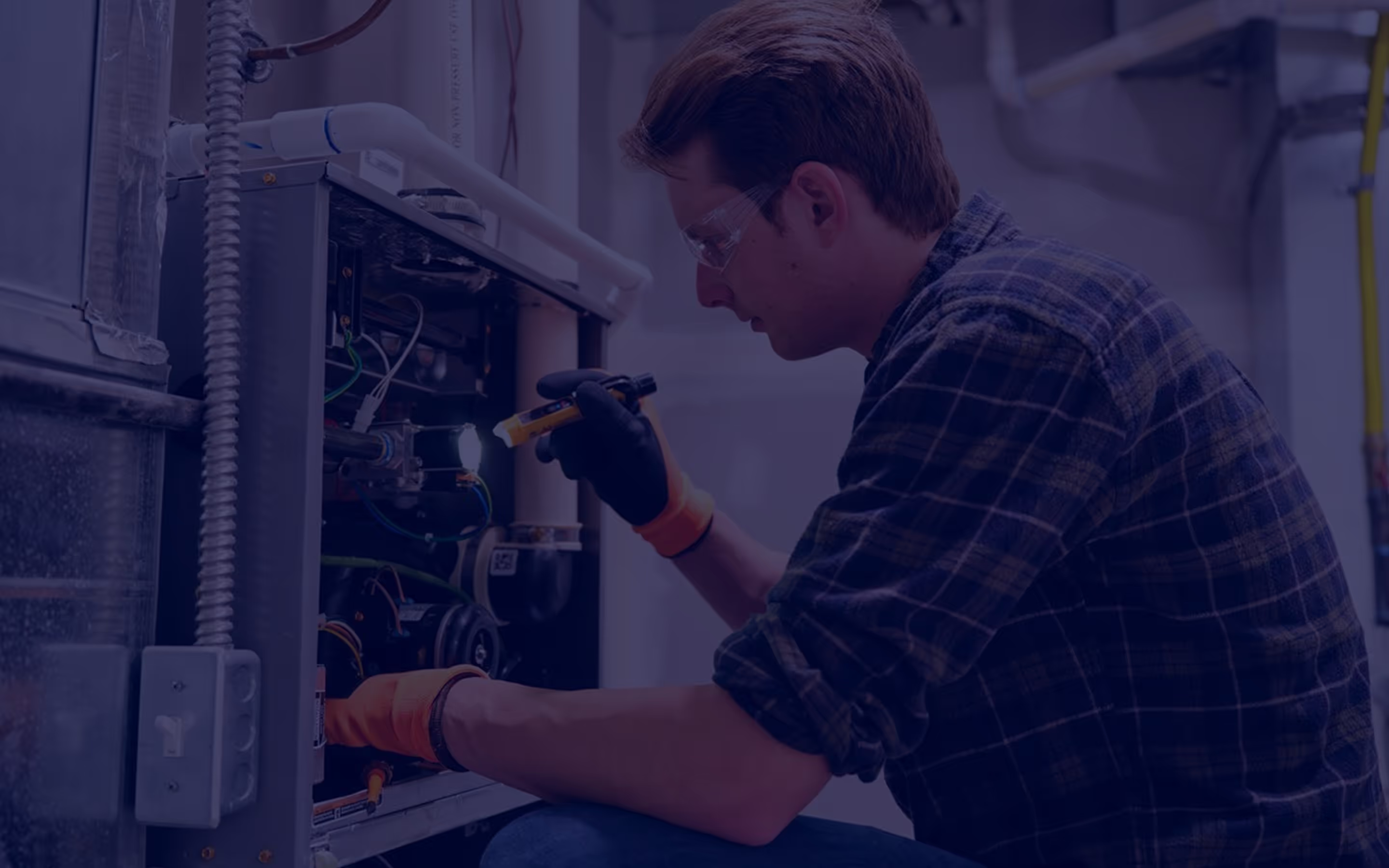
Heating Installation
Schedule an expert heating installation in Woodland and Yolo County. Get high-efficiency units, quick service and affordable financing. Contact us today!

Immediate Heating System Installation Service
Facing a heating system breakdown as winter approaches leads to uncomfortable nights and potential pipe damage, requiring a swift, professional response to restore safety and warmth. Contact us today to schedule your on-site assessment or to apply for financing.
Thompson's Heating & Air swiftly installs high-efficiency units to restore your comfort timely manner, serving homeowners across Woodland, Davis, West Sacramento, and the surrounding Yolo County communities. Whether you are in Winters, Dixon, or Esparto, ensuring your home maintains a consistent, safe temperature is our primary operational objective. We move quickly from the initial call to the final system test to minimize downtime during the colder months.
- Install your heating system within 24 hours—guaranteed.
- Energy-efficient systems that lower monthly utility bills immediately.
- Expert installers with decades of local expertise in California building codes.
Fully licensed, offering extended warranties and flexible financing options for all replacement projects.
What to Expect: Scope of Services and Immediate Timelines
When you engage a professional team for heating installation, clarity regarding the scope of work and the timeline is essential. The process moves beyond a simple equipment swap; it involves a comprehensive evaluation of your property’s thermal characteristics to ensure the new unit performs optimally. Residents in Natomas, Capay, and Brooks often face specific architectural challenges, from older ductwork to varying insulation levels, which must be addressed during the scope definition.
Upon arrival, the technical team performs a load calculation. This is not a guess based on the size of the previous unit. Instead, it is a precise calculation based on square footage, window placement, insulation quality, and local climate data for areas like Glendale and Rumsey. This ensures the selected equipment is neither oversized, which causes short-cycling and humidity issues, nor undersized, which leads to constant running and failure to reach set temperatures.
The scope of installation typically includes:
- Site Protection: Laying down drop cloths and protective gear to ensure flooring and furniture remain pristine.
- System Removal: Safe disconnection and disposal of the existing furnace or heat pump, including environmentally responsible refrigerant recovery if applicable.
- Infrastructure Adaptation: Modifying the plenum, gas lines, or electrical connections to accommodate modern, high-efficiency equipment.
- Code Compliance: Ensuring all work meets local building standards and California Title 24 requirements.
Regarding timelines, most standard installations in Williams, Arbuckle, and Zamora are completed within a single day. Complex scenarios requiring extensive ductwork modification or zoning system implementation may extend into a second day. However, the goal remains to have the heat operational before the technicians depart.
Your Installation Journey: From Assessment to Activation
The path to a new heating system follows a rigid, technical protocol designed to maximize system longevity and efficiency. This process is standardized to ensure consistent quality, whether the project is in Yolo, Knights Landing, or Cache Creek.
Assessment and Sizing
- The process begins with a Manual J load calculation. Technicians measure the home’s thermal envelope. This step is critical because modern units are more efficient and often physically different from units manufactured 15 or 20 years ago.
- Reviewing existing ductwork integrity is the next step. Leaky ducts can reduce system efficiency by up to 30%. In areas like Madison and Clarksburg, where older homes are common, this step dictates whether duct sealing or replacement is necessary alongside the unit installation.
Equipment Selection and Staging
- Based on the assessment, specific recommendations are made regarding AFUE (Annual Fuel Utilization Efficiency) ratings for furnaces or HSPF (Heating Seasonal Performance Factor) for heat pumps.
- Once the unit is selected, inventory is verified, and the installation team stages the equipment for delivery.
Physical Installation
- Technicians arrive and disconnect utilities from the old unit. Gas lines are capped, and electrical circuits are locked out for safety.
- The old unit is removed.
- The new air handler or furnace is positioned. This often requires fabricating a new transition piece for the sheet metal plenum to ensure an airtight seal between the unit and the ductwork.
- Venting is installed. For high-efficiency gas furnaces, this involves running PVC flue pipes to the exterior, often requiring new penetrations through the roof or sidewall to handle the acidic condensate and lower exhaust temperatures.
Connection and Commissioning
- Gas lines are reconnected with new sediment traps and shut-off valves.
- Electrical connections are updated to meet current codes.
- The thermostat is installed or programmed to communicate correctly with the new equipment.
- The system is fired up for a commissioning sequence. This involves measuring static pressure, temperature rise (the difference between return and supply air temperature), and gas manifold pressure.
Final Inspection and HERS Testing
- In California, specifically for residents in Dunnigan, Guinda, and Monument Hills, third-party verification (HERS testing) is often required to certify duct sealing and refrigerant charge. This ensures the system performs to the manufacturer's specifications.
Deciding to Replace Your HVAC: A Cost-Benefit Analysis
Determining when to stop repairing an aging unit and invest in a new installation is a financial and logistical decision. Homeowners in Plainfield, Tancred, and Cottonwood often struggle with this choice during the shoulder seasons. While repairs offer a lower immediate price point, they often represent a poor long-term investment for systems nearing the end of their lifecycle.
Consider the following factors when analyzing the cost-benefit ratio:
- The 50% Rule: If the cost of the repair approaches 50% of the value of a new system, replacement is generally the financially sound choice. A major repair, such as a heat exchanger replacement or compressor failure, often signals that other components are also near failure.
- Age of the Equipment: Furnaces typically last 15-20 years, while heat pumps last 10-15 years. If a unit in Grays Bend or Hungry Hollow is over 15 years old, parts availability becomes scarce, and efficiency has likely degraded significantly. A modern unit will offer immediate savings on monthly energy bills, effectively subsidizing the installation cost over time.
- Frequency of Breakdowns: If a system requires service more than once a season, reliability is compromised. The cost of emergency service calls, combined with the inconvenience of downtime, often outweighs the monthly cost of financing a new system.
- Safety Concerns: For gas furnaces, age can lead to cracks in the heat exchanger. This poses a carbon monoxide risk. If any combustion safety issues are detected, immediate replacement is the only safe option.
- Comfort and Performance: Older systems often struggle to maintain even temperatures or control humidity. If some rooms are freezing while others are hot, or if the system runs continuously without satisfying the thermostat, the mechanical limits of the unit have been reached.
Adapting to California’s Climates: Local Guidelines and Seasonal Tips
Installing heating systems in the Sacramento Valley and surrounding areas requires adherence to strict state regulations and an understanding of the local microclimates. The requirements for a home in Swingle or Elkhorn are dictated not just by comfort, but by California’s Title 24 energy standards.
Title 24 Compliance:
- California has some of the strictest energy codes in the nation. Any alteration to an HVAC system triggers requirements for duct testing and sealing.
- New installations must meet specific minimum efficiency ratings. For residents in the region, this means the equipment installed is guaranteed to be high-performance, but it also means the installation process must include rigorous testing to pass final inspection.
Permitting Requirements:
- Building permits are non-negotiable for HVAC replacements. Whether in a dense neighborhood or a rural property, filing for a permit ensures that the installation is reviewed by a municipal inspector for safety.
- This process protects the homeowner’s insurance validity and property value. Unpermitted work can cause significant issues during the future sale of a home.
Seasonality and Scheduling:
- The demand for heating services spikes as soon as the first frost hits the Valley.
- Proactive homeowners schedule installations during the mild autumn months. This ensures equipment availability and allows for a more flexible installation schedule.
- Winter installations are often emergency-driven. While crews are prepared for rapid response, navigating freezing attic spaces or icy roofs can complicate the physical installation process.
Gas vs. Heat Pump:
- California is pushing toward electrification. Modern heat pumps are capable of handling the winter lows in this region efficiently.
- However, many homes still rely on natural gas. Dual-fuel systems (a heat pump with a gas furnace backup) are becoming a popular choice for maximizing efficiency while maintaining a powerful heat source for the coldest nights.
Why Professional Installation Matters
The longevity and efficiency of a heating system are determined more by the quality of the installation than the brand of the equipment. A top-tier furnace installed poorly will fail prematurely and cost more to operate than a mid-range unit installed perfectly. Thompson's Heating & Air focuses on the physics of airflow and combustion to ensure every system delivers the rated performance.
- Correct Sizing: Oversized units short-cycle, leading to wear and tear on the blower motor and igniter. Undersized units run indefinitely, driving up electricity and gas usage. Professional calculation prevents this.
- Ductwork Integration: A new unit cannot push air through obstructed or undersized ducts. The installation process includes an evaluation of the air distribution system to ensure it can handle the airflow of the new equipment.
- Warranty Protection: Manufacturers require proof of professional installation to honor warranties. Improper installation voids these protections immediately.
- Safety Verification: Dealing with natural gas and high-voltage electricity requires certified expertise. From gas leak testing to verifying proper voltage at the disconnect, professional protocols prevent hazards.
- Refrigerant Handling: For heat pumps, the refrigerant charge must be exact. Too much or too little refrigerant damages the compressor and reduces heating capacity.
When a system is installed correctly, it operates quietly, maintains stable temperatures, and requires fewer repairs over its lifespan. The investment in professional service pays dividends through lower operational costs and extended equipment life.
Secure Your Heating Solution Today
Waiting for a total system failure puts your home and plumbing at risk during freezing temperatures. A planned replacement allows for the selection of the best equipment for your specific needs rather than settling for whatever is in stock during an emergency. Whether upgrading for efficiency or replacing a failed unit, professional installation ensures compliance, safety, and comfort. Take control of your home’s climate before winter intensifies. Schedule your heating installation with Thompson's Heating & Air.
.avif)
Schedule Your Heating Service Today
Do not wait for your [system type] to fail completely. Call Thompson's Heating & Air today at (530) 661-2599 to schedule your [service name] in [city] or anywhere in Yolo County. Our experienced technicians are ready to restore your comfort with fast, reliable service you can trust.



.avif)
.avif)
.png)
