
HVAC Maintenance: Troubleshooting the Burning Dust Smell During Your Fall Startup

That First Chilly Morning: Why Your Furnace Smells Like It's Burning
The calendar finally turns, the temperature drops across Woodland, and you switch your thermostat to "heat" for the first time this season. Within ten minutes, a strong, alarming burning odor fills your home's vents. Here at Thompson's Heating & Air, our dispatch board always lights up on these mornings. When you are looking for reliable home maintenance tips and troubleshooting, figuring out whether this sudden smell is a normal seasonal occurrence or a dangerous fire hazard is usually at the top of the list. For most homeowners, this scenario triggers immediate panic. You might find yourself rushing to the thermostat, wondering if you need to evacuate the house or call the fire department.
This specific issue is incredibly common during the October heating startup. As homes transition from relying on their Air Conditioning systems to running their central heating, idle furnace components are suddenly subjected to extreme temperatures. Even if you were diligent about scheduling your AC maintenance over the summer, the heating side of your HVAC system has been sitting completely dormant. During those long months of inactivity, airborne debris silently accumulates inside the cabinet.
Understanding exactly what is happening inside your furnace can turn a moment of panic into a simple monitoring exercise. The burning smell you detect on that first chilly morning is rarely a sign that your house is in danger. Instead, it is usually a basic mechanical reality of how forced-air heating systems operate after a long period of rest. By knowing what to look for, you can safely navigate this seasonal transition without unnecessary stress.
The Mechanics of Your Heat Exchanger After a Long, Dry Summer
To understand why your furnace produces a burning smell, you have to look at the core component responsible for warming your house: the heat exchanger. The heat exchanger is a large, clam-shaped metal shield located inside your furnace cabinet. Its job is to safely contain the combustion flames and toxic exhaust gases while transferring intense heat to the clean air circulating through your home. When your furnace is running, the surface of this metal shield gets incredibly hot.
During the idle summer months, however, the heat exchanger sits completely cold and unused. Even with a high-quality air filter in place, microscopic airborne particulates eventually bypass the filtration system. These tiny particles settle directly onto the cold metal surface of the heat exchanger, building up a thin, invisible layer of debris over several months. When the furnace finally fires up in the fall, the heat exchanger rapidly reaches extreme temperatures. This sudden blast of heat instantly incinerates the settled layer of dust. The resulting smell is literally harmless organic matter burning off, which your blower fan then pushes through your ductwork and into your living spaces.
Living in the Sacramento Valley adds a unique layer to this process. In our years of servicing homes throughout Woodland and the surrounding agricultural areas, our team at Thompson's Heating & Air has seen exactly how our hot, dry summer environment leads to significantly heavier airborne dust and particulate settling on idle furnace components compared to other regions. The local climate means your furnace is collecting more debris during its off-season than a system in a wetter, less agricultural area.
Agricultural Dust vs. Standard Household Dust
Not all dust is created equal, and the type of dust in your home directly affects the smell your furnace produces.
• Standard household dust: This consists mostly of indoor lint, pet dander, dead skin cells, and fabric fibers. When standard household dust burns off, it typically smells like a hot clothes iron or slightly singed fabric.
• Agricultural topsoil: The fine agricultural dust that infiltrates homes in our region is different. It carries organic matter from local fields.
• The difference in odor: Because agricultural dust contains different organic compounds, it can create a slightly more pungent or lingering earthy odor when it burns off. It might smell faintly like a dry campfire or scorched earth rather than just burnt lint.
The 30 to 60-Minute Rule for Normal Dust Burn-Off
When that burning smell hits your nostrils, the most important question is how long you should wait before taking action. At Thompson's Heating & Air, we believe in providing honest, transparent advice meant to empower the homeowner. A pattern we see often is homeowners booking unnecessary, panicked service calls for a normal seasonal occurrence. To prevent that, our team typically advises a clear, definitive timeline you can follow to determine if your system is operating safely.
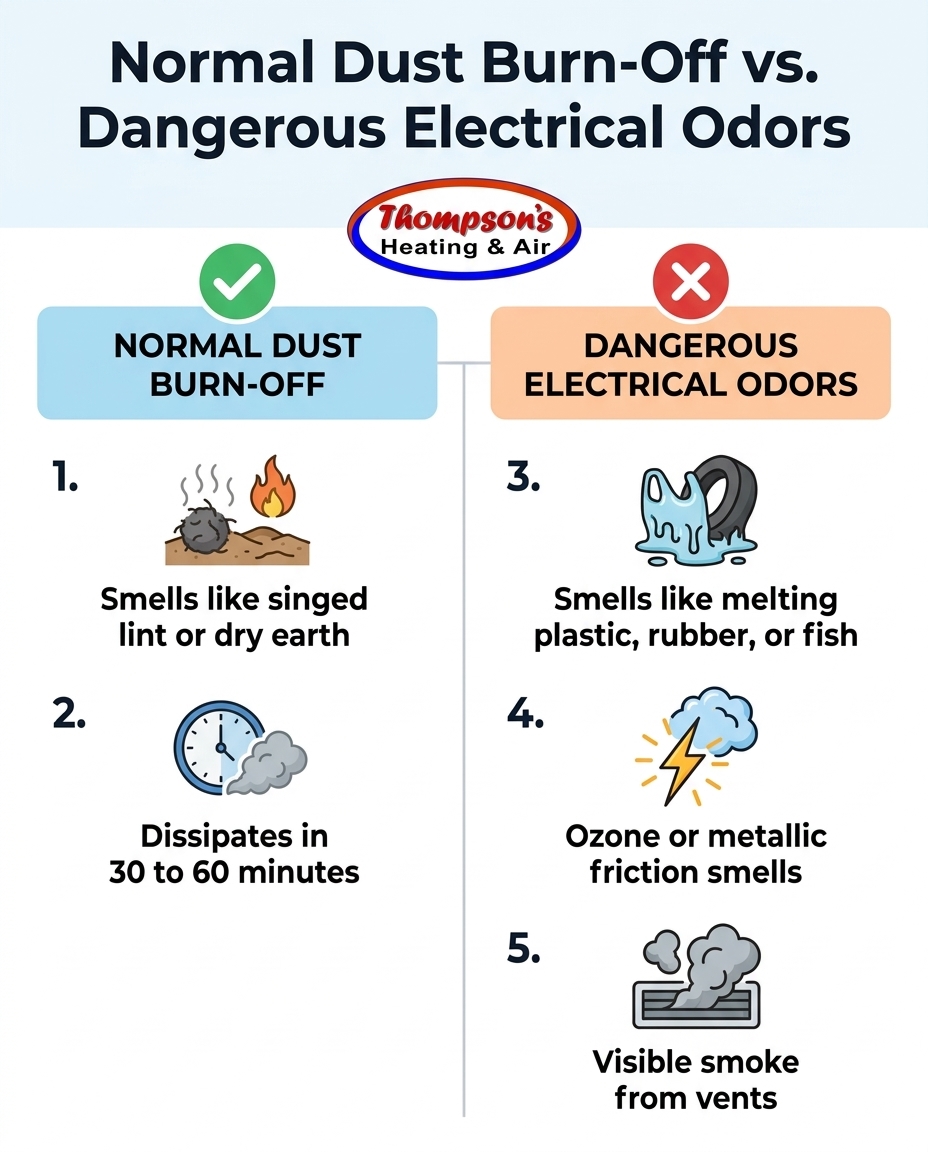
Normal dust burn-off odors should completely dissipate within 30 to 60 minutes of odor dissipation during the first continuous heating cycle. If the smell is caused by harmless settling dust, it will peak in intensity during the first fifteen minutes and then steadily fade away. Here is how you can safely monitor your system during this window:
1. Note the exact time: As soon as you notice the burning smell, check the clock. This gives you a strict baseline for the 60-minute window.
2. Ventilate the home: Open a few windows or doors to allow fresh air to circulate. This helps clear the initial wave of odor from your living spaces and makes it easier to tell if the smell is actually fading.
3. Monitor the intensity: Pay close attention to whether the smell is getting weaker or stronger. Normal dust burn-off will always fade as the dust is completely incinerated.
4. Listen to the system: While you monitor the smell, listen for any strange grinding, screeching, or banging noises. Normal burn-off is silent.
Reassure yourself that monitoring the system for this duration is perfectly safe, provided the odor remains distinctly like dusty organic matter. However, if the smell persists beyond the 60-minute mark, or if it grows significantly stronger and more acrid rather than fading, the situation transitions from a normal event to a potential mechanical issue.
Identifying the Odor: Normal Dust vs. Electrical Hazards
Equipping yourself with sensory knowledge is the best way to protect your home. While burning dust is harmless, other odors indicate dangerous mechanical or electrical failures. Knowing the difference between these scents can save your heating system from catastrophic damage.
• Normal Dust Burn-Off — What It Smells Like: Hot clothes iron, singed lint, or a dry, earthy campfire scent. — What It Usually Means: Harmless summer dust incinerating on the heat exchanger. — Action Required: Monitor for 30 to 60 minutes. Open windows to ventilate.
• Melting Plastic or Rubber — What It Smells Like: Sharp, acrid, chemical smell that burns the back of your throat. — What It Usually Means: A foreign object in the ductwork or melting wire insulation. — Action Required: Shut down the system immediately and call a professional.
• Electrical or "Fishy" Smell — What It Smells Like: Distinctly like dead fish or burning electronics. — What It Usually Means: Severe electrical arcing or melting plastic components near the blower. — Action Required: Shut down the system immediately at the thermostat and breaker.
• Metallic Friction or Ozone — What It Smells Like: Smells like a hot power tool, a passing train, or an approaching thunderstorm. — What It Usually Means: A failing blower motor, seized bearings, or an overheating electrical component. — Action Required: Shut down the system immediately to prevent motor burnout.
It is crucial to highlight that visible smoke of any kind coming from your vents is never normal. An invisible odor is expected during startup; a hazy room or visible smoke billowing from the registers is an absolute emergency. If you ever see smoke, bypass the monitoring phase entirely.
When to Shut Down Your Heating System Immediately
While we want you to feel confident monitoring a normal dust burn-off, there are strict safety criteria for when to stop observing and take immediate action. If you detect the sharp scent of melting plastic, an electrical burning odor, the distinct fishy smell of melting wire insulation, or any visible smoke, you must act quickly.
The immediate response: Turn off the heating system directly at the thermostat. Switch it from "heat" to "off." If the smell is particularly strong or electrical in nature, you should also locate your home's main electrical panel and flip the breaker dedicated to your furnace. Once the system is powered down, check your home's smoke and carbon monoxide detectors to ensure they are active, functioning, and have not been triggered by the event.
Under no circumstances should you attempt to investigate the internal components yourself. As local HVAC professionals, we explicitly warn against opening the furnace cabinet, attempting to clean the heat exchanger, or inspecting high-voltage wiring on your own. Modern furnaces contain complex electrical boards, high-voltage capacitors, and delicate gas valves. Diagnosing electrical shorts, seized blower motors, or cracked heat exchangers requires specialized diagnostic tools and the expertise of a licensed professional. Opening the cabinet yourself not only risks severe electrical shock but can also void your manufacturer warranty.
Proactive HVAC Maintenance: Minimizing Fall Startup Odors
While some degree of dust burn-off is inevitable after a long summer, severe odors can be heavily mitigated with proper seasonal preparation. You do not have to simply accept a smelly house every October. The key to a smooth, odor-free transition lies in proactive care before the cold weather actually arrives.
The simplest step you can take is replacing your air filter before initiating the first heating cycle. A dirty, clogged filter from the summer cooling season restricts airflow. When airflow is restricted, the furnace runs hotter than it should, which exacerbates the burning smell and puts unnecessary strain on the heat exchanger. Starting the season with a fresh, clean filter ensures optimal airflow and helps capture any loose debris before it reaches the heating elements.
Beyond the filter, scheduling professional heating maintenance is the most effective way to prevent startup issues. During a comprehensive tune-up, our technicians safely access the internal cabinet to clean the burner assembly and carefully inspect the heat exchanger before ignition. We remove the bulk of the accumulated dust using specialized vacuums and brushes. Furthermore, a pre-season inspection catches fraying wires, loose electrical connections, or failing motors long before they create the dangerous, acrid odors discussed earlier. By addressing these components early, you ensure the system is clean and safe to operate.
Managing Indoor Air Quality During the Seasonal Transition
The transition from cooling to heating affects more than just the temperature in your home; it has a significant impact on your overall indoor air quality. When the furnace kicks on for the first time, the sudden rush of warm air often stirs up dust that has settled deep inside your ductwork over the summer. This can temporarily lower your indoor air quality, causing sneezing or minor irritation for sensitive family members.
Your HVAC system's blower fan plays a critical role in filtering out this particulate matter once the initial burn-off is complete. As the air circulates through the house and returns to the furnace, the air filter captures the suspended dust. Homeowners often wonder about their thermostat fan settings during this transition period. Specifically, understanding how running your AC fan continuously affects humidity and dust filtration is important. Leaving the fan to run continuously can help filter the air faster during that first day of heating, but it can also pull residual moisture from the system back into the house.
To combat the heavy agricultural dust prevalent in our area, our team highly recommends upgrading to higher MERV-rated filters during the fall. A filter with a MERV rating between 8 and 11 is typically ideal for the residential systems we service around Woodland. These filters are dense enough to capture the fine topsoil and pollen that infiltrate the home, without restricting the vital airflow your furnace needs to operate safely.
Enjoying a Safe, Odor-Free Winter Heating Season
Switching on your heat for the first time should bring comfort, not anxiety. A brief burning dust smell on the first chilly morning is usually a harmless sign that your system is simply clearing out summer debris. By relying on the 30 to 60-minute dissipation rule, you can monitor the situation with confidence and peace of mind.
However, true comfort comes from knowing your equipment is in peak condition. Gathering reliable home maintenance tips and troubleshooting knowledge is excellent, but it cannot replace the trained eye of a professional. At Thompson's Heating & Air, we encourage all homeowners to prioritize professional seasonal tune-ups. A thorough inspection ensures your system operates safely, efficiently, and without alarming odors all winter long, giving you the clear timeline and safety assurances you deserve.
Frequently Asked Questions
How long is it normal for a heater to smell like burning?
Based on what we see in the field every October, it is completely normal for a heater to smell like burning dust for 30 to 60 minutes during its first cycle of the season. This brief window allows the furnace to incinerate the harmless dust that settled on the heat exchanger over the summer. If the smell persists longer than an hour or grows stronger, it is time to turn the system off and investigate further. Opening windows during this initial hour can help clear the harmless odor quickly.
Is the burning dust smell from my furnace dangerous?
No, the standard burning dust smell is not dangerous and is not a fire hazard. It is simply organic matter, like lint and topsoil, reacting to the sudden high temperatures of the heat exchanger. As long as the scent resembles a hot clothes iron or dry earth, you are perfectly safe. However, if the smell changes to melting plastic or electrical burning, it transitions into a hazardous situation.
Why does my furnace smell like burning plastic?
A burning plastic smell usually indicates a severe electrical issue or a foreign object trapped in the system. It can be caused by melting wire insulation, an overheating capacitor, or a plastic toy that fell down a floor register and into the ductwork. Because melting electrical components pose a significant fire risk, you should turn off the furnace immediately if you detect this specific, acrid odor.
Should I turn off my heater if it smells like it's burning?
If the smell is strictly like dusty lint and it is the very first time you have turned the heater on, you do not need to turn it off immediately; you can monitor it for up to 60 minutes. However, you should turn the heater off immediately if the smell is sharp, chemical, metallic, or resembles melting plastic. You must also shut the system down instantly if you see any visible smoke coming from your vents.
Can I clean my furnace heat exchanger myself to prevent the smell?
No, you should never attempt to open the furnace cabinet and clean the heat exchanger yourself. The internal components involve high-voltage electricity, delicate gas valves, and intricate safety sensors that are easily damaged. Cleaning the heat exchanger requires specialized brushes, vacuums, and diagnostic tools that only licensed HVAC professionals, like our team at Thompson's Heating & Air, possess. Attempting a DIY cleaning can lead to severe injury, carbon monoxide leaks, or voided warranties.
How often should I schedule HVAC maintenance for my furnace?
You should schedule professional HVAC maintenance for your furnace once a year, ideally in the early fall before the cold weather arrives. An annual tune-up allows a technician to clean away the summer dust, inspect the electrical connections, and verify that the heat exchanger is intact. Consistent yearly maintenance minimizes startup odors, improves energy efficiency, and prevents unexpected breakdowns during the winter.



.avif)
.avif)
.png)
