
How Running Your AC Fan Continuously Affects Humidity Levels in August

The Myth of Constant Circulation: Why More Airflow Isn't Always Better
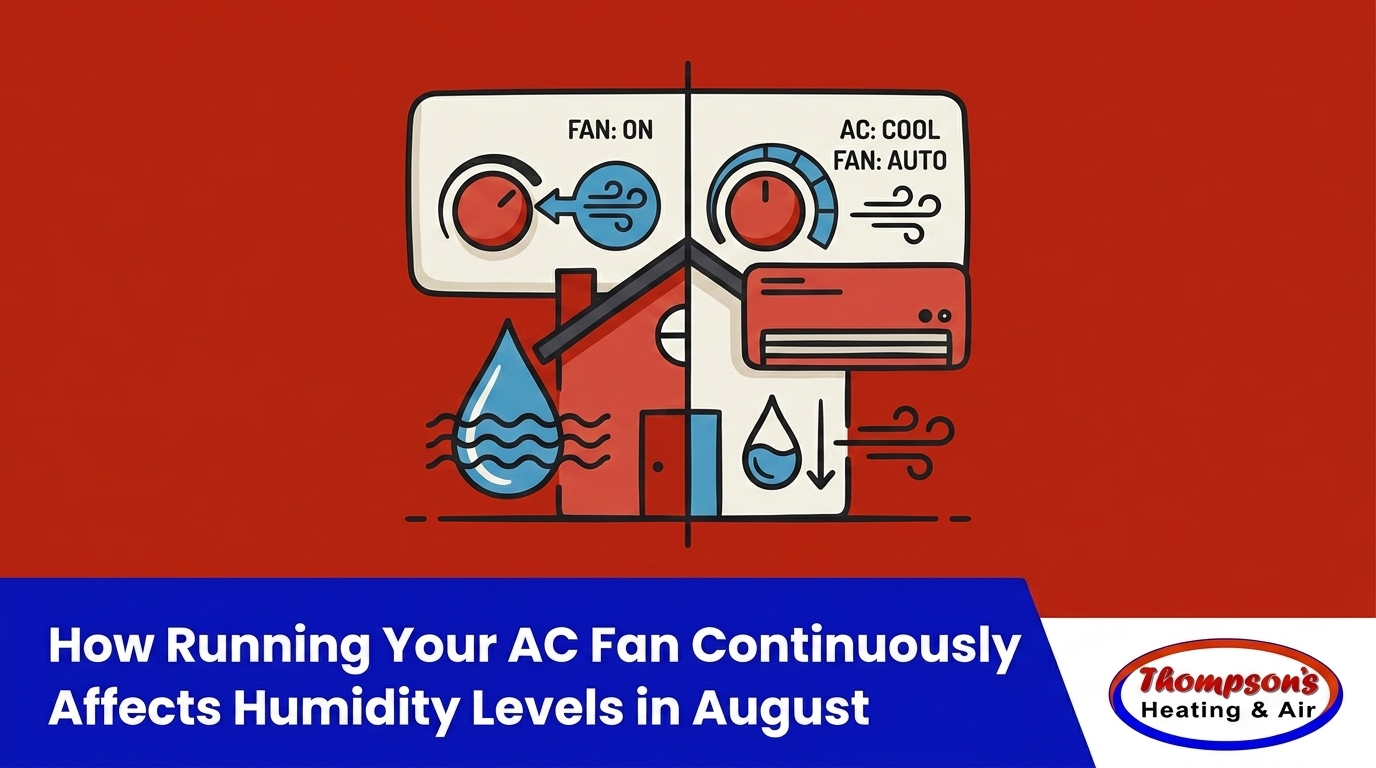
As families in Woodland CA transition into the back-to-school season, our team at Thompson's Heating & Air frequently hears a common misconception: that keeping air moving constantly will automatically make a home feel cooler. But if you want to understand how running your AC fan continuously affects humidity levels in August, you have to look at the physics of moisture. In our experience, many homeowners assume that a constantly running blower motor acts like a ceiling fan, creating a refreshing breeze in every room. Instead, they find themselves sitting in a house that feels inexplicably muggy, sticky, and clammy, even though the air conditioner is running all day. The root of this frustrating problem usually comes down to one simple decision point: the Thermostat 'ON' vs 'AUTO' switch.
If you are struggling to keep your home comfortable, understanding how your air conditioning system manages moisture is the first step to take before scheduling professional AC repair.
When you set your thermostat fan to 'ON', the blower motor runs 24 hours a day, regardless of whether the outdoor compressor is actively cooling the air. While this does keep air circulating through your ductwork, we constantly see how it actively works against your system's natural dehumidification process. To understand why more airflow isn't always better for your indoor comfort, we have to look at how your equipment actually removes water from the air.
Understanding Latent Cooling: How Your Air Conditioner Actually Removes Moisture
Air conditioners do not just lower the temperature of your home; they also condition the air by removing excess moisture. When our technicians explain this process to customers, we break this dual function down into two distinct categories of cooling: sensible cooling and latent cooling. Sensible cooling is the actual drop in temperature that you can measure with a thermometer. Latent cooling is the extraction of humidity from the indoor air, which dramatically improves how the air actually feels on your skin.
• Sensible Cooling — What It Does: Lowers the physical heat energy in the air. — How It Is Measured: Standard thermometer (Degrees Fahrenheit). — Impact on Comfort: Prevents overheating and cools the room down.
• Latent Cooling — What It Does: Removes water vapor from the indoor air. — How It Is Measured: Hygrometer (Relative Humidity percentage). — Impact on Comfort: Allows human sweat to evaporate, making you feel cooler.
Latent cooling happens entirely by design, but it requires specific timing and airflow conditions to work correctly. If those conditions are interrupted, the moisture stays trapped inside your living space.
The Role of the Evaporator Coil in Humidity Control
Your indoor unit houses a critical component called the evaporator coil. When a cooling cycle begins, cold refrigerant pumps through this coil, dropping its surface temperature dramatically. As warm, humid air from your return vents blows over this freezing cold metal, a phase change occurs. The moisture in the air condenses into liquid water on the surface of the coil, exactly like water droplets forming on the outside of a cold glass of iced tea on a hot late-summer afternoon.
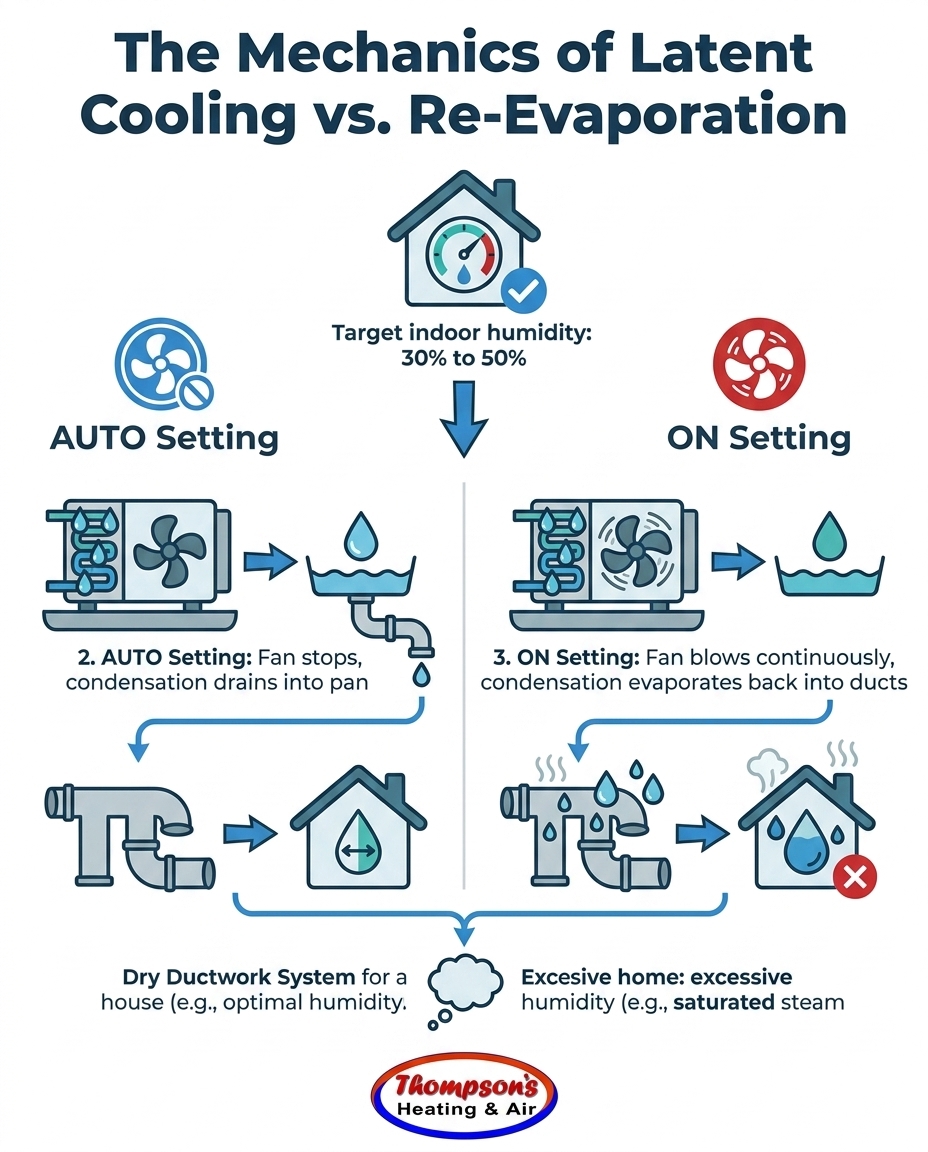
This process effectively makes the evaporator coil the primary dehumidifier for your entire home. However, the process is not complete just because the water has condensed. That accumulated moisture must drip off the coil, collect in the condensate drain pan below, and flow safely outside through a PVC drain line. For this drainage process to happen effectively, the cooling cycle must end, and the heavy blast of air from the blower fan must stop. Without a pause in airflow, the water never gets the chance to drain away.
The Re-Evaporation Trap: What Happens When the Fan Never Stops
The exact physical mechanism of the re-evaporation trap is simple but highly disruptive to your indoor comfort. When your thermostat fan is set to 'ON', the blower motor never powers down. The compressor outside finishes cooling the house to your target temperature and shuts off, but the indoor fan keeps blowing full force across a soaking wet evaporator coil.
Instead of allowing the condensed water to drip into the drain pan, the relentless airflow acts like a giant blow dryer. It rapidly evaporates the resting water right off the coil and pushes it directly back into your ductwork. Within minutes, all the humidity your system just worked so hard to extract is dumped right back into your living room, bedrooms, and hallways. During peak August heat in the Sacramento Valley, our technicians observe AC units running incredibly long cycles, creating massive amounts of condensation. This high volume of water is highly vulnerable to re-evaporation if the fan never stops.
Why the Air Feels Clammy Despite Low Temperatures
This cycle of high humidity makes the indoor air feel heavy, sticky, and noticeably warmer than the number displayed on the wall. The human body cools itself by sweating; when the air around you is dry, that sweat evaporates quickly, carrying body heat away with it. When the indoor humidity is artificially inflated by re-evaporation, the air is already saturated with water. Your sweat has nowhere to go, leaving your skin feeling clammy.
We see the impact of poorly timed airflow and unexpected system behavior all summer long. For example, one local Woodland customer reached out to us late last August because their home felt inexplicably muggy despite the AC running all day; our team sent a technician to diagnose the unit that same afternoon, only to find the fan locked in the 'ON' position. Just as a sudden mechanical breakdown creates an immediate comfort crisis, the creeping, sticky discomfort of an AC trapped in a re-evaporation cycle can make your system feel like it is completely failing during critical end-of-season heat waves. The thermostat registers the correct temperature, but the "feels like" index is ruined by trapped moisture.
The Case for 'AUTO': Letting Your Evaporator Coil Drain Properly
The most effective, actionable solution to high indoor humidity during late-summer cooling is switching your thermostat fan setting back to 'AUTO'. Our team highly recommends this simple adjustment because it synchronizes the indoor blower fan with the outdoor compressor's cooling cycle, allowing the equipment to operate exactly as the manufacturer intended.
When you select 'AUTO', the sequence of operations changes dramatically. The thermostat detects that the room has reached the desired temperature and sends a signal to stop the cooling cycle. The outdoor compressor shuts down. A few moments later, the indoor blower motor powers down completely. With the air pressure suddenly removed, gravity takes over. The accumulated moisture on the evaporator coil is finally able to drip freely into the condensate pan without being violently disturbed by continuous airflow.
At Thompson's Heating & Air, our deep expertise in Sacramento Valley climate nuances helps homeowners solve major comfort issues with simple, non-salesy thermostat adjustments. By letting the coil drain properly, you allow the home's relative humidity to drop back into the ideal 30% to 50% range. You will notice an immediate improvement in comfort levels, and you gain the secondary benefit of reduced energy consumption since the blower motor is no longer drawing power 24 hours a day.
How Indoor Activities Compound Late-Summer Humidity Issues
Leaving the fan set to 'ON' is the primary driver of re-evaporation, but secondary factors inside your house can easily compound the problem. In our years of serving the community, we've noticed that daily living generates a surprising amount of indoor moisture. When the fan runs constantly, this newly generated moisture is continually circulated rather than extracted.
• Cooking and Boiling Water: Simmering soups, boiling pasta, and using unvented gas stoves release heavy amounts of water vapor directly into the kitchen air.
• Bathing and Showering: A hot, ten-minute shower can add up to a half-pint of water to the air. If bathroom exhaust fans are not used, this moisture spreads quickly.
• Respiration and Perspiration: A family of four simply breathing and sweating at rest can add over a gallon of water to the indoor air every single day.
• Houseplants and Aquariums: Large collections of indoor plants release moisture through transpiration, adding to the overall humidity load of the home.
When your fan is stuck in the 'ON' position, it picks up all of this localized moisture and distributes it evenly into every room of the house. Proper ventilation works in tandem with the 'AUTO' setting to maintain optimal indoor air quality.
Managing the Moisture Load in Your Home
To keep the moisture load manageable, our experts suggest always using targeted exhaust fans during high-moisture activities. Run the bathroom vent during showers and leave it on for 20 minutes afterward. Use the kitchen range hood when boiling water. Most importantly, ensure the AC is allowed to run full, uninterrupted cooling cycles on the 'AUTO' setting to handle the combined load of outdoor humidity and indoor moisture generation.
The Hidden Cost of Continuous Fan Operation on Equipment Lifespan
Beyond the immediate discomfort of a clammy house, running your blower motor constantly carries a significant hidden cost regarding equipment longevity. As HVAC professionals, we know that a blower motor is a heavy-duty mechanical component designed to run in cycles, not continuously. Running it 24/7 accelerates mechanical wear and tear on internal bearings, belts, and electrical capacitors.
Premature blower motor failure often occurs during peak heat events when the system is already stressed to its limits. When a system is pushed too hard, it eventually fails. During a recent August heatwave, our team responded to a customer whose AC broke down completely because the fan had been running non-stop for weeks. Our technician arrived the same day to repair the system, restoring their cooling right when they needed it most. Avoiding unnecessary wear—like running the fan continuously—is one of the best ways we know to prevent these emergency breakdowns.
Continuous operation also pulls air through your return vents constantly, which means it pulls dust, pet dander, and debris through your system non-stop. This causes your air filters to clog much faster than normal. A heavily clogged filter severely restricts airflow, forcing the blower motor to work harder to pull air, which raises internal operating temperatures and strains the entire system. Relying on routine AC maintenance is the best way to undo the stress of continuous operation, clean the blower assembly, and ensure the condensate drain line is clear of algae and blockages.
Frequently Asked Questions About AC Fan Settings and Indoor Humidity
Why does my house feel humid with the AC on?
Your house likely feels humid because the thermostat fan is set to 'ON' instead of 'AUTO'. This setting causes the blower motor to run continuously, which evaporates the condensed water resting on the indoor coil and blows it right back into your living space. Switching the fan back to 'AUTO' allows the water to drain properly, restoring the system's ability to dehumidify the air.
Should I set my AC fan to on or auto in summer?
We strongly recommend always setting your AC fan to 'AUTO' during the summer cooling season. The 'AUTO' setting ensures that the fan only blows when the compressor is actively cooling the air. Once the cooling cycle finishes, the fan stops, which is a critical step that allows the evaporator coil to drain its collected moisture into the condensate pan.
Does leaving the AC fan on increase humidity?
Yes, leaving the AC fan on significantly increases indoor humidity during the summer. By blowing air constantly over a wet evaporator coil, the fan acts like a blow dryer, vaporizing the moisture and pushing it back through your ductwork. This defeats the latent cooling process and makes the home feel sticky and warm.
How do I reduce humidity in my house with AC?
To reduce humidity, first switch your thermostat fan to 'AUTO' so the system can properly drain condensation. Next, ensure your air filters are clean so airflow is not restricted, and limit indoor moisture generation by using exhaust fans while cooking or showering. If you want to learn more about advanced moisture control, understanding how humidifiers work with your HVAC system during the heating season provides great contrast to summer dehumidification needs.
Can a continuously running fan cause mold in my ductwork?
A continuously running fan can contribute to organic growth in your ductwork by constantly blowing damp, humid air through dark, unconditioned spaces. When moisture from the evaporator coil is repeatedly blown back into the ducts instead of draining away, it creates an environment that is highly conducive to mold and mildew growth over time.
How does the 'AUTO' setting affect my monthly energy consumption?
The 'AUTO' setting reduces your monthly energy consumption by ensuring the blower motor only draws power when active cooling is required. Blower motors use a significant amount of electricity, and running one 24 hours a day on the 'ON' setting can noticeably inflate your utility bills compared to allowing it to cycle naturally.
Reclaim Your Comfort: Optimize Your Thermostat for Late-Summer Heat
Understanding how running your AC fan continuously affects humidity levels in August is the key to reclaiming your indoor comfort. The science is clear: switching your thermostat from 'ON' to 'AUTO' is the absolute simplest, most effective way to fix a clammy house and let your system drain moisture the way it was designed to. When you live in Woodland CA, managing the late-summer heat requires your equipment to run at peak efficiency without fighting against its own fan settings.
If you have switched your thermostat to 'AUTO', changed your air filter, and managed indoor moisture, but your home still feels uncomfortably humid, there may be a deeper mechanical issue at play. A blocked condensate line, low refrigerant charge, or an oversized AC unit can all cause poor dehumidification. Contact our local experts at Thompson's Heating & Air today for a thorough system evaluation, and let us help you restore total comfort to your home.



.avif)
.avif)
.png)
