
Will Running Your HVAC Fan Reduce Humidity? Fall Heating and Moisture Explained

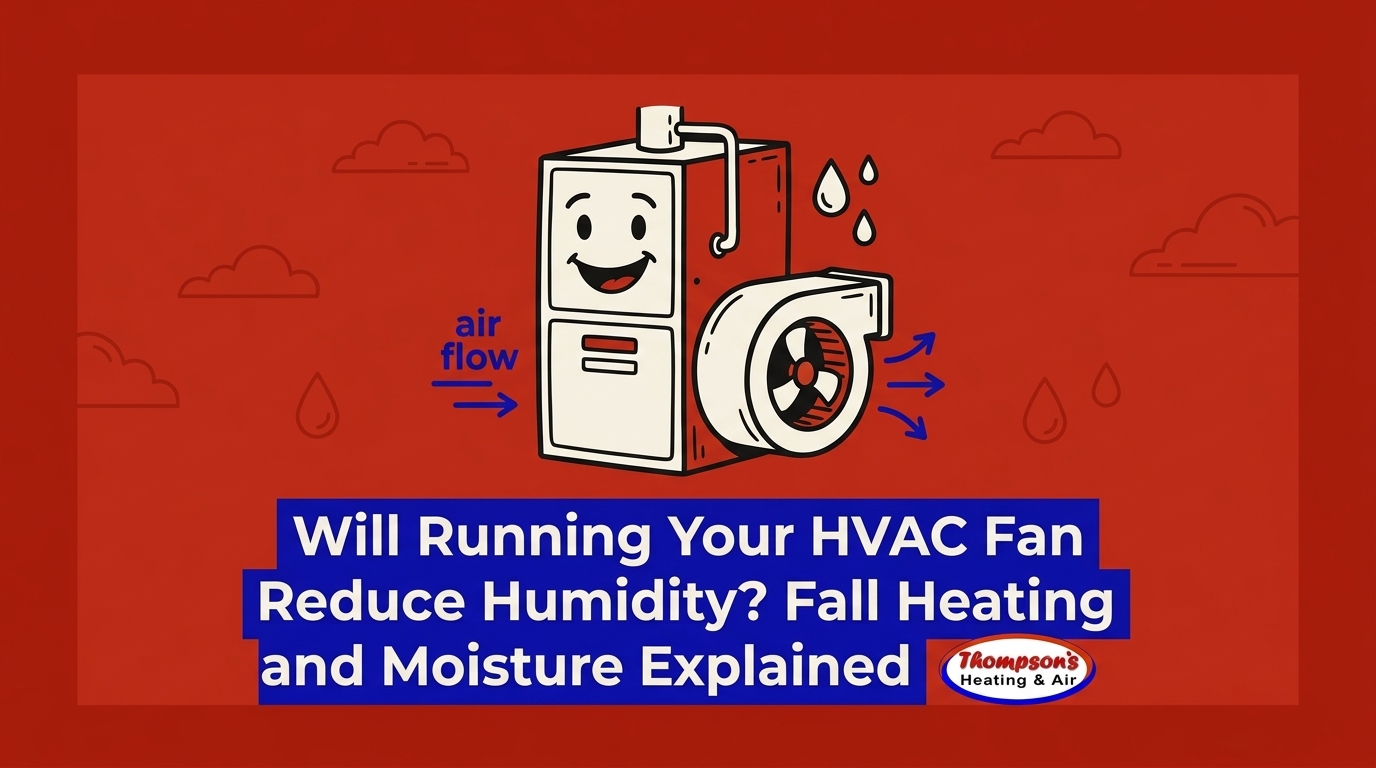
Facing Fall Dampness: Will Running Your HVAC Fan Reduce Humidity?
Is your furnace emitting a strange burning smell, or failing to ignite entirely on the first chilly October morning after sitting dormant through the Woodland summer? When the weather shifts, a common part of seasonal home maintenance tips and troubleshooting that our technicians at Thompson's Heating & Air handle is figuring out how to manage indoor moisture and ensure your heating equipment starts up safely. You might wonder if simply turning on the HVAC fan will help dry out that damp autumn air. The answer involves understanding exactly how your system transitions from cooling to heating, and knowing the difference between a normal seasonal startup and a genuine safety hazard that requires professional attention.
Whether you are wrapping up the cooling season with routine Air Conditioning care or need to schedule a comprehensive AC Service in Woodland, our team's professional guidance ensures your system is ready for the shift in weather.
October brings a distinct change to Northern California. The dry heat fades, replaced by cooler, damper air that seeps into your living space. In our experience serving local homeowners, we frequently see folks try to run the HVAC fan independently, hoping the circulating air will act like a breeze to dry out the rooms. However, air circulation alone does not remove moisture. To truly manage mid-fall heating startup conditions, we need to look at how your thermostat settings interact with the physical equipment inside your utility closet, and why the heating cycle is ultimately responsible for your comfort.
The Short Answer: How Fan Settings Impact Indoor Moisture
The short answer is no—running your HVAC fan alone will not reduce indoor humidity. In fact, depending on how your system was operating previously, we have seen cases where running the fan independently can actually make your Woodland home feel more humid and uncomfortable.
To understand why, you have to look at the two primary fan settings on your thermostat: "ON" and "AUTO." When set to AUTO, the blower fan only runs when the system is actively cooling or heating the air. Once the target temperature is reached, the fan shuts off. When set to ON, the blower fan runs continuously, 24 hours a day, regardless of whether the air conditioner or furnace is actively conditioning the air. While continuous circulation might sound beneficial for stale air, it works against your moisture control efforts.
Why the 'ON' Setting Can Work Against You
When your air conditioning runs during warmer afternoons, the indoor evaporator coil gets extremely cold. Warm, moist air from your home blows across this cold coil, and the moisture condenses into water droplets—much like water beading on the outside of a cold glass. This water drips into a drain pan and flows safely out of your house.
If you leave the fan in the ON position after the cooling cycle finishes, the blower continues to push unconditioned air over that wet evaporator coil. Instead of draining away, the lingering moisture re-evaporates and is blown straight back into your living space. This process actively increases your indoor humidity. Circulation without active temperature conditioning simply moves damp air from one room to another. For optimal moisture management, our technicians always recommend the AUTO setting as your baseline.
Transitioning to Heating: Why Your Furnace is Key to Fall Comfort
As temperatures drop in Woodland CA, air conditioning is no longer a viable method for dehumidification. You cannot run the AC to remove moisture without freezing out your family. Instead, the transition to heating becomes the primary driver of indoor comfort and moisture control.
The Sacramento Valley climate requires a specific approach during this seasonal shift. You move from hot, dry summers where the AC runs constantly, to mild, damp autumns where the air feels heavy and cool. Introducing heat into the home is the most effective way to lower relative humidity naturally.
Relative humidity measures how much moisture the air holds compared to the maximum amount it could hold at a given temperature. Warm air expands and can hold significantly more moisture than cold air. When your furnace kicks on and warms the indoor air, the physical capacity of that air to hold water increases. Even though the absolute amount of water in the house hasn't changed, the relative humidity drops. This is why heated air feels drier to your skin and eliminates that clammy, damp sensation.
To truly combat fall dampness, the system must actively change the air temperature. Circulating cold, damp air with the fan will only make you feel chilly due to the wind chill effect. Turning on the heat is the necessary step to restore comfort.
The HVAC Startup Sequence After a Dormant Summer
When you finally switch your thermostat from cooling to heating for that mid-fall heating startup, a complex sequence of events takes place inside your furnace. Understanding this physical startup sequence helps you recognize what is normal and what might be a sign of trouble after a 6-month off-season.
If you are curious about how fan operation ties into this process, understanding How Running Your AC Fan Continuously Affects Humidity Levels provides great context for why the system operates in distinct stages rather than all at once.
1. The Call for Heat: It all begins at the thermostat. When the indoor temperature drops below your setpoint, the thermostat sends an electrical signal to the furnace control board, initiating the heating sequence.
2. The Inducer Motor Engages: The very first thing you will hear is a small fan starting up. This is the draft inducer motor. Its job is to clear out any leftover combustion gases from the heat exchanger and ensure there is proper airflow through the exhaust flue before any gas is released. This is a critical safety step.
3. Ignition and Gas Valve Operation: Once the control board verifies the inducer motor is running safely, it activates the ignitor. In modern systems, this is a hot surface ignitor that glows bright orange. The gas valve then opens, releasing fuel over the ignitor to create the burner flames.
4. The Blower Fan Activates: Notice that the main blower fan does not turn on immediately. The furnace waits 30 to 60 seconds for the heat exchanger to warm up. If the fan turned on right away, it would blast cold air through your vents. Once the metal is hot, the main fan engages, distributing warm air throughout the house and naturally lowering your relative humidity.
That Burning Smell: Normal Dust Burn-Off or System Hazard?
One of the most common concerns our team at Thompson's Heating & Air encounters during an October startup is a distinct burning odor coming from the vents. Distinguishing between a normal seasonal startup smell and a genuine safety hazard or component failure is a critical decision point for homeowners before winter hits.
Over the long Woodland summer, dust, pet dander, and airborne particles settle on the furnace heat exchanger. When the burners ignite for the first time in six months, that accumulated debris bakes off the hot metal. This produces a temporary burning dust smell. It is completely normal and usually dissipates within 30 to 60 minutes of operation.
However, not all odors are harmless. An electrical burning smell, the scent of melting plastic, or a system that repeatedly attempts to start but fails to ignite are clear red flags. When a system fails to start or presents a safety hazard, rapid professional response is necessary. For example, our technicians recently responded to an early morning call when a local customer's air conditioning stopped working unexpectedly during the summer. We dispatched a team member for a same-day repair, and the system was successfully restored by early afternoon. We apply that exact same urgency to fall heating failures. If your furnace will not ignite, do not attempt to bypass safety switches or clean the ignitor yourself—these are licensed professional repairs.
• Smells like burning dust/hair — Typical Cause: Summer dust accumulation baking off the heat exchanger — Duration: 30 to 60 minutes after first startup — Recommended Action: Monitor; open a window if needed. Normal operation.
• Smells like electrical wire/plastic — Typical Cause: Overheating blower motor or melting wire insulation — Duration: Persistent while running — Recommended Action: Turn off immediately at thermostat and call a professional.
• Clicking sound, no heat — Typical Cause: Faulty ignitor or dirty flame sensor — Duration: Continuous failed cycles — Recommended Action: Turn off system. Requires professional diagnostic and repair.
• Smells like rotten eggs — Typical Cause: Natural gas leak — Duration: Persistent, even when off — Recommended Action: Evacuate home, call gas company and HVAC professional.

Better Strategies for Managing Indoor Air Quality and Humidity
Beyond simply flipping the thermostat from ON to AUTO, there are several effective strategies for managing moisture and improving the air you breathe. ASHRAE (the American Society of Heating, Refrigerating and Air-Conditioning Engineers) recommends maintaining indoor relative humidity between 30% and 60%. Falling below 30% can cause dry skin and respiratory irritation, while rising above 60% encourages mold growth and dust mites.
Before assuming a major equipment upgrade is necessary, our team at Thompson's Heating & Air provides honest, expert advice on optimizing your existing system. Proper thermostat use and basic home ventilation often solve mild dampness issues without the need for costly additions.
• Use exhaust fans strategically: Bathrooms and kitchens generate massive amounts of airborne moisture. Run your exhaust fans during and for 20 minutes after showering or boiling water to vent humidity directly outside.
• Optimize your thermostat settings: Keep the fan on AUTO. If your thermostat has a dedicated humidity control feature, ensure it is calibrated for the fall season.
• Embrace natural ventilation: On crisp, dry autumn afternoons, open windows on opposite sides of the house for 15 minutes. This cross-ventilation flushes out stale, damp indoor air and replaces it with fresher outdoor air.
• Consider dedicated dehumidification: If your home consistently stays above 60% humidity despite proper heating and ventilation, it might be time to look into whole-home Indoor Air Quality Solutions. A dedicated dehumidifier works alongside your HVAC system to extract moisture without overcooling the house.
Frequently Asked Questions About Fans, Humidity, and Heating
Does running the fan help with humidity?
Running the HVAC fan alone does not help with humidity and can actually make the problem worse. When the fan runs continuously without the air conditioner actively cooling, it re-evaporates moisture that was left on the indoor coil and blows it back into the house. To effectively reduce humidity, the system must be actively conditioning the air through cooling or heating.
Does circulating air reduce humidity?
Circulating air does not reduce the actual amount of moisture in your home. Moving air simply creates a wind-chill effect on your skin, which can make you feel slightly cooler, but the relative humidity remains the same. True moisture removal requires a phase change, such as condensation over a cold AC coil, or a temperature increase from a furnace that expands the air's moisture capacity.
Should I leave my HVAC fan on AUTO or ON?
You should generally leave your HVAC fan set to AUTO. The AUTO setting ensures the blower only runs when the system is actively heating or cooling, which is the most energy-efficient and effective way to manage indoor moisture. The ON setting forces the fan to run 24/7, which wastes electricity, increases wear and tear on the blower motor, and often elevates indoor humidity levels.
How do I reduce humidity in my house in the winter?
To reduce humidity in the winter, rely on your heating system, as warming the air naturally lowers its relative humidity. Additionally, ensure you are using kitchen and bathroom exhaust fans to vent excess moisture from cooking and showering outdoors. If condensation consistently forms on your windows despite running the heat, you may need to evaluate your home's ventilation or consider a whole-home dehumidifier.
Why does my heater smell like burning dust when I turn it on?
Your heater smells like burning dust because particles accumulate on the heat exchanger during the months it sits idle. When you turn the furnace on for the first time in the fall, the heat exchanger gets extremely hot and bakes off that settled dust. This temporary odor is a normal part of the seasonal startup process and should fade within an hour of operation.
Does fan mode use a lot of electricity?
Running your system in fan-only mode uses significantly less electricity than running the air conditioner compressor or electric heating elements, but it still adds up. A standard blower motor running 24/7 can add a noticeable amount to your monthly utility bill. Furthermore, because it often increases indoor humidity, you may end up running your AC or heat more frequently to compensate, indirectly driving up energy costs.
Ensure a Safe and Comfortable Fall Heating Season
While running the fan alone won't cure autumn dampness, a properly functioning heating system absolutely will. As you transition out of the cooling season, understanding how your equipment works gives you a clear advantage. Knowing the difference between a harmless dusty smell and a dangerous electrical odor provides peace of mind, ensuring you have a clear, safety-first checklist of normal versus abnormal startup symptoms.
If your system struggles to ignite, emits persistent burning smells, or fails to lower the dampness in your home, do not wait for the freezing weather to arrive. Whether you are looking for home maintenance tips and troubleshooting advice, or you need to schedule your next AC Service in Woodland to prep your system for the months ahead, the team at Thompson's Heating & Air is here to provide the professional support you need for lasting comfort.



.avif)
.avif)
.png)
