
Step-by-Step Guide to What an HVAC Maintenance Plan Includes

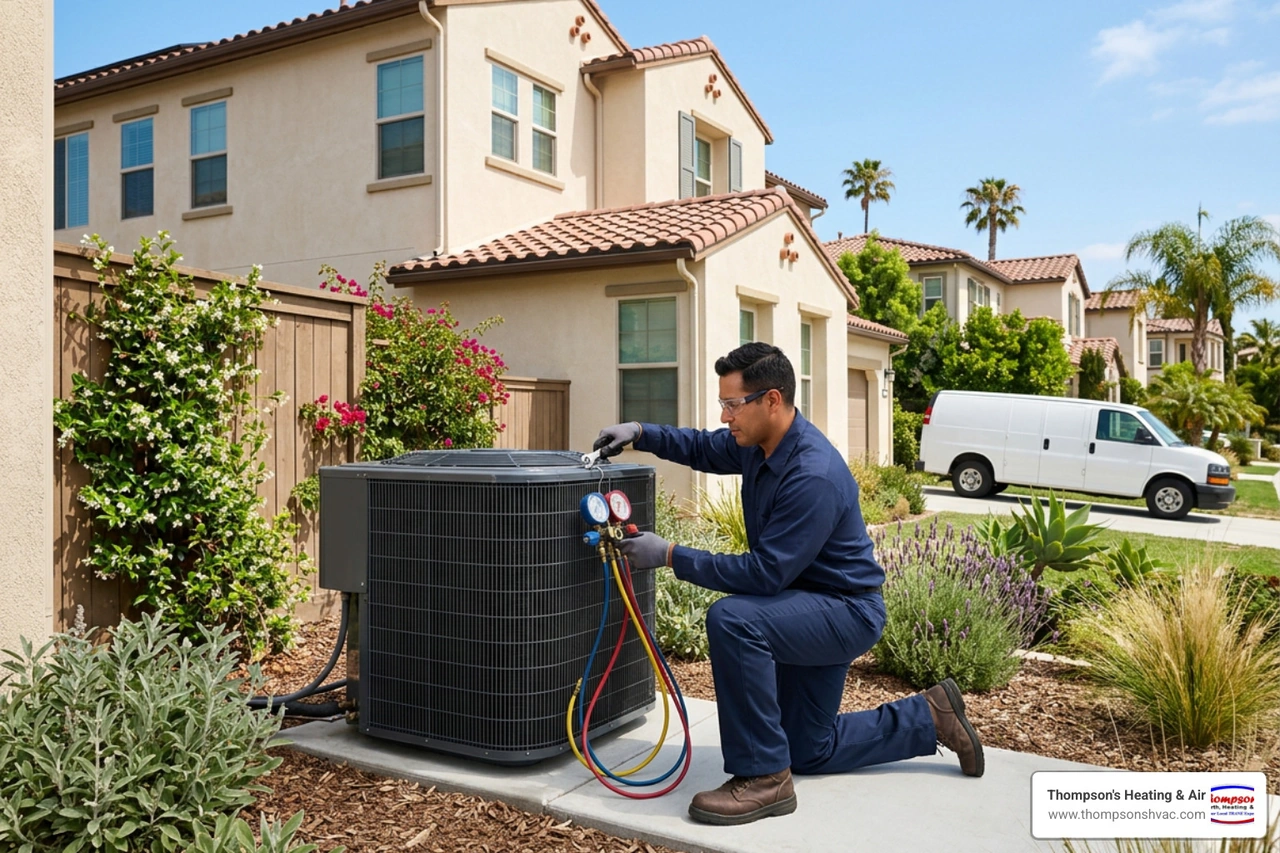
What an HVAC Maintenance Plan Actually Includes (And Why It Matters)
What an HVAC maintenance plan includes is one of the most important things to understand before signing any service agreement — and the short answer is: more than most homeowners expect.
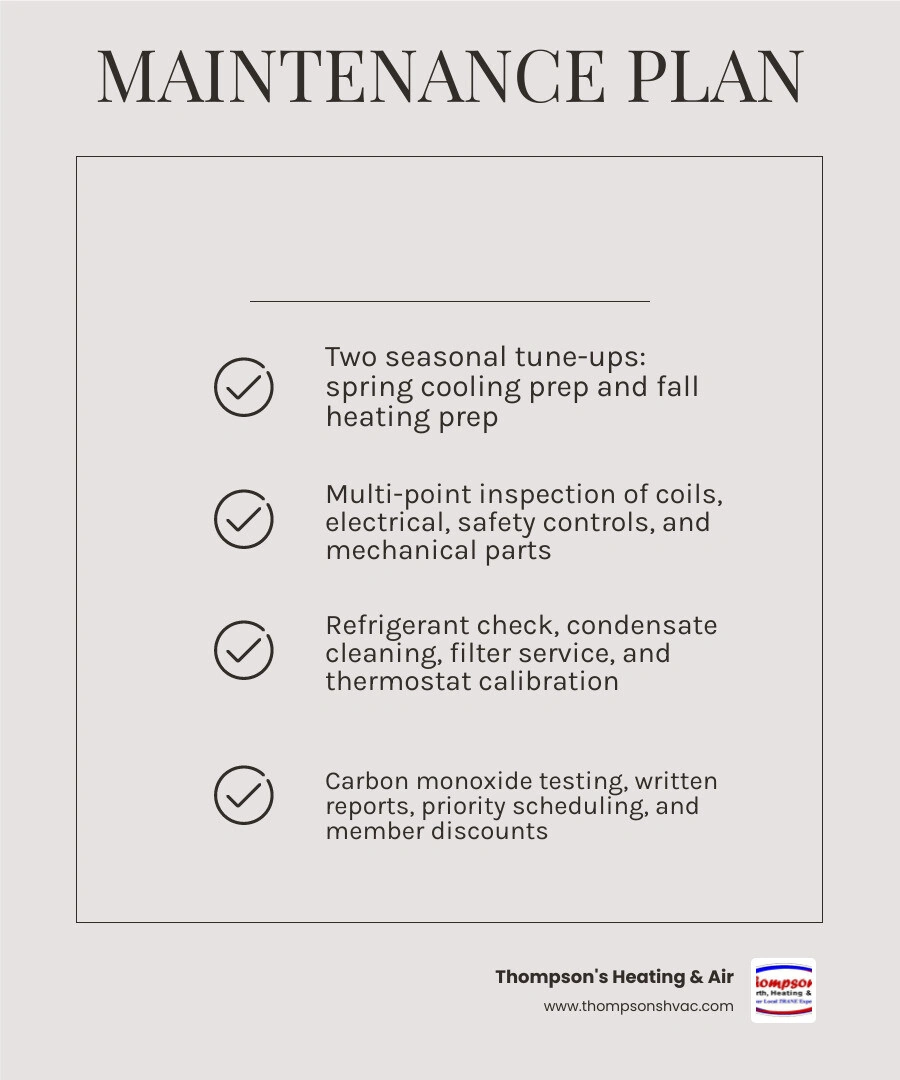
Here is a quick overview of what a standard HVAC maintenance plan typically covers:
• Two seasonal tune-ups per year — one in spring (cooling prep) and one in fall (heating prep)
• Multi-point inspection of electrical connections, safety controls, and mechanical components
• Coil cleaning — both condenser and evaporator coils
• Refrigerant level check and pressure measurement
• Condensate drain cleaning to prevent water damage and mold
• Filter inspection or replacement
• Thermostat testing and calibration
• Carbon monoxide and heat exchanger inspection during heating visits
• Written service report after each visit
• Priority scheduling and repair discounts for plan members
Most professional tune-up visits cover around 30 separate procedures and take 60 to 90 minutes per system.
Your HVAC system is one of the largest investments in your home. In Woodland, CA, where summers push temperatures well past 100°F and winters demand reliable heat, skipping routine maintenance is a gamble most homeowners cannot afford. A well-maintained system can last 15 to 20 years — while a neglected one may fail in 10 to 12. Regular professional service also keeps energy bills in check, since a poorly maintained system can lose up to 5% of its efficiency every single year without it.
A maintenance plan takes the guesswork out of caring for your heating and cooling system. Instead of waiting for something to break, you get scheduled, proactive service that catches small problems before they turn into expensive emergencies.
Basic what does an hvac maintenance plan include terms:
• how a maintenance plan extends equipment life
• is an hvac maintenance plan worth it
What is an HVAC Maintenance Plan and How Does It Work?
An HVAC maintenance plan is a proactive service agreement between you and a licensed heating and cooling contractor. Think of it as a comprehensive wellness plan for your home's climate control system. Instead of waiting for your air conditioner to blow warm air on a scorching July afternoon in Davis or Winters, you enroll in a plan that guarantees scheduled, preventative maintenance visits throughout the year.
Unlike reactive repairs, which only address problems after they have caused a system shutdown, a maintenance plan is designed to optimize system efficiency, ensure safe operation, and catch minor component wear before it cascades into a major breakdown.

When you enroll, we keep track of your service schedule and reach out to book your appointments during the transition seasons (spring and fall). This prevents you from forgetting this crucial chore amidst a busy schedule.
To truly understand the value of these agreements, it helps to read about whether is an hvac maintenance plan worth it for your specific household needs.
Understanding what does an hvac maintenance plan include versus a warranty
It is common for homeowners in Yolo County to confuse a maintenance plan with an equipment warranty or a home warranty. However, these three programs serve entirely different purposes, and relying on one to do the job of the other can lead to unexpected out-of-pocket expenses.
• Manufacturer Equipment Warranty: When you install a new heating and cooling system, the manufacturer (such as Carrier, Trane, or Lennox) provides an equipment warranty. This warranty typically covers the cost of replacement parts if a component fails due to a manufacturing defect within a specific timeframe (often 5 to 10 years). However, there is a major catch: almost all manufacturer warranties explicitly require proof of regular professional maintenance to remain valid. If your compressor fails but you cannot produce documented service reports showing annual tune-ups, the manufacturer can—and likely will—deny your warranty claim.
• Home Warranty: A home warranty is a broad, third-party service contract that covers various home systems and appliances (like plumbing, electrical, and HVAC) when they break down. While it sounds convenient, home warranties do not include preventative maintenance. They only kick in after a failure occurs, often require a service fee for every visit, and frequently feature long wait times for contractor dispatch and extensive coverage exclusions.
• HVAC Maintenance Plan: A maintenance plan is a local service agreement focused purely on prevention, safety, and optimization. It does not replace your manufacturer warranty; rather, it acts as the "insurance policy" that keeps that warranty active. It provides the hands-on routine service, systematic cleaning, and professional safety checks that home warranties and manufacturer warranties completely exclude.
What does an HVAC maintenance plan include for seasonal tune-ups?
A comprehensive maintenance plan is built around seasonal tune-ups. Because your system's demands change dramatically between the hot dry valley summers and the chilly winter months, the tasks performed during these visits are tailored to the upcoming season.
During these visits, a qualified technician performs a thorough multi-point inspection. To understand the deep technical details of these appointments, you can read our complete guide on what does an hvac maintenance visit include.
To give you a clear picture of how these visits differ, here is a comparison of the primary tasks performed during your spring and fall appointments:
• Condenser coil deep cleaning — Fall Heating Maintenance Tasks: Heat exchanger safety inspection
• Evaporator coil inspection — Fall Heating Maintenance Tasks: Carbon monoxide safety testing
• Refrigerant level and pressure check — Fall Heating Maintenance Tasks: Gas valve and gas line leak checks
• Condensate drain line flush — Fall Heating Maintenance Tasks: Burner assembly cleaning and adjustment
• Compressor electrical testing — Fall Heating Maintenance Tasks: Flue exhaust and venting system check
• Capacitor capacitance measurement — Fall Heating Maintenance Tasks: Ignition system and pilot assembly check
Spring and summer cooling checklist
When we perform your spring cooling tune-up, our goal is to prepare your air conditioner or heat pump to battle the intense Northern California summer heat. Here are the critical components we service:
• Condenser Coils: The outdoor condenser unit is exposed to dirt, dust, pollen, and agricultural debris common in Yolo County. Dirt acts as an insulator, trapping heat inside the coils and forcing your compressor to work much harder to cool your home. We wash and clear these coils to ensure optimal heat transfer.
• Refrigerant Levels: We measure refrigerant pressures, checking for superheat and subcooling to ensure the system has the precise charge specified by the manufacturer. Low refrigerant indicates a leak, which can cause evaporator coils to freeze and eventually destroy the compressor.
• Electrical Connections: We inspect all wiring, tighten loose connections, and measure the voltage and amperage draw of motors. We also test the capacitors—which act as starting batteries for your system—since failing capacitors are a leading cause of emergency summer service calls.
• Condensate Drain: As your AC removes humidity from the air, moisture collects in a drain pan and flows out through a condensate line. We flush this line to clear algae, dust, and sludge, preventing water backups that can cause severe ceiling and drywall damage.
• Blower Motor: We check the blower wheel, measure static pressure (the "blood pressure" of your duct system), and lubricate any moving parts to ensure smooth, quiet airflow throughout your home.
Fall and winter heating checklist
As the hot valley days give way to cool autumn nights, the focus shifts to safety, combustion efficiency, and reliable heating. Our fall heating tune-up includes:
• Heat Exchanger Inspection: This is the most critical safety step. We inspect the heat exchanger cells for microscopic cracks, rust, or corrosion. A cracked heat exchanger can allow toxic carbon monoxide gas to leak directly into your home's air supply.
• Carbon Monoxide Testing: We run specialized combustion analysis equipment to ensure your furnace is burning gas cleanly and safely, verifying that carbon monoxide levels are well within safe thresholds.
• Gas Valves and Lines: We check gas connections and valves for leaks using electronic leak detectors, ensuring there are no hazardous fuel leaks in or around your heating unit.
• Burner Cleaning: Over time, soot and dust can build up on the burners, leading to inefficient combustion, delayed ignition, and uneven heating. We clean and adjust the burners for a clean, blue flame.
• Safety Controls: We test the limit switches, flame sensors, and thermocouple safety devices. These controls are designed to shut the system down instantly if an unsafe condition—such as overheating or a gas backup—is detected.
The Key Benefits of Enrolling in a Maintenance Agreement
Enrolling in an HVAC maintenance plan is an investment that pays dividends in comfort, safety, and financial savings. When you consider the unique climate of Yolo County, the benefits of regular hvac maintenance in hot dry valley environments become even more apparent.
Here are the primary advantages you enjoy as a plan member:
• Significant Energy Savings: Dirt and neglect force your system to run longer and work harder to achieve your desired indoor temperature. According to the Department of Energy, regular preventative maintenance can improve system operating efficiency by 15% to 25%. This translates directly into lower monthly utility bills.
• Extended Equipment Lifespan: Heating and cooling systems are mechanical machinery with moving parts. Just like changing the oil in your car prevents engine failure, regular lubrication, cleaning, and electrical calibration prevent premature wear. A well-maintained system easily lasts 15 to 20 years, whereas a neglected system often requires complete replacement in just a decade.
• Priority Scheduling: When temperatures soar to 105°F in Woodland or Natomas, HVAC companies are flooded with emergency repair calls. As a maintenance plan member, you bypass the standard waiting line. You receive priority scheduling, ensuring a technician is dispatched to your home quickly during peak demand periods.
• Exclusive Discounts: Most plans include member-only perks, such as discounts on diagnostic fees, reduced rates on parts and labor for repairs, and waived after-hours emergency fees.
• Improved Indoor Air Quality: Dust, pet dander, and mold spores naturally accumulate inside your system's air handler. During routine maintenance, we clean internal components and manage your filtration, keeping your indoor air cleaner and healthier for your family.
How regular maintenance prevents emergency repairs
The vast majority of emergency HVAC breakdowns are completely preventable. They are usually caused by minor, inexpensive issues that were left ignored for too long.
For example, a dirty air filter restricts airflow, which causes the indoor evaporator coil to drop below freezing. This ice buildup blocks airflow entirely, forcing liquid refrigerant back into the compressor. The compressor—a highly expensive component—eventually seizes under the strain. What could have been prevented with a simple filter swap and coil cleaning during a routine visit turns into an expensive, stressful emergency replacement in the middle of a heatwave.
By identifying worn capacitors, cleaning dirty burners, clearing drain lines, and correcting minor electrical issues early, preventative maintenance stops the domino effect of component wear, keeping your system operating reliably when you need it most.
Understanding Plan Tiers, Exclusions, and Customer Responsibilities
Most HVAC companies offer tiered maintenance plans to accommodate different household budgets and system ages. A basic tier might cover your two annual tune-ups and a small discount on repairs. A mid-tier plan often adds priority scheduling and waived diagnostic fees. Premium tiers may include full parts and labor coverage, complimentary accessories maintenance (like humidifiers or air purifiers), or loyalty credits that accumulate over time to help offset the cost of a future system replacement.
To keep your home running smoothly between professional visits, it is helpful to review our guide on how to maintain your heating and cooling system.
What is typically excluded from a standard plan?
While a maintenance plan provides robust protection, it is not an all-inclusive insurance policy. It is vital to understand what is typically excluded from a standard service agreement:
• Major Repairs and System Replacements: A maintenance plan covers the labor to inspect, clean, and tune your system. It does not cover the cost of replacing major components (like a cracked heat exchanger or a failed compressor) unless you are enrolled in a premium, fully comprehensive parts-and-labor plan.
• Ductwork Sealing and Repairs: Maintenance plans focus on the heating and cooling equipment itself. Sealing duct leaks, repairing collapsed flex ducts, or performing professional duct cleaning are specialized services that require separate agreements.
• Refrigerant Recharging: Checking refrigerant pressures is included, but if your system is low, finding the leak and adding new refrigerant is an additional service.
• Pre-Existing Conditions: If your system is already broken or failing when you first sign up for a plan, the initial repair work required to get the system back into safe, operational condition is not covered under the maintenance agreement terms.
Knowing what does an hvac maintenance plan include for homeowner tasks
A professional maintenance plan is a partnership between you and your service provider. To ensure your system operates at peak efficiency year-round, homeowners have a few simple but critical responsibilities:
• Regular Filter Replacement: While technicians inspect and replace filters during their bi-annual visits, standard 1-inch to 4-inch filters need to be checked and replaced every 1 to 3 months, especially if you have pets or suffer from allergies.
• Maintaining Outdoor Clearance: Keep shrubs, plants, weeds, and stored items at least 24 inches away from your outdoor condenser unit. This ensures the unit has adequate airflow to dump heat outside.
• Keeping Vents Clear: Ensure that return air grilles and supply registers inside your home are not blocked by furniture, heavy drapes, or rugs. Restricted airflow strains the system.
• Prompt Reporting: If you notice unusual noises, strange odors, inconsistent temperatures, or a sudden spike in your utility bills, do not wait for your next scheduled maintenance visit. Report the issue promptly so it can be addressed before causing secondary damage.
Frequently Asked Questions About HVAC Maintenance Plans
How often should my heating and cooling system be serviced?
At a minimum, your HVAC system should be professionally serviced twice per year. We recommend scheduling your air conditioning tune-up in the spring (March through May) before the blistering summer heat arrives, and your heating tune-up in the fall (September through November) before winter temperatures drop.
If you have a heat pump system, twice-annual service is especially critical. Because heat pumps provide both heating and cooling, they run virtually year-round without an off-season, meaning they accumulate wear and tear twice as fast as single-season systems.
Will a maintenance plan keep my manufacturer warranty valid?
Yes. Almost all major HVAC manufacturers require documented annual professional maintenance as a condition of their parts warranties. If a major component fails during the warranty period, the manufacturer will often request copies of your service records to prove the system was not neglected. Enrolling in a maintenance plan ensures you automatically receive the professional documentation and written service reports needed to keep your warranty fully compliant.
Can I perform HVAC maintenance tasks myself?
While there are several important DIY tasks you should handle—such as replacing your air filters, keeping the outdoor unit clear of leaves and debris, and flushing your condensate drain with vinegar—comprehensive HVAC maintenance must be performed by a licensed professional.
Tasks such as measuring electrical capacitance, handling chemical refrigerants (which requires EPA 608 certification), checking gas valve pressures, and performing combustion analysis require specialized diagnostic tools, safety training, and technical expertise. Attempting these tasks yourself can void your warranty, damage your equipment, or expose your household to safety hazards like high-voltage electrical shocks or carbon monoxide leaks.
Conclusion
An HVAC maintenance plan is the single most effective way to protect your home comfort, lower your monthly energy bills, and avoid the stress of unexpected system breakdowns. By investing in preventative care, you ensure your heating and cooling system is prepared to handle the extreme seasonal shifts of Northern California.
At Thompson's Heating & Air, we have been keeping families comfortable throughout Woodland, CA, and Yolo County since 1992. As a family-owned business, we pride ourselves on delivering reliable, honest service that earns us 5-star reviews. Our comprehensive Maintenance Plan is designed to keep your system running cleanly, safely, and efficiently year-round.
Whether you need a quick seasonal tune-up or comprehensive HVAC Maintenance and Repair services, our team of experienced, certified technicians is here to help.
Don't wait for the next heatwave or winter cold snap to test your system's limits. Schedule your seasonal tune-up with Thompson's Heating & Air today and experience the true peace of mind that comes with professional, preventative care.



.avif)
.avif)
.png)
