
Maintenance Plans: Giving Your Equipment a Longer Lease on Life


Why a Maintenance Plan Is the Key to Longer-Lasting HVAC Equipment
How a maintenance plan extends equipment life comes down to one core idea: small, regular interventions stop minor issues from growing into major failures that shorten your system's lifespan.
Here's a quick breakdown of how it works:
1. Reduces friction and heat - Lubrication of moving parts like blower motors and fan bearings lowers thermal stress that degrades components over time.
2. Catches problems early - Routine inspections identify worn parts, loose electrical connections, and low refrigerant before they trigger cascading failures.
3. Maintains airflow efficiency - Clean coils and filters prevent the system from overworking, which cuts energy draw and mechanical strain.
4. Protects your warranty - Most manufacturers require documented annual professional service to honor coverage on major components like compressors.
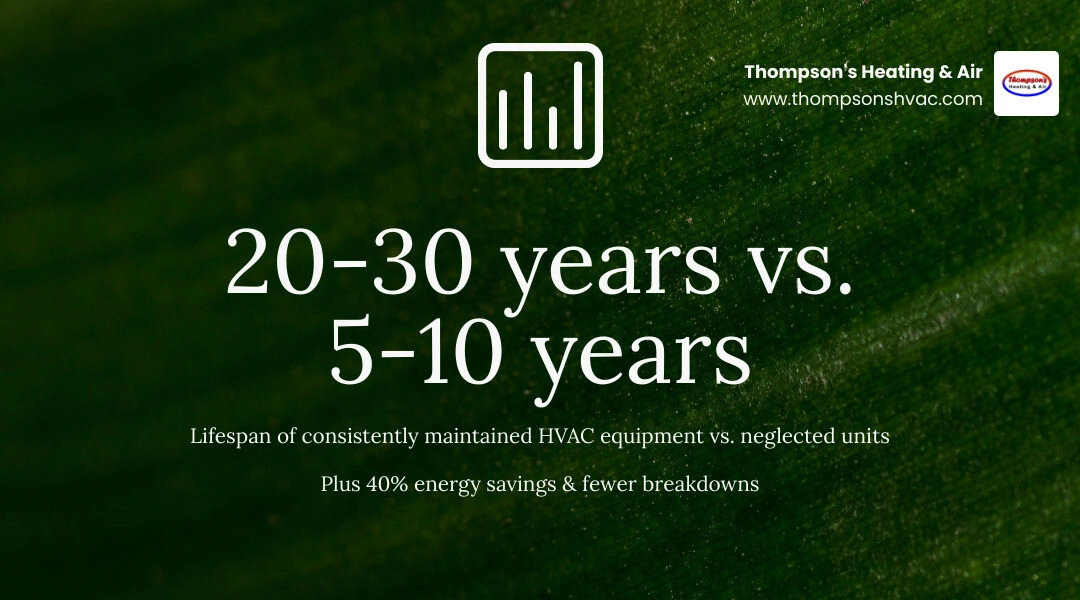
5. Extends usable lifespan - Industry data shows that consistently maintained equipment can last 20 to 30 years, while neglected units often fail within 5 to 10 years.
For homeowners and business owners in Woodland, CA and across Yolo County, this matters more than most places. Between scorching summer heatwaves and dusty agricultural air, your HVAC system is under constant environmental pressure. Without a structured maintenance plan, that pressure quietly shortens the life of your equipment - often without any obvious warning signs until something breaks down completely.
The difference between a system that lasts 12 years and one that lasts 25 years is rarely about the brand or the model. It's almost always about how consistently it was cared for.
Understanding How a Maintenance Plan Extends Equipment Life
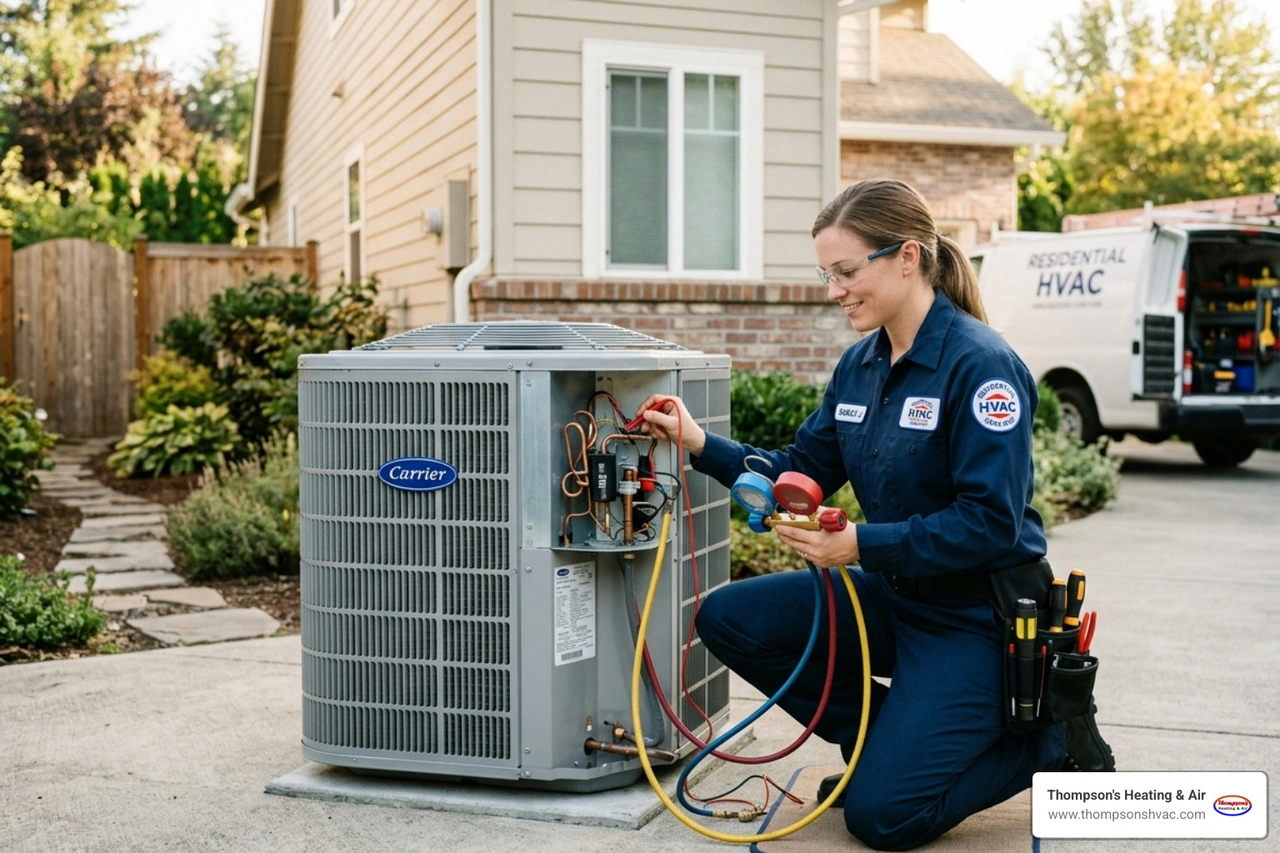
When we talk about how a maintenance plan extends equipment life, we are really talking about the shift from "reactive" to "proactive" care. Reactive maintenance is the "if it ain't broke, don't fix it" philosophy. Unfortunately, in mechanical systems, by the time something feels "broken" to a homeowner, internal damage has often been occurring for months.
A Maintenance Plan acts as a protective shield for your investment. Instead of waiting for a total system shutdown during a 105-degree day in Davis or Dixon, a structured plan schedules service during the mild "shoulder" seasons. This proactive scheduling ensures that your system is never running under peak stress while handicapped by dirty components or failing electrical parts. By consistently returning the equipment to its "factory-fresh" state, we effectively slow down the clock on mechanical degradation.
Reducing Friction and Heat Through Proper Lubrication
The two biggest enemies of any mechanical system are friction and heat. Inside your air conditioner or furnace, blower motors and fan bearings are constantly spinning. Over time, the factory lubricant dries out or becomes contaminated with dust.
When lubrication fails, friction increases. This causes the motor to pull more "amps" (electricity) to maintain its speed. This extra electrical draw generates intense heat radiation, which can eventually melt the thin insulation on motor windings. Through AC Maintenance, we ensure these moving parts are properly greased and oiled. This simple act reduces thermal stress and prevents the motor from burning out prematurely, potentially saving you from a very expensive replacement.
Preventing the "Domino Effect" of Component Failure
Mechanical systems are interconnected. If one small part begins to fail, it places an unfair burden on every other component. We call this the "domino effect" of collateral damage. For example, a worn-out capacitor—a small, inexpensive part that helps start your motor—might struggle to provide enough power. If left unaddressed, the motor has to work twice as hard to start, leading to a burnt-out compressor.
By understanding How to Prevent HVAC Emergencies with Maintenance, you can stop these cascades. Replacing a $20 belt or a $50 capacitor during a routine check is a minor task that prevents the destruction of a $2,000 motor or compressor. Consistency ensures that system reliability remains high throughout the year.
Key Components of an Effective Longevity Strategy
An effective longevity strategy isn't just about a quick "look-over." It involves a deep dive into the physics of the machine. At Thompson's Heating & Air, we focus on the specific vulnerabilities that lead to early retirement for HVAC units in Northern California.
One of the most overlooked aspects of Heating Maintenance is the tightening of electrical connections. Because of the heat-induced expansion and contraction of wires (the "thermal cycle"), electrical terminals can physically loosen over time. Loose wires cause "arcing," which can fry expensive control boards. Coupled with thermostat calibration to ensure the system isn't "short-cycling" (turning on and off too frequently), these technical adjustments are vital for long-term health.
How a Maintenance Plan Extends Equipment Life in Dusty Climates
Living in Yolo County means dealing with significant amounts of agricultural dust, especially during harvest seasons in places like Arbuckle, Zamora, and Knights Landing. This dust acts as a literal blanket of insulation on your coils.
When your evaporator or condenser coils are coated in grime, they can't exchange heat efficiently. This forces your blower motor to strain against the resistance. If you have a Ductless Maintenance routine, you know that keeping these small, high-efficiency filters clean is the only way to maintain the airflow required for the system to survive. High filter efficiency and clear airflow are the primary ways we prevent the blower motor from "suffocating" under the weight of local dust.
Mitigating Environmental Stress in Woodland, CA
Our local climate is beautiful, but it's tough on machinery. Summer heatwaves in Winters and Esparto can keep AC units running for 12 to 18 hours straight. Conversely, winter frost in the Capay Valley puts a heavy load on heating elements.
A solid Heat Pump Maintenance plan includes clearing outdoor debris—like leaves, twigs, and cobwebs—that can trap moisture against the metal casing, leading to corrosion. We also apply rust inhibitors and check refrigerant levels. If refrigerant is even slightly low, the system has to run longer to reach the desired temperature, which exponentially increases the wear and tear on the compressor.
The Quantifiable Benefits of Proactive Care
The data is clear: maintenance isn't a luxury; it's a financial strategy. According to industry reports from Honeywell and the Department of Energy, well-executed preventive maintenance can reduce overall repair needs by 25% and cut unplanned downtime by up to 40%.
• Average Lifespan — Neglected System: 5–12 Years — Maintained System: 20–30 Years
• Energy Efficiency — Neglected System: Drops 5% per year — Maintained System: Stays near peak
• Monthly Bill Impact — Neglected System: Up to 40% higher — Maintained System: Optimized/Lower
• Repair Frequency — Neglected System: High (Emergency) — Maintained System: Low (Scheduled)
• Warranty Status — Neglected System: Likely Voided — Maintained System: Fully Protected
Investing in HVAC Maintenance and Repair provides a massive return on investment. A well-maintained system can save up to 40% on energy consumption because clean, lubricated components draw significantly less amperage to do the same amount of work.
Early Detection and the Role of Modern Technology
In May 2026, we have more tools than ever to track your system's "medical history." Modern diagnostic tools allow us to perform vibration analysis and thermal scanning. If a bearing is starting to fail, it will vibrate at a specific frequency or generate a "hot spot" that we can see with infrared cameras long before the part actually snaps.
Following a professional HVAC Service Frequency Guide allows us to use these technologies to spot "unusual noises" or performance dips. This predictive approach means we aren't just fixing what's broken; we are predicting what might break and stopping it in its tracks.
Best Practices for Maximizing Your System's Years
While professional service is the backbone of longevity, there are several best practices you can adopt at home to help. First, keep an "Asset Inventory." Know the age, model number, and service history of your unit. This helps us spot trends—for instance, if your system is blowing through filters faster than normal, it might indicate a ductwork leak.
Secondly, timing is everything. Don't wait for the first 100-degree day in West Sacramento to call us. Use The Woodland Homeowner's Guide to a Happy Heater to stay ahead of the seasons. Scheduling your cooling tune-up in March or April and your heating tune-up in September or October ensures your system is ready for the "marathon" of the peak season.
Why Professional Service is Essential for How a Maintenance Plan Extends Equipment Life
There are some things a YouTube tutorial simply can't replace. NATE-certified technicians have the specialized instruments required to check refrigerant pressures, measure gas manifold pressure, and conduct safety audits on heat exchangers (checking for deadly carbon monoxide leaks).
Furthermore, How Improperly Sized Systems Shorten Equipment Life is a major issue in many older homes in Rumsey or Brooks. A professional can assess if your system is working too hard because it was poorly installed by a previous owner. Ensuring your system is the right size and has the correct refrigerant charge is the only way to guarantee it reaches that 20-to-30-year milestone.
Frequently Asked Questions about Equipment Longevity
How often should I have my HVAC system maintained in Yolo County?
In our region, we highly recommend biannual service. Because of our high run-hours in the summer and the dusty agricultural environment, a single annual checkup often isn't enough to keep the coils clean and the motors lubricated. We suggest a Spring AC prep and a Fall heating prep. If you live in a particularly high-dust area like Zamora or Yolo, you should also be checking your filters every 30 days.
Does skipping professional maintenance really void my manufacturer warranty?
Yes, in many cases, it does. Most major manufacturers, including Bryant, require proof of annual professional maintenance to honor claims on expensive parts like compressors or heat exchangers. If your system fails in year seven, but you have no documentation of professional service, the manufacturer may deny your claim, leaving you with a massive bill. A maintenance plan provides the "paper trail" you need to keep your warranty valid.
What are the common signs that my equipment is wearing out early?
Keep an eye out for "the big four":
1. Rising utility bills without a change in weather or usage.
2. Frequent cycling, where the system turns on and off every few minutes.
3. Strange odors, like a "burning" smell or a musty "dirty sock" scent.
4. Poor airflow, which usually indicates a clogged coil or a failing blower motor.
Conclusion
At Thompson's Heating & Air, we’ve been part of the Woodland community since 1992. As a family-owned business, we know that your HVAC system is one of the most expensive appliances in your home. Our goal is to make sure you get every possible year of service out of it.
How a maintenance plan extends equipment life is simple science: we reduce friction, eliminate dirt, and stop the "domino effect" of component failure. Whether you are in Davis, Natomas, or Williams, our NATE-certified technicians are ready to provide the 5-star service your home deserves. Don't leave your comfort to chance or wait for a costly breakdown. Protect your investment with professional HVAC Maintenance and Repair and give your equipment the long, healthy life it was designed for.



.avif)
.avif)
.png)
