Why Oversized HVAC Systems Waste Energy and Your Hard-Earned Cash

Why Improperly Sized HVAC Systems Are Quietly Destroying Equipment in Woodland, CA
How improperly sized systems shorten equipment life comes down to one core problem: your HVAC unit is constantly fighting against itself. When a system is too big, it turns on and off dozens of times a day, wearing out components far faster than normal. When it's too small, it runs nonstop, overheating motors and compressors until they give out. Either way, what should last 15 to 20 years may fail in half that time.
Here's a quick breakdown of how wrong sizing damages your system:
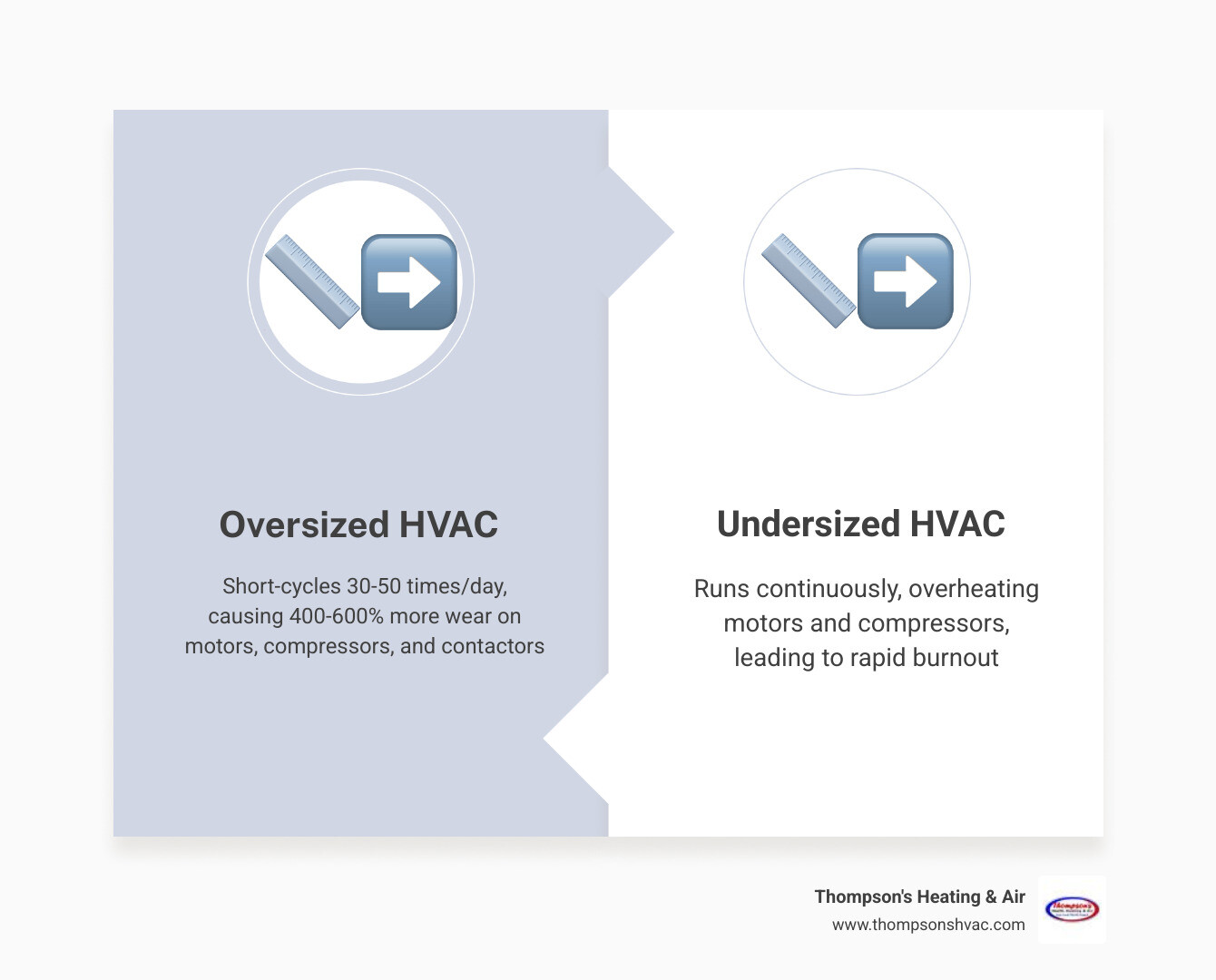
• Oversized systems short-cycle 30 to 50 times per day (versus a normal 6 to 8), creating up to 400-600% more wear events on motors, compressors, and contactors
• Undersized systems run continuously, overheating components and causing early motor and compressor burnout
• Both scenarios can cut a system's expected lifespan from 15-20 years down to as few as 8-10 years
• Poor humidity control from either sizing mistake can lead to mold growth and accelerated coil damage
• Higher energy bills signal that the system is working harder than it should — and that wear is building up fast
Over 60% of residential HVAC systems are incorrectly sized, according to Department of Energy data. That means the majority of homeowners in Woodland and across Northern California may be unknowingly shortening the life of a system they spent thousands of dollars on.
For homeowners and business owners in Yolo County already dealing with hot summers and unpredictable energy costs, an improperly sized system doesn't just mean discomfort — it means paying for repairs and replacements years sooner than you should have to.
Understanding How Improperly Sized Systems Shorten Equipment Life
When we talk about HVAC "size," we aren't talking about the physical dimensions of the unit sitting in your backyard or attic. We are talking about capacity—the system's ability to remove heat (in the summer) or add heat (in the winter) to your home. In the HVAC industry, we measure this in BTUs (British Thermal Units) or tons.
The mechanical stress caused by a mismatch between this capacity and your home’s actual needs is the primary reason how improperly sized systems shorten equipment life. Think of it like a marathon runner. A properly sized system is like a runner maintaining a steady, healthy pace. An oversized system is like a sprinter who runs full tilt for 100 yards, stops abruptly, and then tries to sprint again every five minutes. An undersized system is like a runner who is forced to jog for 48 hours straight without a single break. Neither of those runners is going to stay healthy for long.
In places like Woodland and Davis, CA, where our summer temperatures regularly climb into the triple digits, your system is already under pressure. Under normal conditions, a well-maintained system should last between 15 and 20 years. However, when improper sizing enters the equation, component fatigue sets in much earlier.
Proper Hvac Installation Maintenance Repair must begin with an accurate assessment of your home's thermal load. Without it, the system commissioning process—the critical first few hours where we calibrate airflow, refrigerant levels, and electrical pressures—cannot overcome the fundamental flaw of a unit that is simply the wrong size. When the "heart" of your system (the compressor) is forced to operate outside its design parameters, it doesn't just lose efficiency; it loses years of its life.
The Destructive Cycle of Oversized HVAC Units
It is a common myth in Northern California that "bigger is better" when it comes to air conditioning. Many people believe that a larger unit will cool the house faster and work less. In reality, the opposite is true. This leads to a phenomenon known as "short cycling."
Short cycling occurs when a powerful unit blasts a home with cold air so quickly that the thermostat reaches its target temperature in just a few minutes. The system then shuts down. However, because the unit didn't run long enough to circulate the air or remove humidity, the house warms back up almost immediately, and the system kicks on again.
This is a financial and mechanical disaster. The most stressful moment for any motor is the startup. During startup, an HVAC system can draw 6 to 10 times its normal operating current. If you are looking for a Heating And Air Estimate, it is vital to ensure the professional isn't just looking at your square footage, but at the actual cooling load to avoid this cycle.
Beyond the mechanical wear, oversized units create a humidity imbalance. An air conditioner needs to run for at least 10 to 15 minutes for the evaporator coil to get cold enough to begin pulling moisture out of the air. Short cycles mean the coil stays "dry," leaving your home feeling clammy and "sticky" even if the air is cool. This excess moisture can lead to mold risks and accelerate the corrosion of your internal components.
Symptoms Comparison Table
• Run Time — Oversized System: Cycles on/off every 5-10 mins — Undersized System: Runs almost 24/7
• Indoor Humidity — Oversized System: High (Sticky/Clammy) — Undersized System: Low (Dry/Dusty)
• Energy Bills — Oversized System: Spikes due to startup draw — Undersized System: High due to constant running
• Lifespan — Oversized System: Reduced by 50% (8-10 years) — Undersized System: Reduced by 30-40%
• Temperature — Oversized System: Wide swings/Uneven — Undersized System: Never reaches set point
How Short Cycling Acts as a Catalyst for How Improperly Sized Systems Shorten Equipment Life
To understand why short cycling is so deadly for your equipment, you have to look at the electrical components. The contactors and capacitors in your outdoor unit act like the "ignition" for your compressor and fan. These parts have a finite number of "starts" in their lifespan.
When a system starts 30 to 50 times a day instead of the standard 6 to 8, you are essentially putting 400% to 600% more wear on these parts. This leads to:
1. Motor Fatigue: The windings inside the motor overheat from constant high-voltage surges.
2. Contactor Wear: The electrical points can "pit" or weld shut, leading to expensive emergency repairs.
3. Capacitor Failure: These components provide the "kick" to start the motor; frequent starts cause them to leak or lose their charge prematurely.
Why Undersized Systems Burn Out Faster
On the other side of the coin, we have the undersized system. This often happens after a homeowner adds an extension to their house in Winters or Dixon without upgrading their HVAC, or if a contractor tries to save money by installing a smaller unit than required.
An undersized system is a "constant hustler." Because it lacks the "muscle" to reach the thermostat's set point on a 100-degree Woodland afternoon, it simply never turns off. This continuous operation leads to massive heat buildup in the compressor and fan motors.
One of the most common issues we see during Hvac Maintenance And Repair calls for undersized units is a frozen evaporator coil. You might think a unit running nonstop would be "super cold," but when a system is overworked, the refrigerant pressures can drop, causing the moisture on the coils to turn into a block of ice. This restricts airflow and forces the fan motor to work against heavy resistance until it eventually burns out.
The Hidden Mechanical Strain of How Improperly Sized Systems Shorten Equipment Life
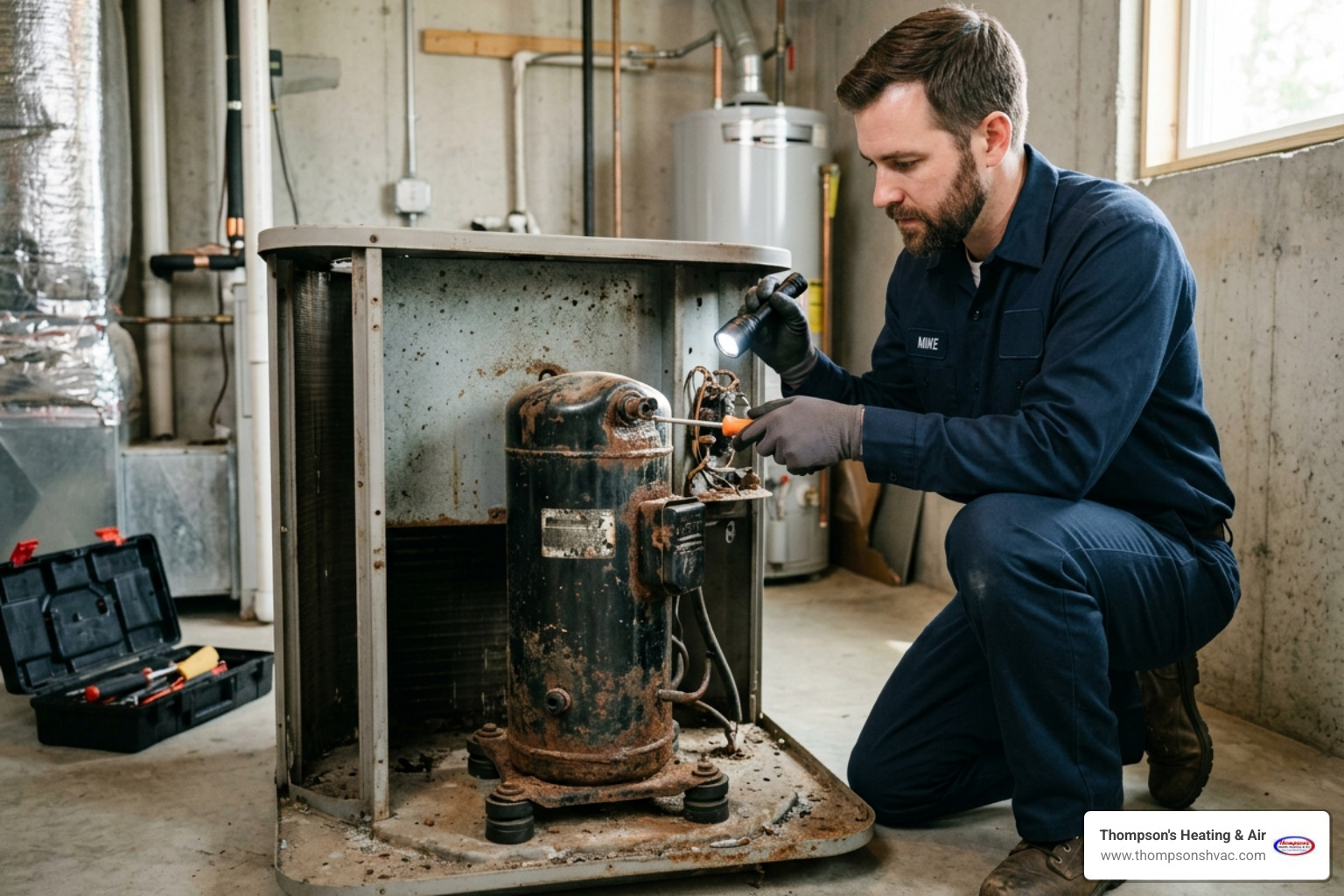
The compressor is the most expensive part of your HVAC system, often called the "heart." It relies on specialized oil to keep its internal bearings lubricated. When a system is undersized and runs constantly in the Northern California heat, the compressor can overheat to the point where this oil loses its viscosity (it thins out).
Without proper lubrication, the internal bearings begin to grind. This creates tiny metal shavings that circulate through the entire system, eventually leading to a total "slugging" or burnout of the compressor. This is a classic example of how improperly sized systems shorten equipment life—the system doesn't just stop working; it effectively destroys itself from the inside out.
The Importance of Manual J Load Calculations in Woodland, CA
So, how do we avoid these nightmares? It starts with moving away from the "Square Footage Myth." Many contractors still use a "rule of thumb" like "one ton for every 500 square feet." In a modern home in Woodland or West Sacramento, that rule is often wrong.
A true professional uses a Manual J Load Calculation. This is a detailed scientific assessment that looks at:
• Insulation levels: How well does your attic and wall insulation hold in the air?
• Window orientation: How much "solar gain" do you get from south-facing windows during a July afternoon?
• Building materials: Is your home brick, wood, or stucco?
• Occupancy: How many people live in the home and generate heat?
Once the Manual J tells us exactly how much heat your home gains, we use a Manual S calculation to select the specific equipment that matches that load. This ensures the system is "right-sized" for the Woodland climate, ensuring it runs long enough to dehumidify but cycles off often enough to rest.
Properly sizing your system also makes you eligible for various Tax Credits And Rebates. In 2026, many high-efficiency incentives require proof that the system was sized correctly for the home to ensure the energy savings are actually realized.
Frequently Asked Questions about HVAC Sizing
How can I tell if my AC is too big for my house?
The most obvious sign is the "7-minute cycle." If your AC turns on, blasts air, and shuts off in under 10 minutes, it is likely oversized. Other red flags include high indoor humidity (over 50-60%), a "clammy" feeling on your skin, and uneven temperatures where some rooms are freezing while others remain warm because the air didn't have time to circulate.
Does a system that runs constantly always mean it's too small?
Not necessarily. While an undersized capacity is a major cause of constant running, other issues can mimic this. Dirty air filters, leaky ductwork in your crawlspace, or a low refrigerant charge can all make a properly sized system struggle to keep up. This is why a professional diagnostic is essential before assuming you need a larger unit.
Can a smart thermostat fix a sizing issue?
A smart thermostat is a great tool for efficiency, but it cannot change the laws of physics. While you can adjust "cycle protection" settings to prevent a system from turning on and off too rapidly, this is only a temporary band-aid. If the mechanical capacity of the unit doesn't match the thermal load of the house, no amount of software can prevent the long-term wear and tear that leads to premature failure.
Conclusion
At Thompson's Heating & Air, we’ve seen the damage that a "guess" can do to a home's comfort and a family's budget. Since 1992, our family-owned business has focused on precision. We don't just "swap out boxes"; we ensure that every installation in Woodland, Davis, and the surrounding Yolo County communities is engineered for long-term reliability.
How improperly sized systems shorten equipment life is a preventable tragedy. By insisting on a Manual J calculation and choosing a team that prioritizes 5-star service and technical expertise, you can ensure your HVAC system lasts its full 20-year lifespan. Whether you are in Woodland, Winters, or West Sacramento, don't let a sizing mistake waste your hard-earned cash.
Protect your investment with professional HVAC installation and maintenance by contacting Thompson's Heating & Air today. We are here 24/7 to ensure your home stays comfortable for decades to come.



.avif)
.avif)
.png)
