
Warning Signs Your Air Conditioner Is Growing Mold

Is Your HVAC System Making You Sick? Know the Warning Signs
The signs of mold in your HVAC system are something every Woodland, CA homeowner should know — because mold doesn't just sit still. Once it takes hold inside your air handler, ducts, or coils, your system blows spores into every room of your home every time it runs.
Here are the most common warning signs to watch for:
• Musty or earthy odor coming from vents when the system turns on
• Visible dark spots or discoloration around vent covers or on the air handler
• Black dust that reappears on vent covers shortly after cleaning
• Increased allergy or asthma symptoms that improve when you leave home
• Excess condensation or moisture around ducts, vents, or the indoor unit
• Reduced airflow from one or more vents without an obvious cause
• Unexplained fatigue, headaches, or sinus congestion that lingers indoors
Most homeowners don't realize there's a problem until symptoms have been building for weeks. Mold spores are microscopic — you can't see them in the air, but your lungs certainly notice them.
Mold thrives in dark, damp, enclosed spaces, and your HVAC system checks every one of those boxes. The evaporator coil pulls moisture out of the air and drips it into a drain pan. If that pan clogs, or if humidity levels inside your home creep above 60%, you've created ideal conditions for mold to grow and spread.
The good news: caught early, mold in an HVAC system is a manageable problem. The key is knowing what to look for.
5 Common Signs of Mold in Your HVAC System
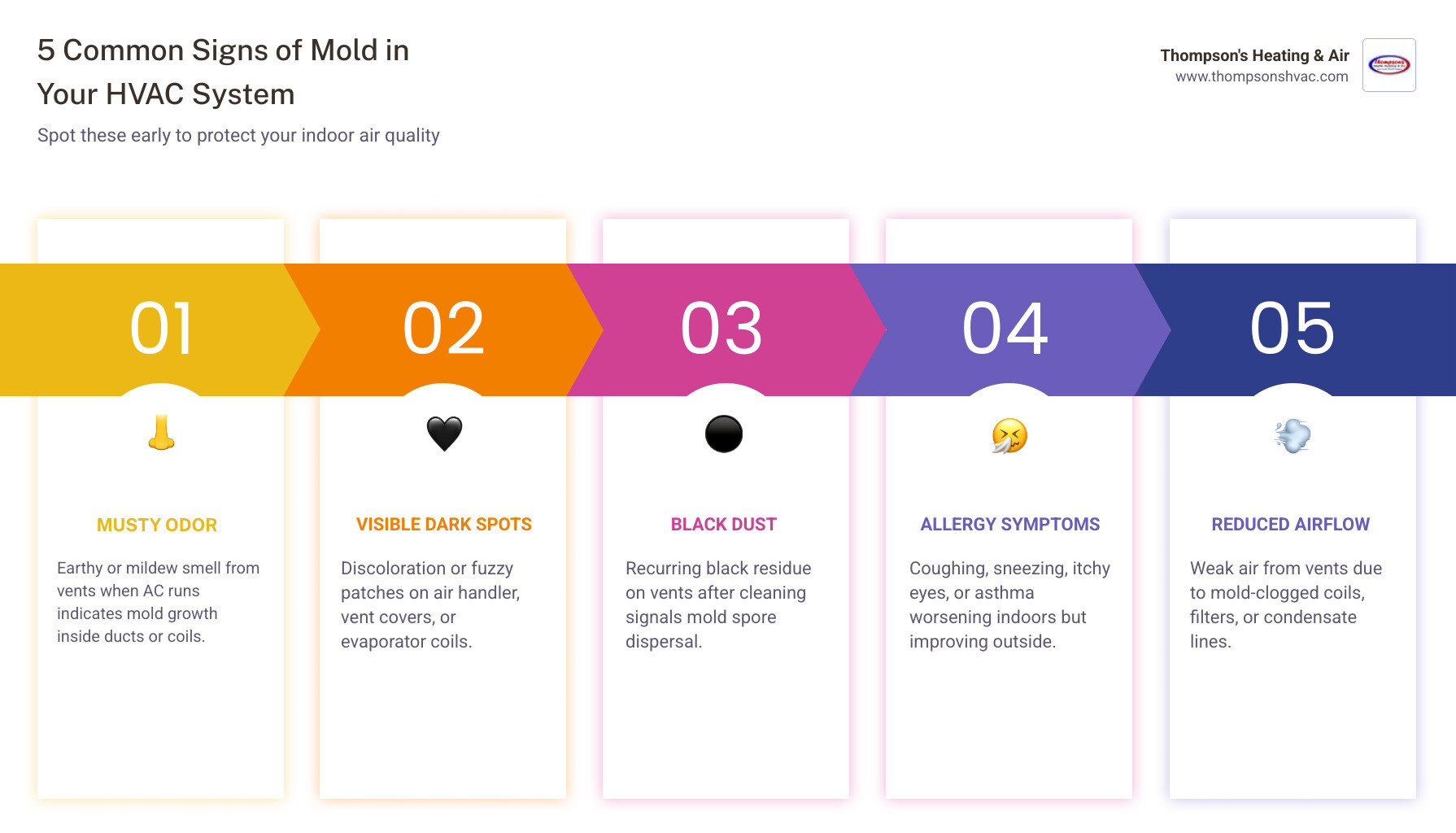
Identifying the signs of mold in your hvac system early can save you from a major headache (both literally and figuratively). As we head into April 2026, the transition from mild spring days to warmer afternoons in Yolo County often means your air conditioner is working harder, creating more condensation and, unfortunately, more opportunities for mold to flourish.
1. Musty or Earthy Smells
The most frequent indicator of a problem is a distinct odor. When mold grows, it releases microbial volatile organic compounds (mVOCs). These gases have a heavy, damp, or earthy scent. If you notice a "dirty sock" smell specifically when the fan kicks on, it’s a strong signal that mold is present on the evaporator coils or deep within the ductwork.
2. Visible Growth on Components
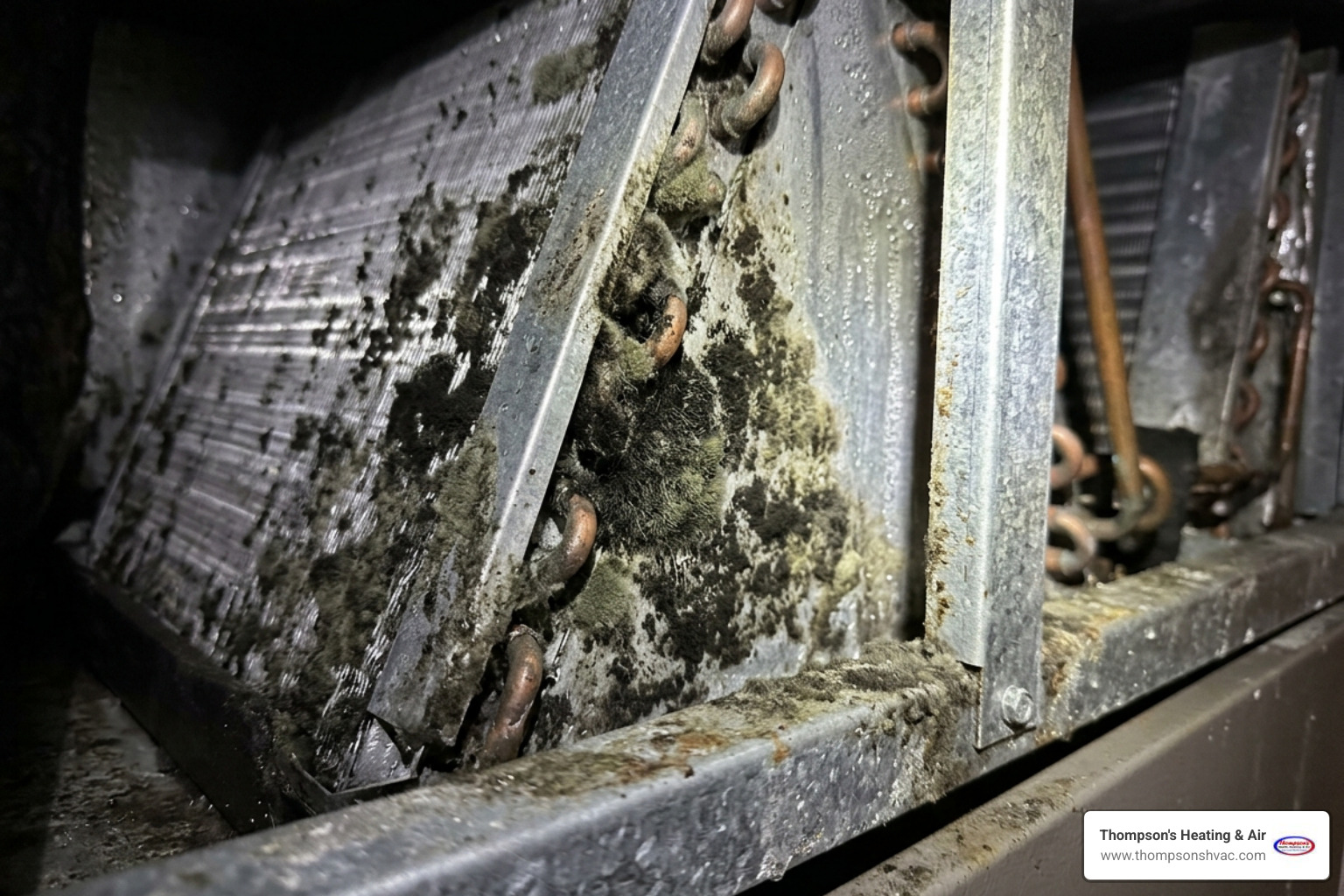
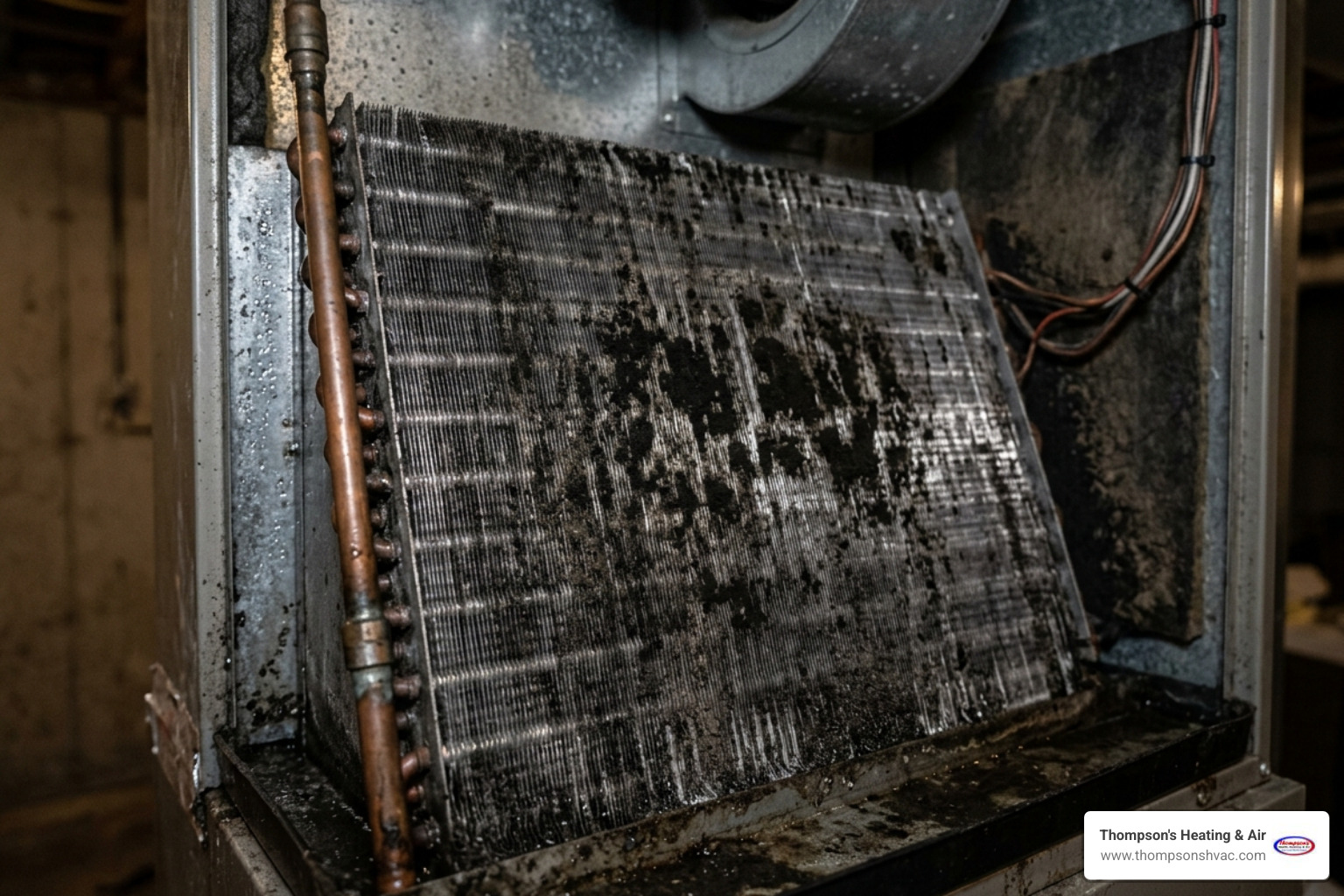
While mold loves to hide, it eventually becomes visible. You might see fuzzy white patches, green streaks, or black spots. This is often found on the air handler itself or around the registers. If you spot growth here, it is almost certain that the internal components are also affected. Regular hvac maintenance and repair is the best way to catch these growths before they become a whole-home contamination issue.
3. Mysterious Black Dust
Have you noticed black, clumpy dust accumulating on your vent covers? If you wipe it away and it returns within a few days, it might not be dust at all. It could be concentrated mold spores or dried microbial growth being pushed out of the ducts. Unlike regular household dust, this "black dust" often feels slightly damp or sticky to the touch.
4. Airflow Restriction
Mold doesn't just contaminate the air; it can physically block it. Significant mold growth on the evaporator coils or inside narrow duct passages can restrict airflow. If your system feels like it’s blowing weaker than it used to, or if some rooms are significantly warmer than others, a biological blockage could be the culprit.
5. Excessive Condensation and Moisture
Mold needs water to survive. If you see standing water in the drain pan, puddles around the indoor unit, or "sweating" ducts, you have a moisture problem. This excess condensation provides the perfect breeding ground for species like Aspergillus or Cladosporium.
Visible Growth and Physical Signs of Mold in Your HVAC System
When inspecting your system, pay close attention to the vent covers. Discoloration here is a major red flag. Mold can appear as slime in the drip pans or as fuzzy patches on the fiberglass insulation inside the air handler.
Clogged condensate lines are a primary cause of these physical signs. When the line that carries water away from your AC gets backed up, that water sits in the dark, warm environment of your attic or closet. If you suspect your system was poorly installed or has been neglected, professional hvac installation maintenance repair is necessary to clear these lines and ensure the unit is draining correctly.
Respiratory Symptoms as Signs of Mold in Your HVAC System
Sometimes, your body knows there is a problem before your eyes or nose do. Because HVAC systems circulate air 24/7, they are incredibly efficient at spreading spores. Common health-related signs of mold in your hvac system include:
• Chronic Coughing and Sneezing: If you find yourself reaching for tissues only when you are at home, the air quality is likely to blame.
• Itchy, Watery Eyes: Spores act as persistent irritants to the mucous membranes.
• Asthma Flare-ups: Mold is a well-documented trigger for asthma and other chronic obstructive pulmonary diseases (COPD).
• Fatigue and Brain Fog: Mycotoxins produced by certain molds can lead to a general feeling of lethargy or "heaviness."
• Sinus Congestion: Persistent "cold-like" symptoms that never seem to go away are a classic sign of poor indoor air quality.
To combat these issues, many Woodland residents turn to advanced indoor air quality products like whole-home air purifiers or HEPA filtration systems.
Why Mold Grows in Woodland Air Conditioning Systems
In Woodland and surrounding areas like Davis and West Sacramento, our climate plays a big role in HVAC health. While we don't have the swampy humidity of the South, our summer cooling season creates significant temperature differentials that lead to condensation.
Mold growth is a simple formula: Moisture + Food + Darkness = Mold.
Your HVAC system provides all three. The "food" is the organic matter found in common household dust—skin cells, pollen, and pet dander—that settles on damp coils and duct walls.
• Humidity Level — Mold-Prone HVAC: Above 60% — Mold-Resistant HVAC: 30% - 50%
• Air Filtration — Mold-Prone HVAC: Standard fiberglass (MERV 1-4) — Mold-Resistant HVAC: High-efficiency (MERV 13+)
• Maintenance — Mold-Prone HVAC: Neglected / Clogged drains — Mold-Resistant HVAC: Annual tune-ups / Clear drains
• System Sizing — Mold-Prone HVAC: Oversized (short-cycling) — Mold-Resistant HVAC: Correctly sized for the home
• Duct Integrity — Mold-Prone HVAC: Leaky or uninsulated — Mold-Resistant HVAC: Sealed and well-insulated
Oversized units are a hidden cause of mold. An AC unit that is too large for a home will cool the air very quickly and then shut off. However, the dehumidification process takes time. If the unit doesn't run long enough, the air stays humid, creating a "cold and clammy" environment where mold loves to grow.
Health Risks of Circulating Mold Spores
As of April 2026, health standards have become increasingly focused on the long-term effects of indoor air pollution. Mold doesn't just cause "allergies"; it can lead to more serious conditions. Some molds produce mycotoxins—toxic substances that can be inhaled or absorbed through the skin.
For vulnerable populations, such as seniors in Winters or young children in Natomas, these risks are magnified. Allergic rhinitis and long-term respiratory inflammation can stem from constant exposure to spores circulated by a contaminated AC unit. In Woodland, where seasonal pollen is already a challenge, adding mold spores to the mix can make the spring and summer months unbearable.
Investing in high-quality indoor air quality products is no longer a luxury; for many, it's a health necessity. Technologies like UV-C germicidal lights can be installed directly inside your air handler to neutralize spores before they ever leave the unit.
Proactive Prevention and Maintenance Strategies
The best way to deal with mold is to ensure it never gets a foothold in the first place. Prevention is significantly easier—and more affordable—than remediation.
1. Control Humidity: Keep your indoor relative humidity between 30% and 50%. You can monitor this with a simple tool called a hygrometer. If your home stays consistently above 50%, consider a whole-home dehumidifier.
2. Upgrade Your Filters: Use filters with a MERV 13 rating. These are dense enough to trap microscopic mold spores and prevent them from settling on your coils. Remember to change them every 30 to 90 days.
3. Install UV Lights: UV germicidal lights are a "set it and forget it" solution. They use ultraviolet light to scramble the DNA of mold spores, preventing them from reproducing on your AC components.
4. Schedule Annual Tune-ups: A professional hvac maintenance and repair visit includes cleaning the evaporator coils and ensuring the condensate drain is flowing freely. This removes both the moisture and the "food" (dust) that mold needs.
5. Seal Your Ducts: Leaky ducts in unconditioned spaces (like a hot attic) can pull in humid air and dust, creating a localized mold factory. Sealing and insulating your ductwork keeps the air clean and your energy bills low.
Frequently Asked Questions about HVAC Mold
Can I clean mold out of my air ducts myself?
We generally advise against DIY duct cleaning for mold. While you can certainly wipe down your vent covers with a mild detergent, mold often lives deep inside the ductwork where household tools can't reach. More importantly, attempting to vacuum mold without professional HEPA-filtered equipment can actually aerosolize the spores, spreading them further into your carpets and furniture. Professional remediation involves containment and specialized biocides to ensure the mold is actually gone and won't return next week.
How often should I check for signs of mold in my HVAC system?
You should do a visual check of your vents and air handler every time you change your filter—roughly every 30 to 90 days. However, a deep inspection should happen twice a year during your seasonal transitions (Spring and Fall). In April 2026, as you switch from heating to cooling, it is the perfect time to look for any moisture issues that may have developed over the winter.
Does a musty smell always mean there is mold?
Not always, but it usually means there is some form of biological growth. It could be bacteria or "dirty sock syndrome" caused by buildup on the coils. Regardless of whether it is mold or bacteria, the solution is the same: the system needs a professional cleaning. Odor neutralizers or "air fresheners" only mask the problem; they don't remove the source of the smell.
Conclusion
Your home should be a sanctuary of clean air and comfort. Recognizing the signs of mold in your hvac system is the first step in protecting your family's health and your system's efficiency. At Thompson's Heating & Air, we’ve been serving the Woodland, CA community since 1992. As a family-owned business, we understand the local climate and the specific challenges it poses to your indoor air quality.
Whether you are in Davis, Dixon, or West Sacramento, our team is available 24/7 to provide reliable service and expert solutions. From annual tune-ups to the latest indoor air quality products, we are committed to helping you breathe easier. Don't let a musty smell or a hidden leak compromise your comfort—reach out to us today to ensure your HVAC system is clean, safe, and ready for the season ahead.



.avif)
.avif)
.png)
