
Sacramento Homeowner Guide to HVAC Mold Risks and Prevention


Why Mold Is a Real Threat for Sacramento Valley Homeowners
Mold prevention tips for the sacramento valley homeowners are more important than most people realize — especially in a region where winter storms, Tule fog, and atmospheric rivers can push indoor humidity to dangerous levels in a matter of hours.
Sacramento Valley's climate is uniquely challenging. Average annual rainfall sits around 18.5 inches, but it doesn't fall evenly. When atmospheric rivers hit, they dump enormous amounts of moisture in short windows. Tule fog — that thick, ground-hugging fog common from November through February — can push outdoor relative humidity above 90%. That moisture finds its way into older homes, crawl spaces, basements, and even your HVAC ductwork.
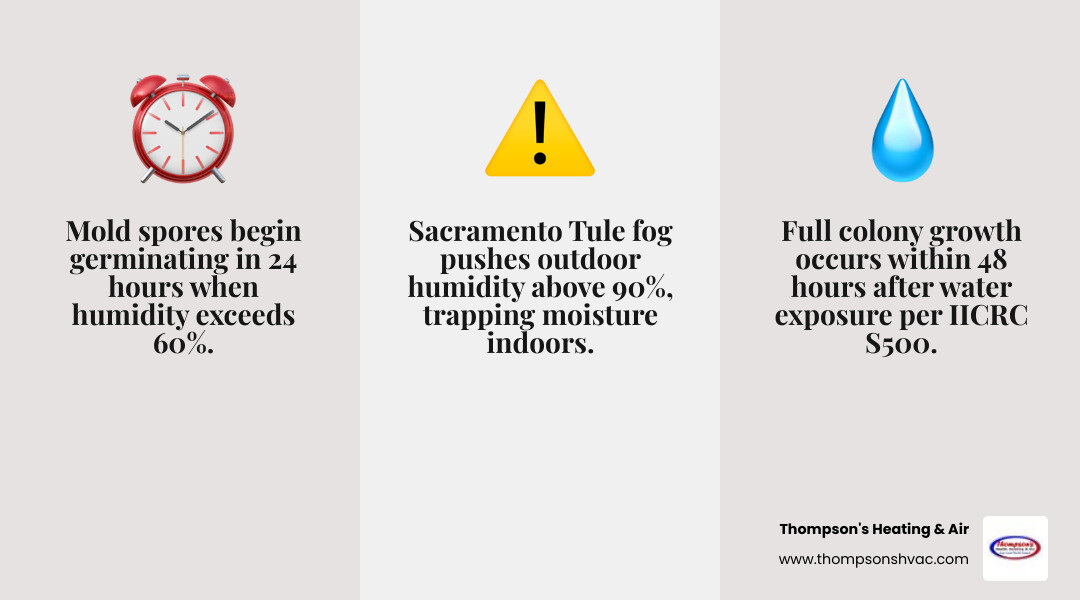
Here's the part that catches most homeowners off guard: mold doesn't wait. Under the right conditions — trapped moisture, moderate temperatures, and humidity above 60% — mold spores can begin germinating in as little as 24 to 48 hours after water exposure, according to ANSI/IICRC S500 standards. Over 50% of homes deal with hidden mold problems each year, often without the homeowner knowing until damage or health symptoms appear.
Top mold prevention tips for Sacramento Valley homeowners:
1. Keep indoor humidity between 30% and 60% using a dehumidifier or your HVAC system
2. Fix any water leaks within 24 to 48 hours — don't wait
3. Run exhaust fans in bathrooms, kitchens, and laundry rooms during and after use
4. Inspect crawl spaces, basements, and attics regularly, especially after storms
5. Install vapor barriers in crawl spaces to block ground moisture
6. Schedule regular HVAC maintenance to prevent mold growth in ducts and coils
7. Make sure gutters and downspouts direct water away from your foundation
8. Use a moisture meter to check for hidden damp spots behind walls or under flooring
9. Seal gaps around windows, doors, and pipes where moisture can enter
10. Look for early warning signs like musty odors, water stains, or unexplained allergy symptoms
For Sacramento Valley homeowners, mold prevention isn't a one-time task — it's a year-round habit. Your HVAC system plays a bigger role in this than most people expect, both as a potential mold risk and as one of your most powerful tools for controlling indoor humidity and air quality.
Why Sacramento Valley Homes are Vulnerable to Mold
Living in the Sacramento Valley means dealing with a specific set of environmental factors that mold absolutely loves. We aren't just talking about a little rain; we’re talking about atmospheric rivers that can saturate the ground and elevate the local water table. When the ground stays soaked, moisture often migrates upward into crawl spaces and basements, creating a persistent "damp" feeling in older homes in Woodland or Davis.
Then there is the infamous Tule fog. This dense, cold fog doesn't just make driving difficult; it keeps outdoor humidity at nearly 100% for days or even weeks at a time. During these periods, your home struggles to "breathe." Moisture accumulates on windowsills, inside wall cavities, and within poorly ventilated attics.
Structural vulnerabilities in many of our local homes—like outdated insulation or settling foundations—can trap this moisture. This is why HVAC Maintenance and Repair is so critical. A well-tuned HVAC system is your primary defense against stagnant, humid air that otherwise invites spore colonization.
Mold prevention tips for the Sacramento Valley homeowners: Understanding the 48-Hour Rule
When it comes to water damage, the clock is your biggest enemy. According to IICRC S500 standards, mold spores can begin to germinate in as little as 24 to 48 hours. By the 72-hour mark, colonies can become visible to the naked eye, and within a week, the contamination can become widespread.
In our local climate, especially during the rainy season, moisture doesn't evaporate quickly on its own. If a pipe leaks under your sink in Winters or a storm pushes water under your door in Natomas, you have a very narrow window to dry that area completely. Rapid drying is the only way to stop the biological trigger that turns a simple spill into a mold infestation. You can find more advice on handling these household emergencies on our Blog.
Essential Mold Prevention Tips for the Sacramento Valley Homeowners
The golden rule of mold prevention is moisture control. If you control the water, you control the mold. We recommend every homeowner invest in a simple hygrometer—a small device that measures indoor humidity.
To keep your home safe, you should aim to maintain indoor relative humidity between 30% and 60%. If your home consistently creeps above 60%, mold will thrive. During our humid winter months, a dedicated dehumidifier can be a lifesaver, but your air conditioner also acts as a dehumidifier during the warmer months.
Ventilation is the second pillar of prevention. Always use exhaust fans in high-moisture areas like bathrooms and kitchens. If you find that your home feels "stuffy" or smells slightly damp even when it's dry outside, it might be time to look into Indoor Air Quality Products like whole-home air purifiers or improved filtration systems that can capture spores before they settle.
Controlling Moisture in Crawl Spaces and Basements
Crawl spaces are often the "forgotten" part of a Sacramento Valley home, yet they are the most common source of mold issues. Because our region has high water tables and frequent winter flooding, moisture often seeps through the soil.
Installing a high-quality vapor barrier—a thick plastic sheet that covers the dirt floor—is one of the most effective ways to block ground moisture from entering your living space. Additionally, ensuring your foundation drainage is clear and that your gutters direct water at least six feet away from the house will prevent pooling. If you are noticing dampness in these areas, HVAC Installation Maintenance Repair services can help ensure your ductwork in these spaces is sealed tightly, preventing humid air from being sucked into your home's circulation.
Identifying Early Warning Signs and Hidden Mold
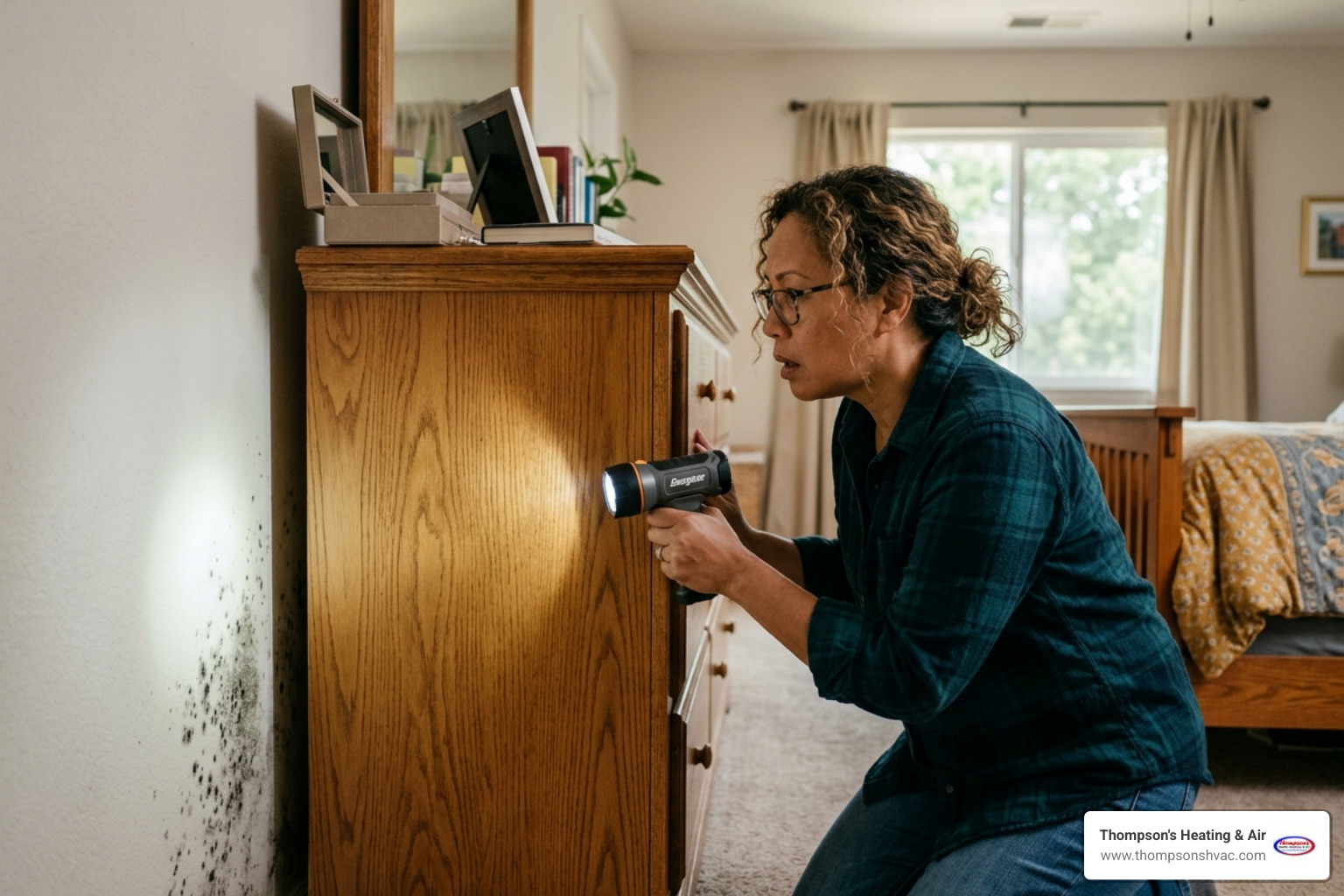
Mold is a master of hide-and-seek. It often grows behind furniture, under carpets, or inside wall cavities before you ever see a single black spot. In the Sacramento Valley, we often see mold develop behind bedroom furniture that is pushed directly against an exterior wall. The lack of airflow combined with the temperature difference between the warm room and the cold wall creates the perfect "dew point" for condensation.
Keep an eye (and nose) out for these warning signs:
• Musty Odors: That "earthy" or "wet sock" smell is often the first sign of hidden mold.
• Water Stains: Discoloration on ceilings or walls, even if they feel dry to the touch now, indicates a past or present moisture problem.
• Bubbling Paint or Peeling Wallpaper: This usually means moisture is trapped inside the drywall itself.
• Warped Baseboards: If your wood trim is starting to "cup" or pull away from the wall, there’s likely moisture underneath.
• Health Symptoms: If your family experiences unexplained sneezing, coughing, or itchy eyes that seem to improve when you leave the house, mold might be the culprit.
Don't forget to check the attic. Roof leaks from winter storms can lead to mold growth on the underside of your roof sheathing, which can eventually impact your indoor air quality as air moves through your home.
DIY vs. Professional Mold Remediation
When you find mold, your first instinct might be to grab a bottle of bleach. However, the EPA generally suggests that homeowners only attempt DIY removal if the affected area is less than 10 square feet (roughly a 3x3 foot patch).
If you decide to tackle a small project, safety is paramount. Always wear a NIOSH-approved N95 respirator, long gloves, and safety goggles. You want to avoid breathing in spores that become airborne during cleaning. Ensure you have cross-ventilation by opening windows and using fans to blow air out of the house, not into other rooms.
DIY Cleaning Agent Comparison
• Distilled White Vinegar — Best For: Non-porous & some porous surfaces — Pros: Kills ~82% of mold species; non-toxic — Cons: Strong smell; doesn't kill 100% of spores
• Hydrogen Peroxide (3%) — Best For: Hard surfaces, grout, clothes — Pros: Antifungal and antibacterial; bleaches stains — Cons: Can discolor some fabrics/surfaces
• Baking Soda & Water — Best For: Mildew and light mold — Pros: Absorbs moisture; very safe for pets/kids — Cons: Requires scrubbing; best for light cases
Note: Never mix bleach with ammonia or vinegar, as it creates toxic chlorine gas.
When to call pros for mold prevention tips for the Sacramento Valley homeowners
While DIY is fine for a small bathroom corner, some situations require professional intervention. If you suspect your HVAC system is contaminated, do not turn it on. Running a system with mold in the ducts can spread spores to every corner of your home.
You should also call a professional if you find "black mold" (Stachybotrys chartarum), if the water damage was caused by "black water" (sewage), or if the mold covers a large area. Professionals use psychrometrics—the science of drying—to ensure that moisture is removed from deep within structural studs and subflooring, not just the surface. This level of HVAC Maintenance and Repair and structural drying is the only way to ensure the mold doesn't simply grow back in two weeks.
Frequently Asked Questions about Sacramento Mold
How does Tule fog affect indoor mold growth?
Tule fog creates a "pressure cooker" of moisture. Because the outdoor humidity is so high (often 90%+), moisture from showering or cooking has nowhere to go. It stays trapped inside your home. We recommend running your HVAC fan even when the heat isn't on to keep air circulating, which helps prevent condensation on windows and cold corners.
What are the health risks of mold exposure for local families?
Mold isn't just a property issue; it's a health issue. Some molds produce mycotoxins—toxic byproducts that can be inhaled. Vulnerable populations, including children, the elderly, and those with asthma or compromised immune systems, are at higher risk. Common symptoms include respiratory irritation, chronic sinus infections, and worsened asthma triggers.
Can my HVAC system spread mold spores?
Yes. If moisture accumulates on your AC's evaporator coils or if your condensate drain line becomes clogged, mold can grow right inside the unit. Because the HVAC system is the "lungs" of your home, those spores are then blown into every room. Regular filter changes and professional coil cleanings are essential to keep your air clean.
Conclusion
At Thompson's Heating & Air, we’ve been serving the Sacramento Valley—from Woodland and Davis to Winters and Dixon—since 1992. We know exactly how our local weather patterns can stress a home’s ecosystem. Mold prevention isn't just about cleaning; it's about creating an environment where mold simply cannot grow.
By maintaining your HVAC system, controlling your indoor humidity, and acting fast when you spot moisture, you can protect both your home’s value and your family’s health. Whether you need a seasonal tune-up to ensure your system is dehumidifying properly or you're interested in the latest Indoor Air Quality Products, our family-owned team is here to provide 5-star service. Don't let the next atmospheric river catch you off guard—stay proactive and keep your Sacramento Valley home dry and healthy.



.avif)
.avif)
.png)
