
Why Your AC Drain Line Clogs More Often in Late August

The Late-Summer AC Shutdown: Don't Panic Just Yet
Late August is here, and after months of running flawlessly through the peak heat, your air conditioner suddenly stops working. If you are wondering why your AC drain line clogs more often in late August, you are not alone. It is a specific time of year when a very predictable mechanical issue reaches its breaking point. You might walk past your thermostat to find a completely blank screen, or you might notice that the indoor unit has powered down entirely while the house rapidly warms up. When temperatures are peaking outside, a sudden loss of cooling can instantly induce panic. When we field these frantic late-August calls at Thompson's Heating & Air, we find that most homeowners immediately assume the worst: a catastrophic compressor failure or a burnt-out blower motor.
Here is the reality: many late-summer system failures are actually intentional safety trips. Your air conditioning system has built-in mechanisms designed to shut everything down before severe damage occurs. After months of continuous moisture extraction, the drain lines that carry away condensation often become completely blocked by the end of the season. When this happens, the system turns itself off to protect your home. This is a highly solvable, common problem that prevents severe water damage to your ceilings and floors. If you find yourself sweating through a sudden shutdown, a quick call for professional Air Conditioning service is usually all it takes for our team to clear the line, reset the safety switches, and get the cold air flowing again.
How 90 Days of Continuous Cooling Creates the Perfect Storm
To understand why your system suddenly shuts down at the end of the summer, you have to look at what your air conditioner has been doing for the past three months. Air conditioners do not just lower the temperature of your home; they also actively remove humidity from the indoor air. As warm air blows over the freezing cold evaporator coil, moisture condenses on the metal fins, much like water droplets forming on the outside of a cold glass of ice water on a hot day.
Here in Woodland CA, our team sees firsthand how the prolonged heat waves of the Sacramento Valley force AC units to run continuously for 90 days or more. This relentless operation maximizes the amount of moisture your system extracts. During peak operation, a standard central air conditioner removes anywhere from 5 to 20 gallons of humidity from the air daily. All of this water drips down into a shallow metal or plastic tray known as the condensate drain pan, before flowing out of your home through a white PVC pipe.
The hidden danger of continuous operation:
• Constant dampness: Because the system runs without a break during long heat waves, the drain pan and the PVC line never have a chance to dry out.
• Ideal temperatures: The water sitting in the pan is usually slightly cool, but the attic or utility closet housing the unit is warm, creating a humid microclimate.
• Airborne food sources: Dust, pet dander, and microscopic organic matter bypass your air filter and settle into the wet pan, providing a food source for biological growth.
This continuous flow of condensation creates the ideal breeding conditions for algae, mold, and mildew. If you are trying to troubleshoot an AC that is not cooling properly, looking at the moisture cycle is a vital step we always recommend. The dark, wet environment inside that narrow PVC pipe allows microscopic spores to thrive, setting the stage for a massive blockage as the summer drags on.
The Timeline of Algae Growth in Your Condensate Drain
A drain line clog rarely happens overnight. It is a cumulative process that builds slowly over the cooling season. Understanding this timeline explains exactly why these sudden system shutdowns peak specifically in late August.
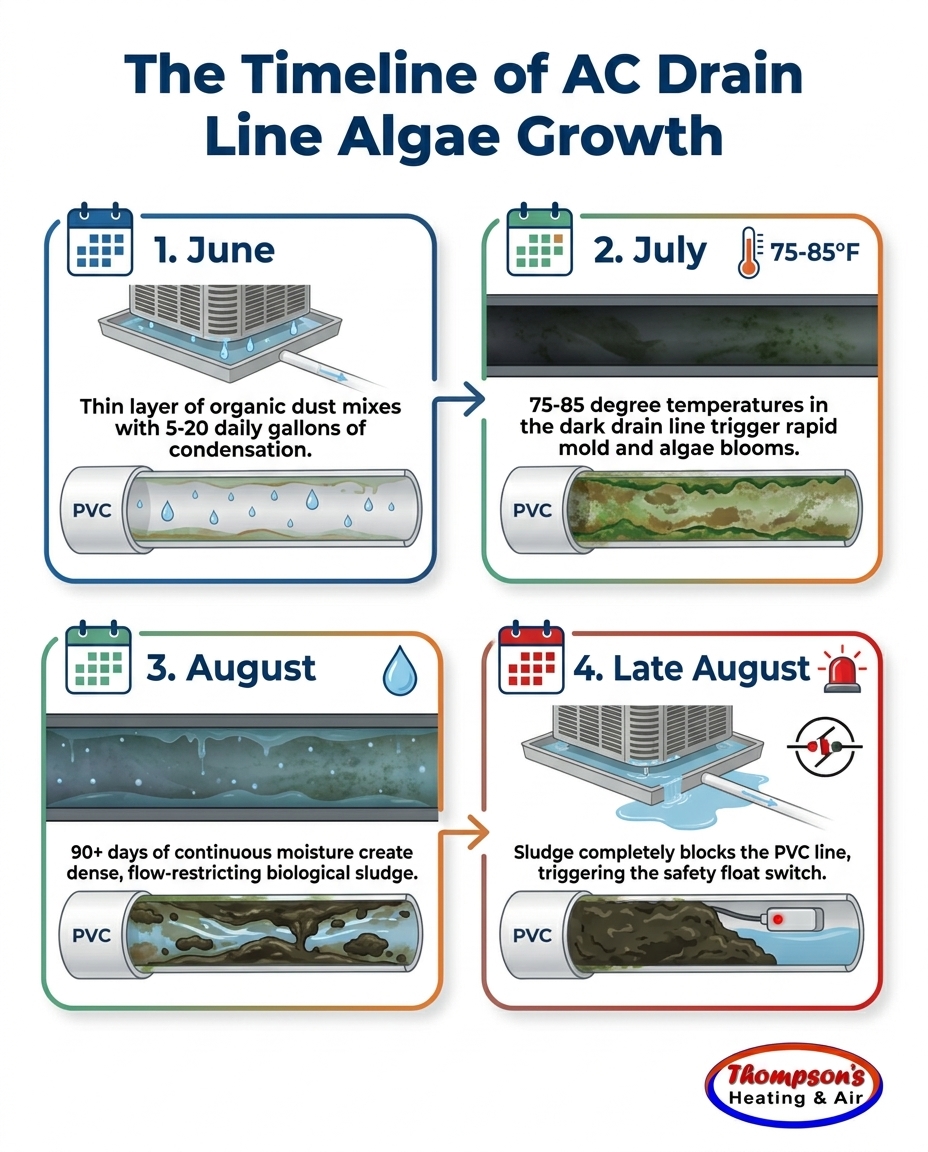
Early Summer (June): The Foundation Forms
When you first turn on your AC consistently in June, the drain pan is mostly clean. However, as the system begins pulling gallons of water out of the air, airborne particulates and dust mix with the initial condensation. This forms a very thin, almost invisible layer of organic food along the bottom of the drain pan and the inner walls of the PVC pipe. At this stage, water still flows freely, but the biological foundation has been laid.
Mid-Summer (July): Rapid Biological Blooms
By July, the intense heat has arrived. The ambient temperatures around your indoor unit often hover between 75 and 85 degrees, while the inside of the drain line remains pitch black and constantly wet. These are the exact conditions required for rapid algae and mold blooms. Microscopic spores begin to multiply quickly, forming a slimy, green or black film inside the pipe. The flow of water might slow down slightly, but it is usually not enough to trigger a backup yet. Upgrading your indoor air quality solutions during this time can help reduce the organic dust that feeds this growth, but the moisture itself remains constant.
Peak Summer (August): The Sludge Thickens
As August begins, your system has been running almost non-stop for over two months. The continuous moisture and the accumulating organic buildup coalesce into a thick, gel-like sludge. This biological mass becomes sticky, trapping even more dirt and debris as it flows out of the drain pan. The inner diameter of the PVC pipe narrows significantly, restricting the water flow to a slow trickle.
End of Season (Late August): The Complete Blockage
By late August, just as families are gearing up for the back-to-school transition, the restricted flow finally hits a breaking point. The thick sludge completely bridges the gap inside the narrow drain line, creating a solid plug. Water can no longer escape to the outside of your home. Because the AC is still running and producing gallons of condensation, the water quickly backs up into the indoor drain pan, filling it to the brim and threatening to overflow into your home.
The Safety Float Switch: Your System's Hidden Protector
When that complete blockage occurs, you might expect water to start pouring through your ceiling or flooding your utility closet. If you have a modern, properly installed air conditioning system, this does not happen. Instead, your system relies on a crucial safety device known as a float switch. This small, hidden protector is the exact reason your system suddenly goes dead.
An AC float switch is a small electronic sensor typically located near the evaporator coil, either clipped to the edge of the drain pan or spliced directly into the secondary drain port. It operates on a very simple mechanical principle:
1. The water rises: As the primary drain line clogs, water backs up and begins filling the drain pan.
2. The float lifts: Inside the switch, a small buoyant plastic cylinder (the float) rises with the water level.
3. The circuit breaks: Once the float reaches a certain height, it trips a tiny internal switch that breaks the low-voltage electrical connection to your thermostat.
4. The system shuts down: Without that electrical signal, the AC unit instantly powers down, stopping the production of condensation immediately.
When record high temperatures are predicted across Woodland CA, losing your cooling feels like a disaster. Our crew at Thompson's Heating & Air recently helped a local homeowner who faced this exact scenario when their AC system broke down just as a massive late-summer heat wave approached. Fortunately, one of our technicians was able to come out the same day to address the issue. We discovered that the compressor was perfectly fine; the system had simply shut itself down because a clogged drain line tripped the float switch. The issue was addressed on the same day, restoring cooling before the house overheated.
While a blank thermostat or a dead AC unit is frustrating, you should reframe this sudden loss of cooling as a massive success. The float switch deliberately cut the power to prevent hundreds of gallons of water from overflowing. It sacrificed your temporary comfort to save you from incredibly costly ceiling collapses, ruined drywall, or warped hardwood floors.
Warning Signs Your AC Drain Line Is Clogging
While the float switch is a great safety net, our technicians always advise catching a developing clog before it triggers a complete system shutdown. Because the buildup happens gradually over the summer, your system will often give you subtle hints that the drain line is struggling to keep up. If you notice any of these warning signs in late August, it is time to call us for a professional inspection.
• Musty or dirty sock odors: When biological growth takes over your drain pan, the blower fan will push those odors straight into your living space. If your home smells damp, musty, or like dirty gym socks specifically when the AC kicks on, you have a heavy buildup of algae or mold in the system.
• Visible water pooling: Check the base of your indoor air handler. If you see small puddles of water, water stains on the floor, or moisture creeping around the base of the unit, the drain pan is likely overflowing slightly before the switch can catch it, or the pan itself may have a small crack.
• Unusual gurgling sounds: When a drain line is partially blocked by sludge, water struggles to get past the obstruction. This can create a distinct gurgling, bubbling, or sucking sound coming from the AC unit or the PVC pipe itself as air bubbles are forced through the thick algae.
• Short-cycling behavior: Sometimes, the water level in the pan sloshes around. It might lift the float switch just enough to shut the system off, but then the water slowly drains, lowering the float and turning the system back on. This causes the AC to turn on and off rapidly in short bursts, struggling to maintain the set temperature before a full, permanent shutdown occurs.
Why Clearing Deep Sludge Requires Professional Tools
When a homeowner realizes their drain line is clogged, the first instinct is often to try and clear it themselves. While minor dust blockages early in the year might be simple to manage, late-summer algae forms a dense, incredibly sticky sludge that fiercely resists basic DIY methods. Pouring a cup of vinegar down the access tube will not dissolve a solid, three-inch plug of biological mass. Attempting to plunge the line or shove a wire hanger down the PVC pipe is highly dangerous; improper DIY clearing attempts frequently push the clog deeper into inaccessible areas or outright crack the brittle PVC drain line, leading to hidden leaks inside your walls.
During one recent stretch of extreme late-summer weather, a local household found themselves without an operating AC for three days during 100-plus degree heat. Our owner at Thompson's Heating & Air came out personally, quickly identified that a severe, deep-set drain blockage had tripped the system's safety lockouts, and fixed it right away to get their cooling restored. Prompt, professional intervention is exactly what is needed for these stubborn late-season clogs.
Our professional HVAC technicians use specialized tools to safely and completely clear the line. This process typically involves:
• High-suction vacuums: We use industrial-grade wet vacuums attached to the exterior exit of the drain pipe to pull the heavy sludge out safely, rather than pushing it further in.
• Pressurized flushing: If the clog is severe, our professionals may use regulated, pressurized nitrogen or specialized water flushing tools to blast the blockage free without exceeding the pressure limits of the PVC pipe.
• Algaecide treatments: Once the line is clear, we apply professional-grade algaecide tablets or liquid treatments to the drain pan to kill off any remaining spores and prevent the sludge from immediately reforming.
This deep cleaning process is a core component of routine AC maintenance. At Thompson's Heating & Air, we have extensive local experience with Sacramento Valley climate patterns, and our technicians are fully prepared to handle these specific peak-summer emergency call patterns. A professional visit also ensures that the float switch is safely reset, the electrical connections are dry, and the rest of the system is undamaged before the power is restored.
Frequently Asked Questions About Late-Summer AC Drainage
Why did my AC suddenly shut off in late summer?
A sudden shutdown in late summer is often caused by a tripped float switch due to a clogged condensate drain line. After running continuously for months, the drain line fills with biological sludge that blocks the flow of water. The system shuts down as a protective measure to prevent that backed-up water from overflowing and damaging your home.
What does an AC float switch do?
An AC float switch detects rising water levels in the indoor drain pan. When a clog prevents water from draining, the water level lifts a small float inside the switch. This action immediately cuts the low-voltage power to the thermostat and the AC system, stopping the production of condensation and preventing a flood.
Why does algae grow in my AC drain line?
Dark, damp environments with warm ambient temperatures (typically between 75 and 85 degrees) are ideal for biological growth. The continuous summer condensation provides a constant water source, while airborne dust provides the food. Over several weeks, this creates a thick, gel-like algae sludge inside the pipe.
Where is the AC float switch located?
The float switch is typically attached directly to the secondary drain port on the indoor evaporator coil pan. In some system configurations, it can also be installed directly in-line with the primary PVC drain pipe, usually situated just outside the air handler cabinet.
What happens if your AC drain line is clogged?
When the line is completely clogged, the condensation water backs up into the indoor drain pan. If you have a functional float switch, it will trigger and shut down the entire system. If you do not have a switch, or if it fails, the water will overflow the pan, potentially causing severe water damage to your ceilings, walls, or flooring.
How do you stop algae from growing in an AC drain line?
The best prevention is routine professional maintenance before the cooling season begins. HVAC technicians thoroughly clean the drain pan and apply professional-grade algaecide tablets or treatments during tune-ups. These treatments slowly dissolve over the summer, actively preventing the rapid biological blooms that cause late-season clogs.
Restore Your Home's Comfort with Expert Drain Line Clearing
A dead air conditioner in the middle of a late-August heat wave is incredibly stressful, but it doesn't have to mean a massive repair bill. If you are dealing with a sudden shutdown, remember why your AC drain line clogs more often in late August: it is usually a simple biological buildup triggering a vital safety mechanism. Your system is likely just protecting your home from water damage.
Do not suffer through the end-of-season heat or attempt risky DIY plumbing fixes on your HVAC system. Schedule a professional repair promptly to get the line cleared safely and effectively. Understanding that this shutdown is a protective safety feature caused by peak algae growth gives you peace of mind, and knowing a professional drain clearing is the standard fix makes the next step easy. Contact our local experts at Thompson's Heating & Air for AC repair in Woodland, and let a trained technician restore your comfort today.



.avif)
.avif)
.png)
