
How to Troubleshoot AC Not Cooling Properly

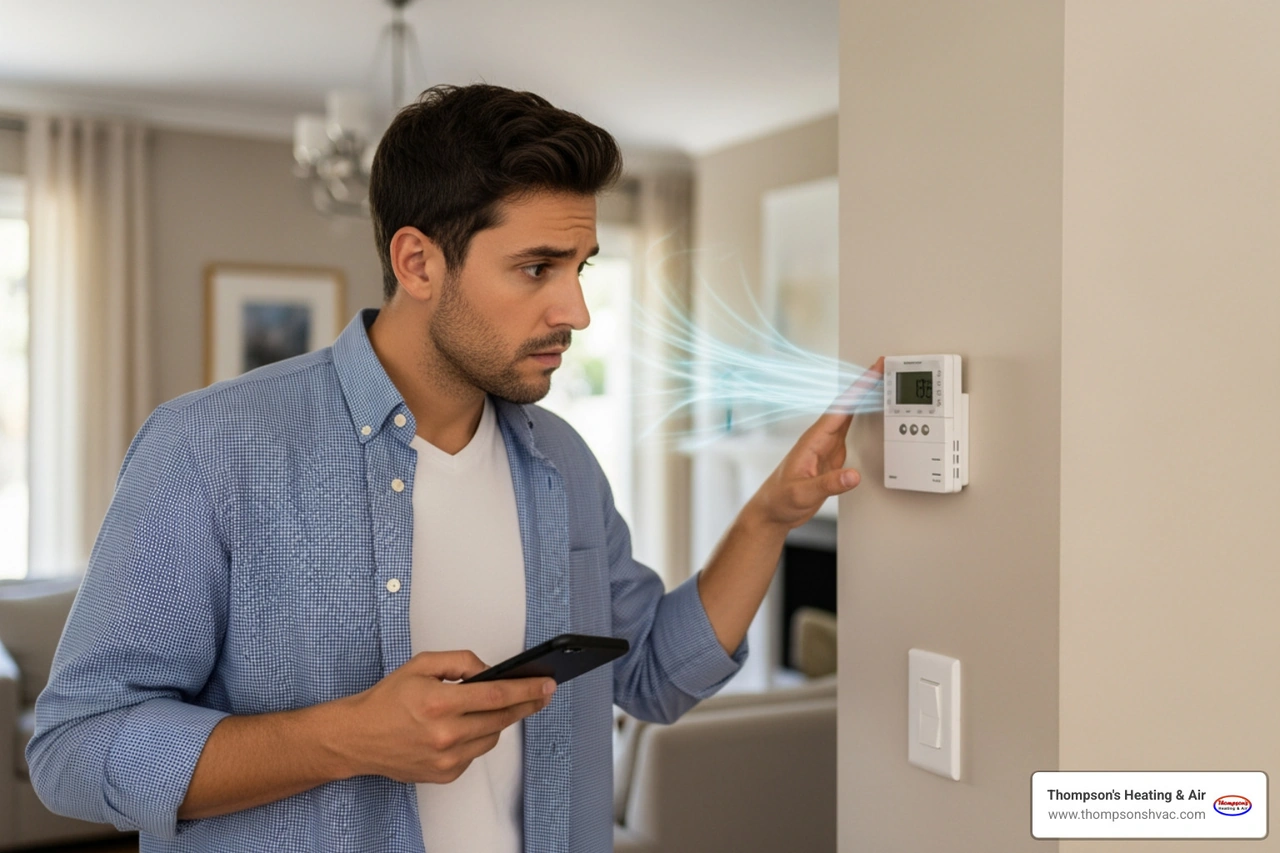
Why Your AC Not Cooling Properly Is Worth Checking Before You Call
If you're dealing with ac not cooling properly what to check, here's a quick answer before we dive in:
Start with these checks first:
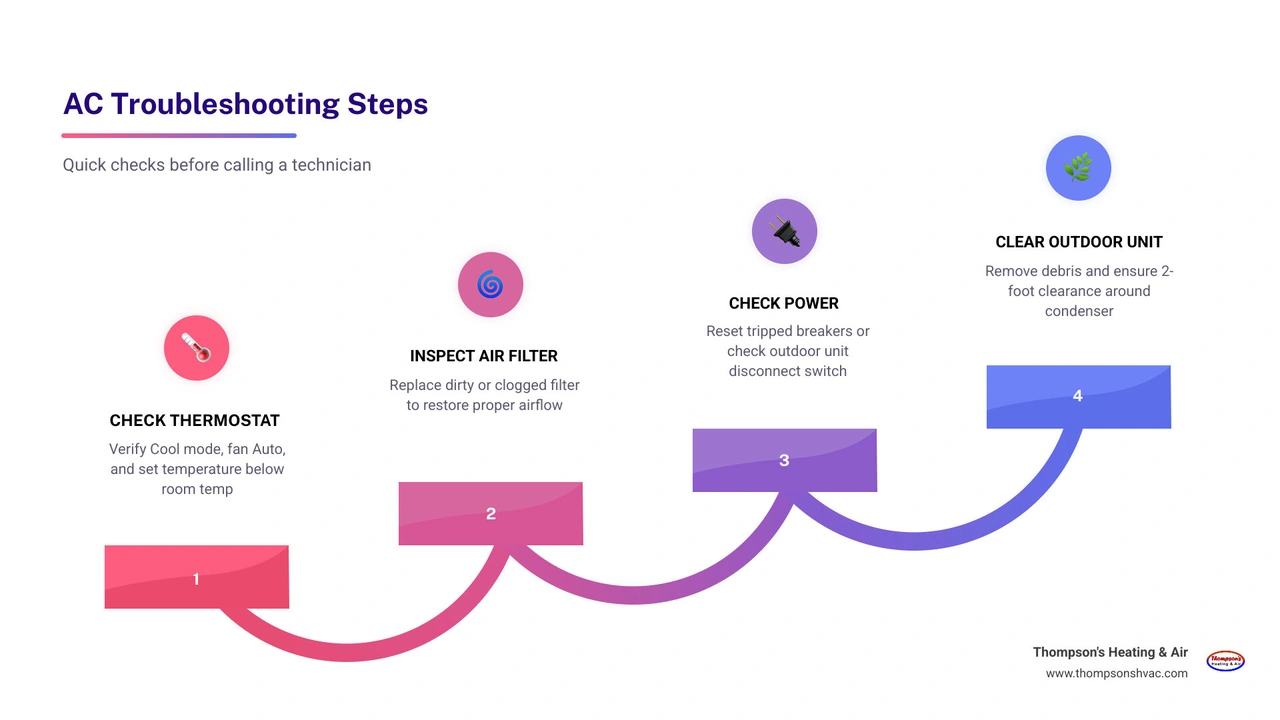
1. Thermostat - Make sure it's set to "Cool" mode, fan is on "Auto," and the set temperature is below the current room temperature
2. Air filter - A dirty or clogged filter is the most common reason AC systems stop cooling effectively
3. Circuit breaker - Check your electrical panel for any tripped breakers connected to your AC
4. Outdoor unit - Make sure the condenser isn't blocked by debris, overgrown plants, or dirt buildup
5. Vents and registers - Confirm all supply and return vents are open and unobstructed
6. Frozen coils - Look for ice buildup on the indoor unit, which can block cooling entirely
7. Refrigerant leak - If you hear hissing or see ice on the lines, this requires a professional
Woodland summers are no joke. When temperatures climb into the triple digits across Yolo County, your air conditioner isn't just a comfort — it's a necessity. So when you notice your AC running but the house staying warm, that specific kind of frustration sets in fast.
The good news is that many of the most common reasons an AC stops cooling properly are things you can identify yourself in under an hour — and some you can even fix without spending a dime. Dirty air filters alone are linked to the majority of AC service calls, which means a simple $10 filter swap could be all that stands between you and cool air.
That said, some issues — like low refrigerant, a failing compressor, or frozen evaporator coils — do require a licensed HVAC technician. Knowing the difference can save you time, money, and potentially prevent a minor issue from turning into a costly repair.
This guide from Thompson's Heating & Air walks you through exactly what to check, in the right order, so you can troubleshoot your AC cooling problem step by step.
AC Not Cooling Properly What to Check First
Before you start worrying about major mechanical failures, we always recommend starting with the basics. It is surprisingly common for a "broken" AC to actually be a simple power or settings issue. In the HVAC world, we often see service calls that could have been avoided by flipping a single switch.
When considering ac not cooling properly what to check, start with the "low-hanging fruit." This includes verifying that the system is actually receiving power and that the instructions you are giving it via the thermostat are correct. Learning How to Prevent HVAC Emergencies with Maintenance starts with understanding how these simple components interact.
Checking Your Thermostat and Power Supply
The thermostat is the brain of your cooling system. If the brain is confused, the body (the AC unit) won't work.
• Mode Settings: Ensure the thermostat is set to "Cool." It sounds simple, but during the shoulder seasons in the Sacramento Valley, it's easy to forget the system was left on "Heat" or "Off."
• Fan Settings: Set your fan to "Auto" rather than "On." When the fan is "On," it blows air continuously, even when the AC isn't actually cooling. This can lead to warm air blowing through your vents between cooling cycles.
• Batteries: If your thermostat has a blank screen or is acting erratically, try replacing the batteries. Weak batteries can prevent the thermostat from sending a strong signal to the AC unit.
• Calibration: Sometimes a thermostat loses its calibration and thinks the room is cooler than it actually is. If you notice a discrepancy between the reading and how you feel, it might be one of the Signs Your AC Needs Repair.
Verifying the Outdoor Unit Power
Your central air system has two main parts: the indoor air handler and the outdoor condenser. Sometimes the indoor fan is blowing air, but the outdoor unit isn't running because it lost power.
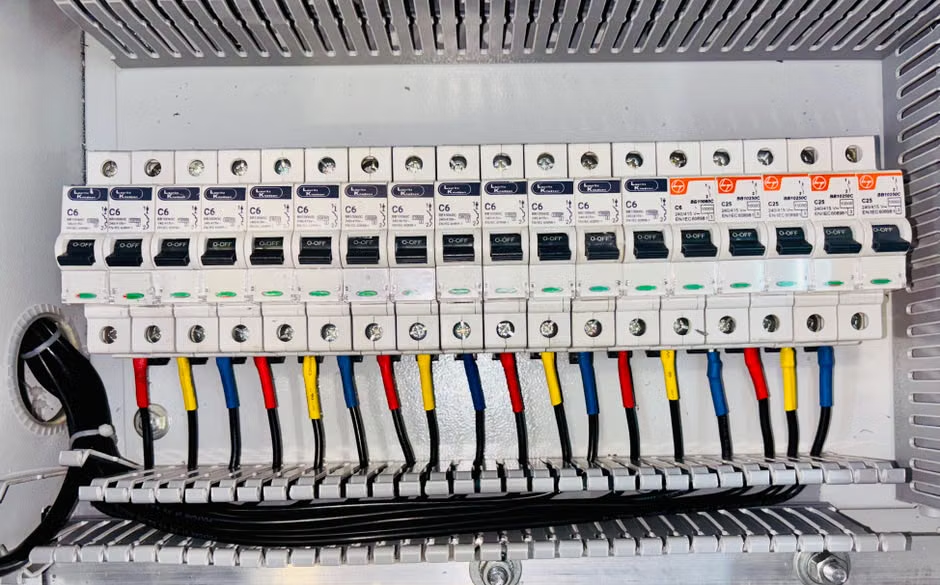
Check your electrical panel for any tripped breakers. If the breaker for the "AC" or "Condenser" is in the middle position, flip it all the way off and then back on. Additionally, check the outdoor disconnect switch located in a small box near the condenser unit. Sometimes this switch can be bumped or a fuse inside can blow, cutting power to the most important part of the cooling process.
Common Airflow Obstructions and Filter Maintenance
If the power is on but the air isn't cold, the next culprit is almost always airflow. Your AC works by pulling heat out of your indoor air. If air can't move freely through the system, that heat stays trapped in your home.
In places like Woodland and Davis, Sacramento Valley dust and agricultural debris can clog a filter faster than you might expect. This restriction of airflow is the #1 cause of AC performance issues.
Why Your AC Not Cooling Properly Might Be a Dirty Filter
A clogged filter doesn't just make the air "dirty"; it physically chokes the system. When the air can't flow over the evaporator coils inside your home, those coils get too cold. Eventually, the humidity in the air freezes onto the coils, turning them into a block of ice. Once the coils are frozen, they can't absorb any more heat, and your AC will blow warm air.
Understanding How Often Should You Change Your HVAC Air Filter is vital for local homeowners. Generally, we recommend checking them every 30 days during the peak of summer. If you have pets that shed dander or if you live near dusty fields, you may need to change them more frequently. If you find your system is already struggling, scheduling AC Repair in Woodland CA is the best way to ensure no permanent damage was done to the blower motor.
Inspecting Vents and Registers
Take a walk through your home and check every vent.
• Blocked Registers: Ensure that furniture, long curtains, or rugs aren't covering the supply vents or the large return air grilles.
• The "Closed Vent" Myth: Many people believe closing vents in unused rooms saves energy. In reality, this increases pressure in your ductwork and can actually reduce cooling efficiency or cause the coils to freeze.
• Ductwork Leaks: If you have strong airflow in one room but weak airflow in another, you might have a disconnected or leaky duct in the attic or crawlspace. This is a common issue that affects How Proper HVAC Sizing Affects Comfort.
Inspecting the Outdoor Condenser Unit
The outdoor unit's job is to release the heat collected from inside your home into the outside air. If the unit is "suffocating," it can't dump that heat effectively, and your home won't get cool.
Clearing Debris Around the Condenser
For your AC to work, it needs to breathe. We recommend maintaining at least a 2-foot "clear zone" around your outdoor unit.
• Vegetation: Trim back bushes, weeds, and tall grass.
• Debris: Remove any leaves, twigs, or cottonwood seeds that have accumulated against the sides of the unit.
• Cleaning: You can gently rinse the exterior of the unit with a garden hose (do not use a pressure washer!) to wash away dust and pollen. This is a simple DIY step that we often perform during AC Repair in Davis CA or AC Repair in West Sacramento CA to restore immediate cooling capacity.
Checking for Damaged Condenser Fins
The "fins" are the thin metallic slats on the side of your outdoor unit. If these are bent or crushed—perhaps from a rogue hail storm or a misplaced weed whacker—they block airflow. While you can use a "fin comb" to carefully straighten them, significant damage usually requires a professional touch to ensure the outdoor fan motor isn't being overworked.
Identifying Serious Issues Like Frozen Coils or Refrigerant Leaks
If you've checked the thermostat, changed the filter, and cleared the outdoor unit but you're still sweating, you may be dealing with a more technical mechanical failure.
• Air Temperature — Likely Airflow Issue: Slightly cool but weak — Likely Refrigerant Leak: Warm or room temperature
• Sounds — Likely Airflow Issue: Whistling or straining fan — Likely Refrigerant Leak: Hissing or bubbling noises
• Ice Presence — Likely Airflow Issue: Often found on indoor coils — Likely Refrigerant Leak: Often found on outdoor lines
• Cycle Length — Likely Airflow Issue: Runs constantly — Likely Refrigerant Leak: Short cycling (on and off)
• Humidity — Likely Airflow Issue: Normal or slightly high — Likely Refrigerant Leak: Very high indoor humidity
Signs Your AC Not Cooling Properly Requires Professional Repair
There are three "Big Red Flags" that mean you should stop DIY troubleshooting and call us:
1. Ice Buildup: If you see ice on the copper lines leading to the outdoor unit or on the indoor evaporator coil, turn the system off immediately. Running it with ice can destroy the compressor.
2. Hissing Noises: This often indicates a refrigerant leak. Since refrigerant is a closed-loop system, it should never "run out." A leak means there is a hole that must be patched.
3. Frequent Tripping: If your AC trips the circuit breaker every time it tries to start, there is an electrical short or a failing component that is drawing too much power.
Consulting our Annual HVAC Maintenance Complete Guide can help you spot these issues before they lead to a total system failure. If your unit is over 10-15 years old and faces these problems, it may be time to ask, Should I Repair or Replace My HVAC System?
Understanding System Sizing and Extreme Heat
Sometimes, the AC is working perfectly, but the heat is simply too much. Most AC systems are designed to maintain a 20-degree difference between the outdoor temperature and the indoor temperature. If it's 110°F in Woodland, your AC might struggle to get the house below 80°F.
This is why Getting the Right Size HVAC for the Sacramento Valley Homes is so important. An undersized unit will run forever without reaching the set point, while an oversized unit will "short cycle," failing to remove humidity and leaving the house feeling clammy.
Frequently Asked Questions About AC Troubleshooting
How long should it take for my AC to cool the house?
A properly functioning AC system should begin to noticeably drop the temperature within 15 to 30 minutes of starting. However, if your home has been baking in the sun all day, it could take several hours to bring the entire "heat load" of the walls and furniture down to a comfortable level. The speed depends heavily on your insulation quality and the capacity of the unit.
Should I turn off my AC if it isn't blowing cold air?
Yes. If the system is running but not cooling, you are wasting energy and potentially damaging the compressor. This is especially true if the system is frozen. Turning it off allows the ice to melt and prevents the mechanical parts from overheating. You can turn the "Fan" setting to "On" while the "Cooling" is "Off" to help speed up the thawing process.
Why is my AC blowing warm air?
The most common reasons for warm air are a tripped breaker for the outdoor unit (so only the indoor fan is running), a severe refrigerant leak, or a failed capacitor. The capacitor is a small component that "kickstarts" the compressor; if it fails, the fan might spin, but the cooling cycle never actually begins.
Conclusion
Dealing with an ac not cooling properly what to check checklist can be stressful when the house is heating up, but we hope this guide gives you the confidence to tackle the simple fixes first. At Thompson's Heating & Air, we've been a family-owned staple in the Woodland community since 1992. We understand the specific demands the Northern California climate puts on your HVAC system.
Whether you're in Winters, Davis, or West Sacramento, our team is ready with 24/7 technician access to get your comfort back on track. If your DIY checks didn't solve the problem, don't suffer through the heat. Contact us today for professional AC Repair in Davis CA and surrounding areas. We’ll diagnose the issue quickly and ensure your family stays cool all summer long.



.avif)
.avif)
.png)
