
Why Your Home Comfort Depends on the Perfect HVAC Fit


Why Getting Your HVAC Size Right Is the Foundation of True Home Comfort
How proper HVAC sizing affects comfort comes down to one simple idea: a system that's too big or too small for your home will struggle to keep temperatures steady, control humidity, and run efficiently — no matter how new or expensive it is.
Here's a quick look at what proper sizing actually does for your comfort:
• Steady temperatures - A correctly sized system runs full cycles, eliminating hot and cold spots between rooms
• Humidity control - Longer, consistent run times allow the system to remove moisture from the air, preventing that sticky, clammy feeling
• Lower energy bills - A right-sized unit doesn't waste energy short-cycling or running nonstop; properly sized systems can use up to 30% less energy than oversized ones
• Longer equipment life - Operating within its ideal range reduces wear on the compressor and other components
• Better air quality - Full run cycles mean more air passes through your filters, reducing dust, pollen, and other airborne particles
More than half of U.S. homes have HVAC systems that are the wrong size. If you live in Woodland, CA, where summers routinely push triple digits, that mismatch isn't just uncomfortable — it's costly.
Think of it like the Goldilocks principle: not too big, not too small, but just right. An oversized unit blasts cold air, shuts off too fast, and leaves the air feeling damp. An undersized unit runs constantly and still can't keep up on the hottest days. Only a system matched precisely to your home hits that sweet spot.
Understanding How Proper HVAC Sizing Affects Comfort
In heating and cooling, "size" doesn't refer to the physical dimensions of the outdoor unit. Instead, it refers to the system’s cooling and heating capacity, measured in BTUs (British Thermal Units) and tonnage. One ton of air conditioning capacity is equal to 12,000 BTUs per hour. On average, one ton can cool about 500 to 600 square feet, but this is a very loose rule of thumb that often leads to mistakes.
At Thompson's Heating & Air, we know that true comfort requires precise load matching. This means calculating exactly how much heat your home gains in the summer and loses in the winter. When we achieve a perfect match, the system operates in its "sweet spot," providing the exact amount of conditioned air needed to maintain a steady temperature. This precision is the key to HVAC Installation Maintenance Repair that lasts for decades rather than years.
The Science of Airflow: How Proper HVAC Sizing Affects Comfort
Airflow is the vehicle that delivers comfort to your living room, bedroom, and kitchen. When a system is sized correctly, the airflow velocity is just right—strong enough to circulate air to the furthest corners of the room but quiet enough that you don't feel like you're sitting in a wind tunnel.
Proper sizing also ensures that the static pressure—the resistance to airflow within your ducts—remains within safe limits. If a unit is too powerful for the existing ductwork, it’s like trying to force a fire hose's worth of water through a straw. This creates noise, vibrates the walls, and leads to uneven temperature consistency. By ensuring the unit matches the home's needs, we also allow Indoor Air Quality Products like high-efficiency filters and UV lights to work effectively, as air moves through them at the intended speed for maximum filtration.
Local Climate Factors and How Proper HVAC Sizing Affects Comfort
Living in Yolo County means dealing with a specific set of climate challenges. In April 2026, as we look at the upcoming summer, we know that Woodland summers aren't just warm—they are intense. Proper sizing must account for our local "design temperature," which is the maximum temperature our area typically hits.
We also have to consider heat gain from our abundant Northern California sunshine. A home in Davis or West Sacramento with large, south-facing windows will have a much higher cooling demand than a shaded home in Winters. If your contractor doesn't factor in the local climate and your home's specific orientation, you’ll likely end up with a system that fails when you need it most. This is why professional HVAC Maintenance and Repair starts with an understanding of the local environment.
The Pitfalls of an Oversized System: Why Bigger Isn’t Better
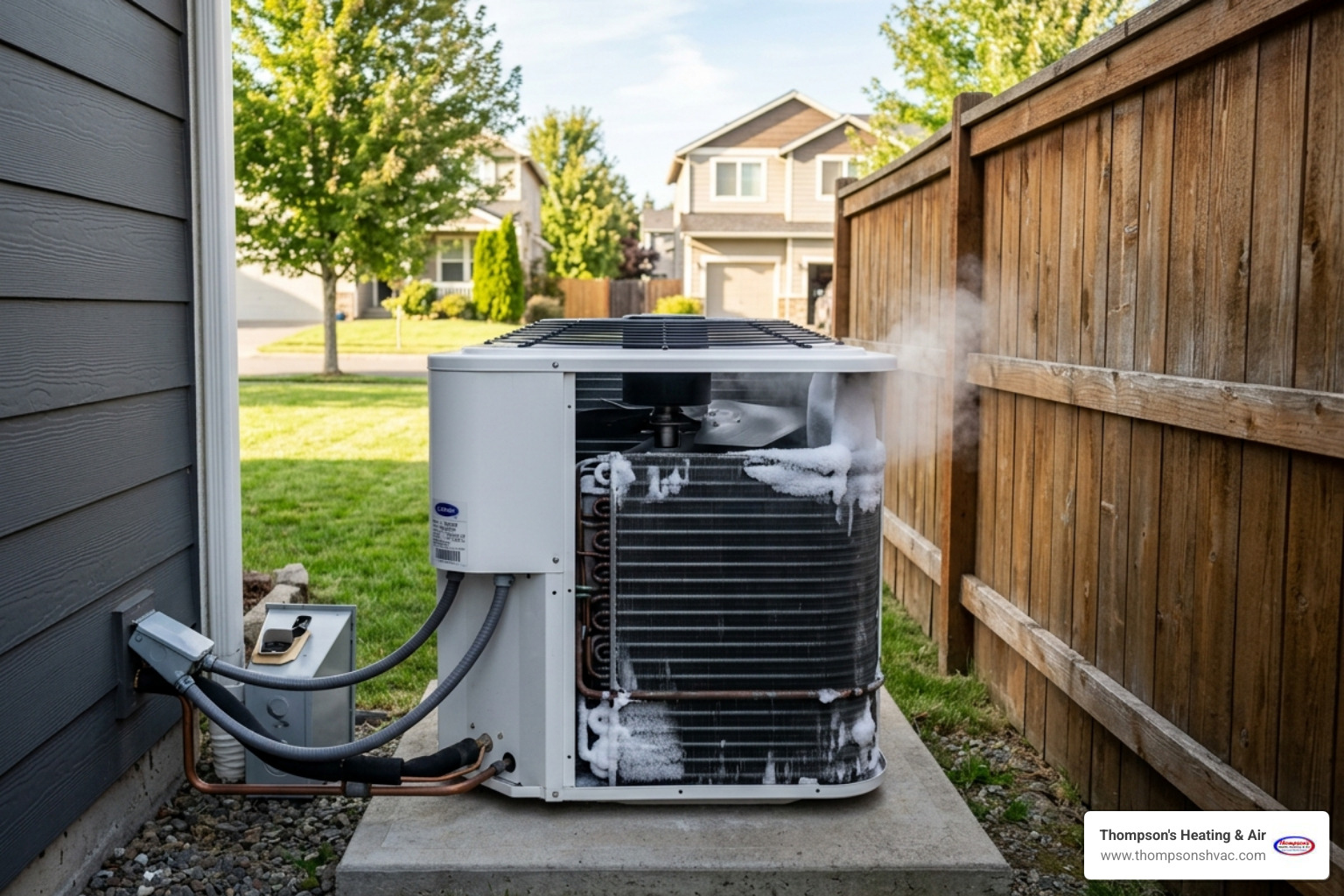
There is a common myth that "bigger is better" when it comes to AC. Many homeowners believe a larger unit will cool the house faster. While it might reach the thermostat setting quickly, it does so through a process called short cycling.
Short cycling occurs when a powerful unit blasts the home with cold air, satisfies the thermostat in ten minutes, and shuts off. This is incredibly inefficient. Think of it like driving a car in heavy stop-and-go traffic versus maintaining a steady highway speed. The constant starting and stopping:
• Wastes Energy: The startup phase of an HVAC cycle consumes the most power.
• Strains the Compressor: Frequent starts can cut an HVAC system’s lifespan by up to 50%.
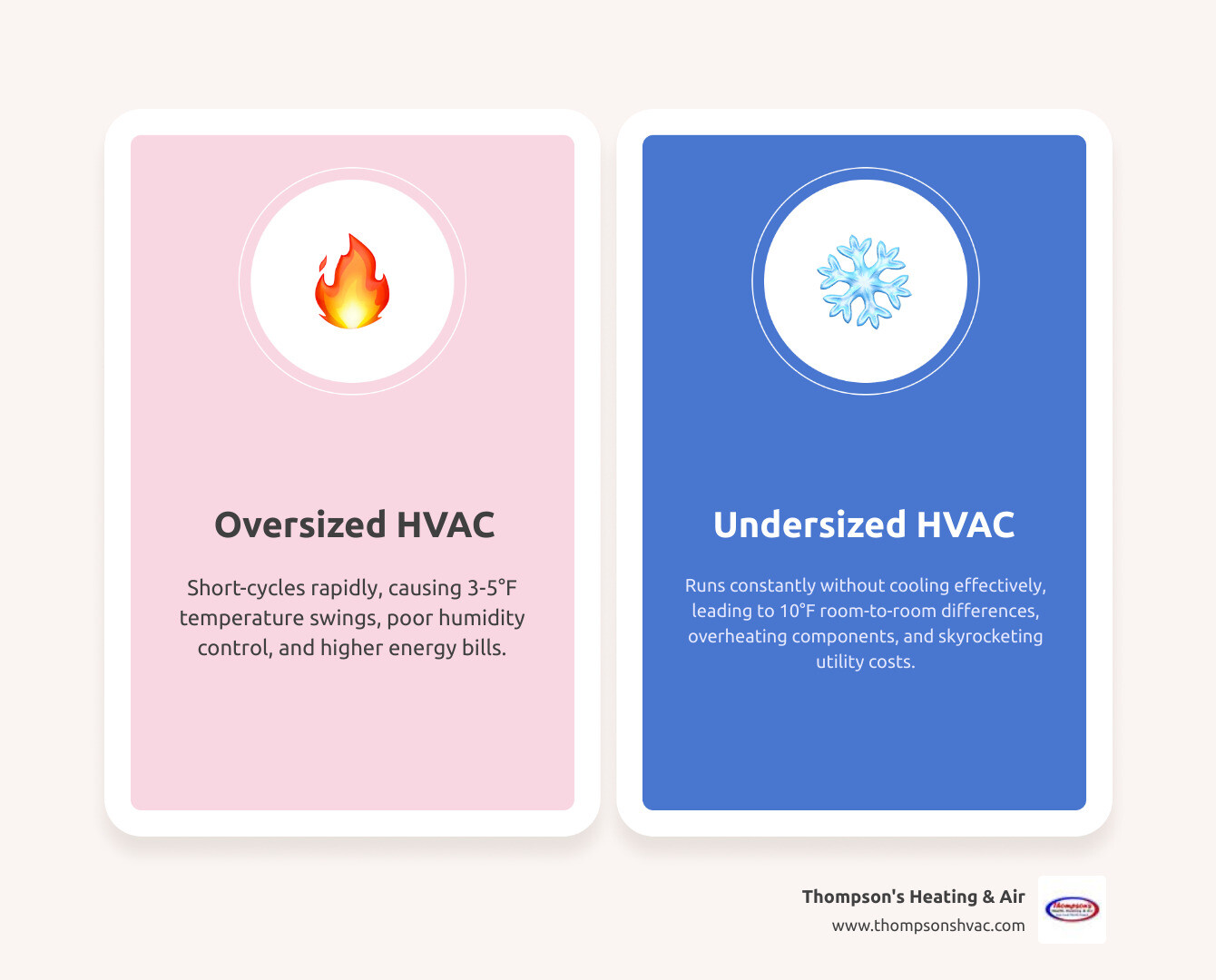
• Causes Temperature Swings: Oversized systems often cause temperature swings of 3-5°F between cycles, leaving you feeling alternately chilly and stuffy.
Humidity Management and How Proper HVAC Sizing Affects Comfort
The biggest "hidden" victim of an oversized system is humidity control. Air conditioners don't just cool the air; they remove "latent heat" (moisture). This dehumidification only happens when the cooling coils stay cold for an extended period.
Because an oversized unit shuts off so quickly, it never runs long enough to pull moisture out of the air. The result? "Clammy air." Your thermostat might say it’s 72 degrees, but you feel sticky and uncomfortable. In humid pockets of Northern California, this excess moisture can even lead to mold growth inside the ducts. Using Smart Thermostat Installation in West Sacramento CA can help monitor these levels, but a thermostat can't fix a system that is fundamentally the wrong size.
The Struggle of an Undersized Unit in Northern California
On the flip side, an undersized unit is like a small engine trying to pull a massive trailer up a hill. It will run constantly, struggling to reach the set temperature on a 100-degree Woodland afternoon.
The symptoms of an undersized system are frustrating and expensive:
• Constant Operation: The unit never rests, leading to component overheating and premature failure.
• Massive Utility Bills: Because the unit never cycles off, your energy meter spins non-stop.
• Uneven Cooling: You may experience temperature swings of up to 10°F between rooms. The room closest to the unit might be okay, while the upstairs bedrooms remain sweltering.
• Cycle Length — Oversized System: Very short (5-10 mins) — Undersized System: Very long (runs forever)
• Humidity — Oversized System: High (sticky/clammy) — Undersized System: Average to Low
• Energy Bills — Oversized System: High (due to startup spikes) — Undersized System: High (due to total runtime)
• Room Temps — Oversized System: Uneven (blasts of air) — Undersized System: Uneven (hot spots)
• Lifespan — Oversized System: Shortened by starts/stops — Undersized System: Shortened by overwork
The Professional Solution: Manual J Load Calculations
So, how do we avoid these "too big" or "too small" traps? We use the industry-standard ACCA Manual J Load Calculation. This isn't a guess based on square footage; it’s a scientific evaluation of your home’s unique DNA.
When we perform a Heating and Air Estimate, we look at:
1. Insulation R-values: How well your attic and walls keep the heat out.
2. Window Orientation: Which rooms get the direct afternoon sun.
3. Air Leakage: How much "treated" air is escaping through gaps in doors or windows.
4. Occupants and Appliances: More people and high-end kitchens generate more internal heat.
5. Ductwork Integrity: Ensuring your "veins and arteries" can handle the air the "heart" is pumping.
This level of detail ensures that your new system is a perfect fit for your specific lifestyle and home structure.
Frequently Asked Questions about HVAC Sizing
What are the clear signs my HVAC system is improperly sized?
The most obvious sign is short cycling—if your AC turns on and off every few minutes, it’s likely oversized. Conversely, if it’s 95 degrees outside and your AC has been running for five hours straight without reaching the thermostat setting, it’s likely undersized. Other red flags include excessive noise from the vents, high indoor humidity (feeling "sticky"), and rooms that are significantly warmer or cooler than the rest of the house.
How does proper sizing impact my monthly energy bills?
Proper sizing is one of the most effective ways to lower your utility costs. A correctly sized unit can use up to 30% less energy than an oversized one because it avoids the massive power draws required for frequent startups. Modern variable-speed systems, when sized correctly, can boost that efficiency by up to 40%. Additionally, a system that doesn't overwork itself requires fewer repairs, saving you money on service calls over time.
Why is square footage alone insufficient for sizing?
Two homes in Woodland can both be 2,000 square feet but have completely different cooling needs. One might have 12-foot vaulted ceilings (more air volume to cool) while the other has standard 8-foot ceilings. One might have modern double-pane windows, while the other has original single-pane glass. Factors like the number of occupants, the type of roofing material, and even the color of the exterior paint can change the load on your HVAC system. Relying solely on square footage is a "guess" that usually results in a comfort mismatch.
Conclusion
At Thompson's Heating & Air, we’ve been serving our neighbors in Woodland, Davis, and across Yolo County since 1992. As a family-owned business, we understand that your home is your sanctuary. We don't believe in "one-size-fits-all" solutions because we know that how proper HVAC sizing affects comfort is the difference between a home you love and a home that frustrates you.
Whether you are in Dixon, West Sacramento, or Winters, our team is dedicated to providing 5-star reliability and local expertise. We take the time to perform the necessary calculations to ensure your system is the "Goldilocks" fit—keeping you cool in the summer, warm in the winter, and efficient all year long.
Ensure your home has the perfect fit with professional HVAC Installation Maintenance Repair



.avif)
.avif)
.png)
