
Why Your Heater Smells Like Burning Plastic Instead of Normal Dust

Is That Fall Heater Odor Harmless Dust or a Dangerous Electrical Fault?
Are you frantically searching the internet because your furnace just kicked on and filled your home with a terrible odor? If you just turned on your system for the first chilly morning of the season, you might be asking yourself exactly why your heater smells like burning plastic instead of normal dust. That sudden, acrid scent pouring from your vents is enough to cause immediate panic for any homeowner.
When the first cold snap hits in September or early fall, heating systems wake up from months of inactivity. While a brief, dusty odor is a completely normal part of this seasonal transition, a sharp, chemical smell is a massive red flag. Recognizing the difference between a harmless seasonal nuisance and a critical safety hazard is the first step in protecting your home. If you suspect an active electrical issue, reaching out for professional heating services is the safest and most effective way to resolve the problem before it escalates.
The Anatomy of First-Startup Odors
Every heating system goes through a settling period during the summer months. As air circulates through your home for cooling, microscopic particles bypass the filter and settle onto the internal components of your furnace. When the heating cycle finally engages, the sudden introduction of high temperatures bakes these settled particles. Understanding what exactly is burning off helps clarify why certain smells are normal and others are alarming.
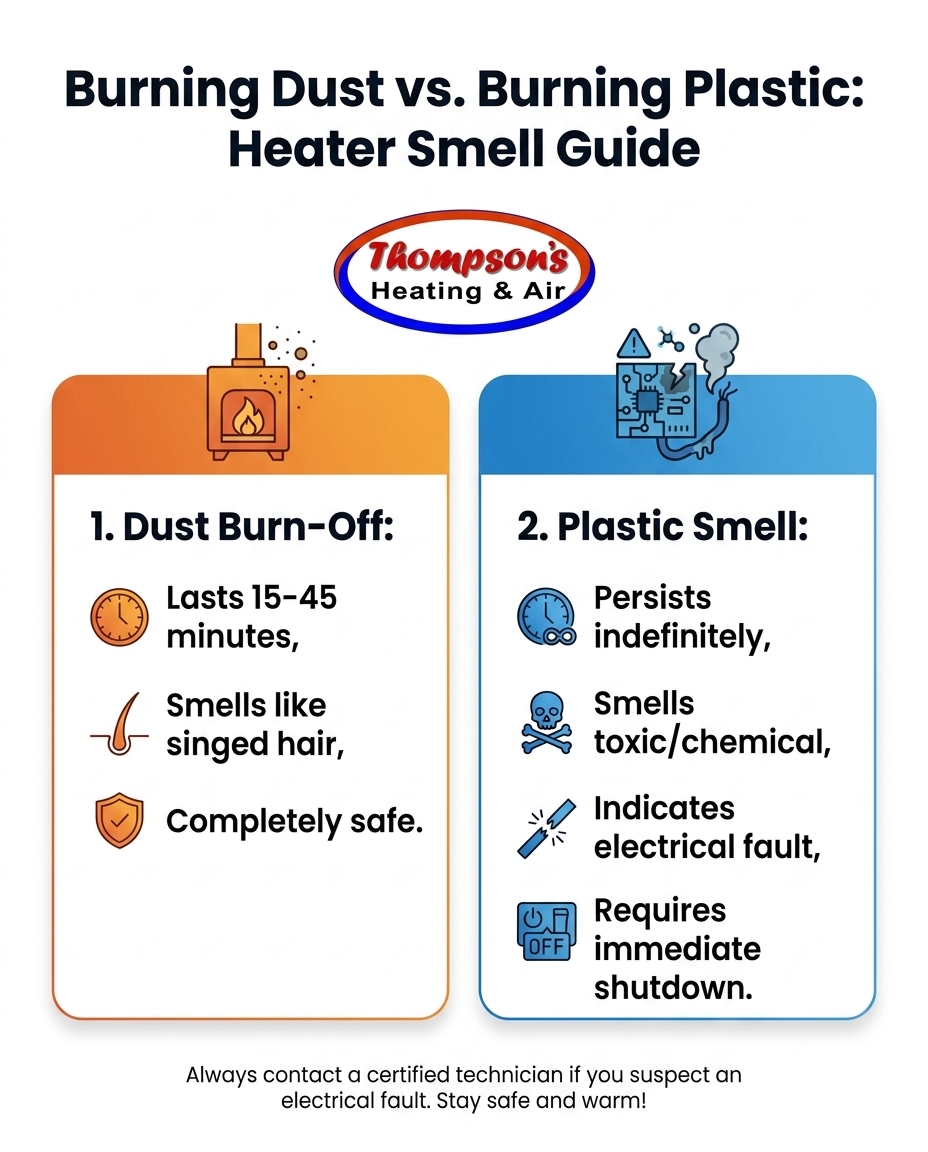
• Singed hair or dusty earth — Typical Cause: Settled household dust on the heat exchanger — Duration: 15 to 45 minutes — Safety Level: Harmless nuisance
• Acrid, melting plastic — Typical Cause: Overheating wire insulation or failing electrical parts — Duration: Persists until shut off — Safety Level: Severe fire hazard
• Rotten eggs or sulfur — Typical Cause: Natural gas leak near the furnace — Duration: Persists until shut off — Safety Level: Immediate evacuation required
• Musty, dirty sock smell — Typical Cause: Bacterial growth on the indoor evaporator coil — Duration: Constant when blower runs — Safety Level: Requires cleaning
The Normal Smell: Why Sacramento Valley Dust Burns Off
In our years providing heating services across Woodland, CA, and the surrounding Sacramento Valley, the team at Thompson's Heating & Air has seen firsthand how our long, dry agricultural summers create a unique environment for your HVAC system. Throughout the summer, heavy particulate matter—including soil dust, agricultural byproducts, pet dander, and general household lint—is pulled into your ductwork and settles directly onto the furnace's heat exchanger.
Because the heat exchanger sits completely dormant while your air conditioner runs, this layer of dust grows thicker over the months. When you finally switch the thermostat to "heat," the burners ignite, and the metal heat exchanger rapidly reaches temperatures exceeding 400 degrees Fahrenheit. The accumulated dust instantly incinerates, sending a distinct "singed" smell through your supply vents.
The Timeline of a Normal Dust Burn-Off
A normal dust burn-off follows a very predictable, harmless pattern. Here is exactly what our technicians tell homeowners to expect during a standard seasonal startup:
1. The Initial Blast: Within the first five minutes of the blower motor turning on, the strongest wave of the odor will push through the vents. It usually smells similar to singed hair or a dusty old radiator.
2. The Fading Phase: Between 15 and 30 minutes of continuous operation, the smell should noticeably weaken. The dust layer has been incinerated, and the fresh air is beginning to clear the ductwork.
3. Total Dissipation: By the 45-minute mark, the odor should be completely gone. If the smell returns during the next heating cycle, or if it never fades, you are no longer dealing with simple dust.
While this process can be slightly irritating to your sinuses, it poses no threat to your home. Opening a few windows to create cross-ventilation is usually all it takes to clear the air.
The Danger Smell: What Burning Plastic Actually Means
While burning dust is a temporary annoyance, a smell resembling melting plastic, burning rubber, or harsh chemicals is a serious warning sign. This distinct, acrid odor does not come from settled debris; it comes from synthetic materials actively breaking down under extreme, unintended heat. When our dispatch center receives a call about burning plastic, we know we are almost always dealing with an active electrical fault.
Electrical components in your furnace rely on thick plastic and rubber insulation to keep electrical currents safely contained. When components fail, draw too much power, or experience a short circuit, the resulting heat quickly melts these protective casings. If you have an older system, you might also want to review our guidelines on older wall heater safety to understand the unique risks associated with aging electrical parts.
Melting Wire Insulation
The quick fix: Shut off the power immediately. Melting wire insulation is one of the most common sources of a burning plastic smell we encounter in the field. Over time, the constant vibration of the furnace can cause electrical connections to loosen. A loose connection creates electrical resistance, which generates intense heat. This heat quickly melts the plastic casing around the wires, releasing toxic fumes into your ductwork. Overloaded circuits or failing control boards can also push excessive amperage through wires not rated for that load, resulting in the same melting effect.
Failing Capacitors and Motors
Your furnace relies on a powerful blower motor to push heated air through your home. This motor is assisted by a capacitor, which acts like a large battery to provide the initial jolt of electricity needed to start the fan. As blower motors age, their bearings wear out, forcing the motor to work harder and draw excess amperage. This causes the motor housing to overheat, often melting nearby plastic components. Similarly, we frequently replace failing capacitors that have bulged and leaked their internal dielectric fluid, producing a harsh, chemical odor that homeowners mistake for burning plastic.
Foreign Objects in the Ductwork
Sometimes, the burning plastic smell is quite literal. On our early fall tune-up visits, our technicians frequently discover that floor registers and return vents have become collection points for small household items. We regularly pull children's plastic toys, candy wrappers, or synthetic pet toys out of the ductwork that fell in during the summer. When the furnace kicks on and the metal ducts heat up, these trapped objects begin to melt. While this isn't an electrical failure, it still releases toxic fumes and requires professional removal to prevent a localized fire inside the ductwork.
Immediate Steps to Take When You Smell Melting Plastic
If you determine that the odor in your home is definitely melting plastic rather than burning dust, you must act quickly. Do not wait 15 to 45 minutes to see if the smell dissipates. Electrical fires can start completely hidden inside the metal cabinet of your furnace, spreading to the surrounding framing before you ever see a flame. Take these steps immediately to secure your home:
1. Turn off the system at the thermostat: Switch your thermostat from "Heat" to the "Off" position. This stops the control board from calling for more heat and running the blower motor, which can fan potential sparks.
2. Shut off the dedicated breaker: Do not rely on the thermostat alone. A shorted control board can sometimes bypass the thermostat and keep the system energized. Locate your main electrical panel, find the breaker labeled "Furnace" or "HVAC," and flip it to the "Off" position. This completely severs the electrical current to the melting components.
3. Assess the area safely: Walk near the furnace closet or basement to check for visible smoke or a worsening odor, but do not open the furnace cabinet. Introducing fresh oxygen to a smoldering component can cause it to ignite.
4. Call for emergency service: Once the power is isolated, contact a licensed professional for heating repair. Explain that you shut the system down due to a burning plastic odor.
5. Evacuate if necessary: If you see visible smoke, hear crackling electrical sounds, or if the toxic smell is overwhelming, evacuate the home and call emergency services immediately.
Why Expert Diagnostics Matter for Heating Safety
When dealing with suspected electrical faults in early fall, attempting a do-it-yourself repair is incredibly dangerous. According to the National Fire Protection Association (NFPA), heating equipment is a leading cause of home fires, and a significant portion of these incidents trace back to ignored electrical failures. Opening the furnace cabinet to poke around for melted wires exposes you to high-voltage risks and can easily turn a minor short circuit into a major fire hazard.
At Thompson's Heating & Air, our team approaches every burning odor call with the utmost caution. We dispatch highly trained technicians to safely trace dangerous electrical faults, ensuring your home is protected from fire risks. Professional technicians carry specialized diagnostic tools—such as multimeters, amp clamps, and thermal imaging devices—that allow them to test circuits, measure motor draw, and pinpoint exact points of resistance without putting the home in danger.
Fast, reliable response times are critical when heating emergencies strike. For example, our team recently helped a local homeowner who experienced an unexpected breakdown on a Sunday morning, leaving them without heat just as temperatures dropped. Our technicians arrived by 2:30 PM the very same day, safely diagnosing the fault and securing the system so repairs could be completed promptly. When you smell burning plastic, you need that same level of urgency and expertise. Trusting a licensed professional for heating repair in Woodland ensures that the root cause of the melting is found and fixed permanently.
Preventing Fall Heater Odors with Pre-Season Maintenance
The best way to handle the panic of strange heater smells is to prevent them from happening in the first place. Proactive, preventative care bridges the gap between emergency troubleshooting and long-term peace of mind. By scheduling a comprehensive pre-season tune-up before the first major cold snap hits Woodland, CA, you can completely bypass the stress of that initial startup.
During a professional tune-up, our technicians physically clean the heat exchanger, wiping away the heavy summer agricultural dust before it ever has a chance to burn off and smell up your home. More importantly, this visit acts as a critical safety inspection for your electrical components. We tighten all high-voltage electrical connections, eliminating the loose lugs that cause wire insulation to melt. We also measure the microfarads of your capacitors and check the amp draw of your blower motor, allowing us to catch and replace failing, overheating parts long before they start producing a toxic plastic odor.
Investing in routine heating maintenance is the single most effective way to ensure that when you turn your thermostat to "heat," you get nothing but safe, warm, odor-free air.
Frequently Asked Questions About Heater Odors
Is a burning plastic smell from a heater dangerous?
Yes, a burning plastic smell is highly dangerous because it indicates an active electrical fault, such as melting wire insulation or an overheating motor. This is a severe fire hazard that requires immediate attention. You should never ignore this odor or wait to see if it goes away on its own.
How long should a heater smell like burning dust?
A normal dust burn-off smell should completely dissipate within 15 to 45 minutes of the first seasonal startup. Once the accumulated summer dust on the heat exchanger has incinerated, the air should smell clean again. If a dusty smell persists for hours or returns every time the heat cycles on, it warrants a professional inspection.
What to do if your heater smells like burning plastic?
Turn off the heating system immediately at the thermostat, then locate your electrical panel and shut off the dedicated breaker for the HVAC unit. Do not attempt to open the furnace cabinet to investigate the source yourself. Once the power is isolated, call a licensed HVAC professional immediately to trace the electrical fault.
Can a burning smell from a heater cause a fire?
While the brief smell of burning dust is completely harmless, burning plastic or rubber smells are often direct precursors to electrical fires. When wires or capacitors overheat enough to melt their protective synthetic casings, they are dangerously close to sparking and igniting surrounding materials.
Why does my new heater smell like burning plastic?
New heaters sometimes emit a faint chemical or oil smell during their very first few cycles as factory coatings and manufacturing oils burn off the heat exchanger. However, a strong, undeniable plastic smell on a new unit could still indicate a pinched wire or an installation error, so it always requires professional verification to be safe.
How can I tell the difference between burning dust and melting wires?
Burning dust smells similar to singed hair or a dusty old radiator, and the scent fades away entirely within 45 minutes of turning the system on. Melting wires produce a harsh, toxic, acrid smell similar to a burning chemical plant, and the odor will persist and worsen as long as the system continues to run.
Secure Your Home's Safety with Professional Heating Diagnostics
The transition into the heating season shouldn't come with anxiety about your home's safety. The short answer is clear: while a brief, dusty odor on the first chilly morning is just a temporary nuisance you can wait out, a sharp plastic smell demands immediate action. Melting wire insulation and failing electrical components are serious hazards that require expert intervention to resolve.
You don't have to guess whether your system is safe to operate. Our local experts at Thompson's Heating & Air can quickly trace electrical faults, replace compromised wiring, and restore your system to perfect working order without putting your property at risk. Secure your home's safety and your own peace of mind by scheduling a professional diagnostic visit today, ensuring you enjoy a warm, odor-free winter.



.avif)
.avif)
.png)
