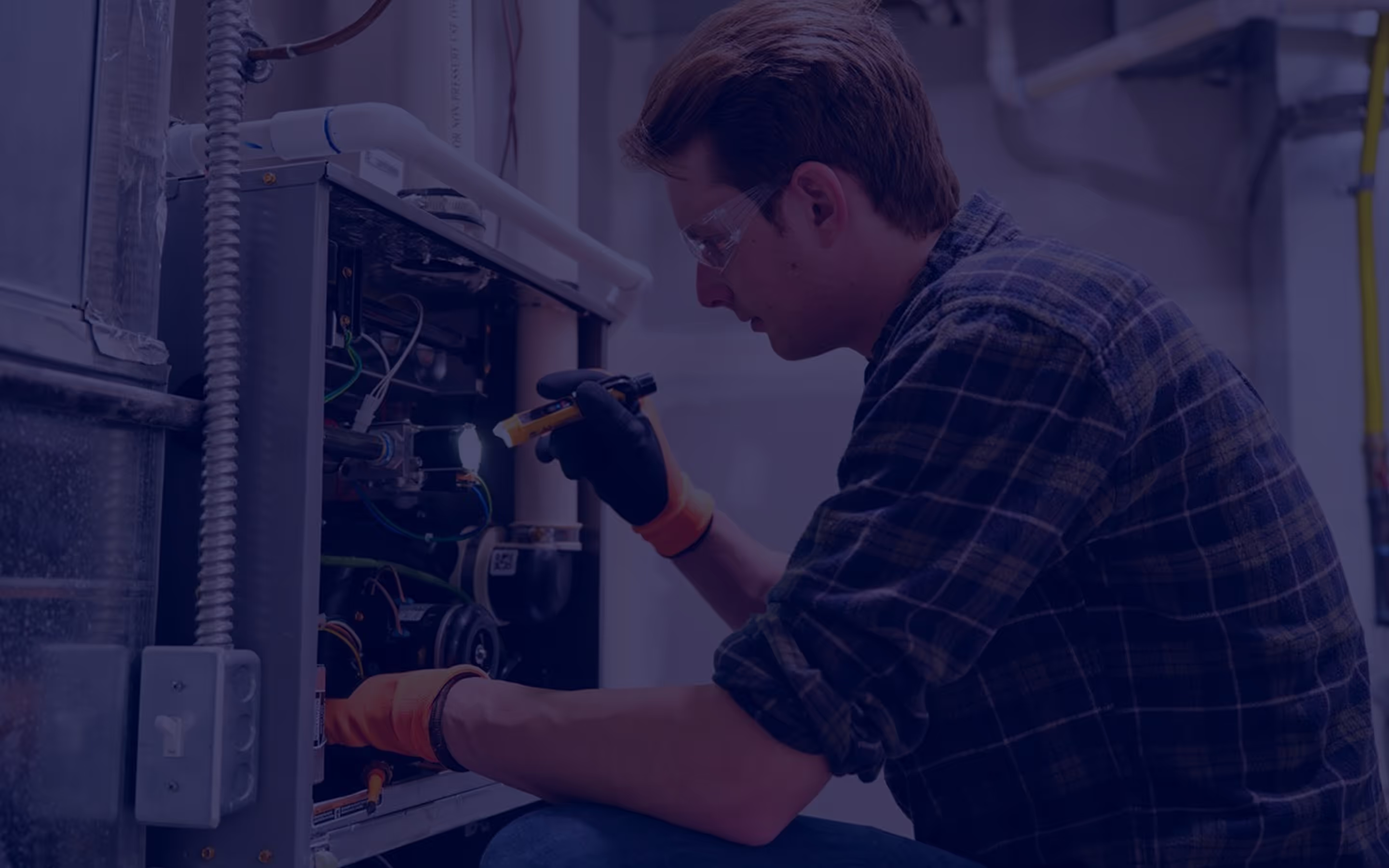
Heating Repair in Woodland, CA
Facing furnace troubles in Woodland? Get rapid, expert service 24/7. Same-day repairs, transparent costs, full warranty. Schedule your heating repair now!

Is Your Furnace Blowing Cold Air or Making Strange Noises?
Waking up to a freezing house or discovering your heating system has failed during a winter cold snap creates immediate stress and discomfort for your family. If your heater is failing just when you need it most, you are not alone—many Woodland residents face unexpected heating breakdowns during the wet, chilly months. Contact Thompson's Heating & Air immediately to schedule a comprehensive diagnostic and restore warmth to your home.
When your comfort is compromised, you need a solution that prioritizes speed, accuracy, and long-term reliability. We provide the following outcomes for homeowners facing heating emergencies:
- Same-day repair services to restore your comfort quickly.
- Competent local technicians available 24/7 for emergencies.
- Transparent pricing with no hidden fees.
- All repairs come with a full warranty to ensure your satisfaction.
Thompson's Heating & Air understands that a broken furnace isn't just an inconvenience; it is a disruption to your daily life that requires urgent professional attention.
Immediate Diagnostics and Repair Scope
When you call for service, the priority is to accurately identify the root cause of the failure rather than simply swapping out parts. Modern heating systems are complex appliances involving intricate electrical components, gas valves, and airflow sensors. A breakdown often presents as a symptom, such as the unit cycling on and off rapidly or blowing lukewarm air, but the underlying issue requires technical expertise to isolate.
Upon arrival, a certified technician performs a systematic evaluation of your entire heating system. This process is designed to catch not only the immediate failure but also any secondary issues that could lead to future breakdowns. You can expect the technician to inspect the thermostat communication, test the ignition sequence, and verify that all safety switches are functioning correctly.
In Woodland, where systems often sit idle during the scorching summer months, dust and debris accumulation can lead to specific startup failures when the temperature finally drops. The scope of a standard repair visit generally includes:
- Safety Inspection: Verifying the integrity of the heat exchanger to ensure there are no cracks that could leak carbon monoxide into the living space.
- Electrical Testing: Checking the voltage and amperage on motors, capacitors, and the control board to prevent electrical fires or component burnout.
- Airflow Analysis: Assessing the blower motor and filter status to ensure heat is being effectively distributed throughout the home.
- Ignition Troubleshooting: Cleaning flame sensors and inspecting the pilot assembly or hot surface ignitor for wear.
Most common repairs, such as replacing a faulty ignitor, swapping a run capacitor, or cleaning a flame sensor, can be completed during the initial visit. Service vehicles are typically stocked with universal parts and common manufacturer-specific components to minimize downtime. If a specific part needs to be ordered, you will be provided with a clear timeline and temporary solutions if available.
The Technical Restoration Process
Restoring a heating system involves a specific sequence of operations to ensure the unit runs efficiently and safely after the repair. Professional technicians follow a strict protocol that moves from isolation of the problem to verification of the fix. This structured approach prevents callbacks and ensures that the repair holds up against the demand of the winter season.
The restoration process typically follows this workflow:
- System Isolation: Power to the furnace is cut, and gas supplies are shut off to ensure a safe working environment.
- Component Removal and Verification: The faulty part is removed, and the technician verifies the specifications to ensure the replacement matches the OEM requirements exactly.
- Installation: The new component is installed with precision, ensuring all wiring connections are tight and gas fittings are sealed and leak-tested.
- Sequence of Operation Test: The technician restores power and initiates a heating cycle. They observe the draft inducer motor starting, the pressure switch closing, the ignitor glowing, the gas valve opening, and the main burner lighting.
- Temperature Rise Calculation: To ensure efficiency, the technician measures the temperature of the air entering the return and the air exiting the supply. The difference, known as the "temperature rise," must fall within the manufacturer's specified range to prevent overheating or short-cycling.
This detailed process ensures that when the technician leaves, your system is not just "working," but operating within the safety and efficiency parameters set by the manufacturer.
When to Repair vs. When to Replace
Deciding between repairing an aging furnace and investing in a new system is a significant financial decision. While repairs are often the most immediate and cost-effective solution, there are specific scenarios where continuing to patch up an old unit becomes economically unwise.
Homeowners should consider replacement over repair when specific thresholds are met regarding age, cost, and safety.
The Age Factor
Heating systems typically last between 15 and 20 years. If your unit is approaching the 15-year mark, parts may be becoming obsolete or significantly more expensive to source. A major component failure, such as a blower motor or control board, in a unit of this age is often a signal that other parts are likely to fail soon.
The Cost-Benefit Analysis
A common industry standard used to guide this decision is the "50% Rule." If the cost of the repair approaches 50% of the value of a new system, replacement is generally the better investment. Additionally, if you have required multiple repairs in the last two years, the cumulative cost of service calls may already exceed the monthly payments on a modern, high-efficiency system.
Safety Concerns
The most critical factor is safety. If a technician discovers a cracked heat exchanger, repair is rarely an option. A cracked heat exchanger can release deadly carbon monoxide into your home. In this scenario, the heat exchanger must be replaced—which is a labor-intensive and expensive job—or the entire furnace must be swapped out. Given the labor costs involved in a heat exchanger swap, full system replacement is usually the logical choice for safety and warranty peace of mind.
Efficiency Ratings
Older furnaces often operate at 60% to 70% AFUE (Annual Fuel Utilization Efficiency), meaning 30 to 40 cents of every dollar you spend on heating goes up the flue pipe. Modern systems operate at 80% to 98% efficiency. Even if the old unit can be repaired, the monthly savings on utility bills from a new system can help offset the installation cost over time — view tax credits.
Local Climate and Regulatory Considerations
Operating a heating system in Yolo County requires specific attention to the local climate patterns and regulatory environment. While the area is known for intense summer heat, the winters bring a distinct shift that affects how heating systems perform and age.
Seasonality and Moisture
The region experiences mild but wet winters, with temperatures frequently dropping into the 30s°F and significant rainfall occurring between November and March. This humidity can impact heating systems, particularly those located in attics or crawl spaces. Moisture can lead to corrosion on electrical contacts and rust on burners if the system is not regularly inspected. Furthermore, the sharp transition from hot summers to cold winters means the furnace often sits dormant for months. This inactivity is why the first cold snap of the year often triggers a wave of service calls; dust that has settled on components burns off or causes sensors to dirty, and motors that haven't spun in months may seize.
Permits and Building Codes
Any significant alteration to your heating system, particularly a replacement or a repair involving gas piping, requires adherence to local building codes. In this area, ensuring that venting is up to code is critical for safety. Older homes may have masonry chimneys that require liners to accommodate modern, higher-efficiency furnaces which produce cooler exhaust gases that can condense and damage unlined brick. Thompson's Heating & Air ensures all major work remains compliant with local regulations, protecting your home’s value and insurance validity.
Utility Infrastructure
Most homes in this vicinity rely on natural gas provided by PG&E, though some newer developments or retrofitted homes utilize electric heat pumps. Understanding the specific fuel source and rate structures can help in optimizing the system. For gas furnaces, ensuring proper gas pressure is vital for efficiency; for heat pumps, verifying the refrigerant charge is key to handling the frosty mornings common in the valley.
Proof of Expertise and Service Reliability
Choosing a service provider for heating repair involves trusting a technician to enter your home and work on a system that is integral to your safety. Professional service providers distinguish themselves not through marketing claims, but through verifiable credentials, technical consistency, and clear communication.
Technical Certification
High-quality repair work is performed by technicians who hold certifications such as NATE (North American Technician Excellence) or have completed rigorous manufacturer training. These credentials indicate that the technician understands the thermodynamics and electrical theory behind the equipment, rather than just knowing how to swap parts.
Diagnostic Transparency
A reputable service provider offers clear, upfront explanations of the problem. You should expect to be shown the failed part, have the testing results explained to you (such as showing the multimeter reading), and receive a flat-rate quote before any work begins. This eliminates the surprise of hourly billing if a repair takes longer than expected due to unforeseen complications.
Availability and Response
Heating disasters rarely happen during business hours. The ability to access 24/7 support is a critical differentiator. Whether it is a holiday weekend or the middle of the night, reliable providers have on-call staff ready to address no-heat emergencies to ensure your pipes don't freeze and your family stays safe.
If your heating system is showing signs of struggle, waiting often leads to more extensive damage and higher costs. Secure your comfort and safety by addressing these issues immediately with a professional team that understands the local climate and specific heating needs of your home.
Restore Your Comfort Today with Trusted Local Experts
Don’t let a failing furnace leave your family in the cold another day. When your heat goes out, every minute matters—and Thompson's Heating & Air is ready to respond with fast, reliable solutions you can trust. Our experienced, certified technicians deliver same-day service, honest pricing, and repairs backed by full warranties, so you can feel confident from the first call to the final test cycle. Whether it’s an unexpected breakdown or warning signs you don’t want to ignore, we’re here 24/7 to protect your comfort and safety. Call now or schedule online to get dependable heat restored today.
.avif)
Schedule Your Heating Service Today
Do not wait for your [system type] to fail completely. Call Thompson's Heating & Air today at (530) 661-2599 to schedule your [service name] in [city] or anywhere in Yolo County. Our experienced technicians are ready to restore your comfort with fast, reliable service you can trust.



.avif)
.avif)
.png)
