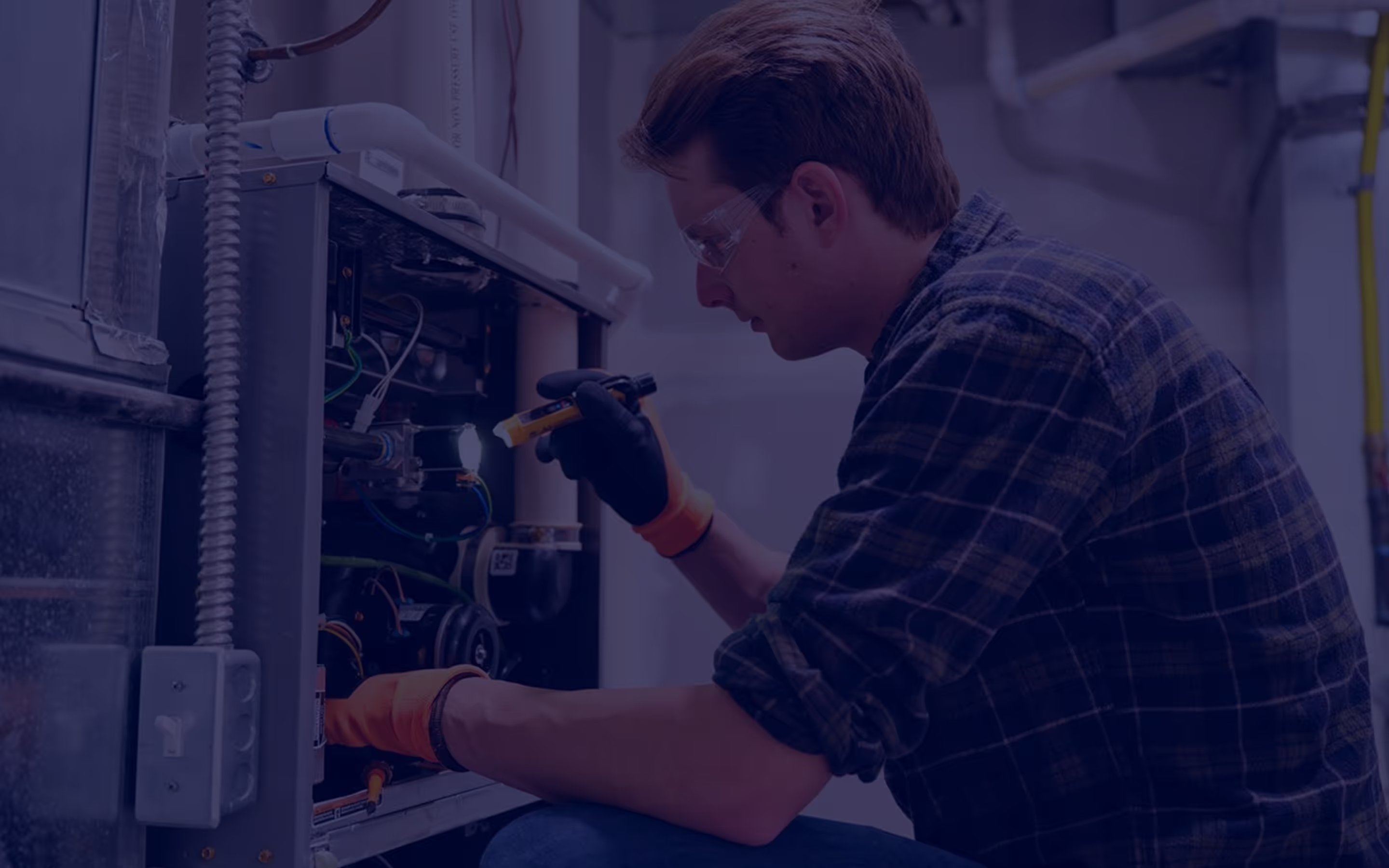
Heating Installation in Woodland, CA
Ensure your Woodland home stays cozy with rapid, professional heating installation. Contact us today for a consultation and secure flexible financing options.

Struggling with Inefficient Heating? Experience Rapid Installation in Woodland
As the cold season approaches in Woodland, ensure your home remains cozy with efficient heating. Relying on an outdated or malfunctioning system during the wet winter months can lead to discomfort and skyrocketing energy bills, making immediate action necessary. Contact Thompson's Heating & Air today to schedule your consultation and secure flexible financing options for your new system.
When you choose professional installation services, you eliminate the uncertainty of intermittent heating failures. We prioritize getting your home back to a comfortable temperature with systems designed for longevity and efficiency.
- Get your new heating system installed within the day to minimize disruption to your routine.
- Benefit from transparent, competitive pricing with no hidden costs or surprise fees.
- Enjoy peace of mind with our comprehensive warranties and responsive customer support.
All installations are fully compliant with local regulations and come with extended warranty options to protect your investment for years to come.
Comprehensive Heating Solutions Available Immediately
Securing a new heating system is about more than just purchasing a unit; it is about acquiring a fully integrated climate solution tailored to your specific property. When you commit to a heating installation, you are purchasing guaranteed performance, safety, and efficiency. The focus remains on delivering a system that operates at peak capacity from the moment it is turned on.
Residents in Woodland require systems that can handle the specific shift from dry summers to damp, chilly winters. The scope of service includes a full assessment of your current infrastructure, accurate load calculations, and the seamless integration of modern equipment. You receive a system that is correctly sized for your square footage and insulation levels, preventing the common issues of short-cycling or underperformance.
Included in every installation service:
- Site Evaluation and Load Calculation: Technicians perform a Manual J load calculation to determine the exact heating requirements of the structure. This accounts for window placement, insulation quality, and local climate data.
- System Selection: Guidance on selecting the right fuel source and efficiency rating (AFUE) that aligns with your budget and long-term energy goals.
- Safe Removal and Disposal: The disconnection and environmentally responsible disposal of your existing furnace or heat pump.
- Code Compliance: Verifying that all gas lines, electrical connections, and venting systems meet current safety codes and building standards.
- Calibration and Testing: A rigorous startup procedure to ensure airflow, static pressure, and temperature rise are within the manufacturer's specified ranges.
The Installation Process: From Assessment to Airflow
A professional installation follows a strict, logical sequence to ensure safety and efficiency. This process minimizes downtime and ensures that the new unit integrates perfectly with your existing ductwork and thermostat systems. We do not skip steps; every connection is verified.
- Initial Site Inspection: Technicians arrive to inspect the existing setup. This involves checking the condition of the ductwork, the electrical panel capacity, and the gas line integrity. If the current infrastructure cannot support a modern, high-efficiency unit, modifications are identified immediately.
- Preparation and Safety Setup: The workspace is prepared to protect your flooring and property. Gas and electricity supplies are shut off safely. Safety protocols are paramount, especially when dealing with combustible fuels and high-voltage electricity.
- Removal of Old Equipment: The obsolete unit is disconnected. Technicians carefully handle refrigerant recovery (if applicable for heat pumps) and disconnect venting flues. The old unit is removed from the premises, ensuring no debris is left behind.
- Positioning and Connection: The new furnace or heat pump is positioned and leveled. Leveling is critical for proper drainage of condensate and quiet operation. Once in place, the system is connected to the plenum (ductwork), gas lines, and electrical supply.
- Venting and Drainage: Proper venting is installed to ensure carbon monoxide and other combustion gases are safely expelled from the home. For high-efficiency condensing furnaces, specific PVC venting and condensate drain lines are installed to handle the liquid byproduct of the heating process.
- System Start-Up and Commissioning: The system is powered on. Technicians measure static pressure in the ducts and adjust the blower speed to match the design requirements. Gas pressure is adjusted at the manifold to ensure the burner operates cleanly and efficiently.
- Final Walkthrough: The operation of the new thermostat is demonstrated. Maintenance requirements, such as filter changes and annual inspections, are explained clearly to ensure the homeowner understands how to maintain the warranty.
Determining When Replacement Beats Repair
Deciding between repairing an aging unit and investing in a new installation is a common dilemma. While repairs may seem cheaper upfront, they often act as a temporary bandage on a failing system. There are specific metrics and indicators that signal when a replacement is the more financially sound decision.
The "50% Rule" is a standard industry benchmark. If the cost of the repair approaches 50% of the value of a new system, replacement is generally the better option. Additionally, if the current unit is over 15 years old, it is likely operating at a significantly lower efficiency tier than modern standards require.
Consider replacement if you observe the following:
- Rising Energy Bills: If fuel costs are increasing despite usage remaining constant, the system’s internal components are likely degrading. Modern systems offer AFUE ratings between 80% and 98%, which can drastically reduce monthly operational costs compared to older units operating at 60-70% efficiency.
- Frequent Breakdowns: If the system has required multiple repairs in the last two years, it has become unreliable. The cumulative cost of service calls, parts, and labor often exceeds the monthly financing cost of a new, warrantied unit.
- Uneven Heating or Cold Spots: As furnaces age, the blower motor may lose power, or the heat exchanger may crack or foul. This results in some rooms being too hot while others remain cold. If ductwork solutions do not fix this, the unit itself is likely failing to generate adequate pressure.
- Safety Concerns: Older gas furnaces run a higher risk of heat exchanger cracks. A cracked heat exchanger can leak carbon monoxide into the living space. If a technician flags a safety violation or a crack, immediate replacement is the only safe path forward.
- Noise and Odors: Excessive rattling, booming, or squealing indicates severe mechanical wear. Strange smells, particularly burning or metallic odors, suggest overheating components or wiring issues that pose a fire hazard.
Local Considerations: Permits, Climate, and Compliance
Operating in Woodland requires specific knowledge of regional building codes and environmental factors. A generic installation approach often fails to account for the nuances of the local climate and regulatory environment.
- Permitting and Inspections: Replacing a heating system is a major construction activity that requires a building permit. This ensures that the installation meets safety standards regarding gas piping, electrical grounding, and venting. Professional installers handle the permit application and schedule the final city inspection. Selling a home with unpermitted work can lead to significant complications during closing; valid permits provide proof of professional workmanship.
- Climate-Specific Sizing: While summers are hot and dry, the winters in this region are mild but wet. This humidity affects how heat feels. Systems must be calibrated to provide consistent warmth without drying out the air excessively, which can happen with oversized gas furnaces. Conversely, heat pumps must be selected with the correct heating seasonal performance factor (HSPF) to handle the dip in temperatures efficiently without relying heavily on expensive auxiliary heat strips.
- Utility Rebates and Incentives: Local utility providers often offer rebates for upgrading to high-efficiency equipment. These programs change frequently and often require specific documentation and installation by a licensed contractor. Using a professional ensures eligibility for these financial incentives, effectively lowering the net cost of the installation.
Technical Expertise and Service Standards
The longevity of a heating system is determined more by the quality of the installation than the brand of the equipment. Even the most expensive furnace will fail prematurely if the ductwork is restricted or the gas pressure is set incorrectly. Thompson's Heating & Air focuses on the technical precision required to get the maximum lifespan out of every unit installed.
Expertise in this field means understanding airflow dynamics. A system that is "starved for air" due to poor return duct sizing will overheat and suffer component failure. Technicians check the entire envelope of the system, not just the box in the garage or attic. This holistic approach ensures that the investment yields comfort for the next 15 to 20 years.
Differentiators in service include:
- NATE-Certified Technicians: Technical competence is verified through rigorous industry testing. This certification ensures that the individuals working on the system understand the thermodynamics and electrical theory behind the equipment.
- Properly Stocked Trucks: Installations proceed smoothly because vehicles are stocked with the necessary fittings, transition metals, and electrical components. This reduces delays caused by trips to supply houses.
- Respect for Property: Installation involves moving heavy equipment through a finished home. Drop cloths, shoe covers, and careful maneuvering prevent damage to flooring and walls. The workspace is left cleaner than it was found.
- Manufacturer Relationships: Direct access to manufacturer support lines and priority parts availability ensures that any warranty issues are resolved rapidly.
Maximizing Efficiency Through Proper Calibration
Installing the unit is only the first phase; calibrating it for the specific home is where efficiency is realized. Modern heating systems often come with variable-speed blowers and multi-stage burners. These features allow the system to run at lower capacities to maintain temperature, rather than blasting at 100% capacity and then shutting off.
To utilize these features, the thermostat and control board must be programmed correctly. Technicians configure the "dip switches" on the furnace control board to match the specific airflow resistance of the home's ductwork. If this step is missed, a variable-speed furnace will operate like a basic single-stage unit, wasting the investment made in higher efficiency technology.
Furthermore, airflow is balanced to ensure that the furthest rooms receive adequate heat. This may involve adjusting dampers at the plenum or recommending changes to register grilles. The goal is a unified temperature throughout the living space, eliminating the need for space heaters in bedrooms.
Secure Your Comfort with Professional Installation
Delaying the replacement of a failing heating system invites risk—risk of breakdown during a cold snap, risk of carbon monoxide exposure, and the certainty of higher energy bills. A modern, professionally installed system transforms the indoor environment, providing consistent, quiet, and safe warmth regardless of the weather outside.
The process is designed to be seamless, from the initial load calculation to the final safety check. Every step is executed with precision to ensure compliance with local codes and manufacturer specifications.
Don't wait for a complete system failure to make a decision. Upgrade your home’s heating infrastructure today and experience the difference that professional sizing and installation make. Contact Thompson's Heating & Air to schedule your estimate and take the first step toward a warmer, more efficient home.
.avif)
Schedule Your Heating Service Today
Do not wait for your [system type] to fail completely. Call Thompson's Heating & Air today at (530) 661-2599 to schedule your [service name] in [city] or anywhere in Yolo County. Our experienced technicians are ready to restore your comfort with fast, reliable service you can trust.



.avif)
.avif)
.png)
