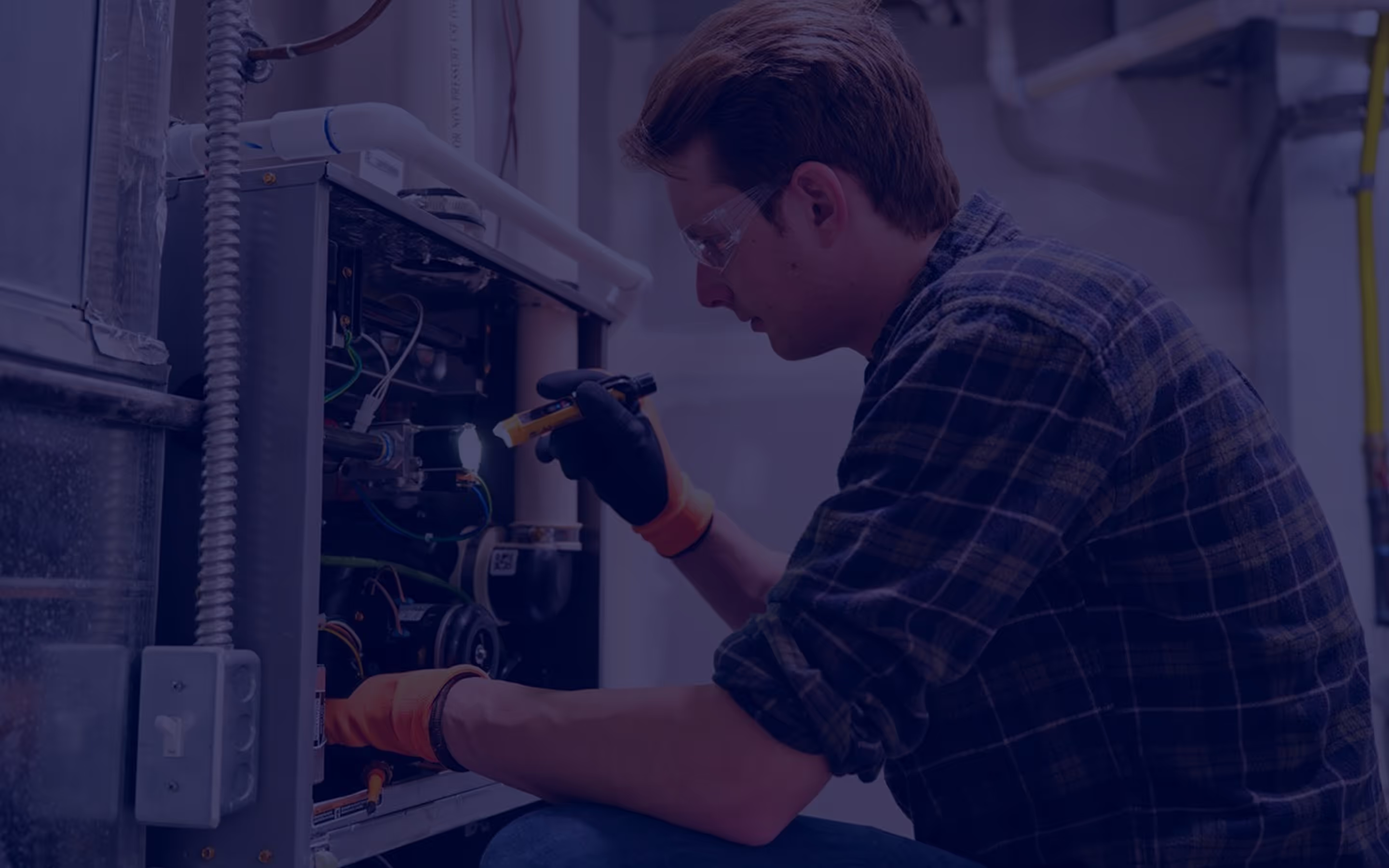
Heat Pump Installation in Woodland, CA
Struggling with high energy bills in Woodland? Opt for our efficient heat pump installation. Save on utilities and enjoy consistent home temperatures. Contact us!

Inefficient Cooling Driving Up Your Summer Energy Bills?
Unpredictable indoor temperatures and skyrocketing utility costs during the peak of summer indicate your current system is failing to keep up with the demands of the season. If your home cannot maintain a consistent temperature, call Thompson's Heating & Air today for an assessment or ask about our financing options to secure a solution immediately.
Experience overwhelming summer heat without relief? Our heat pump installations are tailored to handle the hot, arid climate typical of this region efficiently. We understand that residents in Woodland need reliable cooling when temperatures spike above 90°F, as well as efficient heating during the wet, mild winters. Thompson's Heating & Air provides systems designed to stabilize your indoor environment regardless of the weather outside.
- Rapid installation protocols allow us to quickly deliver relief from the heat, minimizing downtime in your home.
- Systems designed to optimize energy efficiency ensure your monthly utility bills remain manageable even during high-usage months.
- Reliable operation guarantees performance during peak heat months when standard units often fail due to strain.
All installations are backed by comprehensive warranties and eligible for available energy rebates to maximize your investment.
What You Get With a Professional Heat Pump Installation
Choosing to install a heat pump is an investment in year-round climate control. Unlike a standard air conditioner that only cools, a heat pump transfers heat to cool your home in the summer and reverses the process to warm it in the winter. This dual-functionality makes it a primary solution for homeowners looking to simplify their HVAC setup while increasing efficiency.
When you schedule an installation service, the scope of work goes far beyond simply dropping a unit into place. The service includes a comprehensive evaluation of your current infrastructure. We assess your ductwork for leaks that could compromise airflow, check the electrical capacity of your panel to ensure it can support the new equipment, and verify that the refrigerant lines are sized correctly for modern, high-pressure refrigerants.
You receive a complete system changeout or retrofit that brings your home up to modern building standards. This includes the removal and environmentally safe disposal of your old equipment, ensuring no hazardous materials are left behind. The new system is calibrated specifically for your home’s square footage and thermal profile. We ensure the thermostat integration allows for precise control, often including smart technology that learns your schedule to further reduce energy waste.
How the Installation Process Works
A correct installation is the single most important factor in the longevity and efficiency of your heat pump. A top-tier unit installed poorly will fail sooner and cost more to run than a mid-range unit installed perfectly. We follow a rigorous, step-by-step protocol to ensure every component functions as intended.
- Site Evaluation and Load Calculation: The process begins with a Manual J load calculation. This engineering calculation determines exactly how much heating and cooling capacity your specific home requires based on insulation levels, window placement, and local weather patterns in Woodland. Guessing the size often leads to "short cycling," where the unit turns on and off too frequently, wearing out parts prematurely.
- Preparation and Safety Setup: Technicians prepare the workspace to protect your property. This involves laying down drop cloths and setting up safety zones. We shut off power to the existing circuit and disconnect the fuel or electrical supply to the old unit safely.
- Removal of Existing Equipment: The old air handler and outdoor compressor are disconnected. Any remaining refrigerant is reclaimed according to EPA regulations to prevent environmental contamination. The old concrete or composite pad outside is inspected; if it is unlevel or deteriorating, we prepare the ground for a new, stable base.
- Indoor Unit Installation: The new air handler or evaporator coil is installed. This often involves fabricating a transition piece for the sheet metal plenum to ensure an airtight seal between the new unit and your existing ductwork. An airtight seal is critical to preventing conditioned air from leaking into your attic or crawlspace.
- Outdoor Unit Placement: The condenser is positioned on the new pad. Proper clearance is maintained around the unit to ensure adequate airflow, which is vital for the heat exchange process. We also consider noise levels and vibration isolation to keep the operation quiet.
- Line Set and Electrical Connection: Copper refrigerant lines are run between the indoor and outdoor units. These lines are brazed (welded) using nitrogen to prevent oxidation inside the pipes. High-voltage wiring is connected to a disconnect box for safety, and low-voltage control wiring is connected to the thermostat.
- Vacuum and Charge: Before releasing the refrigerant, we pull a deep vacuum on the lines to remove all moisture and air. This is a non-negotiable step; moisture inside the lines creates acid that destroys compressors. Once the vacuum holds, the system is charged with the precise amount of refrigerant required by the manufacturer.
- Final Commissioning: The system is powered on and tested. We measure static pressure, airflow, and temperature splits (the difference in temperature between air entering and leaving the system) to confirm it is operating at peak efficiency.
When Replacement Beats Repair
Deciding between repairing an aging system and investing in a new heat pump often comes down to long-term economics and reliability. While a repair might seem cheaper upfront, it acts as a temporary bandage on a system that is fundamentally failing.
- The 50% Rule: If the cost of the repair approaches 50% of the value of a new system, replacement is the financially sound choice. As equipment ages, the frequency of breakdowns increases. Spending money on a compressor today does not guarantee the fan motor won't fail next month.
- Age of the System: Heat pumps and AC units typically last 10 to 15 years. If your equipment is in this age range and requires a major component replacement, the technology inside is likely obsolete. Newer systems utilize inverter-driven compressors that ramp up and down rather than blasting at 100% capacity, offering significantly better comfort and lower bills.
- Refrigerant Phase-Outs: Older systems often use R-22 Freon, which has been phased out and is incredibly expensive to source. If your older unit has a refrigerant leak, topping it off is no longer a cost-effective strategy. Modern heat pumps use R-410A or newer, eco-friendly refrigerants that are readily available and efficient.
- Rising Energy Bills: Components degrade over time. Coils get fouled, and motors lose efficiency. If you notice a steady climb in your kilowatt-hour usage despite normal weather, your system is working harder to produce the same amount of cooling. Replacing it resets your energy consumption to a much lower baseline.
Navigating Local Requirements and Climate Factors
Installing HVAC equipment in Yolo County requires adherence to specific local codes and an understanding of the regional infrastructure. This is not a "one-size-fits-all" environment; the specific conditions here dictate how a system should be set up for maximum lifespan.
- Permitting and Inspections: The City of Woodland Building Division requires permits for HVAC replacements. This ensures that the installation meets safety codes, particularly regarding electrical connections and structural support. A permitted job closes with an inspection, providing you with third-party verification that the work was done correctly. We handle the permit application and scheduling of inspections as part of the service.
- Electrical Infrastructure: Many older homes in the area may have 100-amp electrical panels that are already near capacity. Adding a powerful heat pump might require a dedicated circuit or a panel upgrade. We evaluate your electrical load before installation to prevent tripping breakers or fire hazards.
- Utility Rebates and Incentives: PG&E and other regional entities frequently offer rebates for upgrading to high-efficiency electric appliances. These programs change often but typically focus on SEER2 (Seasonal Energy Efficiency Ratio) and HSPF2 (Heating Seasonal Performance Factor) ratings. Installing a system that meets specific efficiency tiers can result in significant financial rebates.
- Climate-Specific Tuning: While our winters are mild, the humidity levels can vary. In the summer, the heat is dry and intense. Thompson's Heating & Air configures the airflow settings (CFM) to maximize sensible cooling capacity, ensuring the home cools down quickly in the late afternoon heat without drying out the air excessively, which can cause discomfort.
Why Heat Pumps Fit the Regional Climate
The local weather pattern—scorching dry summers and cool, wet winters—is the ideal operational environment for a heat pump. In extremely cold climates (below freezing for extended periods), heat pumps have to work harder or rely on backup resistance heating strips. However, in our region, the winter temperatures rarely drop below the freezing point for long. This allows the heat pump to extract ambient heat from the outside air very efficiently, often delivering 3 to 4 units of heat for every 1 unit of electricity consumed.
During the summer, the efficiency gains are equally impressive. Modern heat pumps often exceed the cooling efficiency of standard central air conditioners. Because they are designed to run for longer cycles at lower speeds, they eliminate the uncomfortable temperature swings associated with older, single-stage AC units. This steady operation is better for the equipment and provides a more consistent comfort level throughout the home.
Technical Superiority and System Longevity
We prioritize installing equipment that utilizes advanced compression technology. Variable-speed and two-stage compressors are standard recommendations because they adjust their output to match the heating or cooling load of the home in real-time.
- Noise Reduction: Modern systems are significantly quieter than the rattling units of the past. Swept-wing fan blades and compressor sound blankets reduce operational noise, which is essential for maintaining peace in your backyard or patio area.
- Smart Thermostat Compatibility: New heat pumps communicate seamlessly with smart home ecosystems. This allows for geofencing (adjusting the temp when you leave or arrive), detailed energy usage reports, and remote diagnostics that can alert you to a potential issue before the system actually fails.
- Zoning Capabilities: For larger homes, we can integrate zoning systems. This uses motorized dampers in the ductwork to direct air only to the rooms that need it. You no longer have to cool the entire house just to be comfortable in the master bedroom, which further reduces energy consumption.
Secure Your Comfort and Efficiency Today
A failing or inefficient HVAC system is a financial drain and a source of daily frustration. Waiting for a complete breakdown during a heatwave leads to rushed decisions and potential delays. By being proactive with your installation, you gain control over your indoor climate, reduce your carbon footprint, and protect your home from rising energy costs.
We provide the technical expertise required to ensure your new system is sized, installed, and calibrated to meet the specific challenges of the local climate. From pulling the necessary permits to the final quality control check, every step is managed with precision.
Don't let the heat dictate your comfort level this season. Contact us now to schedule your heat pump installation consultation.
.avif)
Schedule Your Heat Pump Service Today
Do not wait for your [system type] to fail completely. Call Thompson's Heating & Air today at (530) 661-2599 to schedule your [service name] in [city] or anywhere in Yolo County. Our experienced technicians are ready to restore your comfort with fast, reliable service you can trust.



.avif)
.avif)
.png)
