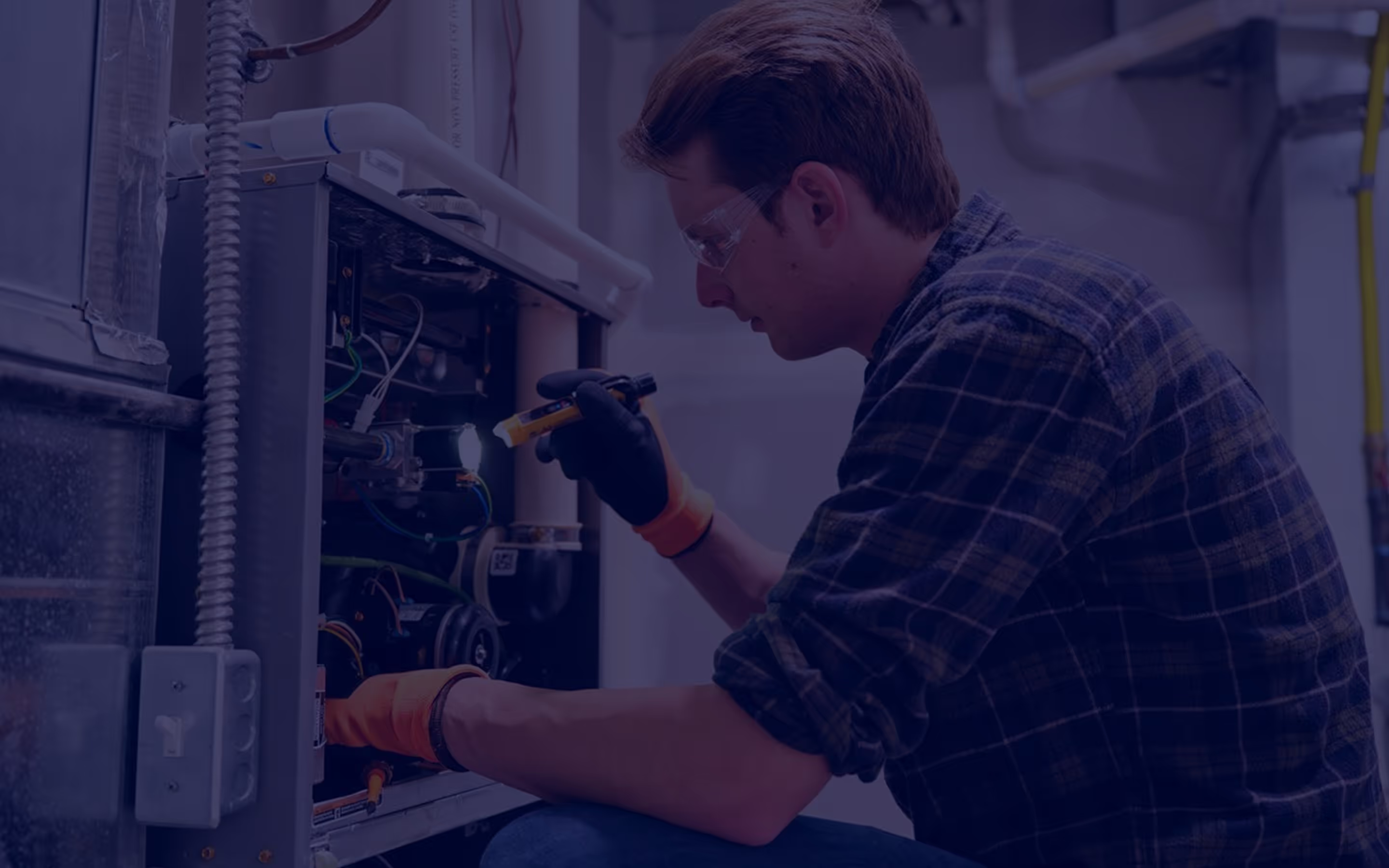
HVAC Repair in Woodland, CA
Seeking prompt HVAC repair in Woodland? Contact us today for quick, reliable service and ensure your home comfort with certified technicians ready to assist.

Experiencing HVAC Problems? Get Reliable Repair Services Today
If your HVAC system is failing, especially during the extreme temperatures we often experience, timely repair is crucial for your safety and comfort. Contact us immediately to schedule a diagnostic visit or to learn about our financing options. At Thompson's Heating & Air, we provide rapid and reliable HVAC repairs to ensure your home remains comfortable year-round. Residents in Woodland can rely on our team to address system failures with speed and technical precision.
- Same-day service to quickly restore your system's functionality
- Transparent pricing and financing options available
- Satisfaction guaranteed with fully licensed and experienced technicians
All services are performed by certified technicians, compliant with local codes, and covered under warranty for your peace of mind.
Troubleshooting Common HVAC Problems
Identifying the root cause of an HVAC issue is the first step toward a solution. Modern heating and cooling systems are complex networks of electrical, mechanical, and airflow components. When one part malfunctions, it often triggers a chain reaction that affects the entire unit. Homeowners often notice symptoms before a total system collapse occurs. Recognizing these early warning signs can prevent minor repairs from escalating into major component replacements.
Airflow and Temperature Irregularities
Inconsistent temperatures are often the most obvious sign of a malfunction. If the thermostat is set to a specific temperature but the system fails to reach it, or if certain rooms remain significantly warmer or cooler than others, the system is struggling to distribute air effectively.
- Weak airflow from vents often indicates a failing blower motor, clogged air filters, or breaches in the ductwork.
- Warm air blowing from the vents while the air conditioning is engaged usually points to a compressor failure or a refrigerant leak.
- Cold spots in the home during the heating season suggest issues with the heat exchanger or uneven duct balancing.
- Short-cycling, where the unit turns on and off frequently without completing a full cycle, signals an oversized unit, a dirty air filter, or a malfunctioning thermostat sensor.
Audible and Olfactory Indicators
Your HVAC system should operate relatively quietly. Unusual noises are mechanical distress signals that require professional attention. Similarly, strange odors can indicate safety hazards, particularly with gas-powered heating units.
- Squealing or screeching sounds typically suggest a slipped or worn-out fan belt.
- Grinding or metal-on-metal noises often indicate that motor bearings have lost lubrication and are grinding against each other.
- Banging or rattling can mean a loose component within the blower assembly or debris trapped in the outdoor condenser unit.
- A burning smell when the heater first turns on is normal (burning dust), but a persistent burning odor implies electrical wiring issues or an overheating motor.
- The smell of rotten eggs is a distinct indicator of a natural gas leak, requiring immediate evacuation and professional intervention.
Electrical and Thermostat Failures
Sometimes the issue originates in the control systems rather than the mechanical units. Electrical connections can loosen over time due to vibration, and sensors can drift out of calibration.
- If the system refuses to turn on entirely, the issue may stem from a tripped breaker, a blown fuse, or a dead thermostat battery.
- Unresponsive thermostats that do not communicate with the furnace or AC unit may need recalibration or replacement.
- Frequent circuit breaker trips indicate that the HVAC unit is drawing more power than it should, often due to a straining motor or a short circuit in the wiring.
Immediate Assistance for Urgent Repair Needs
Certain HVAC failures constitute an emergency, particularly during the peak of summer or the depths of winter. When a cooling system fails in triple-digit heat, the internal temperature of a home can rise to dangerous levels quickly, posing health risks to the elderly, young children, and pets. Likewise, a furnace failure during a cold snap can lead to freezing pipes and significant property damage.
Safety-Critical Situations
Immediate repair is necessary when safety is compromised. While a lack of comfort is inconvenient, specific malfunctions present physical danger to the occupants of the home.
- Gas Leaks: Any potential leak in the gas line or heat exchanger requires immediate shut-off and professional repair to prevent carbon monoxide poisoning or fire hazards.
- Electrical Sparks or Smoking: Visible sparks, smoke, or the smell of melting plastic indicate severe electrical faults that can lead to house fires if the power is not cut immediately.
- Refrigerant Leaks: Leaking refrigerant not only reduces cooling capacity but can also freeze the evaporator coils, causing water damage as the ice melts. Furthermore, chemical refrigerants are hazardous if handled improperly.
Prioritizing System Restoration
Professional technicians prioritize calls based on the severity of the situation. When you request urgent service, the goal is to stabilize the environment as quickly as possible. This often involves a triage approach:
- Isolate the faulty component to ensure the rest of the system is safe.
- Implement temporary fixes if parts need to be ordered, provided safety is not compromised.
- Restore basic heating or cooling functions to maintain a livable temperature while permanent repairs are finalized.
Our HVAC Repair Process Explained
A structured repair process ensures that issues are diagnosed correctly the first time and that repairs adhere to manufacturer specifications. Professional service goes beyond a "quick fix" and aims to optimize the longevity and efficiency of the existing equipment.
Comprehensive Diagnostic Assessment
The repair visit begins with a thorough inspection. Technicians do not simply swap out parts based on a guess; they utilize advanced diagnostic tools to measure pressure, voltage, and airflow.
- Technicians check the thermostat calibration to ensure it reads the indoor temperature accurately.
- Electrical connections are inspected for tightness, and voltage is measured across motors and capacitors.
- For air conditioning, refrigerant levels are gauged to ensure they match factory specifications.
- The heat exchanger is inspected for cracks or corrosion, which is critical for carbon monoxide safety.
- Air filters and ductwork are examined for blockages that restrict airflow and strain the system.
Transparent Quoting and Approval
Once the issue is identified, you receive a detailed explanation of the problem and the proposed solution. There should be no surprise fees or hidden costs.
- The technician provides a clear breakdown of the labor and parts required for the repair.
- Options may be presented if there are multiple ways to address the issue (e.g., repairing a component vs. replacing it).
- Work only begins after you have approved the scope of work and the associated costs.
Execution and Quality Control
Upon approval, the repair is executed using high-quality parts. Professional technicians carry fully stocked trucks with common parts like capacitors, contactors, and motors to facilitate same-day completion whenever possible.
- The faulty component is removed and properly disposed of.
- The new part is installed according to manufacturer guidelines to ensure warranty compliance.
- Once the repair is complete, the system is not just turned on; it is tested through a full cycle.
- The technician measures the temperature differential (the difference in temperature between the supply and return air) to verify the system is heating or cooling effectively.
- All safety controls are tested to ensure they engage properly in the event of a system fault.
When Is It Time to Replace Your HVAC?
Deciding between another repair and a full system replacement is a common dilemma for homeowners. While repairs are often the lower upfront cost, sinking money into a dying system can be more expensive in the long run. There are clear indicators and industry standards that help guide this decision.
The 50% Rule
A widely accepted guideline in the HVAC industry is the 50% rule. If the cost of the repair approaches or exceeds 50% of the value of a new system, replacement is generally the wiser financial choice. This is especially true if the current system is out of warranty, as you would be paying full price for parts and labor on a unit that may fail again soon.
Age of the System
HVAC systems have a finite lifespan. Even with perfect maintenance, mechanical wear and tear eventually render the unit inefficient or unreliable.
- Air Conditioners: Typically last 10 to 15 years. If your unit is over 10 years old and requires a major repair (like a compressor), replacement is often recommended.
- Furnaces: Generally last 15 to 20 years. A furnace nearing the two-decade mark runs the risk of heat exchanger cracks, which are safety hazards.
- Heat Pumps: Because they run year-round for both heating and cooling, heat pumps generally have a lifespan of 10 to 15 years.
Efficiency and Operating Costs
Older units are significantly less efficient than modern counterparts. An old AC unit might have a SEER (Seasonal Energy Efficiency Ratio) rating of 10 or less, while modern units start at 14 and go much higher.
- If your energy bills have been steadily increasing despite normal usage, your system is losing efficiency.
- Investing in a new, high-efficiency system can reduce monthly utility bills, helping to offset the installation cost over time.
- Newer systems often come with rebates and tax incentives that are not available for repairs.
Frequency of Breakdowns
If you find yourself calling for repairs multiple times a year, the system has become a liability. "Band-aid" repairs add up quickly. A reliable new system provides peace of mind and eliminates the recurring expense of service calls and emergency repairs.
Local Regulations and Seasonal Recommendations
Operating an HVAC system in Woodland requires specific attention to the local climate and regulatory environment. The Central Valley's weather patterns—intense dry heat in the summer and damp, mild cold in the winter—create a unique load profile for heating and cooling equipment.
Handling the Summer Heat Load
Summers in this region frequently see temperatures soaring into the triple digits. This places immense strain on air conditioning compressors and capacitors.
- Pre-Season Maintenance: It is vital to schedule AC maintenance in the spring, before the first heatwave hits. This ensures coils are clean and refrigerant levels are sufficient to handle the peak load.
- Filter Changes: During the dusty, dry summer months, air filters clog faster. Changing filters monthly during peak usage ensures the system doesn't overheat due to restricted airflow.
- Capacity Checks: An undersized unit will run continuously without ever satisfying the thermostat in 100-degree weather. Ensuring your system is correctly sized for your square footage is essential for local summer survival.
Winter Efficiency and Humidity Control
While winters are not arctic, the dampness requires a heating system that can effectively manage humidity while warming the air.
- Furnace Inspection: Gas furnaces must be inspected annually for proper combustion. The wet season can accelerate corrosion on external units or exhaust flues.
- Heat Pump Defrost Cycles: For homes with heat pumps, the unit may enter a "defrost mode" during cold, wet mornings. This is normal operation to melt frost off the outdoor coil, but excessive defrosting indicates a sensor issue.
Permits and Building Codes
HVAC work is subject to California Building Energy Efficiency Standards (Title 24) and local building codes.
- Permit Requirements: Significant repairs, such as replacing a compressor, furnace, or condenser, often require a building permit to ensure the work meets safety standards.
- Duct Testing: When installing new equipment or altering ductwork, the state often requires duct pressure testing (HERS rating) to verify that the ducts are not leaking conditioned air into the attic or crawlspace.
- Refrigerant Regulations: Regulations regarding refrigerant types (such as the phase-out of R-22) impact repair options. If an older unit uses banned refrigerants, repair may not be legally or financially feasible, necessitating a system upgrade.
Why Choose Thompson's Heating & Air?
Selecting the right service provider is just as important as the repair itself. Your HVAC system represents a significant investment in your home, and it requires skilled hands to maintain its performance and safety. We are committed to providing high-quality technical service that respects your time and your property.
Licensed and Certified Proficiency
We employ technicians who have undergone rigorous training and certification processes. This ensures they are up-to-date on the latest diagnostic techniques and repair protocols for all major brands and models. Unlicensed contractors may offer lower rates, but they often lack the insurance coverage and technical knowledge required to perform safe, code-compliant repairs.
Warranty Protection
Reliable service is backed by guarantees. We stand behind our workmanship. When we perform a repair, we offer warranties on both parts and labor. This means if the fixed component fails again within the warranty period, you are protected. This level of accountability is a hallmark of professional service.
Respect for Your Home
Our process includes respecting your property from the moment we arrive. Technicians use drop cloths and shoe covers to protect your flooring and ensure the work area is left as clean as we found it. We believe that professional behavior is part of the service package.
Local Expertise
Understanding the specific climate challenges of the area allows us to recommend solutions that work best for local homeowners. Whether it is navigating local permit requirements or advising on the best filtration for regional allergens, our local experience adds value to every service call.
Restore Comfort Fast with Trusted HVAC Experts
Don’t let HVAC issues disrupt your comfort or put your home at risk. When your system shows signs of trouble, swift professional service makes all the difference. At Thompson's Heating & Air, our certified technicians are ready to respond with prompt, dependable repairs designed to restore comfort quickly and safely. From transparent pricing and flexible financing to same-day service and guaranteed workmanship, we make the repair process stress-free. Woodland homeowners trust us for precision diagnostics, lasting solutions, and local expertise. Take control of your indoor comfort today—contact Thompson's Heating & Air now to schedule your HVAC repair and get your system back to peak performance.
.avif)
Schedule Your HVAC Today
Do not wait for your [system type] to fail completely. Call Thompson's Heating & Air today at (530) 661-2599 to schedule your [service name] in [city] or anywhere in Yolo County. Our experienced technicians are ready to restore your comfort with fast, reliable service you can trust.



.avif)
.avif)
.png)
