
Why Your Heat Pump Defrost Cycle Might Alarm You During Early Cold Snaps

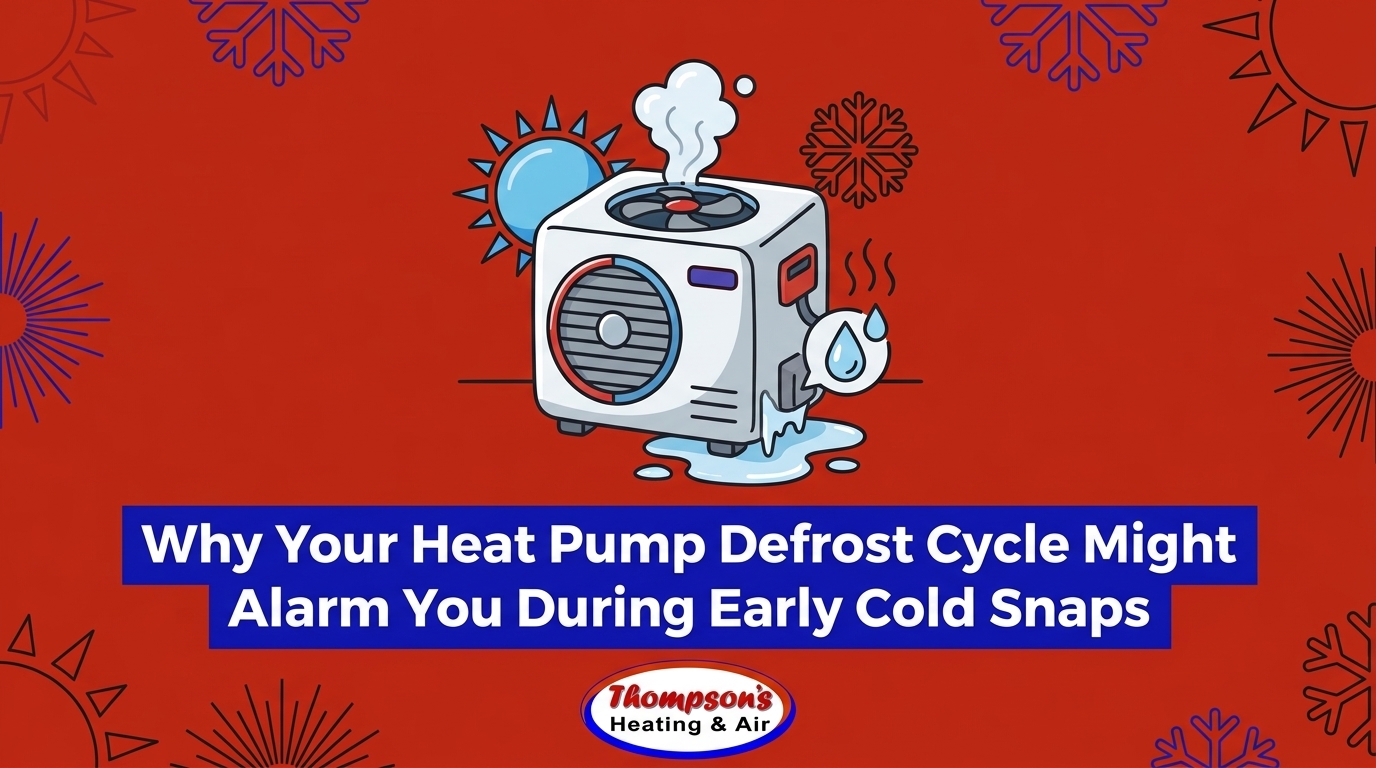
Don't Panic: That Steam Coming From Your Heat Pump is Normal
Understanding why your heat pump defrost cycle might alarm you during early cold snaps is essential when you step outside on a brisk September evening and find your outdoor unit surrounded by a rising cloud of white mist. A loud, sudden whooshing noise cuts through the quiet yard, causing instant panic for many homeowners navigating their first heating season with new equipment. You might immediately assume the unit is overheating, catching on fire, or completely broken down, but recognizing this normal function is the first step to gaining peace of mind about your system's health.
Before you rush to the breaker box to shut off the power, know that this shocking sensory experience is usually a built-in protective mechanism. It is designed to keep your equipment running smoothly and efficiently right here in Woodland CA. To learn more about how your overall equipment operates year-round, explore our comprehensive guide to heat pump systems.
The short answer is: Your system is taking care of itself. When the outdoor temperatures drop, moisture in the air freezes on the exterior components. Your system is smart enough to detect this ice buildup and temporarily reverse its operation to melt it away. By learning to recognize the specific sights and sounds of this routine process, you can save yourself the stress and expense of an unnecessary emergency service call. Let us break down exactly what is happening inside that metal cabinet.
Why Early Fall Brings the First Defrost Cycles
The transition from summer cooling to winter heating is rarely a smooth, gradual process. Early fall cold snaps in September often catch local residents off guard, and they also trigger the very first automated defrost cycles of the season. The Sacramento Valley is known for its famously mild winters, but those sudden, sharp temperature drops in early fall create the exact environmental conditions required for rapid, heavy condensation.
During the warm daylight hours, the ambient air holds a significant amount of invisible moisture. When the sun goes down and temperatures dip rapidly toward freezing, that moisture condenses directly onto the cold outdoor coil of your unit. Because the refrigerant inside that coil is even colder than the outside air, the condensation quickly turns into a layer of white frost. If you are wondering whether this type of system is right for our specific weather patterns, you can read more about why these units are efficient in hot dry climates.
The Role of Relative Humidity
Most homeowners do not realize that frost accumulation actually happens faster at 40°F than it does at 20°F. This is due to relative humidity. At slightly warmer temperatures, the air can hold more moisture. As the system pulls heat out of that damp air, the heavy moisture freezes instantly on the fins of the outdoor coil. When the temperature drops into the teens, the air is typically much drier, resulting in less frost.
Why this alarms first-time owners:
• Summer contrast: During the summer cooling season, your outdoor unit releases heat, meaning it stays warm and never accumulates frost. Seeing ice on the unit in the fall is a brand-new visual.
• Sudden onset: The frost can appear seemingly out of nowhere during a single chilly night after weeks of mild weather.
• Automated sensors: The system's internal sensors trigger the defrost board without any input from you, making the sudden change in operation feel like a malfunction.
Reassure yourself that this transition period is perfectly normal. The system is simply adapting to the shifting seasonal moisture and temperature levels.
Visual and Auditory Cues: Smoke, Steam, and Sudden Whooshes
Demystifying the exact sensory experiences of a defrost cycle is the best way to prevent panic. When the system shifts gears to protect itself, it produces a very specific sequence of sights and sounds. Knowing what to look and listen for will help you confidently identify normal operation versus a true mechanical failure. For ongoing tips on keeping these components clean and functional, review our checklist for heat pump maintenance.
Is It Steam or Smoke?
The most alarming visual cue is the sudden plume of white vapor rising from the top of the outdoor unit. It is crucial to distinguish between harmless steam and dangerous smoke.
• Characteristics of Steam: Steam is a natural byproduct of melting frost hitting the rapidly heated outdoor coil. It is pure white, dissipates quickly into the cold night air, and is completely odorless. It looks exactly like the steam rising from a pot of boiling water.
• Characteristics of Smoke: True smoke will linger in the air, often has a darker or grayish tint, and—most importantly—carries a distinct, acrid smell of burning plastic, melting rubber, or scorched electrical components.
If the vapor disappears quickly and has no smell, you are simply watching water evaporate.
Why Did the Outdoor Fan Stop?
Another common point of concern is the outdoor fan blade. During a normal heating cycle, the large fan on top of the unit spins continuously to pull air across the coils. However, when the defrost cycle begins, the fan will abruptly stop spinning, even though you can still hear the compressor humming loudly inside.
The reason for this: The fan stops intentionally. If the fan kept blowing freezing winter air across the outdoor coil, the system would struggle to generate enough heat to melt the accumulated ice. By shutting down the fan, the unit allows the coil to heat up rapidly, melting the frost in a fraction of the time.
The Sudden Whoosh Sound
The auditory cues are just as startling as the visual ones. The transition into and out of the defrost cycle is not quiet. You will typically hear:
• The initial shift: A loud "whoosh" or hissing sound. This is the internal reversing valve rapidly changing the direction of the highly pressurized refrigerant.
• The melting phase: As the coil heats up, you will hear a low, steady hum from the compressor, accompanied by the sound of sizzling, melting ice and water dripping onto the concrete pad below.
• The return to heating: Once the frost is cleared, you will hear a second "whoosh" as the valve shifts back, followed immediately by the fan motor spinning back to life.
The 15-Minute Rule: How Long Does a Defrost Cycle Last?
When you witness your system steaming and hissing, your immediate instinct might be to take action. However, the absolute best troubleshooting step you can take in this moment is simply to practice patience. We recommend following the 15-minute rule before making any assumptions about the health of your equipment.
1. Note the time: The moment you notice the fan stop and the steam rise, check your watch or phone.
2. Wait it out: A healthy, properly functioning system operates on a standard 10 to 15 minute cycle duration for defrosting. During this window, do not adjust the thermostat, and do not turn off the breaker.
3. Monitor indoor comfort: While the outdoor unit is melting ice, the system is technically no longer pumping heat into your home. To prevent cold drafts from coming through your vents, the system will automatically activate your indoor auxiliary or backup heat strips. You might notice the air feels slightly different or smells faintly of warm dust, which is perfectly normal.
4. Watch for the reset: Within 15 minutes, the outdoor fan should kick back on, the steam should stop, and the system should return to its normal, quiet heating operation.
If you see steam, grab a cup of coffee, stay inside where it is warm, and give the system a quarter of an hour to do its job. In the vast majority of cases, the "problem" will completely resolve itself before you even finish your drink.
The Mechanics: What is the Reversing Valve Doing?
To truly feel comfortable with your system's operation, it helps to understand the hidden mechanics at play. The secret to a heat pump's versatility—and its ability to defrost itself—lies in a small but critical brass component called the reversing valve.
Unlike a traditional furnace that generates heat by burning fuel, your system moves existing heat from one place to another. During the summer, it absorbs heat from inside your house and pumps it outside. During the winter, it absorbs ambient heat from the outdoor air and pumps it inside. The reversing valve is the physical mechanism that dictates the direction of this refrigerant flow.
The Defrost Sequence
When the outdoor coil sensor detects that a layer of frost has grown thick enough to impede airflow, it sends a signal to the defrost control board. The board then executes a brilliant mechanical pivot:
• Temporary Cooling Mode: The reversing valve shifts, temporarily placing the system back into "cooling" mode. This takes the hot, pressurized refrigerant that was destined for your living room and reroutes it directly into the frozen outdoor coil.
• Rapid Thaw: Because the outdoor fan has been shut off, this extreme heat stays concentrated in the coil, rapidly melting the frost and creating the visible steam.
• Sensor Override: A thermostat attached to the base of the outdoor coil monitors the temperature of the copper tubing. Once it senses that the tubing has reached a sufficiently warm temperature (usually around 50°F to 60°F, indicating all ice is gone), it signals the board to end the cycle.
• Return to Normal: The reversing valve shifts back to heating mode, the fan restarts, and warm air resumes flowing into your home.
There are generally two types of control boards that manage this process. Time-temperature boards will initiate a cycle based on a set timer (e.g., every 60 or 90 minutes of compressor run time) as long as the coil is cold enough. Demand defrost boards are more advanced; they measure the exact temperature difference between the air and the coil, only triggering a cycle when frost is actually restricting airflow. Both methods rely on the reversing valve to execute the heavy lifting.
Normal Defrost vs. Time to Call for Help
While steam and whooshing sounds are completely normal, there are specific warning signs that indicate your system is genuinely struggling. Knowing the difference between routine maintenance and a critical failure can save your compressor from permanent damage.
A typical pattern we see is homeowners struggling to understand the technical details of their new systems. For example, a local resident recently sought out a vendor knowledgeable about heat pumps to explain these exact cycles. By providing staff who explained the technical details clearly, the homeowner felt confident in their equipment rather than overwhelmed by it. At Thompson's Heating & Air, our focus on homeowner education means we want you to understand your system so you never have to pay for an unnecessary emergency visit when your unit is just doing its job.
Here is a breakdown of what to watch for:
• Ice Appearance — Normal Operation: A thin, even layer of white frost resembling a light dusting of snow. — Warning Sign (Call for Service): Thick, solid, "glacier-like" clear ice encasing the entire unit and coils.
• Cycle Duration — Normal Operation: Resolves completely within 10 to 15 minutes. — Warning Sign (Call for Service): System runs in defrost mode continuously for hours without returning to heat.
• Vapor Quality — Normal Operation: Odorless, white steam that dissipates rapidly. — Warning Sign (Call for Service): Darker smoke that lingers and smells like burning electrical wires or plastic.
• Fan Behavior — Normal Operation: Fan stops during the cycle and resumes immediately after. — Warning Sign (Call for Service): Fan never turns back on, or the blades are physically blocked by solid ice.
When to take action: If you notice thick, solid ice building up over several days, this is not a normal frost cycle. Heavy icing is usually caused by an underlying mechanical issue. Low refrigerant levels, a malfunctioning defrost control board, a failing outdoor fan motor, or a stuck reversing valve can all cause genuine freezing issues. If your unit exhibits any of the warning signs in the table above, or if the cycle exceeds the normal timeframe, it is time to reach out for professional heat pump repair.

Frequently Asked Questions About Heat Pump Defrost Cycles
Even with a solid understanding of the mechanics, you might still have specific concerns about how your system behaves during cold weather. Here are direct answers to the most common questions homeowners ask during the winter months.
Why is my heat pump steaming?
It is evaporating melting frost off the outdoor coil during a normal defrost cycle. When the system temporarily switches to cooling mode to warm the exterior components, the rapid temperature change turns the melting ice directly into steam, which harmlessly dissipates into the air.
Is it normal for a heat pump to smoke in winter?
True smoke is never normal, but harmless steam is perfectly normal and expected. If the vapor rising from your unit is white, vanishes quickly, and has no smell, it is just steam. If it smells like burning plastic or electrical components, shut off the power immediately and call a professional.
What does a heat pump defrost cycle sound like?
A loud whoosh or hiss followed by the fan stopping and the compressor humming. The initial hissing sound is the reversing valve shifting the flow of refrigerant. During the cycle, you will only hear the low hum of the compressor and the sound of dripping water, followed by another whoosh when normal heating resumes.
How long is a defrost cycle?
Typically 10 to 15 minutes before returning to normal heating mode. The exact duration depends on how much frost has accumulated and how cold the outdoor temperature is, but a healthy system should rarely take longer than 15 minutes to clear the coil.
How often should a heat pump go into defrost mode?
It varies by temperature and moisture, but typically every 30 to 90 minutes of runtime during freezing conditions. If the air is very damp and temperatures are hovering around 35°F, the system will need to clear frost much more frequently than on a dry, extremely cold day.
Can I manually stop the defrost cycle?
No, interrupting the cycle can lead to severe ice buildup and damage the compressor. Never turn off the thermostat or flip the breaker just because you see steam or hear a whooshing sound. Let the system complete its automated process to protect the internal components.
Trust Your Heat Pump This Winter—And Know We're Here If You Need Us
Navigating your first heating season with a new system doesn't have to be stressful. Remember that the sudden appearance of steam, the stopping of the outdoor fan, and the loud whooshing sounds are all signs of a healthy, self-regulating system doing exactly what it was designed to do. When the early fall cold snaps arrive, trust the engineering behind your equipment.
Always fall back on the 15-minute wait rule before assuming the worst. Grab a warm drink, wait a quarter of an hour, and let the system clear its own coils. However, if you notice thick, solid ice building up, or if your system fails to return to normal heating operation, do not ignore it. Contact our team for a thorough diagnostic. We are dedicated to providing a clear, reassuring breakdown of exactly what is happening with your equipment, ensuring your home stays comfortable and safe all winter long.



.avif)
.avif)
.png)
