
The Anatomy of a Clogged Flame Sensor in Your Gas Furnace

That First Chilly Morning: When Your Furnace Quits Before It Starts
Here at Thompson's Heating & Air, September in the Valley means fall preparation is officially underway, and our team knows that understanding the anatomy of a clogged flame sensor in your gas furnace is the single most important step in making sure your home stays warm. We hear the same story every year: you walk over to the thermostat during the September pre-heating season, switch the system to "heat" for the first time in months, and listen for that familiar roar. The furnace kicks on, the burners ignite, and you feel a brief moment of relief—until the system abruptly clicks off just a few seconds later.
When you need reliable Heating Services to prepare for the season, professional care makes all the difference.
In our experience, this frustrating start-and-stop behavior is one of the most common issues homeowners face as the weather begins to cool. Often, the culprit is not a catastrophic mechanical failure, but a tiny, easily overlooked safety component: the flame sensor. This small metal rod acts as the brain's eyes, telling the furnace whether a safe, steady flame is present. When it gets dirty, it triggers an immediate shutdown to protect your home. Understanding how this delicate part works—and why it fails—is essential before winter weather fully arrives.
Understanding the Anatomy of a Clogged Flame Sensor in Your Gas Furnace
To understand why a furnace lights and immediately shuts off, you have to look at the science of how modern heating systems monitor safety. Your furnace does not "sense heat" in the way a thermometer does. Instead, it uses a highly sensitive electrical process called flame rectification.
The Science of Flame Rectification
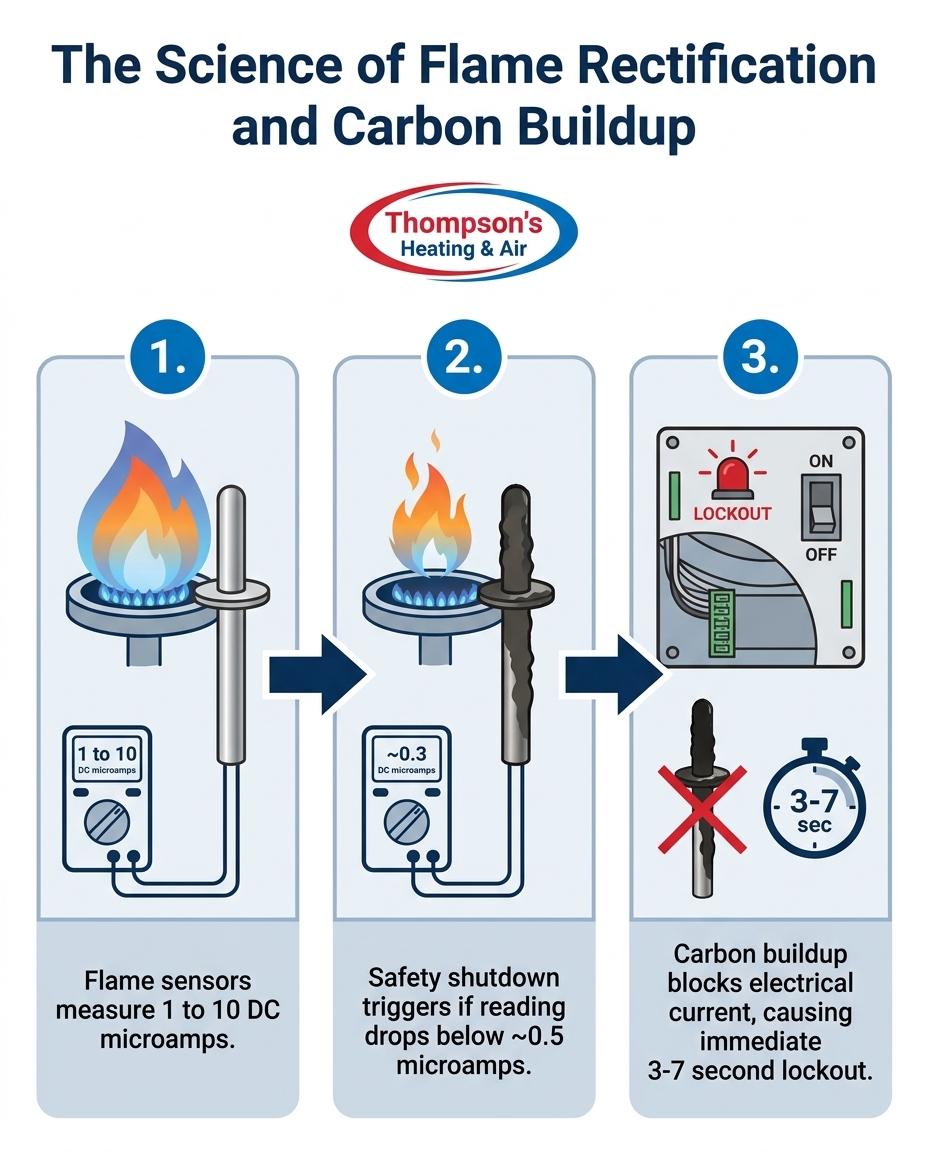
When the gas burners ignite, the flame sensor sits directly in the path of the fire. The furnace's control board sends a very small electrical current—measured in microamps—to the sensor rod. Because a live flame contains ionized gases, it actually conducts electricity. The current travels through the metal rod, rides the live flame over to the metal chassis of the burner, and completes the electrical circuit.
The Microamp Threshold: This electrical current is incredibly weak, typically measuring between 1 and 10 DC microamps. The control board constantly monitors this flow. If the sensor reading drops below a critical threshold (usually around 0.5 microamps), the safety board assumes the flame has gone out.
Why the Surface Matters
Because the sensor relies on conducting electricity rather than feeling heat, its metallic surface must remain completely bare and pristine. Any microscopic layer of insulation will block the microamp current. When carbon buildup coats the rod, the electrical circuit is broken. The control board registers zero microamps, assumes raw gas is pouring into your home unignited, and slams the gas valve shut to prevent an explosion.
• Clean & Bare Metal — Microamp Reading: 2.0 to 10.0 µA — System Response: Continuous, safe heating operation.
• Lightly Coated — Microamp Reading: 0.6 to 1.5 µA — System Response: Intermittent operation, occasional random shutoffs.
• Heavily Clogged — Microamp Reading: Below 0.5 µA — System Response: Immediate safety lockout within 3 to 7 seconds.
Recognizing the Warning Signs: Why the System Short-Cycles
Mapping the technical explanation of flame rectification to what you actually hear and feel in your hallway helps take the mystery out of furnace troubleshooting. When a furnace lights and immediately shuts off, it is following a very strict sequence of operations. If you listen closely, you can hear this exact sequence play out during a short-cycle event.
Here is exactly what happens when your system tries to heat your home with a clogged sensor:
1. The Call for Heat: Your thermostat detects a drop in room temperature and sends a signal to the furnace control board to begin the heating cycle.
2. The Draft Inducer Starts: You will hear a small motor spin up. This is the inducer fan clearing leftover gases out of the heat exchanger and ensuring the flue is clear for safe venting.
3. The Igniter Glows: If the venting is safe, the hot surface igniter begins to glow bright orange, preparing to light the gas.
4. The Gas Valve Opens: You will hear a distinct "click" followed by the whoosh of gas igniting. The burners are now fully lit, and heat is being generated.
5. The Critical 3-to-7 Second Window: This is the moment of truth. The flame sensor has exactly three to seven seconds to register the microamp current through the fire. If a dirty sensor blocks the current, the control board instantly kills the power to the gas valve. The flames vanish, the blower fan may run briefly to cool the chamber, and your home remains cold.
If you observe this exact pattern, professional Furnace and Heating Repair is the safest way to restore your system's function and ensure the safety mechanisms are operating correctly.
From Summer Dust to Winter Shutdown: The Carbon Buildup Process
It is easy to wonder how a component sealed inside your furnace gets so dirty in the first place. The answer lies in the long off-season and the specific environmental conditions around your home. The process follows a predictable pattern of problem, cause, and solution.
The Problem: Idle Accumulation
Throughout the spring and summer, your furnace sits completely idle. However, the air inside your home continues to circulate through the ductwork if you run your air conditioner. In our years of keeping homes comfortable in Woodland CA, our technicians consistently see how our dry, dusty agricultural summer conditions mean a significant amount of fine airborne particulates, pollen, and dust make their way indoors. Even with a good air filter, microscopic particles of dust, pet dander, and laundry lint eventually settle on the internal components of the idle furnace, including the bare metal of the flame sensor.
The Cause: The Fall Baking Process
When you turn the furnace on for that very first September pre-heating season test run, the environment inside the combustion chamber changes drastically. The burners ignite, surrounding the dust-coated sensor rod with intense heat. The accumulated summer dust instantly burns and bakes directly onto the metal surface. This chemical process transforms loose household dust into a hard, baked-on layer of carbon. Because carbon is an excellent insulator, it creates an invisible barrier that completely blocks the microamp electrical current.
The Solution: Pre-Season Intervention
The transition from harmless summer dust to a solid carbon barrier happens during the very first heating cycles. This is why systems that worked perfectly at the end of last winter suddenly fail in the early fall. Addressing this buildup before the baking process becomes severe is the key to uninterrupted comfort.
The Hidden Dangers of Ignoring a Faltering Sensor
A flame sensor rarely fails completely overnight. Usually, it falters intermittently. You might notice the furnace short-cycling once or twice before finally staying lit. It is tempting to ignore this occasional hiccup as long as the house eventually warms up, but doing so creates hidden dangers for your equipment and your comfort.
The Strain on Expensive Components: Every time your furnace starts, shuts down, and restarts, it puts massive electrical and mechanical strain on the system. The draft inducer motor has to work overtime, and the hot surface igniter undergoes rapid heating and cooling cycles. An igniter that is forced to fire three times as often because of a dirty flame sensor will burn out prematurely, turning a simple maintenance issue into an expensive part replacement.
The Risk of Total Lockout: Modern furnaces are programmed to tolerate only a few failed ignition attempts before they enter a "hard lockout" mode for safety. Once locked out, the furnace will refuse to turn on at all until it is professionally reset.
We recently helped one local homeowner who found themselves without air conditioning for three days during 100+ degree summer weather until our owner came out personally and fixed the system right away. While that was a cooling emergency, the lesson translates perfectly to heating: waiting until a faltering part completely fails during extreme weather leaves your family uncomfortable. When you need Heating Repair in Woodland, addressing the warning signs during the September pre-heating season prevents emergency breakdowns on the coldest nights of the year.
The Microscopic Risk: Why DIY Sensor Scrubbing Ruins Furnaces
If you search online for solutions to a short-cycling furnace, you will inevitably find forums advising homeowners to pull the flame sensor out and scrub it with sandpaper, steel wool, or emery cloth. Our team can confidently say this is one of the most destructive pieces of DIY advice on the internet, and we regularly see it actively ruin furnaces across Woodland CA.
The Danger of Invisible Scratches
The metal rod of a flame sensor is manufactured with a highly specialized, perfectly smooth finish. When you use rough abrasives like sandpaper or steel wool to clean off carbon buildup, you create thousands of microscopic scratches and gouges in the metal. To the naked eye, the rod might look shiny and clean, but under a microscope, the surface now resembles a jagged mountain range.
The Carbon Magnet Effect: These microscopic scratches increase the surface area of the rod and create deep crevices. When the furnace runs again, soot and carbon now have perfect little pockets to cling to. A sensor that has been scratched by sandpaper will foul up and fail much faster than a smooth one. What used to take a year to get dirty might now clog up in just a few weeks. Eventually, the rod becomes so deeply scored that it can no longer conduct a microamp current at all and must be completely replaced.
Safety First: Licensed Professional Work
Beyond the risk of damaging the equipment, accessing the flame sensor requires opening the combustion chamber of a gas appliance. Working around live gas valves, high-voltage electrical boards, and delicate venting systems carries significant safety risks. One wrong move can create a gas leak or an electrical short. Because of these hazards, opening the burner compartment is strictly licensed professional work.
Professional Restoration: Precision Care for Delicate Components
Because a flame sensor is so easily damaged by improper handling, professional maintenance is the only reliable way to restore its function. Certified HVAC technicians approach this component with precision, treating it like the delicate safety instrument it is.
Specialized Cleaning Techniques: Instead of harsh abrasives, professionals use specialized, non-abrasive materials—such as specialized synthetic pads or specific grades of specialized cloth—to gently lift the baked-on carbon without scoring the metal underneath. This restores the smooth, conductive surface so the microamp current can flow freely.
Diagnostic Verification: A professional tune-up does not rely on guesswork. After cleaning the sensor, technicians use a specialized multimeter to test the exact microamp draw while the furnace is running. They verify that the reading is well above the safety threshold, ensuring the component is fully restored. Our Thompson's Heating & Air technicians meticulously document their work, providing homeowners with peace of mind that delicate parts were handled correctly without needing to hover over their shoulders.
Just last season, we helped another local homeowner with a 9-year-old system who assumed they were facing a complete replacement. Our technician examined the equipment and determined it only needed a minor tune-up to run efficiently again. This exact situation happens frequently when a furnace lights and immediately shuts off. Before assuming your system is dead, scheduling professional Heating Maintenance can often restore full function simply by giving these delicate sensors the precision care they require.
Frequently Asked Questions About Furnace Flame Sensors
Why does my furnace light and immediately shut off?
This is the hallmark symptom of a dirty or failing flame sensor. When the furnace's safety board cannot detect a flame through the sensor's electrical current, it shuts off the gas valve within three to seven seconds. This safety mechanism prevents raw, unignited gas from flooding into your home.
What happens when a furnace flame sensor gets dirty?
Carbon buildup creates an insulating layer over the metal rod. This baked-on layer blocks the microamp electrical current required for flame rectification. Without that electrical signal, the furnace assumes the fire has gone out and immediately halts the heating cycle.
How do I know if my flame sensor is bad or just dirty?
Only a professional with a multimeter can accurately diagnose this by testing the microamp draw. If cleaning the sensor with specialized, non-abrasive tools does not restore the proper electrical current, the internal structure of the sensor itself has likely failed and requires replacement.
Can a furnace run without a flame sensor?
No. Modern gas furnaces are designed to lock out entirely if the flame sensor is missing, bypassed, or failing. This is a critical safety feature that prevents raw gas from pumping into the home unignited, protecting your property from severe explosion risks.
How often should a flame sensor be professionally cleaned?
It should be inspected and cleaned annually during a comprehensive fall tune-up. Regular maintenance prevents summer dust from baking into a hard carbon shell, ensuring you avoid sudden breakdowns during the coldest days of winter.
Secure Your Comfort Before the Cold Settles In
A furnace that short-cycles during the September pre-heating season is incredibly frustrating, but it is often just a simple safety mechanism doing its job. A dirty flame sensor is not a catastrophic failure; it is a cry for routine maintenance. By scheduling a professional fall tune-up, you ensure that delicate components are cleaned, tested, and ready to perform flawlessly all winter long.
If your heating system is aging beyond the point of simple repairs, now is the perfect time to explore your options. You can read more about Inflation Reduction Act benefits for California homeowners to see how upgrading to a high-efficiency system might qualify for valuable tax credits. Don't wait for the first freezing night to find out your furnace is struggling—take proactive steps today for a warm, comfortable season.



.avif)
.avif)
.png)
