
Claiming PG&E Insulation Rebates to Reduce Your Woodland Cooling Bills

The Challenge of High Cooling Costs and Bureaucratic Rebate Hurdles
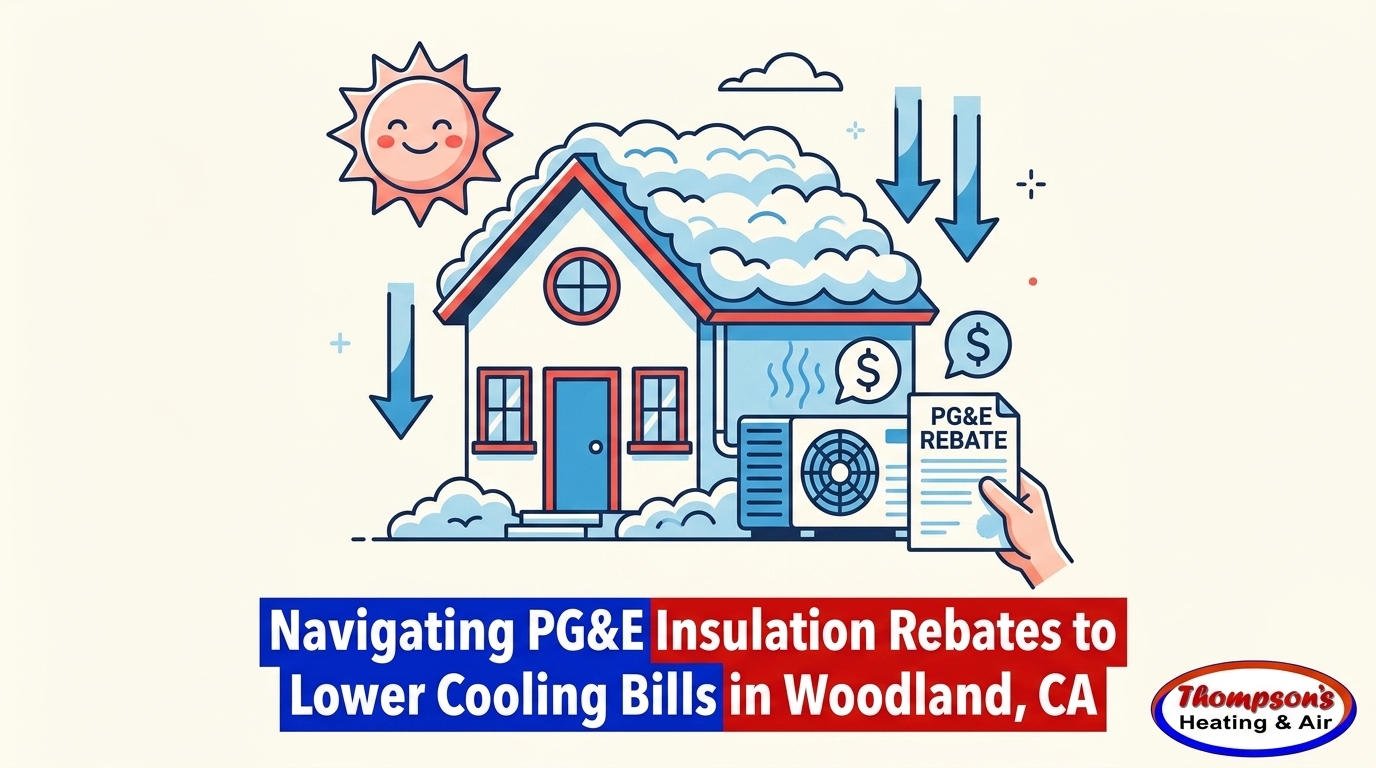
Your air conditioner is running constantly, your house still feels warm by mid-afternoon, and your utility statement is climbing higher every month. Claiming PG&E insulation rebates to reduce your Woodland cooling bills is one of the most effective ways to break this cycle, but the process is rarely as simple as filling out a single form. Navigating the specific paperwork and structural requirements to successfully claim these funds often stops homeowners before they even begin. Understanding exactly what documentation and structural criteria PG&E requires before committing to an insulation upgrade project is the critical decision point for any homeowner.
For comprehensive support, explore our air conditioning services or schedule an AC installation in Woodland today.
In our years of serving the Sacramento Valley, our technicians at Thompson's Heating & Air have seen firsthand how high peak summer cooling costs are a major source of frustration. Homeowners often ask us to upgrade their cooling equipment hoping for relief, only to find that their home's thermal envelope is the actual culprit. Proper thermal barriers work hand-in-hand with cooling systems to maintain comfort. When your attic lacks sufficient insulation, the most efficient air conditioner on the market will still struggle to keep your living space cool.
While PG&E offers generous rebates to help offset the cost of upgrading your insulation, the application process involves strict documentation and structural prerequisites. These utility programs are designed with rigorous oversight to ensure funds are distributed only for verifiable energy improvements. This means that missing a single line item on an invoice or failing to document your starting insulation levels can result in a technical denial.
• High monthly utility bills during peak summer heat. — The Bureaucratic Reality: Rebates exist, but require strict proof of energy savings. — The Required Solution: Pre-project assessment of existing R-values.
• Desire to reduce AC runtime and prevent equipment wear. — The Bureaucratic Reality: Funding is denied if structural prerequisites are not met. — The Required Solution: Detailed contractor documentation and specific invoice formatting.
• Confusion over where to start the upgrade process. — The Bureaucratic Reality: The PG&E portal demands before-and-after evidence. — The Required Solution: Partnering with a contractor who understands local rebate codes.
The bottom line: You cannot simply add insulation and mail in a receipt. You must approach the project with a clear understanding of the bureaucratic hurdles ahead. By verifying your eligibility before the work begins, you protect your investment and ensure that you receive the financial incentives designed to help you lower your cooling costs.
How Attic Insulation Combats Sacramento Valley Heat
During peak summer, we often see cooling systems pushed to the absolute limit. In one recent case, a Woodland homeowner experienced a complete system failure during three consecutive days of over 100-degree weather. Our team at Thompson's Heating & Air promptly repaired the AC unit to restore comfort, but situations like this underscore a pattern we see often: intense, dry heat penetrates under-insulated attics, forcing cooling systems to run continuously until they fail. The intense, dry summers of the Sacramento Valley require proper insulation to trap cooled air indoors, preventing your AC from overworking.
When the sun beats down on your roof, attic temperatures can easily exceed 140 degrees. Without a robust thermal barrier, that radiant heat transfers directly through your ceiling joists and into your living space. This compromised thermal barrier leads to uneven cooling, hot spots in certain rooms, and accelerated wear on your HVAC equipment. Your thermostat senses the rising temperature and commands the air conditioner to keep running, creating a cycle of high energy consumption and mechanical strain.
If your system is struggling, reaching out for professional HVAC service is a smart first step to ensure the equipment itself is functioning properly. However, addressing the building envelope is what provides long-term relief. Utility companies like PG&E incentivize insulation upgrades specifically because they reduce the overall peak load on the electrical grid. When thousands of homes are properly insulated, the entire region requires less electricity during impending heat waves, reducing the risk of brownouts and lowering infrastructure costs.
Reducing Peak Cooling Load
Peak cooling load refers to the maximum amount of heat your air conditioner must remove from your home to maintain a comfortable indoor temperature during the hottest part of the day. This metric directly impacts your monthly utility statements, especially if you are on a time-of-use rate plan where electricity is most expensive during peak afternoon hours.
• Thermal Resistance: Upgraded insulation acts as a primary defense against thermal transfer, significantly lowering your peak cooling load.
• Shorter Cycles: With less heat entering the home, your air conditioner can achieve the target temperature quickly and shut off, rather than running for hours on end.
• Extended Equipment Lifespan: Reducing the runtime of your compressor and blower motor adds years of reliable service to your HVAC system.
• Consistent Comfort: A lower peak load means fewer temperature fluctuations between rooms, keeping your entire home comfortable even when outdoor temperatures soar.
By upgrading your insulation, you are essentially shrinking the amount of work your air conditioner has to do. This reduction in peak cooling load is exactly what PG&E is paying you to achieve through their rebate programs.
Pre-Existing Structural Requirements for PG&E Eligibility
Before you purchase materials or hire a crew, you must understand the specific physical and structural conditions your home must meet to qualify for a PG&E rebate. The most critical hurdle is the pre-existing insulation level. PG&E typically requires existing attic insulation to be R-11 or less to qualify for upgrades. If your home already has R-19 or R-30 insulation, you may not be eligible for this specific financial incentive, even if adding more insulation would still benefit your home's comfort.
Identifying your current insulation levels is a mandatory first step. When our team inspects older homes in Woodland CA built before modern energy codes, we frequently find they meet this R-11 criteria. R-11 typically looks like three to four inches of old fiberglass batts, or a very shallow layer of settled blown-in cellulose. However, because insulation settles and degrades over time, a visual guess is not enough for the utility company.
This is why a professional assessment is necessary. A qualified technician will measure the depth, identify the material, and calculate the exact existing R-value to ensure you meet the baseline maximums allowed by PG&E. Once eligibility is confirmed, the upgraded insulation must meet current target R-values for the region—often requiring you to bring the attic up to R-38 or R-49, depending on the specific program tier.
Assessing Your Current R-Value
R-value is the standard measurement of thermal resistance. The higher the R-value, the better the material resists the transfer of heat. Understanding this metric is essential for navigating the rebate process.
• Baseline Maximums: To qualify for the rebate, your starting thermal resistance must be low enough to justify the utility's investment. This is why the R-11 maximum is strictly enforced.
• Target Minimums: The new installation must hit a specific, much higher R-value target to guarantee meaningful energy savings on the grid.
• Material Variations: Different materials (fiberglass, cellulose, spray foam) provide different R-values per inch of thickness. Your contractor must calculate the exact depth needed to hit the target.
A crucial warning: Never start DIY removal or installation before verifying these pre-existing eligibility criteria. If you remove old insulation yourself before documenting its R-value, you destroy the evidence required to prove your eligibility, resulting in an automatic technical denial from the utility company.
Navigating Title 24 and Climate Zone 11 Standards
Providing authoritative local context is essential when planning an energy upgrade in California. Woodland CA is located within California Building Climate Zone 11. The state is divided into 16 distinct climate zones, each with its own specific building codes and energy efficiency requirements dictated by the California Energy Commission.
Climate Zone 11 experiences cold winters and intensely hot, dry summers. Because of these extreme seasonal swings, the building codes for this zone dictate specific minimum R-values for residential building envelopes. When you undertake an insulation project, you are not just aiming for a utility rebate; you are interacting with state law.
PG&E aligns its rebate requirements directly with Title 24 energy efficiency standards. Title 24 is California's overarching energy code, designed to reduce wasteful and unnecessary energy consumption in newly constructed and existing buildings. When PG&E sets the target R-value for a rebate, they are pulling that number straight from the Title 24 requirements for Climate Zone 11.
• Title 24 Compliance — What It Means for Woodland Homeowners: State-mandated energy codes that must be followed for major residential upgrades and alterations.
• Climate Zone 11 — What It Means for Woodland Homeowners: The specific geographic designation that dictates the exact thickness and thermal resistance required for your home.
• PG&E Alignment — What It Means for Woodland Homeowners: The utility company will not issue a rebate unless the finished project meets or exceeds the Zone 11 minimums.
Compliance with these local standards is mandatory for rebate approval. The utility portal will review your submission to ensure the final R-value matches the Climate Zone 11 requirements. If a contractor installs insulation that falls short of the Title 24 mandate for our specific region, the rebate will be denied, and you may face issues if you ever decide to sell the home and need to pass an inspection.
Step-by-Step Paperwork Checklist for the PG&E Portal
Delivering the right paperwork is just as important as installing the right insulation. The PG&E portal is notoriously strict, and minor clerical errors lead to major delays or outright technical denials. Having a step-by-step paperwork checklist helps homeowners avoid these pitfalls during the application process, ensuring that the funds you expect are actually disbursed.
The required documentation must be comprehensive. You cannot submit a generic receipt that simply says "Attic Insulation." The utility company requires detailed contractor invoices that break down the exact scope of work. This includes the square footage of the area insulated, the pre-existing R-value, the installed material type, and the final post-installation R-value.
Additionally, visual evidence is often required. Depending on the specific rebate tier you are applying for, you may need to provide clear before-and-after photos. These photos must clearly show the depth of the old insulation (often with a ruler in the frame) and the depth of the newly installed material.
Common Application Pitfalls
In our experience helping Woodland residents navigate these programs, knowing exactly what causes an application to fail is the best way to ensure yours succeeds. During peak summer, when rebate processing times can stretch out due to high volume, avoiding these errors is critical.
• Missing contractor license numbers: PG&E requires work to be performed by licensed professionals. If the invoice lacks a valid CSLB license number, it will be rejected.
• Failing to document pre-existing R-values: If you cannot prove the attic was at or below R-11 before the work started, the utility will assume you did not meet the baseline criteria.
• Incorrect square footage calculations: The rebate is often calculated based on the area treated. Discrepancies between the invoice and public property records can trigger an audit.
• Missed submission deadlines: Applications must typically be submitted within a specific timeline after the installation is complete (often 60 to 120 days). Waiting too long invalidates the claim.
By gathering all necessary documentation before the contractor leaves your property, you streamline the submission process and protect your right to the rebate.

The Hidden Benefit: Sealing Out Pollutants
While the primary motivation for navigating PG&E rebates is lowering your cooling costs, there is a substantial hidden benefit to this process. Upgrading attic insulation in Woodland CA almost always involves comprehensive air sealing. Air sealing is the process of finding and closing the tiny gaps, cracks, and penetrations between your living space and the attic or exterior of the home.
A tighter building envelope does more than just stop cooled air from escaping. It actively prevents outdoor dust, allergens, and smoke from entering the living space. This is particularly important in our region. A properly sealed building envelope helps keep out regional agricultural dust or seasonal wildfire smoke common to the area. When the air quality index drops outside, a well-sealed home acts as a safe haven, keeping the indoor environment clean and breathable.
While the utility rebate focuses heavily on energy efficiency and grid load reduction, the secondary benefit is a vastly improved indoor environment. When gaps around recessed lights, plumbing stacks, and electrical wiring are sealed before the new insulation is blown in, you eliminate the pathways that allow dirty attic air to seep into your bedrooms and hallways.
Furthermore, a well-sealed home connects directly to the better performance of internal filtration systems. When your HVAC system isn't constantly battling a steady influx of outdoor pollutants, its air filters last longer and perform more effectively. If you are looking to maximize these health benefits alongside your energy savings, exploring dedicated indoor air quality solutions can further enhance the comfort and safety of your home.
Partnering with a Qualified Local Contractor
Navigating the structural prerequisites and paperwork demands of utility rebates is not a DIY project. Utility companies often require work to be completed by licensed professionals to disburse funds. This rule exists to prevent fraud, ensure compliance with building codes, and guarantee that the projected energy savings are actually realized on the grid.
A qualified contractor handles the structural verification accurately. They know exactly how to measure existing R-11 limits, document the findings according to PG&E's standards, and calculate the precise amount of material needed to meet Climate Zone 11 requirements. Our team at Thompson's Heating & Air has spent years studying Sacramento Valley home structures. We have hands-on experience helping residents navigate specific PG&E rebate paperwork to avoid technical denials, ensuring that your thermal envelope perfectly complements your air conditioning system.
Beyond the installation itself, the real value of a local partner lies in the administrative support. A professional team provides the exact invoice formatting PG&E demands, complete with license numbers, square footage breakdowns, and clear before-and-after metrics. This attention to detail is what separates a successful rebate claim from a frustrating denial in Woodland CA.
Finally, exploring insulation often opens the door to other regional energy incentives. A contractor who understands the local landscape can advise you on how to stack benefits or time your upgrades for maximum financial return. For more information on broader incentive programs, you can review our insights on California energy rebates for HVAC upgrades.
Frequently Asked Questions About PG&E Insulation Rebates
What is the requirement for PG&E insulation rebate?
The primary requirement is that your existing attic insulation must have a thermal resistance of R-11 or less. In addition to this pre-existing limit, the new insulation installed must meet the current Title 24 energy code standards for your specific California Climate Zone. All work must typically be performed by a licensed contractor, and detailed documentation must be submitted through the utility's portal.
Does PG&E offer insulation rebates?
Yes, PG&E offers financial rebates for residential insulation upgrades as part of their broader energy efficiency initiatives. These programs are designed to reduce peak summer load on the electrical grid by helping homeowners improve their building envelopes. The availability and specific dollar amounts of these rebates can fluctuate based on current funding cycles and state energy goals.
How do I claim my PG&E rebate?
You claim your rebate by submitting a detailed application through the official PG&E online portal after the installation is complete. You will need to upload a comprehensive contractor invoice that lists the square footage, starting R-value, and ending R-value. Many rebate tiers also require you to upload clear before-and-after photographs to prove the structural requirements were met.
What R-value is required for PG&E rebate in California?
The required final R-value depends entirely on your specific California Building Climate Zone. For homes in the Sacramento Valley region, the target is often R-38 or R-49 to comply with Title 24 standards. Your contractor must calculate the exact depth of material needed to reach this zone-specific target to ensure the rebate is approved.
How long does it take for PG&E to process an energy rebate?
Processing times vary, but homeowners should generally expect it to take between 4 to 8 weeks after a complete and accurate application is submitted. During peak summer months, high application volumes can extend this timeline. Submitting flawless paperwork with zero clerical errors is the best way to prevent your application from being delayed or kicked back for review.
Can I combine PG&E insulation rebates with other energy upgrades?
Yes, insulation rebates can often be combined with other energy efficiency incentives, such as those for high-efficiency HVAC systems, smart thermostats, or duct sealing. In fact, utility companies encourage comprehensive home energy upgrades. However, you must carefully track the paperwork for each specific program, as the documentation requirements for an air conditioner rebate will differ from those for attic insulation.
Take the Next Step Toward Claiming PG&E Insulation Rebates to Reduce Your Woodland Cooling Bills
Understanding the exact structural requirements and local paperwork is the key to getting a PG&E rebate approved without getting denied on a technicality. The process requires careful documentation, adherence to California Climate Zone 11 standards, and a clear assessment of your starting R-value. By taking the time to verify your eligibility and gather the right evidence, you protect your investment and secure the funds designed to help you improve your home's efficiency.
We encourage homeowners in Woodland CA to have their current insulation levels assessed before the peak heat arrives. Claiming PG&E insulation rebates to reduce your Woodland cooling bills is a powerful way to enhance your comfort while lowering monthly expenses. Speak with a local expert today to evaluate your home's eligibility and start the process of building a stronger, more efficient thermal envelope.


.avif)
.avif)
.png)
