
Will Running Your HVAC Fan Reduce Humidity? Home Maintenance Tips and Troubleshooting for Fall

That First Fall Furnace Startup: Addressing Unsettling Smells and Air Quality
The thermostat drops, the house feels chilly, and as you finally switch your system from cooling to heating, having reliable home maintenance tips and troubleshooting strategies on hand becomes essential. Within minutes, instead of enjoying cozy warmth, you notice a sharp, alarming burning odor spreading through the vents. It is a jarring experience that leaves many homeowners scrambling to the thermostat, wondering if their heating system is catching fire or just blowing off some seasonal cobwebs. When that first cool October morning arrives, the last thing you want is to worry about the safety of your home's air.
Deciding whether this smell is a normal seasonal quirk or a serious hazard requiring an immediate shutdown is a critical moment for any homeowner. This initial startup event is heavily tied to your overall indoor air quality, and understanding what is happening inside your ductwork is the first step in proper home maintenance. Knowing exactly what to look for—and what to smell for—can prevent panic and keep your household safe.
If you are concerned about the air circulating through your vents, exploring professional indoor air quality strategies and indoor air quality solutions in Woodland can help you breathe easier all season long.
Why Your Heater Smells Like Burning Dust After Summer Dormancy
Here at Thompson's Heating & Air, our technicians see the effects of Woodland and Yolo County's long, dry, and intensely agricultural summers firsthand. During these months, heavy particulate matter, pollen, and field dust constantly swirl in the outside air due to local harvesting and dry winds. Even with a high-quality air filter in place, some of this ultra-fine agricultural dust inevitably bypasses the media and settles deep inside your HVAC system's cabinet and ductwork.
Over the long cooling season, your furnace's heating elements—specifically the heat exchanger or electric heat strips—sit completely dormant. They become the perfect, undisturbed resting place for all that settled debris. When you finally turn the heater on in the fall, those components fire up to their maximum temperature almost instantly. The distinct burning odor you smell is literally that accumulated agricultural dust incinerating upon contact with the hot metal.
The Transition from Cooling to Heating
Shifting operations from cooling to heating is a major mechanical change for your system. If you skipped routine AC maintenance over the summer, the amount of dust buildup inside the cabinet is often much higher. A system that runs dirty during the cooling months guarantees a dirtier, smellier startup during the heating months.
Once the furnace ignites and burns off that debris, the blower motor kicks in, pushing the newly incinerated dust particles straight into your home's living spaces. This is why the smell seems to appear in every room simultaneously.
Common Areas Where Summer Dust Accumulates:
• The Heat Exchanger: The primary metal component that heats the air; collects heavy dust during dormancy.
• The Blower Motor: Fan blades gather sticky dust and pet dander over months of continuous summer use.
• The Burner Assembly: Gas jets can become partially clogged with ultra-fine agricultural dirt.
• The Ductwork: Settled particles in the ventilation system are stirred up by the first blast of hot air.
The 15 to 30-Minute Rule for Normal Dust Burn-Off
Our team has spent years responding to frantic fall service calls across Woodland, and we believe in providing honest, transparent advice that puts your peace of mind first. Not every strange smell requires a costly service call, and we want to share this simple guideline to save you from paying for a technician if your system is just doing its normal seasonal burn-off. Understanding the timeline of this process is the easiest way to troubleshoot your fall startup.
Follow these steps to safely monitor your system during its first heating cycle:
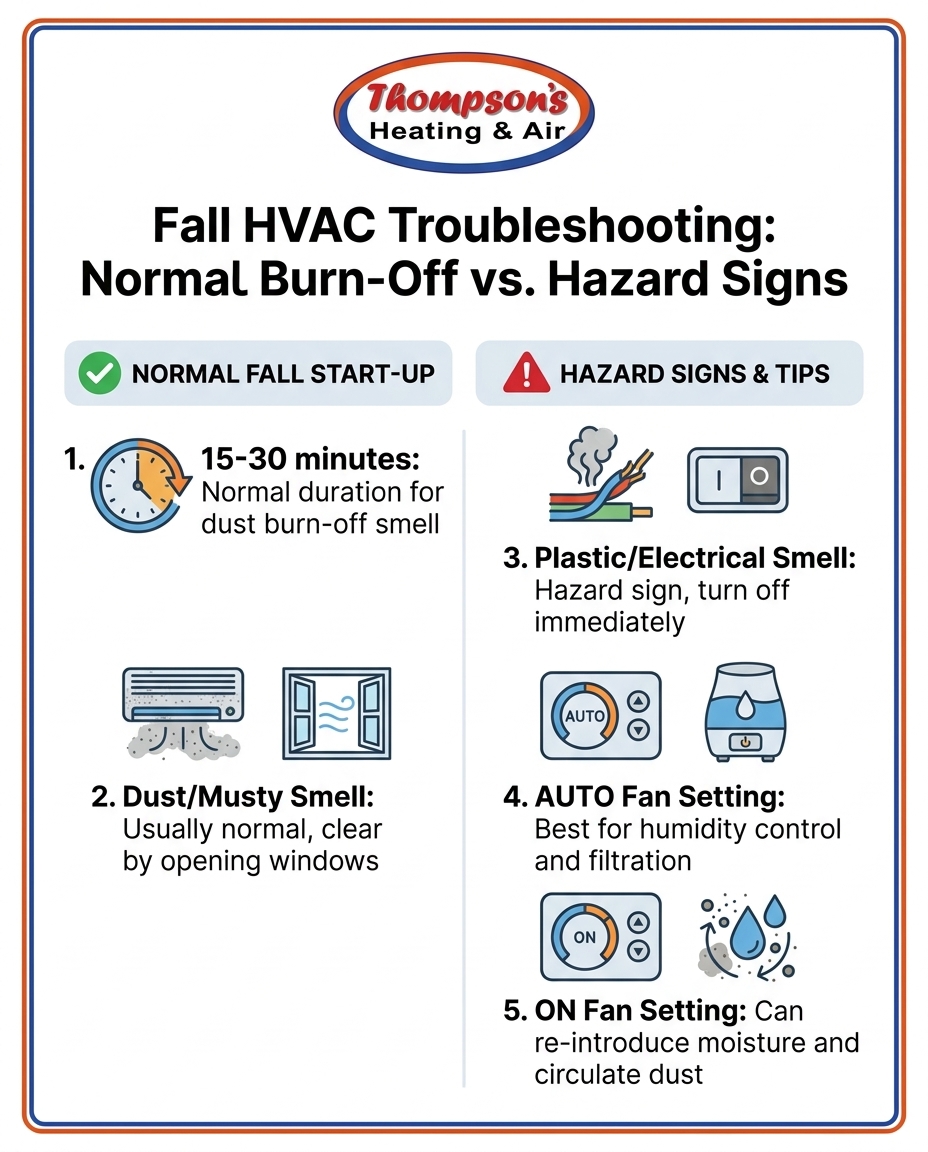
1. Note the exact time: The moment you turn on the heater and detect that dusty, slightly burnt odor, check the clock. A normal dust burn-off duration is exactly 15-30 minutes.
2. Open your windows: Temporarily ventilate the home by opening a few windows and doors. This allows the incinerated particulate matter to escape outside rather than lingering in your living room and affecting your air quality.
3. Monitor the odor's intensity: Pay close attention to the character of the smell. Normal dust burn-off smells like a hot, dusty attic or a hair dryer that has been left on too long. It should gradually weaken as the cycle continues.
4. Check the closest vent: Stand near the vent closest to the furnace. If the air smells progressively cleaner over the first half-hour, the system is clearing itself properly.
5. Resume normal operation: If the smell completely dissipates within that 15 to 30-minute window, your system has successfully cleared the summer debris and is generally safe to continue operating.
Will Running Your HVAC Fan Reduce Humidity and Clear Smells?
When dealing with strange smells or stuffy indoor air during the fall transition, many homeowners try to clear the house by switching their thermostat fan setting from "AUTO" to "ON." The logic seems sound: continuous air circulation should filter out the burning dust smell or reduce lingering indoor humidity. However, the mechanics of your HVAC system tell a different story.
The problem stems from how your system handles moisture. During the cooling cycle, the air conditioner's evaporator coil removes moisture from your home's air, dripping it into a drain pan to be carried outside. However, that coil and drain pan often stay wet long after the active cooling or heating cycle ends. If you leave the fan running continuously on the "ON" setting, it blows air directly over that damp coil. Instead of reducing humidity, it actually evaporates that leftover water and re-introduces moisture back into your home.
Furthermore, leaving the fan "ON" during that initial furnace startup can continuously circulate unsettled dust and incinerated particles throughout the ductwork. Rather than allowing the system to rest and filter the air in controlled batches, the constant airflow keeps dust suspended in your breathing space. The most effective way to manage indoor moisture and smells is to understand how humidifiers work with your HVAC system and to utilize the correct thermostat settings for the season.
Auto vs. On: Which Setting is Best for Indoor Air Quality?
We strongly recommend using the "AUTO" setting on your thermostat for the vast majority of the year. In "AUTO" mode, the blower fan only runs when the system is actively heating or cooling the air. This targeted operation allows your air filter to do its job effectively, trapping dust and debris without over-circulating them.
Using the "AUTO" setting also prevents the fan from pulling moisture back off the evaporator coil between cycles, which is crucial for maintaining comfortable indoor humidity levels. Proper fan settings are a foundational part of supporting overall indoor air quality, keeping your home comfortable, and preventing unnecessary wear and tear on your blower motor.
• AUTO — How It Operates: Fan runs only during active heating or cooling cycles. — Impact on Humidity & Air Quality: Maintains lower humidity; filters air effectively without stirring up settled dust.
• ON — How It Operates: Fan runs continuously, 24/7, regardless of temperature. — Impact on Humidity & Air Quality: Increases indoor humidity; can constantly circulate airborne particles and smells.
When to Worry: Troubleshooting Hazardous HVAC Odors
While a brief, dusty smell is a harmless byproduct of the changing seasons, other odors indicate a real mechanical or electrical failure. If you notice any of these warning signs, it is time to take immediate action, just as you would for a sudden air conditioning repair emergency during the peak of summer.
Use this checklist to identify when a smell crosses the line from normal burn-off to a serious hazard:
• The smell of burning plastic: If the odor resembles melting Tupperware, burning rubber, or scorching wire casings, a plastic component inside the cabinet may be melting. This is a severe fire hazard.
• Electrical or ozone smells: A sharp, metallic, or "fishy" electrical smell often indicates an overheating blower motor, a failing capacitor, or a dangerous short circuit.
• Smells lasting longer than an hour: If the standard burning dust smell persists well past the 15 to 30-minute mark and shows no signs of fading, the system is not just clearing dust; something is actively overheating.
• The smell of rotten eggs: This indicates a natural gas leak. Leave the house immediately and call your utility company.
• Visible smoke from the vents: Smoke is never normal under any circumstances and requires an immediate system shutdown.
The critical rule: If you experience any of these hazardous odors, turn off the system at the thermostat immediately. Never attempt DIY repairs that involve opening the furnace cabinet, inspecting the heat exchanger, or handling internal electrical components. These systems carry high voltage and combustible gases, requiring a licensed professional to diagnose and repair safely.
The Value of a Pre-Winter Professional Inspection
Transitioning safely into the colder months requires more than just listening for strange noises or waiting for smells to dissipate. A professional fall tune-up removes deep-seated agricultural dust from your system before it ever has a chance to burn off. This proactive step improves both the physical safety of your equipment and the overall indoor air quality of your home.
During a comprehensive pre-winter inspection, licensed technicians perform critical safety checks that go far beyond basic troubleshooting. They can safely inspect the heat exchanger for microscopic cracks—a vital step, as a cracked heat exchanger can leak dangerous carbon monoxide into your breathing air. Technicians will also tighten electrical connections, test the ignition sequence, and lubricate the blower motor to ensure it can handle the heavy workload of winter.
Routine maintenance is the most reliable way to prevent unexpected breakdowns during the coldest days of the year. By clearing out the accumulated summer debris before the first ignition, you avoid the unsettling smells entirely, lower your monthly energy consumption, and ensure your heating system operates at peak efficiency when you need it most.
Frequently Asked Questions About Fall HVAC Troubleshooting
Why does my heater smell like burning dust?
When your furnace sits dormant all summer, agricultural dust and airborne particles settle directly onto the heating elements. The first time the system turns on in the fall, the intense heat incinerates this accumulated debris. This creates a distinct, temporary burning dust odor that the blower motor circulates through your vents. It is a normal part of the seasonal transition.
Is it safe to run my furnace if it smells like burning?
It is generally safe if the smell is strictly similar to dry, dusty heat and fades quickly. However, if the odor smells like melting plastic, electrical ozone, or sulfur, it is not safe. You should turn the heating system off immediately at the thermostat and contact a licensed professional for an inspection.
How long does furnace dust burn off take?
A normal dust burn-off duration is between 15 and 30 minutes on the first startup of the season. If the burning smell persists for more than an hour, or if it returns every time the heater cycles on, it indicates a larger mechanical issue rather than routine seasonal dust clearing.
Should I leave my HVAC fan on all the time for air quality?
Leaving your fan on the "ON" setting is usually not recommended for optimal air quality. Continuous circulation can pull trapped moisture off the evaporator coil and blow unsettled dust constantly through the home. Setting the fan to "AUTO" allows for better filtration and prevents the continuous circulation of airborne debris.
Will running the HVAC fan reduce humidity in my house?
No, running the HVAC fan continuously can actually increase indoor humidity. When the fan runs between active cooling or heating cycles, it evaporates the condensation left on the system's internal coils. This pushes that trapped moisture back into your living spaces instead of allowing it to drain properly.
What does an electrical burning smell from my vents mean?
An electrical burning smell typically points to an overheating blower motor, a frayed wire, or a failing capacitor inside the cabinet. This is a serious fire hazard and should never be ignored or treated as normal dust burn-off. Shut off your system at the thermostat immediately and schedule a professional repair.
Ensure a Safe and Comfortable Fall Heating Season
The transition into cooler weather should bring comfort to your household, not anxiety. Understanding the clear distinction between a harmless, temporary dust burn-off and the serious warning signs of a failing system empowers you to make the right call for your home. Knowing how your fan settings impact your indoor environment gives you greater control over your daily comfort.
If you ever have doubts about an unusual odor, or if you simply want to start the season with a clean slate, it is always better to prioritize your safety and peace of mind. Ensure your system is ready for the cold months ahead by scheduling a professional pre-winter inspection. Contact our team to explore reliable indoor air quality solutions in Woodland and secure a comfortable, worry-free heating season today.



.avif)
.avif)
.png)
