What Does a Furnace Limit Switch Do? Your System's First Line of Defense Before the Deep Freeze


Why Your Furnace Might Shut Down on the First Chilly Night
When your heating system repeatedly shuts down before warming your home, you might find yourself wondering what does a furnace limit switch do, and whether a tripped switch is the cause of your cold house. You turn on the heat as the evening chill sets in, expecting a steady flow of warmth. But after just a few minutes, the system clicks off. The house is still cold, and the air coming from the vents was barely warm before the blower shut down. This frustrating pattern, known as short-cycling, often catches homeowners off guard during a November early-winter first freeze.
Before you assume the entire unit is broken and needs replacing, it helps to understand that a premature shutdown is often a deliberate, built-in safety response rather than a mechanical failure. When overnight temperatures suddenly drop in November, heating systems are forced into continuous cycles for the first time all year. This increased workload quickly exposes underlying issues, triggering your system's internal safety mechanisms to prevent a dangerous overheating event.
Keeping your heating systems running safely requires understanding the components designed to protect your home. The limit switch is the primary part responsible for this safety shutdown. By learning how this component operates, you can better decide when a simple filter change will solve the problem, and when it is time to call for professional diagnostics.
The Dual Role of the Furnace Limit Switch
To fully understand what does a furnace limit switch do, it helps to look at the component as the brain of your heating cycle. Located directly on the furnace plenum—the large ductwork box situated just above the heat exchanger—this small but vital part serves two distinct functions. It acts as both a traffic controller for your blower fan and a critical emergency brake for your gas burners.
Monitoring the Plenum Temperature
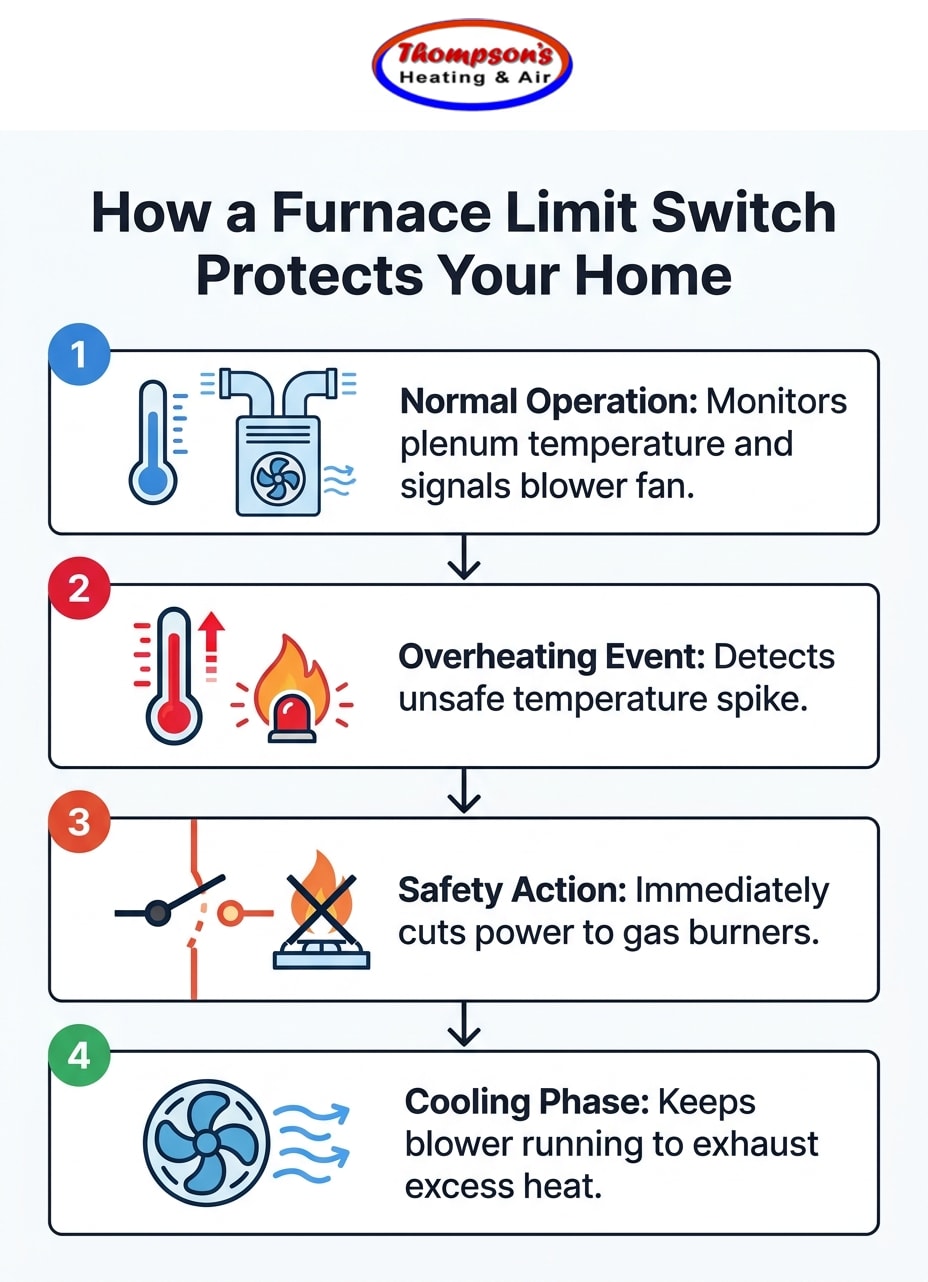
The limit switch features a long temperature probe that extends directly into the heat exchanger area. As your furnace runs, this probe constantly reads the ambient air temperature inside the unit. This monitoring allows the switch to perform its first major function: blower control.
1. Burner ignition: When your thermostat calls for heat, the gas burners ignite, warming the heat exchanger.
2. Fan activation: The limit switch waits until the internal air reaches a specific, warm temperature before signaling the blower fan to turn on. This prevents the system from blasting cold air into your rooms before the furnace has actually warmed up.
3. Fan deactivation: Once the heating cycle finishes and the burners turn off, the switch keeps the fan running just long enough to push the remaining warm air into your home, shutting the fan down only when the internal temperature cools sufficiently.
Preventing Overheating Scenarios
The second, and arguably more important, function is thermal safety shut-off. Without this switch, a furnace could severely overheat, posing a significant fire hazard to your home. If the internal temperature inside the furnace reaches an unsafe threshold, the limit switch immediately intervenes.
• Cutting the fuel supply: The switch instantly cuts power to the gas valve, extinguishing the burners to stop the production of heat.
• Exhausting trapped heat: Even though the burners are off, the switch forces the blower fan to continue running. This pushes the dangerous, trapped heat out of the furnace cabinet and into your ductwork to cool the system down.
• Locking out: If the system overheats repeatedly in a short period, modern limit switches will initiate a "hard lockout," shutting the entire furnace down until a professional resets and inspects it.
Common Reasons Your High Limit Switch Trips
When a furnace trips its limit switch, the component is usually doing exactly what it was designed to do: protecting your home from excess heat. Understanding what causes that excess heat in the first place is key to resolving the issue. In almost all cases, an overheating furnace traces back to restricted airflow. Hidden airflow issues often go unnoticed during mild weather but are rapidly exposed during the first freezing nights in Woodland CA, when the system runs longer and harder.
Here is a breakdown of the most common culprits that cause a high limit switch to trip, and how they impact your system's airflow:
• Severely Clogged Air Filter — How It Causes Overheating: A thick layer of dust and debris prevents the blower motor from pulling enough cool return air into the furnace. Without cool air moving over the heat exchanger, internal temperatures skyrocket. — The Resulting Symptom: The furnace runs for five minutes, shuts down, and the blower fan continues to run blowing cold air.
• Blocked Supply Vents — How It Causes Overheating: Furniture, rugs, or closed vent louvers prevent hot air from escaping the ductwork. The heat backs up into the furnace cabinet, tripping the sensor. — The Resulting Symptom: Certain rooms feel completely cold, while the furnace itself is hot to the touch before shutting down.
• Blocked Return Grilles — How It Causes Overheating: Obstructing the large return grilles in your hallways starves the system of air, creating a vacuum effect that traps heat inside the unit. — The Resulting Symptom: The system struggles to move air, whistling noises occur at the filter, and the limit switch trips repeatedly.
• Failing Blower Motor — How It Causes Overheating: If the motor is coated in dirt or mechanically failing, it cannot spin fast enough to move the required volume of air over the heat exchanger. — The Resulting Symptom: The system overheats rapidly, often accompanied by grinding or squealing noises from the furnace cabinet.
Repeatedly tripping the switch without addressing the root cause is incredibly hard on your equipment. Eventually, the switch itself will wear out from the constant thermal stress and fail permanently. This is why scheduling professional heating maintenance before the heavy winter weather arrives is so critical for reliable operation.
How Overheating Impacts Other Heating Components
A tripping limit switch is rarely an isolated problem; rather, it is a loud symptom of a larger struggle within your HVAC system. When you ask what does a furnace limit switch do, the answer extends beyond just shutting off the burners. It acts as the canary in the coal mine, warning you that the internal environment of your furnace has become hostile to its own components.
The Heat Exchanger: The most expensive and critical component in your furnace is the heat exchanger. It is designed to safely transfer heat from the combustion gases to the air blowing into your home. However, when airflow is restricted and the limit switch trips, the heat exchanger is subjected to extreme temperature spikes. Over time, this rapid expansion and contraction of the metal causes it to stress, weaken, and eventually crack. A cracked heat exchanger is a severe safety hazard that allows carbon monoxide to leak into your home's air supply.
The Blower Motor: When your filter is clogged or your vents are blocked, your blower motor has to work twice as hard to push and pull air through the system. This excessive strain causes the motor itself to overheat and draw too much electrical current. If the limit switch is constantly tripping, your blower motor is likely operating at the edge of failure.
The Inducer Motor: The draft inducer motor is responsible for clearing toxic combustion gases out of the heat exchanger and venting them safely outdoors. When the system short-cycles constantly due to limit switch trips, the inducer motor is forced to start and stop far more frequently than it was designed to. Ignoring these short-cycling events can lead to premature mechanical failure, exposing you to the risks of ignoring a weak furnace inducer motor.
Ultimately, ignoring a tripping switch leads to a cascade of mechanical failures that can turn a simple airflow restriction into a major system replacement.
Safe Troubleshooting Steps for Homeowners
If your furnace is short-cycling during a November early-winter first freeze, it is natural to want to fix the problem immediately. Fortunately, because restricted airflow is the number one cause of an overheating furnace, there are several safe, simple steps you can take before calling a professional. It is important to remember that homeowner troubleshooting should only ever involve the external airflow components—never the internal electrical wiring.
Follow these safe troubleshooting steps if your system is shutting down prematurely:
1. Turn off the thermostat: Before you inspect anything, switch your thermostat to the "Off" position. This stops the furnace from attempting another cycle while you are checking the airflow, preventing further thermal stress on the system.
2. Locate and inspect the furnace filter: Slide the air filter out of its slot (usually located where the return duct meets the furnace). Hold it up to a light source. If you cannot see light passing through the material, the filter is severely clogged and must be replaced immediately. A clean filter is the easiest way to restore proper airflow and stop a limit switch from tripping.
3. Walk through the home and check supply vents: Go room by room and ensure that every supply register is fully open. It is a common myth that closing vents in unused rooms saves energy; in reality, it creates dangerous back-pressure that traps heat inside the furnace. Move any rugs, heavy curtains, or furniture that might be blocking the airflow.
4. Inspect the return grilles: Check the large return grilles in your hallways or living areas. Ensure they are completely unobstructed. Dust or vacuum the louvers if they have accumulated a thick layer of pet hair or debris.
5. Restart and monitor: Once you have replaced the filter and opened all vents, turn the thermostat back to "Heat." Monitor the system for a full cycle. If it runs normally and reaches the set temperature, you have likely solved the problem.
If you perform these steps and the furnace continues to short-cycle, you have reached the limit of safe DIY troubleshooting. The underlying cause is now mechanical or electrical, and requires specialized tools to diagnose safely.
Why Limit Switch Testing Requires a Licensed Professional
When basic airflow fixes do not resolve a short-cycling furnace, the next step is determining whether the limit switch itself has failed, or if a more complex mechanical issue is causing the overheating. This is the exact point where DIY troubleshooting becomes dangerous. Testing or replacing a limit switch requires working with live voltage and specialized diagnostic tools, making it a strict job for a licensed HVAC professional.
The dangers of bypassing: One of the most dangerous things a homeowner can do is attempt to bypass a limit switch to keep the furnace running. Because the switch is your home's primary fire guard, bypassing it removes the only mechanism stopping the furnace from heating uncontrollably. A bypassed switch can lead to catastrophic heat exchanger failure, melted wiring, and severe fire hazards.
Professional diagnostic tools: A licensed technician does not just guess if a switch is bad. They use professional-grade multimeters to test the electrical continuity of the switch under a live load. They also measure the "temperature rise" of the furnace—calculating the exact difference between the return air temperature and the supply air temperature—to verify if the system is genuinely overheating or if the switch has simply become overly sensitive from age.
Comprehensive safety checks: Working with a team that prioritizes safety means you get more than just a quick part swap. Thompson's Heating & Air's commitment to rigorous, proactive safety checks ensures that critical components like limit switches are verified thoroughly before severe weather hits. A professional will check the blower motor amperage, inspect the heat exchanger for stress cracks, and ensure the gas pressure is calibrated correctly. This comprehensive approach guarantees that your heating service in Woodland actually resolves the root cause of the problem, rather than just treating the symptom.
Frequently Asked Questions About Furnace Safety Controls
Understanding the safety mechanisms in your heating system can give you peace of mind during the colder months. Here are some of the most common questions homeowners ask when trying to figure out what does a furnace limit switch do and how to handle a short-cycling system.
What causes a furnace limit switch to trip?
A furnace limit switch trips when the internal temperature of the heating unit reaches an unsafe level. The most common cause of this overheating is restricted airflow, typically resulting from a severely clogged air filter, closed supply vents, or blocked return grilles. If air cannot flow freely over the heat exchanger to absorb the heat, that heat becomes trapped inside the cabinet. Mechanical issues, such as a failing blower motor that isn't spinning fast enough to move the air, can also cause the internal temperatures to spike and trip the switch.
How do I know if my furnace limit switch is bad?
The most obvious sign of a bad or tripping limit switch is a furnace that short-cycles, meaning it runs for only a few minutes before shutting down before the house is actually warm. You may also notice the furnace blower fan running continuously, blowing cold air into your rooms long after the burners have shut off. If you have replaced your air filter and opened all your vents, but the system continues to shut down prematurely, the limit switch itself may have worn out from age or repeated thermal stress and is now tripping at too low of a temperature.
Can a furnace run with a bad limit switch?
No, a furnace should never be run with a bypassed, failing, or broken limit switch. The switch is a non-negotiable safety guard designed to prevent the system from overheating. If a switch is bad, it will usually fail in the "open" position, preventing the burners from igniting at all as a safety precaution. Attempting to bypass the wiring to force the furnace to run removes the home's primary fire protection, creating a severe safety hazard and risking catastrophic damage to the heat exchanger.
How often should a limit switch be inspected?
Your furnace's limit switch and other vital safety controls should be tested annually by a licensed professional. The best time for this inspection is during routine pre-winter heating maintenance, ideally in the early fall before you need to turn the system on for the season. A technician will test the electrical continuity of the switch and measure the system's temperature rise to ensure the furnace is operating within safe thermal boundaries.
Is a tripped limit switch a fire hazard?
The tripped switch itself is not a fire hazard; in fact, it is the exact opposite. The switch trips specifically to prevent a fire hazard by cutting the fuel supply when temperatures get too high. However, if the underlying cause of the overheating—such as a failing motor or severe airflow blockage—is ignored, the situation can become dangerous. Repeatedly resetting a system without fixing the root cause will eventually wear out the switch, which is why professional diagnostics are required.
Ensure Reliable Heating Before the Winter Weather Hits
Your furnace limit switch is a vital protector for your home and family, standing guard against dangerous overheating every time your system runs. While understanding how it works helps you make smarter decisions about basic maintenance, it is crucial to recognize the line between a simple filter change and a complex mechanical issue. When a November early-winter first freeze hits, the sudden strain on your system will quickly reveal any hidden weaknesses.
If you have changed your air filter and checked your vents, but your system is still struggling to complete a full heating cycle, do not ignore the warning signs. Mechanical short-cycling requires expert attention to prevent cascading damage to your heat exchanger and motors. Ensure your home stays safe and warm by scheduling professional furnace repair to thoroughly evaluate your system before the deepest winter weather arrives.