Why Your Heat Pump Vents Feel Cool When the Thermostat is Set to Heat

Why Does My Heat Pump Feel Like It's Blowing Cold Air?
Is your system actually broken, or is a lower heat pump supply air temperature simply a normal part of how these modern HVAC units operate? When the first November pre-winter temperature drops arrive, our team at Thompson's Heating & Air fields calls from many Woodland homeowners who turn on their heating systems only to be met with a surprising sensation: the air coming from the vents feels distinctly cool. This immediate chill often triggers panic, leading you to wonder if the compressor has failed or if the system is completely incapable of warming the house.
The short answer is that what feels like a cold draft is very often a normal characteristic of how heat pump systems function. Unlike traditional furnaces that burn fuel to create intense blasts of heat, these systems move ambient thermal energy from the outdoors into your home. Because of the way they transfer heat, the air they distribute operates at a much lower temperature baseline.
The Initial Panic of the First Cold Snap
It is incredibly common to question your equipment during a sudden chill. You walk over to the vent, place your hand over the register, and expect to feel a roaring fire's worth of warmth. Instead, you feel a lukewarm breeze. Before you assume the system is failing, it is important to understand the biological and mechanical reasons behind this perceived coldness. By learning how to read your system's normal operating signs, you can easily determine whether you are experiencing a standard heating cycle or a legitimate malfunction that requires a professional technician.
The 98.6°F Rule: The Science of Skin vs. Supply Air
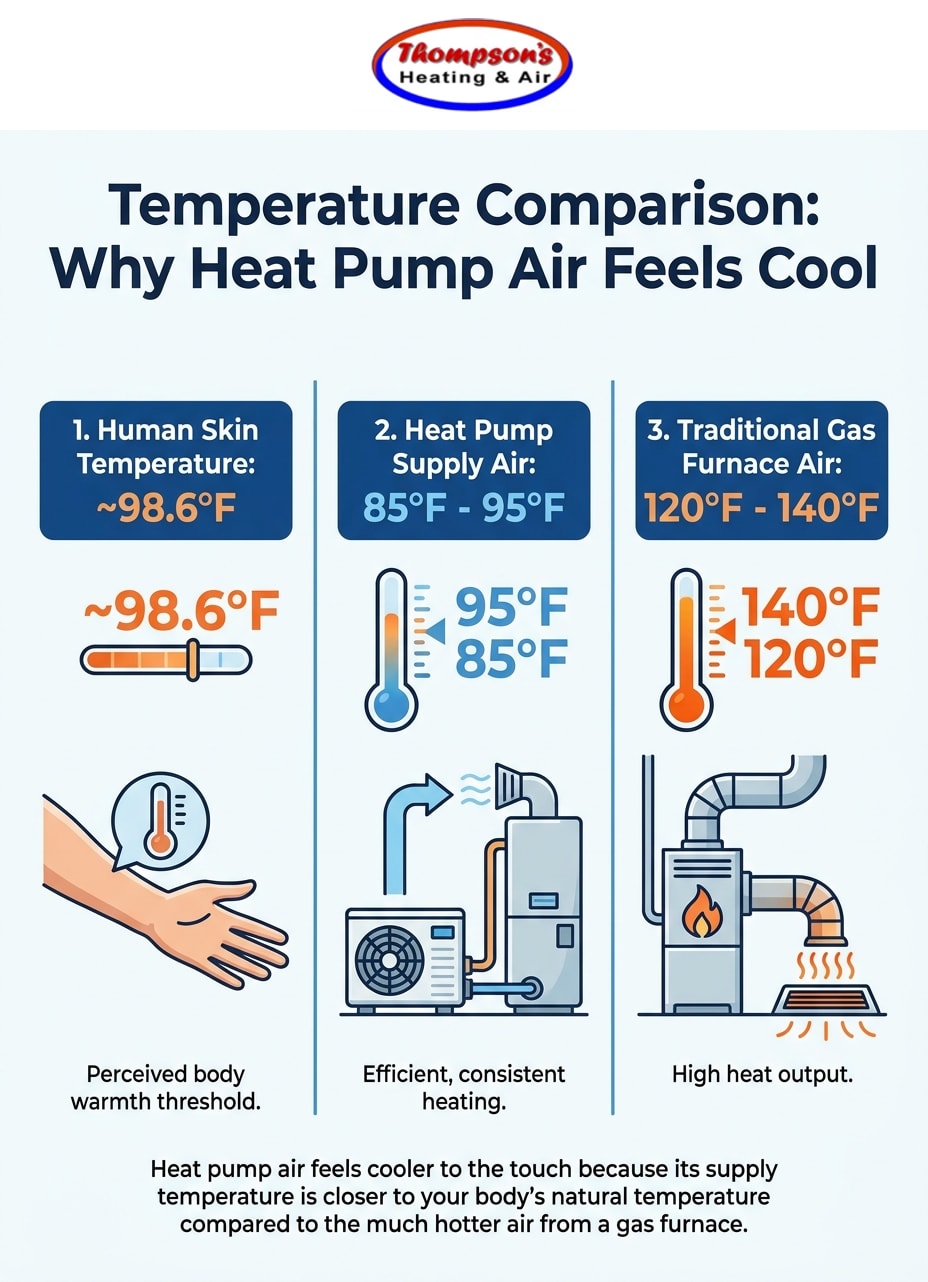
To understand why your heating system feels like an air conditioner, you have to look at the basic science of human biology. Under normal operating conditions, a standard 85-95°F supply air temperature is exactly what you should expect from your vents. This temperature range is highly efficient for warming a living space, but it creates a specific physiological illusion when it interacts with your body.
The Biology of How We Feel Heat
Your average body temperature sits right around 98.6°F. Your skin is highly sensitive to any temperature that falls below that baseline. When a system blows 85°F air across your 98°F skin, the air is technically cooler than you are. As this breeze moves over you, it accelerates the evaporation of natural moisture on your skin, creating a wind-chill effect. Even though that 85°F air is actively warming a 68°F room, it will always feel like a cool draft to the touch.
The quick fix: Stop relying on your hand to test the system. If the ambient room temperature on your thermostat is steadily rising to meet your set point, the system is successfully doing its job. The air only feels cool because you are warmer than the air itself. However, if the room temperature continues to drop while the system runs constantly, that is a clear indicator that you may need professional heat pump repair in Woodland to restore proper functionality.
A Shift in Expectations: Heat Pumps vs. Traditional Gas Furnaces
If you recently upgraded your HVAC equipment, the psychological transition can be jarring. Homeowners who are used to older heating methods often misinterpret the gentle operation of modern electric systems as a mechanical failure. Understanding the difference in how these two technologies deliver warmth is the key to mastering your home comfort.
Why "Low and Slow" Wins on Efficiency
Traditional gas furnaces operate by combusting fossil fuels. This creates intense, high-temperature blasts of air that typically range between 120 and 140 degrees Fahrenheit. When that air hits your skin, it feels undeniably hot because it is significantly warmer than your body temperature. However, this method uses a massive amount of energy, creating sharp temperature spikes and drops throughout the house.
Modern electric heat pumps use a steady-state heat transfer method. They operate "low and slow," delivering a continuous stream of 85-95°F supply air temperature to gently and efficiently raise the ambient temperature of the home. This method uses a fraction of the energy and provides a much more even climate, eliminating the cold spots often left behind by traditional furnaces.
• Typical Output Temperature — Traditional Gas Furnace: 120°F - 140°F — Modern Heat Pump: 85°F - 95°F
• Heating Method — Traditional Gas Furnace: Fuel combustion (high intensity) — Modern Heat Pump: Heat transfer (steady state)
• Airflow Sensation — Traditional Gas Furnace: Intense, hot blast — Modern Heat Pump: Gentle, lukewarm breeze
• Energy Efficiency — Traditional Gas Furnace: Lower (creates temperature spikes) — Modern Heat Pump: Higher (maintains even climate)
How Damp Winter Weather Alters Indoor Comfort
Your perception of indoor temperature is heavily influenced by the environment outside your walls. During the November pre-winter temperature drops, the weather does not just get colder—it often gets significantly wetter. This environmental shift plays a massive role in how the air from your vents feels on your skin.
The Thermal Conductivity of Humid Air
When the heavy, damp Tule fog rolls into the Sacramento Valley during late fall, we consistently notice how that moisture changes our customers' perception of indoor heat. Water is an excellent conductor of thermal energy. When the indoor air retains some of this seasonal dampness, it pulls heat away from your body much faster than dry air would. This means that an 85°F breeze in a damp room will feel substantially colder than the exact same breeze in a dry room.
Your system is constantly working against these external environmental factors to maintain a steady indoor climate. To get an accurate reading of your home's comfort level, we highly recommend placing a secondary digital thermometer in the living room, away from the direct airflow of the vents. This will give you the true ambient temperature of the space, proving that the system is warming the room despite the damp, heavy air making the drafts feel cooler.
The Defrost Cycle: When Temporary Chills Are Normal
There is one specific operational phase where your system will actually blow cooler air on purpose. As outdoor temperatures plunge toward freezing, condensation on the outdoor unit's coils can turn into a thick layer of frost or ice. If left unchecked, this ice would completely block airflow and ruin the compressor. To protect itself, the system initiates a built-in defrost cycle.
Step-by-Step: What Happens During Defrost
When the defrost cycle triggers, the system temporarily stops heating your home and focuses on melting the outdoor ice. Here is the exact sequence of events:
1. Frost detection: Internal sensors detect that ice is restricting outdoor airflow, signaling the control board to initiate defrost mode.
2. The reversing valve shifts: The system temporarily switches into air conditioning mode. It pulls ambient heat from inside your house and sends it outdoors to rapidly melt the ice on the coils.
3. Cool air circulates: Because the system is acting as an air conditioner for a few minutes, the indoor vents will blow noticeably cooler air. (This is also a great time to evaluate how ductwork impacts heat pump airflow, as clear vents help the system cycle efficiently).
4. Auxiliary heat engages: To prevent your home from getting too cold, the system usually activates secondary electric heat strips to offset the chill.
5. Normal heating resumes: Once the outdoor ice is melted (typically within 10 to 15 minutes), the reversing valve shifts back, and normal 85-95°F supply air temperature resumes.
If you feel a sudden drop in vent temperature during freezing weather, wait 15 minutes. In almost all cases, the defrost cycle will end, and warm air will return automatically.
Troubleshooting: Signs You Actually Need Professional Service
While lukewarm air and temporary defrost chills are perfectly normal, there are times when your system is genuinely malfunctioning. Knowing the difference between a biological illusion and a mechanical failure can save you from freezing nights and expensive emergency calls.
When to Call a Professional
If you notice any of the following symptoms, it is time to turn off the system and contact a licensed technician:
• The room temperature never rises: If the thermostat is set to 70°F but the room stays stuck at 62°F after hours of running, the system is failing to transfer heat.
• The air is genuinely freezing: If the air coming from the vents is the same temperature as the room (or colder) and the system is not in a brief defrost cycle, there is a mechanical issue.
• The outdoor unit is encased in solid ice: A light layer of frost is normal; a solid block of thick ice means the defrost control board has failed.
• The system runs endlessly: While these units run longer than furnaces, a system that never cycles off is struggling with a severe airflow or refrigerant restriction.
Finding a technician who understands these specific components is critical. Last fall, a homeowner reached out to our team at Thompson's Heating & Air after having difficulty finding an HVAC vendor knowledgeable about the complex technical details of their heat pump. They needed clear answers, not guesswork. By providing staff who truly understood the technology, our team was able to diagnose the issues accurately and ultimately installed new, high-efficiency products cleanly and on time to the customer's complete satisfaction.
This is where our transparent diagnostic approach makes all the difference—educating you to prevent unnecessary service calls for perfectly normal operation, while providing honest, expert intervention when a real mechanical issue exists. Never attempt DIY repairs on refrigerant lines or high-voltage electrical components. Always rely on professional heating repair services to keep your warranty intact and your home safe.
Proactive Steps for Reliable Winter Heating
The best way to ensure your system delivers a consistent 85-95°F supply air temperature is through proactive care. When a system is neglected, it has to work twice as hard to move air, which further lowers the output temperature and makes the house feel drafty and uncomfortable.
Your Pre-Winter Maintenance Checklist
Before the November pre-winter temperature drops become severe, take a few minutes to optimize your home's airflow. In our years of keeping Woodland homes comfortable, the most common culprit behind weak, cool airflow we find is a clogged air filter. When the filter is packed with dust and pet dander, the blower motor cannot pull enough air across the indoor coil. This restricts the heat transfer process, resulting in lukewarm air barely trickling out of the registers. Check your filter every 30 days during heavy usage months and replace it the moment it looks gray or opaque.
Additionally, walk through your home and ensure all supply registers and return grilles are completely unblocked. Moving a heavy rug or a piece of furniture off a vent can dramatically improve the ambient temperature of a room.
Finally, the most effective step you can take is scheduling routine heat pump maintenance. During a professional tune-up, a technician will verify that the reversing valve is shifting correctly, weigh the refrigerant charge to ensure optimal heat transfer, and test the defrost control board. Catching a minor electrical issue in the fall guarantees that your system will be ready to perform when the deep winter freezes arrive.
Comprehensive FAQ: Heat Pump Temperatures and Performance
What temperature should air coming out of a heat pump be?
Under normal operating conditions, the supply air should range between 85 and 95 degrees Fahrenheit. Because this technology relies on transferring ambient heat rather than combusting fossil fuels, it produces a steady, moderate warmth rather than the intense heat of a gas furnace. As long as this air is gradually raising the overall ambient temperature of your home, the system is performing exactly as designed.
Why does my heat pump blow cold air when the heat is on?
The air often feels cold because the 85-95°F supply air is lower than your natural body temperature of 98.6°F. When this air blows across your skin, it creates a wind-chill effect, making it feel like a cool draft. Additionally, if the system is in its temporary defrost cycle to melt outdoor ice, it will briefly blow cooler air into the home for about 10 to 15 minutes before returning to normal heating mode.
How do I know if my heat pump is working properly?
The most reliable way to check your system's performance is by monitoring the ambient room temperature, not by feeling the air at the vents. If your thermostat is set to 68°F and the room successfully reaches and maintains 68°F, the system is working perfectly. If the system runs constantly but the indoor temperature continues to drop, you likely have a mechanical issue that requires professional diagnostics.
Does auxiliary heat change the temperature of the air coming from my vents?
Yes, auxiliary electric heat strips can temporarily increase the temperature of the air coming from your vents. These backup strips automatically engage during extreme cold snaps or during the defrost cycle to help the primary system keep up with the heating demand. When auxiliary heat is running, you may notice the vent air feels slightly warmer and more intense than standard operation.
How long does a heat pump defrost cycle last before warm air returns?
A normal defrost cycle typically lasts between 10 and 15 minutes. During this brief window, the system reverses its operation to melt frost off the outdoor coils, which can cause the indoor vents to push out cooler air. Once the outdoor sensors detect that the ice has melted, the system will automatically switch back to standard heating mode and warm air will resume.
Stay Comfortable and Confident This Winter
Understanding your normal heat pump supply air temperature is the absolute key to wintertime peace of mind. By recognizing the 98.6°F rule and knowing how the defrost cycle operates, you can confidently navigate the colder months without second-guessing your equipment. Remember, a lukewarm breeze is a sign of high-efficiency heat transfer, not necessarily a broken compressor. However, if your home's ambient temperature is dropping and the system is running constantly without providing relief, do not ignore the warning signs. Reach out to a local HVAC expert to ensure your system is properly calibrated, fully charged, and ready to keep your family comfortable all season long.