The Hidden Diagnostics of Servicing a Gas Fireplace Insert Before Winter


The Hidden Risks of Dormant Fireplaces as Winter Approaches
Before the first freeze hits, prioritizing servicing gas fireplace insert units is the most critical step you can take for your home's winter readiness. Throughout the spring and summer, your fireplace sits completely idle. While it may look perfectly fine behind the glass, the interior components are quietly collecting dust, circulating pet dander, and providing a dark, quiet shelter for spiders to build webs. These microscopic obstructions do more than just create a burning smell when you first turn the unit on. They create genuine safety hazards, from obstructed burner ports to delayed gas ignition, right when you need reliable heat the most.
As you prepare for November pre-winter usage, scheduling a professional technical evaluation ensures these hidden risks are eliminated before they become dangerous. If you are looking to secure your home's comfort, exploring comprehensive heating services is the smartest way to start the season safely.
The unseen dangers of the off-season:
• Dust accumulation: Settled particles on the heat exchanger can cause unpleasant odors and minor smoke when first ignited.
• Pest intrusion: Spiders and small insects are naturally drawn to the small, dark orifices of gas valves and burner tubes.
• Corrosion and moisture: Summer humidity can cause subtle oxidation on sensitive electrical sensors, preventing them from reading properly.
• Vent blockages: Birds and rodents frequently build nests in dormant exterior venting caps during the warmer months.
Aesthetic cleaning simply cannot address these internal mechanical realities. A thorough technical diagnostic is required to verify that the gas pressure is correct, the venting is completely clear, and the safety sensors are fully operational before the unit handles a heavy winter workload.
Why Cosmetic Cleaning Falls Short of True Safety
Most homeowners take pride in keeping their living spaces clean, which often includes wiping down the glass front of the fireplace and vacuuming the surrounding hearth. However, there is a massive difference between basic cosmetic upkeep and the rigorous safety diagnostics performed by licensed professionals. A standard household vacuum is not designed to safely remove microscopic debris from delicate gas valves, nor can a glass cleaner identify a failing thermopile.
For homes in Woodland CA, agricultural dust and summer pollen easily find their way into the home and settle inside dormant hearth appliances. When this debris coats the internal sensors, the fireplace may struggle to stay lit or fail to ignite entirely. More importantly, cosmetic cleaning completely misses the critical safety checks that protect your home from carbon monoxide exposure and hidden fire hazards.
What a professional diagnostic uncovers that cosmetic cleaning misses:
• Gas valve integrity: Technicians use specialized combustible gas detectors to identify micro-leaks around the valve fittings that are invisible to the naked eye.
• Microscopic debris removal: Professionals use compressed air and specialized brushes to clear out the primary air shutter and burner orifices without damaging them.
• Exhaust and intake separation: A technical inspection verifies that the intake air and exhaust gases are not mixing, which is a primary cause of poor flame quality and carbon monoxide risks.
• Gasket seals: The fiberglass rope gasket behind the glass must be inspected for proper compression to ensure dangerous combustion gases do not leak into the living room.
To truly protect your family, booking pre-season heating maintenance goes far beyond making the appliance look nice. It ensures the mechanical heart of the system is operating strictly within the manufacturer's safety tolerances.

Inspecting the Ignition and Thermopile Systems
The ignition system is the brain of your gas fireplace insert. It dictates when the gas flows and, more importantly, when it must shut off to prevent a dangerous buildup. When preparing for November pre-winter usage, professionals spend a significant portion of their diagnostic time focusing on the pilot light assembly, the thermocouple, and the thermopile. These components work together to prove that a flame is present before allowing the main gas valve to open.
If these sensors are coated in a thin layer of summer dust or oxidation, they cannot detect the pilot flame accurately. The system's built-in safety mechanism will assume the fire has blown out and immediately shut down the gas supply. This is the most common reason homeowners experience unexpected fireplace shutdowns right in the middle of a cold snap.
1. Pilot light mechanism cleaning: The technician carefully disassembles the pilot hood to remove soot and silica buildup, ensuring the pilot flame is strong, blue, and directly engulfing the sensors.
2. Sparkler assembly inspection: The piezo igniter (the component that creates the spark) is checked for proper alignment and strong electrical grounding so it lights the pilot instantly.
3. Thermocouple testing: This smaller sensor is tested to ensure it is generating enough voltage to hold the pilot valve open.
4. Wiring harness evaluation: All internal wires connecting the sensors to the main valve and wall switch are inspected for heat damage or loose connections.
Millivolt Output Diagnostics
Unlike your central furnace, many gas fireplace inserts operate on a millivolt system, meaning they generate their own tiny electrical current using the heat from the pilot light. This is why you can still turn on your gas fireplace during a power outage. The thermopile is the component responsible for generating this current.
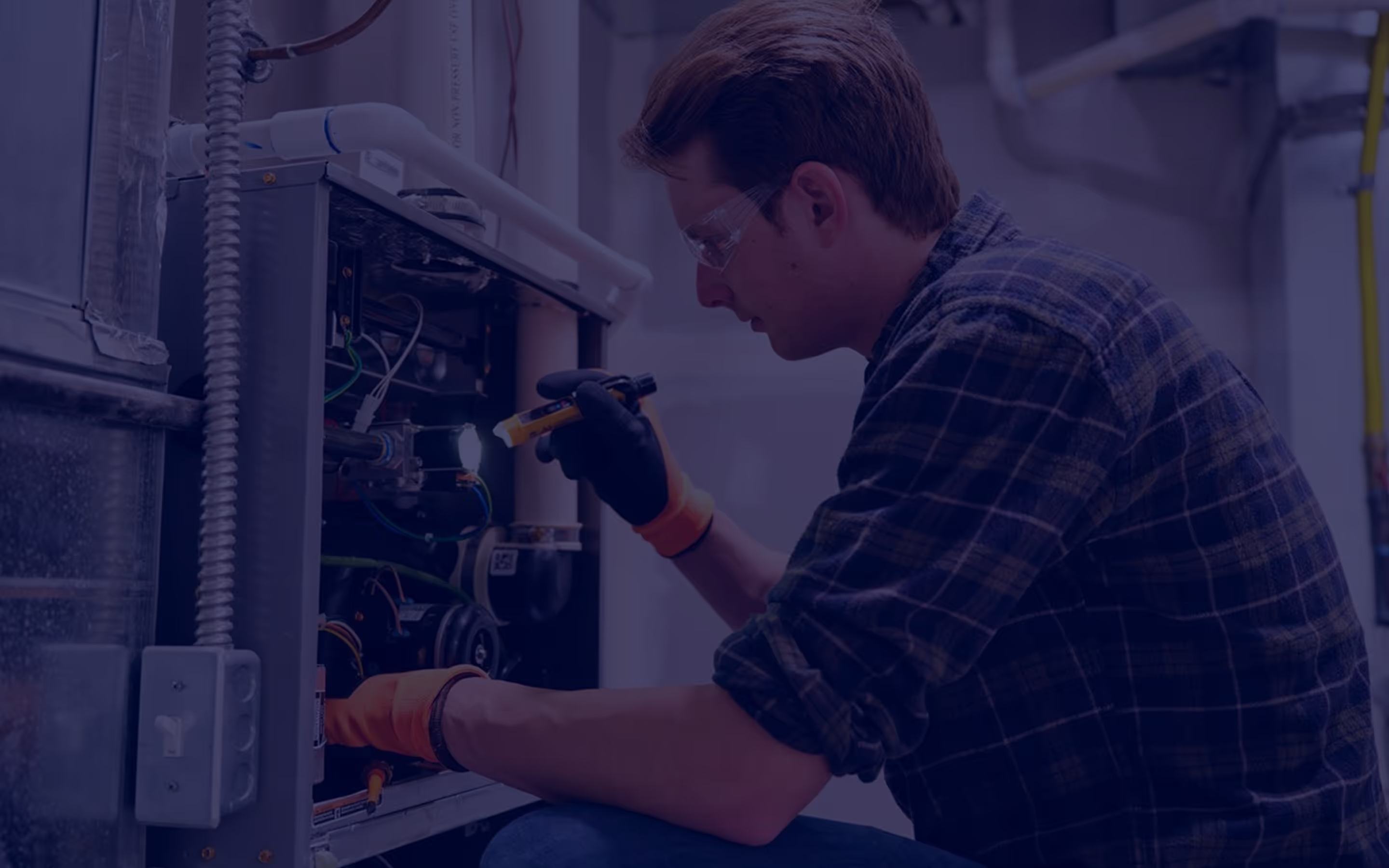
During a professional inspection, technicians use a digital multimeter to measure the exact millivolt output of the thermopile. A healthy thermopile should generate between 400 and 600 millivolts. If the reading drops below 325 millivolts, the technician knows the component is failing and will soon cause the main burner to stop responding to the wall switch. Testing these electrical signals requires specialized training to ensure the readings are accurate without compromising the integrity of the gas valve.
Venting, Flue, and Draft Diagnostics
A gas fireplace insert is only as safe as its venting system. The combustion process creates water vapor, carbon dioxide, and potentially lethal carbon monoxide. Moving these byproducts safely out of the home requires a completely unobstructed flue and proper drafting physics. During the dormant months, the venting system is highly vulnerable to external blockages, including bird nests, accumulated leaves, and structural shifts in the chimney crown.
In the Sacramento Valley, the damp Tule fog and chilly evenings make reliable drafting critical. Dense, cold outside air can sink down into an unmaintained chimney, creating a heavy column of cold air that acts like a plug. When you first ignite the fireplace, the warm exhaust gases must have enough drafting force to push that cold air out. If the draft is weak, the exhaust will spill backward into your living room.
Professionals conduct rigorous carbon monoxide testing and draft evaluations to ensure the exhaust is flowing precisely as designed. They inspect the termination cap on the roof or side of the house to verify it is free of debris and properly sealed against the weather. They also check the co-linear venting tubes (one for fresh air intake, one for exhaust) to ensure they have not become disconnected or crushed over time.
Drafting issues are not just a safety hazard; they also impact your indoor comfort. If you notice cold air seeping into the room when the fireplace is off, the drafting system may be compromised. Identifying the source of drafts near your fireplace insert is a standard part of a comprehensive diagnostic, ensuring your home retains the heat it produces.
Burner Port Clearing and Gas Valve Integrity
The burner tube is where the actual combustion takes place, and it relies on dozens of tiny, precision-drilled ports to distribute the gas evenly across the firebox. When these ports become clogged, the appliance cannot operate safely or efficiently. Spider webs are a particularly notorious problem. Spiders frequently crawl into the burner tubes during the summer. Even a single, thin web can act as a solid wall against the flow of natural gas or propane.
When a burner port is blocked, the gas is forced to travel to other areas of the tube, creating uneven, misaligned flames that can cause permanent soot damage to the glass and logs. Worse, blockages can lead to delayed ignition. This happens when gas pools inside the firebox for several seconds before finally reaching the pilot light, resulting in a startling "boom" that shakes the glass and poses a severe safety risk.
Professional burner and valve diagnostics include:
• Burner tube extraction: Safely removing the entire burner assembly from the firebox to mechanically brush and clear every individual port.
• Air shutter adjustment: Calibrating the primary air shutter to ensure the perfect ratio of oxygen to gas, which prevents heavy sooting and carbon buildup.
• Log placement verification: Ensuring the ceramic logs are placed in their exact factory-specified positions so they do not impinge on the flames and create excess carbon monoxide.
• Micro-leak detection: Scanning the entire length of the gas valve and the main supply line connections to guarantee zero combustible gas is escaping into the cabinet.
Addressing these mechanical realities early in the season prevents the need for emergency heating repair when the weather turns freezing. Identifying a failing gas valve during a scheduled November pre-winter usage check is vastly preferable to dealing with a sudden gas leak on a holiday weekend.
The Dangers of DIY Fireplace Maintenance
With countless online videos available, it can be tempting to treat gas fireplace maintenance as a weekend DIY project. However, while homeowners can and should safely wipe down the exterior glass and vacuum the outer hearth, any internal diagnostics require specialized tools and formal training. A gas fireplace insert is a complex, live-fire appliance operating inside your living room, and the margin for error is non-existent.
The primary danger of DIY maintenance is improper reassembly. If the glass front is not seated and sealed perfectly, carbon monoxide can easily bypass the gasket and fill the home. If a homeowner attempts to clean the burner ports and accidentally bends the pilot hood or damages the thermopile, the unit will become completely inoperable. Furthermore, attempting to adjust the air shutter without a combustion analyzer often leads to heavy sooting that ruins the aesthetic of the logs and creates a fire hazard.
For residents in Woodland CA, relying on a licensed professional is also a matter of protecting your investment. Most major fireplace manufacturers explicitly state in their warranty documentation that all internal servicing must be performed by a qualified technician. If a DIY repair attempt causes damage to the gas valve or heat exchanger, the warranty is immediately voided.
A licensed, trained eye spots the hidden wear and tear that an untrained homeowner simply cannot see. From hairline cracks in the ceramic glass to subtle signs of metal fatigue in the firebox, a professional diagnostic is the only way to ensure the appliance is genuinely safe to operate.
Integrating Hearth Safety into Whole-Home Winter Prep
A gas fireplace insert is rarely just a decorative feature; it is a highly efficient, critical piece of your home's overall heating strategy. When properly maintained, an insert provides excellent zone heating, allowing you to warm the main living areas where your family spends the most time without forcing your central furnace to heat empty bedrooms.
Because Thompson's Heating & Air brings comprehensive expertise in both traditional HVAC systems and specialized hearth products, we view your fireplace inspection as an integral part of your whole-home winter safety plan rather than just servicing a standalone appliance. Ensuring the fireplace operates at peak efficiency directly reduces the daily strain on your primary central heating system.
During November pre-winter usage preparations, taking a holistic approach pays off. When your primary furnace and your supplemental gas insert are both professionally evaluated, you gain the confidence that your home can easily handle whatever temperatures the winter season delivers. This dual-system reliability means that even if one system requires unexpected downtime, your family will never be left in the cold.
Secure Your Winter Comfort with Professional Diagnostics
The technical depth of a professional gas fireplace inspection goes far beyond making the flames look pretty. It is a rigorous, safety-focused evaluation of millivolt electrical systems, gas valve integrity, and proper venting physics. By clearing out the hidden dust, webs, and wear and tear that accumulate during the off-season, technicians ensure your unit is ready to perform safely.
For homeowners in Woodland CA, ensuring safe operation provides the reliable supplemental heat necessary to stay comfortable all winter long. You want the confidence of knowing that when you flip the switch, the fire will ignite smoothly, vent properly, and shut down safely every single time.
Do not wait until the first freezing night to discover your fireplace is struggling. Schedule your professional servicing gas fireplace insert appointment now, before the coldest weather sets in, and enjoy a warm, safe home all season.
Frequently Asked Questions
How often should a gas fireplace insert be serviced?
Major manufacturers and fire safety organizations recommend having your gas fireplace insert serviced once a year, ideally in the fall before heavy winter use begins. Annual servicing ensures that dust, spider webs, and oxidation that accumulate during the dormant summer months are cleared out. It also provides an opportunity for technicians to verify that the gas valve, safety sensors, and venting systems are operating perfectly.
What happens if you don't service a gas fireplace?
Skipping annual maintenance allows microscopic debris to clog the burner ports and pilot assembly, which frequently leads to delayed ignition or a system that refuses to stay lit. Over time, neglected fireplaces can develop micro-leaks in the gas lines or suffer from compromised venting, which drastically increases the risk of carbon monoxide spilling into the living space. Additionally, ignoring maintenance often voids the manufacturer's warranty on expensive internal components.
Why does my gas fireplace keep shutting off?
The most common reason a gas fireplace shuts off unexpectedly is a dirty or failing safety sensor, such as the thermocouple or thermopile. These sensors are designed to detect the pilot flame; if they are coated in dust or begin to fail electrically, they will assume the fire is out and immediately shut down the gas supply for safety. A professional can easily test the millivolt output of these sensors and clean or replace them to restore reliable operation.
What is included in a professional gas fireplace inspection?
A professional inspection includes testing the millivolt output of the thermopile, checking the gas valve for micro-leaks using combustible gas detectors, and mechanically clearing the burner ports of debris. Technicians also evaluate the venting system for blockages, ensure proper drafting, and inspect the glass gasket seal to prevent exhaust leaks. The process is a comprehensive safety and performance diagnostic, not just a cosmetic cleaning.
Can a dirty gas fireplace cause carbon monoxide issues?
Yes, a dirty or unmaintained gas fireplace can absolutely create carbon monoxide hazards. If the burner ports are clogged or the primary air shutter is improperly adjusted, the gas will not burn cleanly, leading to excess carbon monoxide production. Furthermore, if the exhaust venting is blocked by animal nests or debris, those dangerous combustion gases have nowhere to go but backward into your home.