
Identifying the Source of Drafts Near Your Fireplace Insert

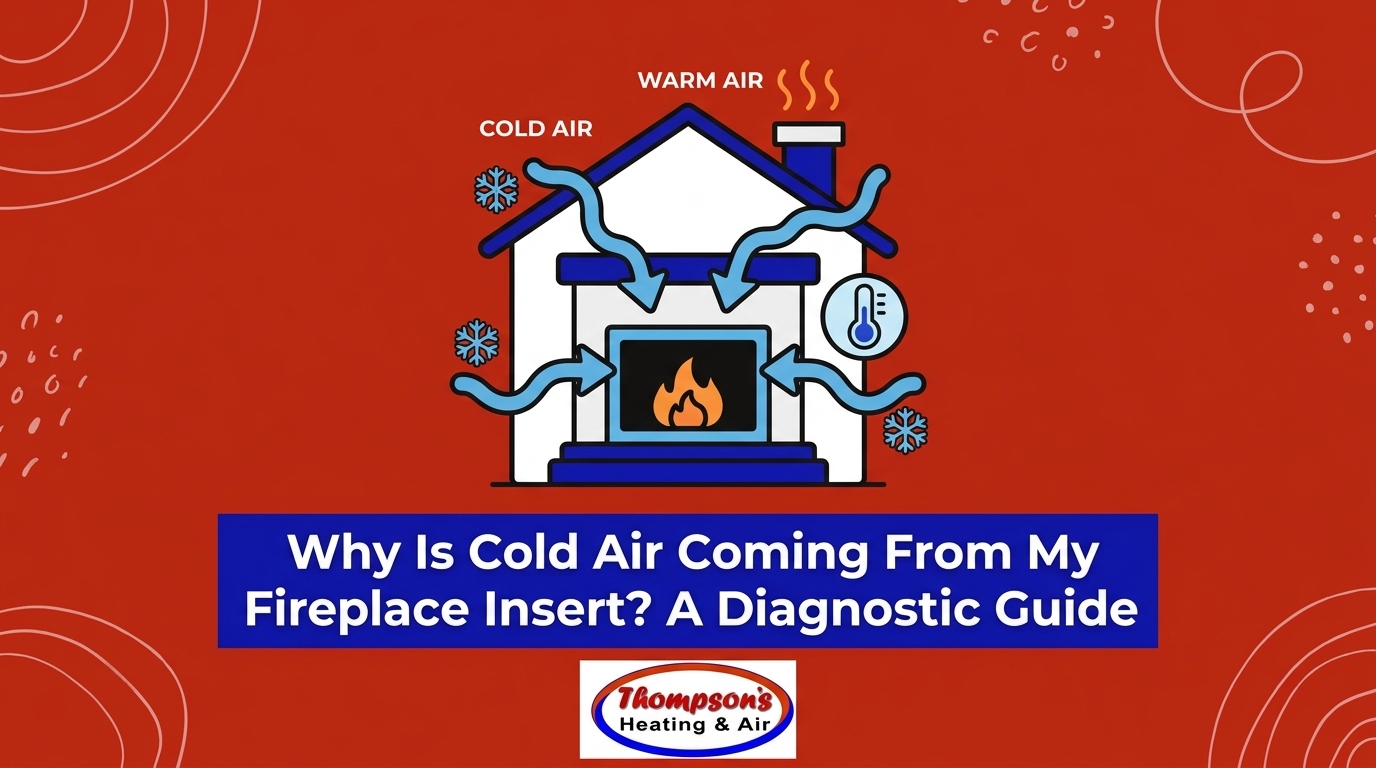
Why Is There a Chill Near Your Fireplace This Fall?
Is your living room feeling unexpectedly chilly even though your hearth is supposed to be a source of warmth? Identifying the source of drafts near your fireplace insert is a critical first step when early fall temperatures begin to drop. While a fireplace insert is specifically designed to improve your home's heating efficiency by containing the fire and radiating heat into the room, a compromised surround or flue can have the exact opposite effect. When the mechanical seals fail, cold outdoor air can draft directly into your living space, making your primary heating system work overtime to compensate.
Recognizing this draft early in the season is essential for restoring your home's thermal boundary. If you are noticing a cold breeze near the hearth this September or early fall, it is time to look beyond the surface. For comprehensive heating services and professional heating repair, scheduling a diagnostic inspection before peak winter weather hits will keep your home comfortable and efficient.
Understanding How Cold Air Bypasses Your Fireplace Insert
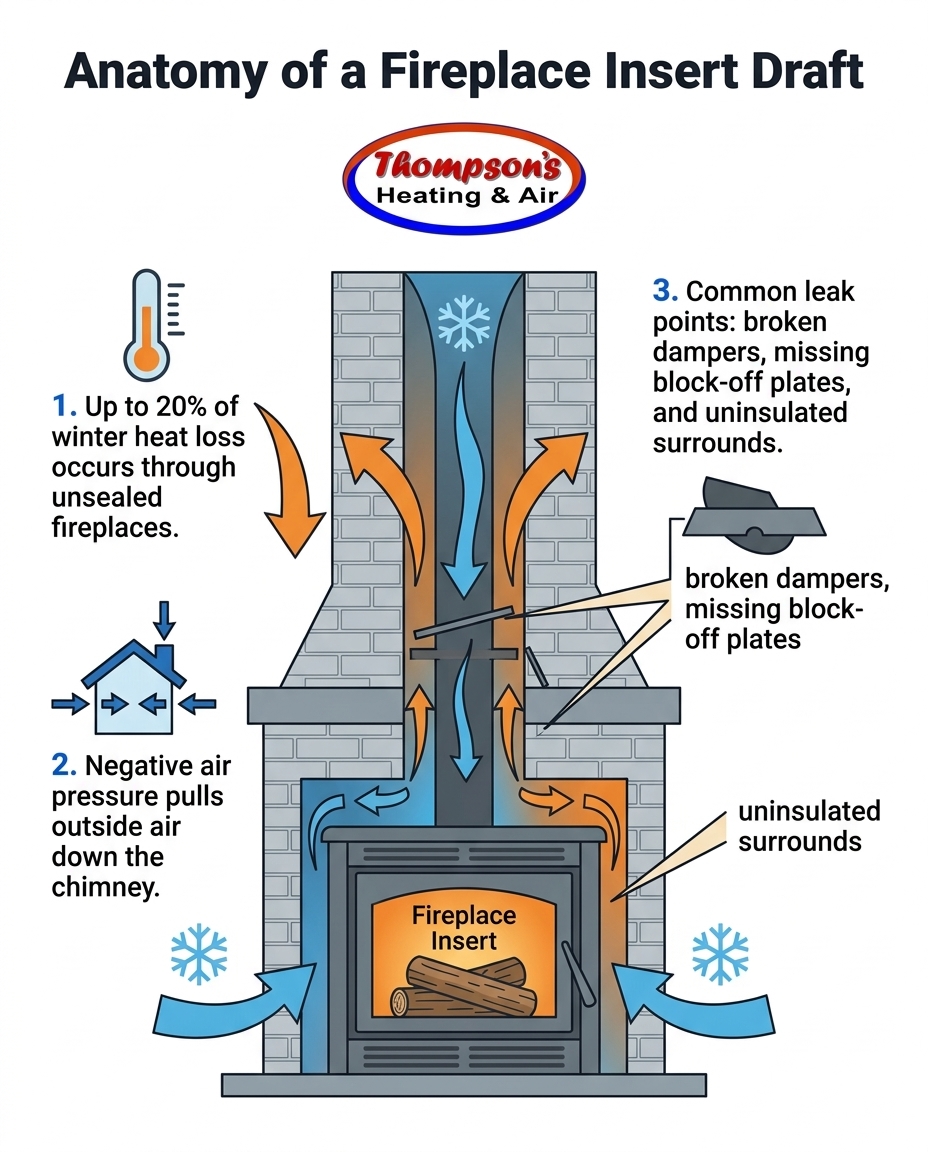
To stop a draft, you first have to understand the physics of how cold air enters the home. Fireplaces and chimneys can account for up to 20% of a home's winter heat loss if they are not properly sealed. This significant energy loss is primarily driven by two interrelated forces: the stack effect and negative air pressure.
The stack effect occurs because warm air is lighter and less dense than cold air. As your home's heating system warms the indoor air, that air naturally rises toward the upper floors and the attic. If your home has minor air leaks in the upper levels, that warm air escapes outside. This upward movement creates a vacuum, or negative air pressure, in the lower levels of your home. To equalize the pressure, the house attempts to pull replacement air from the outside through any available gap. A poorly sealed chimney flue acts as a massive straw, drawing cold, dense outside air straight down into your living room.
In Woodland CA, where the damp, chilly winter conditions can make indoor drafts feel particularly biting, this continuous influx of cold air severely impacts your indoor comfort. It is important to clarify that this draft is rarely a flaw in the manufacturing of the insert itself. Instead, it is almost always a symptom of a mechanical sealing failure in the surrounding masonry or the venting system. Fixing it requires pinpointing exactly where that seal has been compromised.
Diagnosing Chimney Flue and Damper Vulnerabilities
When investigating a draft, the internal components of the chimney are often the primary culprits. While the fireplace insert itself is a sealed metal box, the pathway it uses to exhaust gases must be strictly controlled. When you are comparing gas fireplace inserts to traditional wood burning systems, one commonality is that both rely on a secure venting pathway to prevent outside air intrusion.
Diagnosing these internal components requires looking beyond the room-facing elements and evaluating the mechanical parts hidden inside the chimney structure. Because September and early fall offer mild weather, it is the perfect window to address these specific vulnerabilities before heavy use is required.
1. The Chimney Damper: The damper is the primary valve that seals the chimney when the fireplace is not in use. Over years of exposure to high heat, moisture, and creosote, a traditional throat damper can become warped, rusted, or jammed. Even a millimeter of warping prevents the metal plates from sitting flush, allowing cold air to pour in and warm air to escape.
2. The Block-Off Plate: A block-off plate is a piece of sheet metal installed inside the chimney just above the fireplace insert. Its job is to seal the chimney cavity so that room air cannot go up the chimney and cold air cannot come down. If this plate is missing, improperly sized, or unsealed around the edges, drafts will easily bypass the insert.
3. The Flue Liner: Fireplace inserts typically utilize a continuous metal flue liner that runs all the way to the top of the chimney. If this liner is degraded, disconnected at the appliance adapter, or lacks proper top-sealing insulation, cold air from the masonry chase will sink down around the liner and enter the room.
The diagnostic challenge: Because these components are located deep within the dark, soot-covered chimney cavity, identifying a warped damper or a poorly sealed block-off plate requires specialized inspection cameras and professional diagnostic experience.
Inspecting the Insert Surround for Insulation Gaps
If the internal flue components are intact, the next area to investigate is the insert surround. The surround consists of the decorative metal panels that bridge the gap between the modern fireplace insert and the original masonry opening. While they look like a solid barrier, they are often a hidden source of air leaks.
When an insert is installed, the space behind the surround must be properly insulated to prevent air from the chimney chase from entering the room. Over time, the materials used to seal this gap can fail. High-temperature insulation can compress, degrade, or shift. Additionally, the extreme temperature fluctuations of a working fireplace cause the metal insert to expand and contract repeatedly. This constant movement can gradually break the seals around the masonry, creating hairline gaps that widen over the years.
In homes across Woodland CA, where heating systems run frequently during the chilly winter nights, even a small gap behind the surround can let in a surprising volume of cold air. You can often detect these gaps by holding the back of your hand near the edges of the surround panels on a windy day. If you feel a concentrated breeze, the insulation behind the panel has likely failed.
Ensuring a tight seal at the surround is a critical part of comprehensive hearth care. Just as you would schedule routine heating maintenance for your furnace, having a professional evaluate and replace degraded fireplace insulation ensures your system continues to function as an efficient thermal barrier rather than an open window.
How Insert Drafts Compromise Overall Heating Efficiency
It is easy to view a drafty fireplace as an isolated nuisance—a cold spot in the living room that you just avoid on chilly evenings. However, from a building science perspective, a fireplace draft is a whole-home HVAC efficiency problem. Your home operates as a single, interconnected thermal envelope, and a localized leak has cascading effects on your primary heating system.
When cold air continuously pours into the living room, the ambient temperature drops. Your thermostat, sensing this drop, commands your furnace or heat pump to kick on. Because the cold air is constantly fighting the warm air, your primary heating system is forced to run longer, cycle more frequently, and consume significantly more energy just to maintain the set temperature. This not only drives up utility costs but also accelerates wear and tear on your HVAC equipment.
Furthermore, a drafty insert can severely impact your indoor environmental quality. The air being pulled down a masonry chimney is not clean. It carries soot, creosote dust, mold spores, and outdoor allergens directly into your living space. Addressing these drafts is an essential step for homeowners looking into indoor air quality solutions, as sealing the chimney prevents these unfiltered particulates from circulating through your home's ductwork.
• Primary Heating System — With an Unsealed, Drafty Insert: Runs longer cycles; increased wear and tear. — With a Professionally Sealed Insert: Maintains temperature easily; normal cycling.
• Energy Consumption — With an Unsealed, Drafty Insert: Higher usage due to continuous heat loss. — With a Professionally Sealed Insert: Optimized usage; thermal envelope is secure.
• Indoor Air Quality — With an Unsealed, Drafty Insert: Chimney dust and outdoor allergens enter the home. — With a Professionally Sealed Insert: Unfiltered chimney air is blocked from living spaces.
• Room Comfort — With an Unsealed, Drafty Insert: Noticeable cold spots near the hearth. — With a Professionally Sealed Insert: Consistent, even temperatures throughout the room.
Why Professional Diagnostics Outperform DIY Sealing
When faced with a draft, many homeowners are tempted to visit the hardware store for cans of expanding foam or tubes of silicone sealant. However, attempting to seal a fireplace insert yourself is not only ineffective—it can be highly dangerous. Fireplace inserts operate at extreme temperatures and have highly specific venting requirements that must be maintained for safe operation.
The dangers of DIY sealing: Standard expanding foams and caulks are highly flammable and will melt or ignite when the insert reaches operating temperature. Even if you use high-heat sealants, applying them improperly can block necessary ventilation pathways. If the exhaust flow is disrupted, dangerous carbon monoxide can back up into your living room instead of venting safely outside. Because of these severe safety risks, sealing a fireplace insert requires licensed, certified workmanship.
A professional diagnostic inspection evaluates both the chimney flue and the insert surround simultaneously. At Thompson's Heating & Air, our comprehensive diagnostic approach ensures that technicians don't just look at the surface; they thoroughly inspect the entire venting system to guarantee an airtight seal that meets all safety codes. We evaluate the damper, test the draft pressure, inspect the block-off plate, and use specialized high-temperature materials to secure the surround.
Real-world experience shows the value of this professional approach. For example, one local homeowner reached out to us last winter after purchasing a fireplace insert. They needed reliable advice and high-quality workmanship to ensure the unit was installed and sealed safely. By focusing on comprehensive diagnostics and expert installation, the system was secured perfectly, and the customer was extremely happy with their new, draft-free fireplace insert. Addressing these issues in September or early fall ensures your home is just as comfortable and safe before the heavy winter weather arrives.
Frequently Asked Questions About Fireplace Insert Drafts
Why is cold air coming from my fireplace insert?
Cold air typically enters through a compromised chimney flue, an open or broken damper, or missing insulation around the insert surround. Because your home naturally creates negative air pressure as warm air rises, it pulls outside air down the chimney to replace it. If the mechanical seals on your damper or the insulation behind the insert's decorative panels have degraded, that cold air will draft directly into your living room.
How do professionals fix a drafty fireplace insert?
Professionals inspect the entire system, install or repair block-off plates, replace faulty dampers, and apply high-temperature insulation to the surround. A certified technician will first use diagnostic tools to pinpoint the exact location of the leak. Depending on the issue, they may need to rebuild the seal at the top of the chimney, replace a rusted throat damper with a top-sealing model, or remove the insert surround to pack specialized, fire-rated insulation into the gaps.
Do fireplace inserts stop drafts?
Yes, when properly installed and sealed, fireplace inserts are highly effective at stopping drafts compared to open masonry fireplaces. An open fireplace is essentially a large hole in your house, whereas an insert is a sealed, closed-combustion system. However, the insert can only stop drafts if the space between the metal unit and the original masonry brick is perfectly sealed with block-off plates and high-heat insulation.
How do I find a draft in my chimney?
Drafts can often be felt by hand near the edges of the insert surround or heard as whistling on windy days, but pinpointing the exact mechanical failure requires a professional flue inspection. You can perform a basic test by holding a lit incense stick near the edges of the insert when it is turned off; if the smoke blows into the room, you have a leak. However, determining whether the leak is caused by a failed damper, a missing block-off plate, or a cracked liner requires a professional with specialized equipment.
Can a drafty insert affect my winter energy bills?
Absolutely. Unsealed fireplaces can account for significant heat loss, forcing your primary heating system to run longer and increasing energy consumption. When cold air continuously enters the room, your thermostat registers the drop in temperature and commands your furnace or heat pump to run more frequently. In Woodland CA, where winter nights are persistently chilly, this continuous cycle of heat loss and overcompensation can lead to noticeably higher utility bills.
Secure Your Fireplace Before Peak Winter Arrives
An airtight seal at both the flue and the insert surround is absolutely critical for maintaining your home's heating efficiency and protecting your indoor air quality. When mechanical components like dampers warp or surround insulation degrades, your fireplace transforms from a cozy heat source into a major energy drain.
Remember that September and early fall provide the optimal window to address these vulnerabilities. Don't wait until the deep winter chill sets in to start identifying the source of drafts near your fireplace insert. Talk to a certified HVAC professional today to schedule a comprehensive diagnostic inspection, ensuring your fireplace operates safely, efficiently, and draft-free all season long.



.avif)
.avif)
.png)
