
The Risks of Ignoring a Weak Furnace Inducer Motor Before Winter

That Early Fall Rattling Noise Is More Than a Nuisance
At Thompson's Heating & Air, our team frequently fields calls in early September from homeowners who turn on their thermostat to knock off the morning chill, only to be greeted by an unfamiliar rattling or humming sound. The risks of ignoring a weak furnace inducer motor before winter are severe, even if the system still manages to produce heat right now. Your first instinct might be to brush off the noise as a harmless seasonal quirk. After all, if the house is warming up, the furnace must be fine, right? However, that specific sound is a warning that a critical safety component is struggling to perform its job.
If you are noticing early warning signs, exploring professional heating services and proactive heating repair can keep your home safe and warm all season long.
During the September pre-heating season, many homeowners decide to run a quick test cycle on their furnace. This is the exact moment when minor mechanical issues reveal themselves. Ignoring a noisy inducer motor because the furnace technically still works is a dangerous gamble. Assuming this is just a harmless rattle can eventually lead to dangerous combustion gas buildup inside your living space. Addressing this specific noise early prevents a minor mechanical issue from becoming a major safety hazard when you need your heating system the most.
Common Assumptions That Lead to Furnace Failures
In our years of servicing Woodland homes, we've found that homeowners often delay action based on a few common, yet incorrect, assumptions about their heating system:
• "It's just settling in:" Furnaces do not need to "warm up" or settle in to run quietly. A mechanical noise indicates mechanical friction or electrical struggle.
• "I'll wait until it breaks completely:" Waiting for a total failure means waiting for a sudden loss of heat, usually on the coldest night of the year.
• "It's just a loose panel:" While loose panels happen, a distinct humming or grinding sound from the upper compartment is almost always motor-related.
The Crucial Sequence of Operations: What a Draft Inducer Motor Does
To understand why a rattling noise matters so much, you need to know how your heating system actually starts up. Modern furnaces operate on a strict sequence of operations. This means one component must successfully complete its job before the next component is allowed to activate. When our technicians perform pre-season tune-ups, we always closely monitor the draft inducer motor because it is specifically designed to be the very first component to turn on when your thermostat calls for heat in your Woodland, CA home.
The Step-by-Step Ignition Process
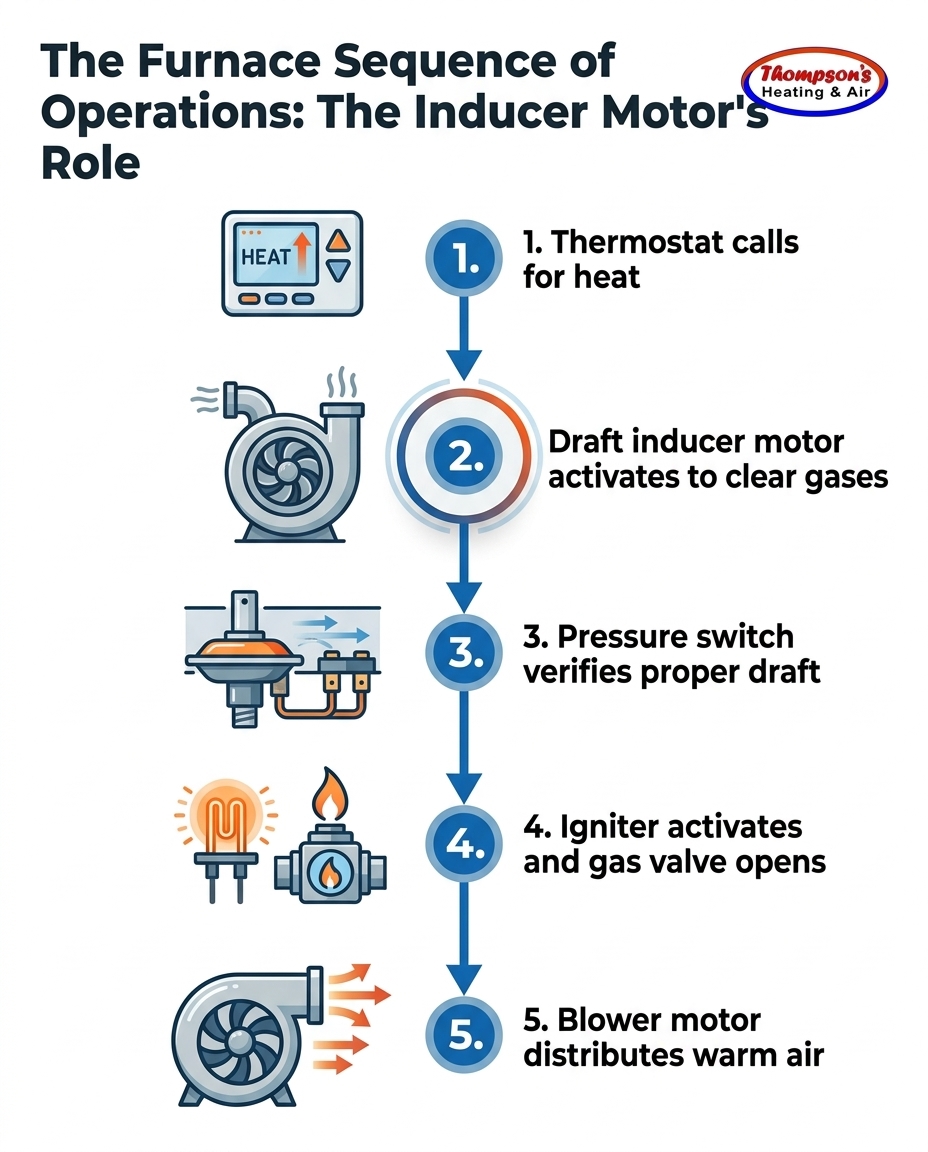
Here is exactly what happens during a healthy heating cycle:
1. The Thermostat Signals for Heat: You adjust the temperature, and the thermostat sends a low-voltage signal to the furnace control board.
2. The Draft Inducer Motor Activates: Before any gas is released or any sparks are created, the inducer motor powers on. Its primary job is to clear the heat exchanger of any residual gases from previous cycles.
3. The Pre-Purge Phase: The motor runs for about 30 to 60 seconds, establishing a steady draft of air. This ensures the upcoming flames will burn cleanly and efficiently.
4. Safety Verification: A pressure switch verifies that the inducer motor is moving enough air. Only then does the system proceed.
5. Ignition and Blower Activation: The igniter glows, the gas valve opens, the burners light, and finally, the main blower motor pushes warm air through your vents.
Without this initial clearing process, the furnace cannot safely ignite the gas. The inducer motor sets the stage for the entire heating cycle, ensuring that every subsequent step happens in a safe, controlled environment.
The First Line of Defense Against Carbon Monoxide
The inducer motor does much more than just move air; it actively pushes dangerous combustion byproducts safely out through the flue. When natural gas burns to create heat, it produces carbon monoxide and other exhaust gases. In older furnaces, these gases relied entirely on natural convection—hot air rising—to exit the home. Modern, high-efficiency furnaces extract so much heat from the combustion process that the exhaust gases are no longer hot enough to rise quickly on their own. They need a mechanical push.
Why Proper Exhaust Ventilation is Critical
A weak or failing motor lacks the power to fully exhaust these gases, increasing the risk of carbon monoxide lingering in the home. This is why the inducer motor is classified as a critical life-safety component, not just a mechanical convenience. Proper exhaust ventilation is heavily emphasized by the Department of Energy and the EPA for maintaining safe indoor air quality.
The dangers of lingering exhaust: If the inducer motor is spinning too slowly, exhaust gases can back up into the heat exchanger. Over time, this acidic exhaust can corrode the metal, leading to cracks. This makes early intervention just as important as testing furnace heat exchangers, a standard part of our fall safety checks. By addressing a noisy motor during the September pre-heating season, you protect the structural integrity of your entire heating system and safeguard your indoor air quality.
Telltale Signs Your Inducer Motor is Struggling
Because the inducer motor is the first thing to turn on, it is usually the easiest component to monitor by ear. You don't need specialized training to notice when a normally quiet system starts sounding like a small airplane engine. Loud rattling or vibrating noises often indicate failing bearings or a loose fan wheel inside the motor housing. A distinct electrical humming or buzzing sound without the motor actually spinning points to a failing capacitor or a completely seized motor.
Decoding Furnace Warning Noises
Noticing these signs during the early fall transition months provides a brief window to act before peak heating demands. Here is a breakdown of what our technicians typically encounter in the field when diagnosing different noises and behaviors:
• Loud rattling or grinding — The Underlying Cause: Worn-out motor bearings or a cracked cooling fan wheel. — The Solution: Professional inspection to determine if the wheel can be tightened or if the motor requires replacement.
• Electrical humming or buzzing — The Underlying Cause: The motor is receiving power but cannot spin (seized bearings or bad capacitor). — The Solution: Immediate electrical diagnostic to prevent damage to the furnace control board.
• Clicking followed by silence — The Underlying Cause: The control board is trying to start the motor, but the motor has failed entirely. — The Solution: Complete motor replacement and system reset by a certified technician.
• Furnace shuts down after 60 seconds — The Underlying Cause: The motor is running too weakly to satisfy the pressure switch draft requirements. — The Solution: Testing the draft pressure with a manometer to verify motor strength.
If you hear clicking noises followed by the system shutting down completely, this is a clear sign the motor has failed to initiate the safety sequence. When you catch these symptoms early in the September pre-heating season, scheduling professional heating repair in Woodland ensures you aren't left shivering when the first real cold front arrives.
The Pressure Switch and Furnace Safety Lockouts Explained
Your furnace is heavily computerized and relies on a network of sensors to operate safely. One of the most important sensors is the pressure switch. Furnaces are equipped with a pressure switch that strictly monitors the negative pressure, or draft, created by the inducer motor. A small rubber tube connects the switch to the inducer housing. When the motor spins up to its proper speed, it creates a specific amount of suction. The pressure switch feels this suction and closes its electrical circuit, telling the control board it is safe to proceed.
What Happens When the Motor is Weak?
If the inducer motor is weak and fails to create sufficient draft, the pressure switch remains open. An open pressure switch immediately halts the ignition sequence, forcing the furnace into a "safety lockout" mode. The system simply refuses to light the burners.
The reality of a safety lockout: This lockout is a protective measure designed to prevent carbon monoxide buildup, but it leaves the home completely without heat. Woodland, CA winter nights frequently drop into the 30s and 40s, making a sudden safety lockout highly disruptive and uncomfortable. We often have to explain to frustrated customers that a safety lockout isn't a glitch; it is the system working exactly as designed to protect your home from a failing inducer motor.
Why Professional Diagnostics Are Non-Negotiable
When a furnace refuses to start, it can be tempting to look up a quick fix online. However, testing and replacing an inducer motor involves handling high-voltage components and verifying critical combustion safety metrics. DIY tutorials often overlook the precise draft measurements required to ensure the pressure switch and exhaust flue are operating safely. You cannot simply bypass a pressure switch to get the heat running—doing so removes the only safeguard preventing carbon monoxide from spilling into your home.
The Value of Expert Intervention
A professional diagnostic ensures that the underlying cause of the motor failure is accurately identified. Sometimes, the motor itself is fine, but a blocked flue pipe (like a bird's nest or debris) is preventing proper draft. Other times, a failing control board is sending the wrong voltage to the motor. Proactive diagnostics prevent sudden, disruptive breakdowns when the weather is at its worst in Woodland, CA.
At Thompson's Heating & Air, our commitment to rigorous safety inspections positions prompt professional diagnosis as the ultimate defense against dangerous combustion gases. We understand that urgency matters. For example, we frequently see cases where a homeowner ignores a minor hum in September, only to experience a total system lockout on the first freezing night of November. We bring a high level of urgency and dedication to these winter safety diagnostics. Booking routine heating maintenance before the deep freeze allows our technicians to catch a weak motor while it is still just a rattle, rather than a full-blown emergency.
Frequently Asked Questions About Furnace Inducer Motors
Is a noisy inducer motor dangerous?
The noise itself isn't the danger, but it indicates the motor is failing. A failing motor risks improper ventilation of carbon monoxide, making it a serious safety concern. When bearings wear out or the fan wheel cracks, the motor loses its ability to push exhaust gases outside. Over time, this can lead to toxic gases backing up into your living space, which is why we always advise that the noise should never be ignored.
What happens if the draft inducer motor fails entirely?
The furnace's pressure switch will detect the lack of airflow immediately. The system will enter a hard safety lockout and refuse to ignite the burners. You will likely hear the thermostat click, followed by silence, and your home will not receive any heat until the motor is professionally replaced and the safety codes are cleared.
Can a furnace run safely without an inducer motor?
No, modern high-efficiency furnaces cannot operate without a functional inducer motor. The motor is a mandatory safety component designed to clear residual gases and establish a proper draft for combustion. Without it, the flames would not burn properly, and dangerous exhaust gases would have no reliable way to exit the house.
Why does my furnace shut off immediately after the inducer motor starts?
This usually means the inducer motor is running too weakly to satisfy the pressure switch. The system shuts down as a built-in safety precaution to prevent gas buildup. Even if the motor is spinning, if it isn't hitting the required RPMs to create enough suction, the pressure switch will deliberately halt the ignition sequence.
How long does a typical draft inducer motor last?
In our experience, most inducer motors are built to last between 10 and 15 years, closely mirroring the lifespan of the furnace itself. However, poor maintenance, excessive dust, or frequent short-cycling can cause the motor bearings to wear out prematurely. Having our team inspect the system annually during the September pre-heating season helps ensure the motor reaches its full expected lifespan.
Secure Your Peace of Mind Before the Deep Freeze
Understanding the critical role of the inducer motor empowers homeowners to take early noises seriously. That rattling sound in the utility closet is your heating system asking for help before the heavy winter workload begins. A thorough safety inspection provides peace of mind that the heating system will operate cleanly, efficiently, and most importantly, safely.
Don't wait for a complete system lockout in the middle of winter to address a struggling motor. When you hear the warning signs during the September pre-heating season, taking swift action protects your home from the dangers of improper combustion ventilation. Reach out to our team at Thompson's Heating & Air to explore comprehensive heating repair and maintenance options, so you can enjoy a warm, comfortable, and safe home all winter long.



.avif)
.avif)
.png)
