
Don't Let Your Filter Get Funky

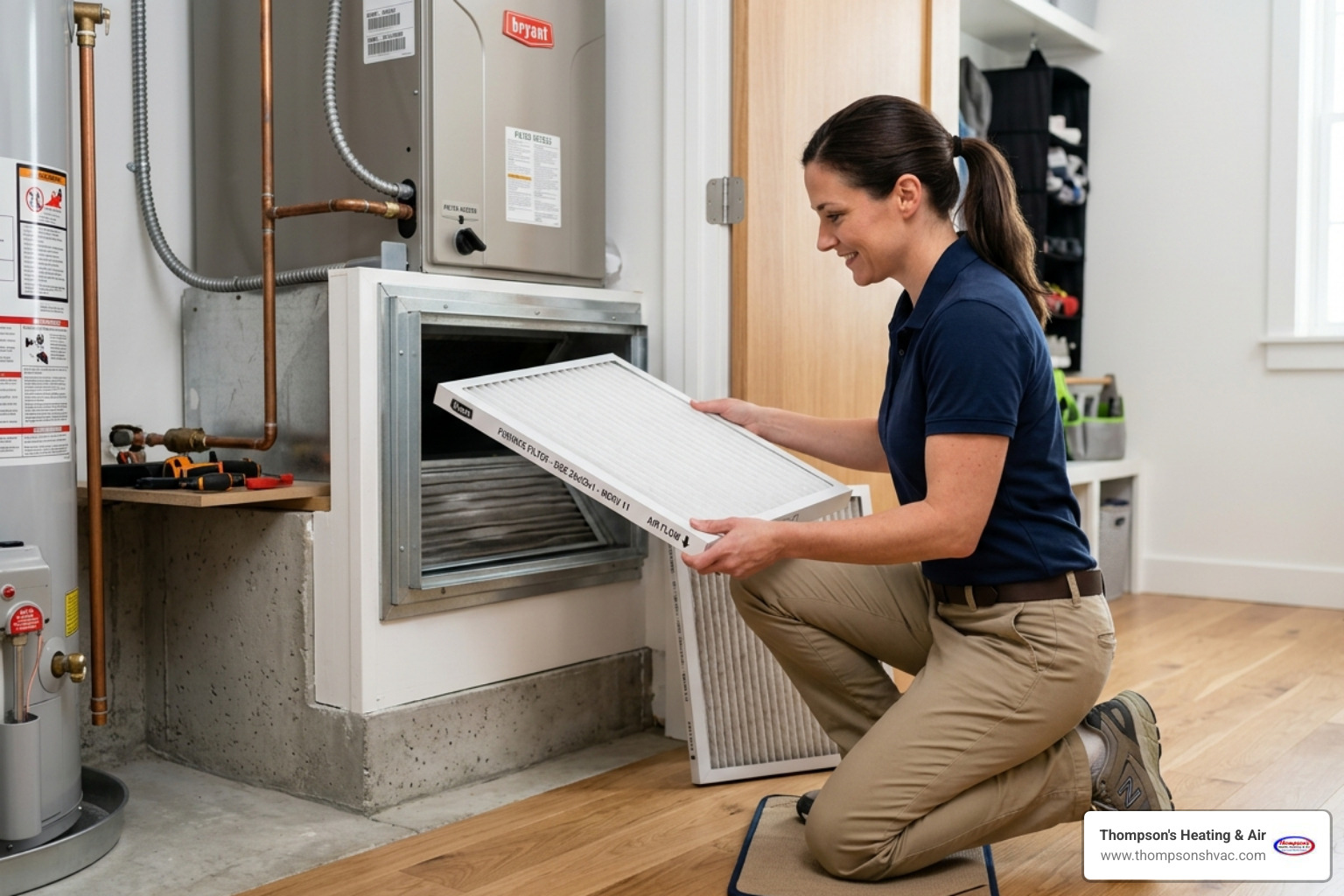
Why Knowing How Often Should You Change Your HVAC Air Filter Can Save You Money and Headaches
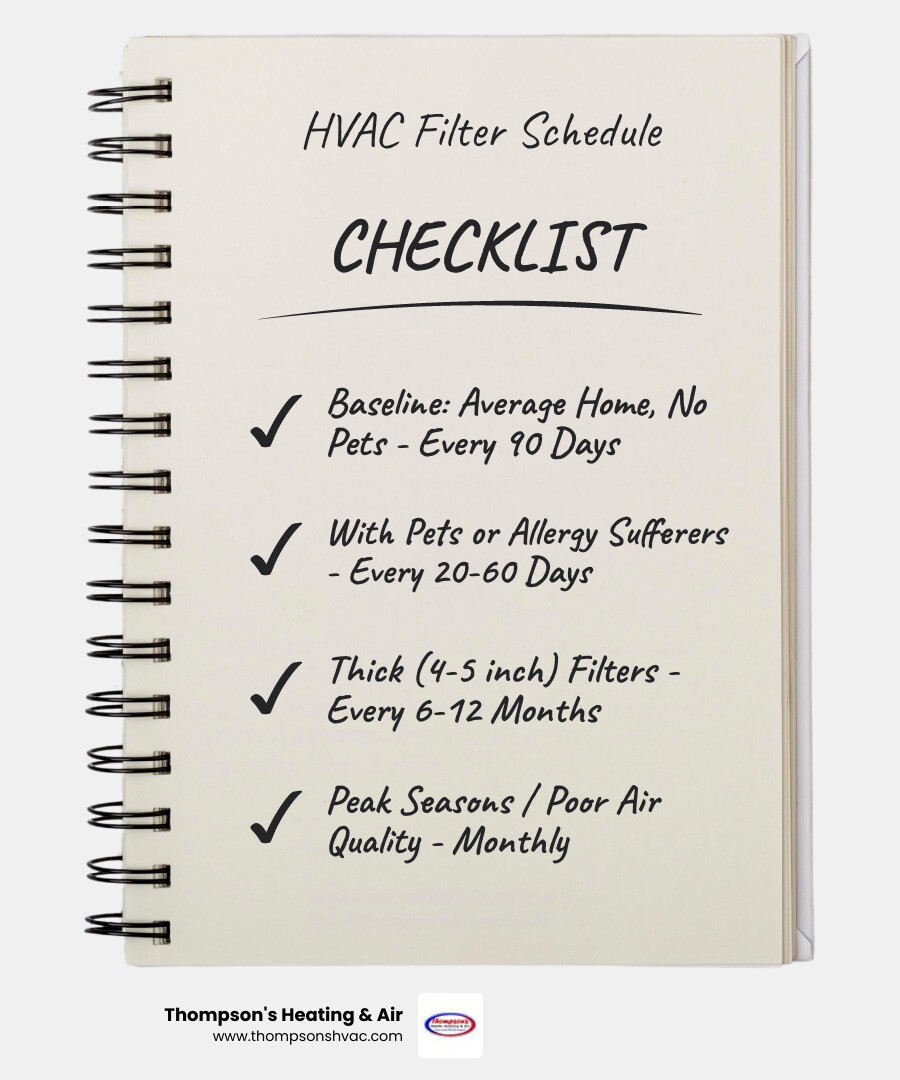
How often should you change your HVAC air filter depends on your specific home and lifestyle, but here's a quick-reference guide to get you started:
• Single occupant, no pets, mild conditions — Recommended Replacement Frequency: Every 90 days
• Average household, no pets — Recommended Replacement Frequency: Every 60-90 days
• One pet — Recommended Replacement Frequency: Every 60 days
• Multiple pets or allergy sufferers — Recommended Replacement Frequency: Every 20-45 days
• Vacation home or rarely occupied — Recommended Replacement Frequency: Every 9-12 months
• 1-inch filter (any household) — Recommended Replacement Frequency: Every 30-90 days
• 4-5 inch thick filter — Recommended Replacement Frequency: Every 6-12 months
• During peak summer or winter seasons — Recommended Replacement Frequency: Every 30 days
Most HVAC manufacturers and heating and air professionals agree on one baseline: change your filter at least every 90 days. But if you live in Woodland, CA, where hot summers push your AC hard, wildfire smoke rolls through in late summer, and spring pollen coats everything in sight — your filter may need attention much sooner than that.
Think of your HVAC air filter as the lungs of your system. When it's clean, air moves freely, your equipment runs efficiently, and your indoor air stays healthy. When it's clogged, your system strains, your energy bills climb, and the wear on your equipment adds up fast. According to the U.S. Department of Energy, replacing a dirty, clogged filter can improve your system's efficiency by 5 to 15 percent — a meaningful difference over a long Woodland summer.
The tricky part is that there's no single answer that fits every home. Filter type, home size, pets, occupancy, and local air quality all play a role. This guide breaks it all down so you can build a filter schedule that actually works for your household.
How Often Should You Change Your HVAC Air Filter?
When we talk to our neighbors in Woodland and Davis, the most common question we get is: "Do I really need to change this every month?" The answer is a bit more nuanced than a simple yes or no. While the 90-day rule is the industry standard for a basic suburban home, your specific equipment dictates the rhythm.
The 90-Day Baseline vs. Reality
For a standard 1-inch pleated filter in a home with two people and no pets, changing it every three months is usually sufficient. However, if you are using the budget-friendly fiberglass filters, those thin blue or green spun-glass models, you should be looking at a replacement every 30 days or less. They simply don't have the surface area to hold much debris before they start choking your system.
Thickness Matters
If your home is equipped with a high-capacity media cabinet, you might have filters that are 4 or 5 inches thick. These "deep-pleat" filters are designed with massive surface areas. Because they have more "pockets" to trap dust, they can often last 6 to 12 months. However, even these heavy-duty filters should be inspected during your HVAC Maintenance and Repair visits to ensure they haven't been prematurely sidelined by a particularly dusty season.
Seasonal Surges
In Northern California, our HVAC systems don't run at a steady pace all year. During those triple-digit July days in Winters or Dixon, your air conditioner might be running 12 to 18 hours a day. More runtime means more air passing through the filter, which means more dust being trapped. We recommend checking your filter every 30 days during peak summer and winter months, even if you usually go longer during the mild spring and fall.
Factors Influencing Filter Lifespan in Woodland
Living in the Yolo County area presents unique challenges for indoor air quality. Our local environment plays a massive role in how quickly that filter goes from "bright white" to "funky grey."
Pet Dander and Hair
We love our furry family members, but they are the number one "filter killers." Dogs and cats shed fur and dander constantly. If you have a Golden Retriever in a Woodland home, you’ll likely find a "blanket" of fur on your filter within 60 days. For households with multiple pets, we often suggest a 30-day replacement cycle to prevent that hair from bypassing the filter and coating your expensive evaporator coils.
Yolo County Pollen and Agriculture
Woodland, Arbuckle, and Williams are surrounded by beautiful farmland, but that means a lot of dust and pollen. During the spring "bloom" or during harvest season, the sheer volume of particulate matter in the air increases. If you leave your windows open for a cross-breeze, that outdoor dust eventually finds its way into your return vents.
Wildfire Smoke: The California Factor
In recent years, smoke from regional wildfires has become a major concern for our local air quality. Smoke particles are incredibly fine and can clog even high-efficiency filters very quickly. If we are experiencing a "smoke event," we recommend checking your filter weekly. A filter that looks clean might actually be "glazed" over with microscopic soot, significantly restricting airflow. In these cases, upgrading to specialized Indoor Air Quality Products can help protect both your lungs and your HVAC equipment.
Home Occupancy and Size
A house with five active kids and a revolving door of guests will accumulate dust much faster than a quiet home with a single occupant. Every time someone walks across the carpet or folds laundry, particles are kicked into the air. Similarly, larger homes circulate a higher volume of air, which naturally brings more debris to the filter.
Understanding MERV Ratings and Filter Types
Not all filters are created equal. When you’re standing in the aisle of a hardware store in Woodland, the choices can be overwhelming. The key is the MERV rating, which stands for Minimum Efficiency Reporting Value. This scale (typically 1 to 16 for residential use) tells you how effective the filter is at trapping small particles.
Comparing Filter Types
• Fiberglass — Typical MERV Rating: 1–4 — Lifespan: 30 Days — Best For: Protecting the blower motor only; poor air cleaning.
• Pleated Paper — Typical MERV Rating: 5–8 — Lifespan: 60–90 Days — Best For: Standard homes; traps dust, lint, and some pollen.
• High-Efficiency Pleated — Typical MERV Rating: 9–12 — Lifespan: 90 Days — Best For: Homes with pets or mild allergies; traps dander and mold spores.
• HEPA (High-Efficiency Particulate Air) — Typical MERV Rating: 13–16 — Lifespan: 6–12 Months — Best For: Severe allergies or respiratory issues; traps 99.97% of particles.
The Fiberglass Trap
Fiberglass filters are the cheapest option, but they are essentially "boulders-only" filters. They catch the big stuff (like hair and large dust bunnies) to protect the mechanical parts of your furnace, but they let almost all microscopic allergens pass right through. We generally advise our clients to skip these in favor of pleated versions.
The "Too Tight" Filter Risk
It’s tempting to buy the highest MERV rating available (like a MERV 16) to get the cleanest air possible. However, filters with very high ratings are very dense. If your HVAC system wasn't designed to "pull" air through such a thick mesh, it can cause the blower motor to overheat and fail. Most residential systems in our area are happiest with a MERV 8 to MERV 12 filter.
Signs and Consequences of a Clogged Filter
How do you know it’s time to swap? You don't always have to wait for the calendar. Your home and your HVAC system will often give you "funky" warnings.
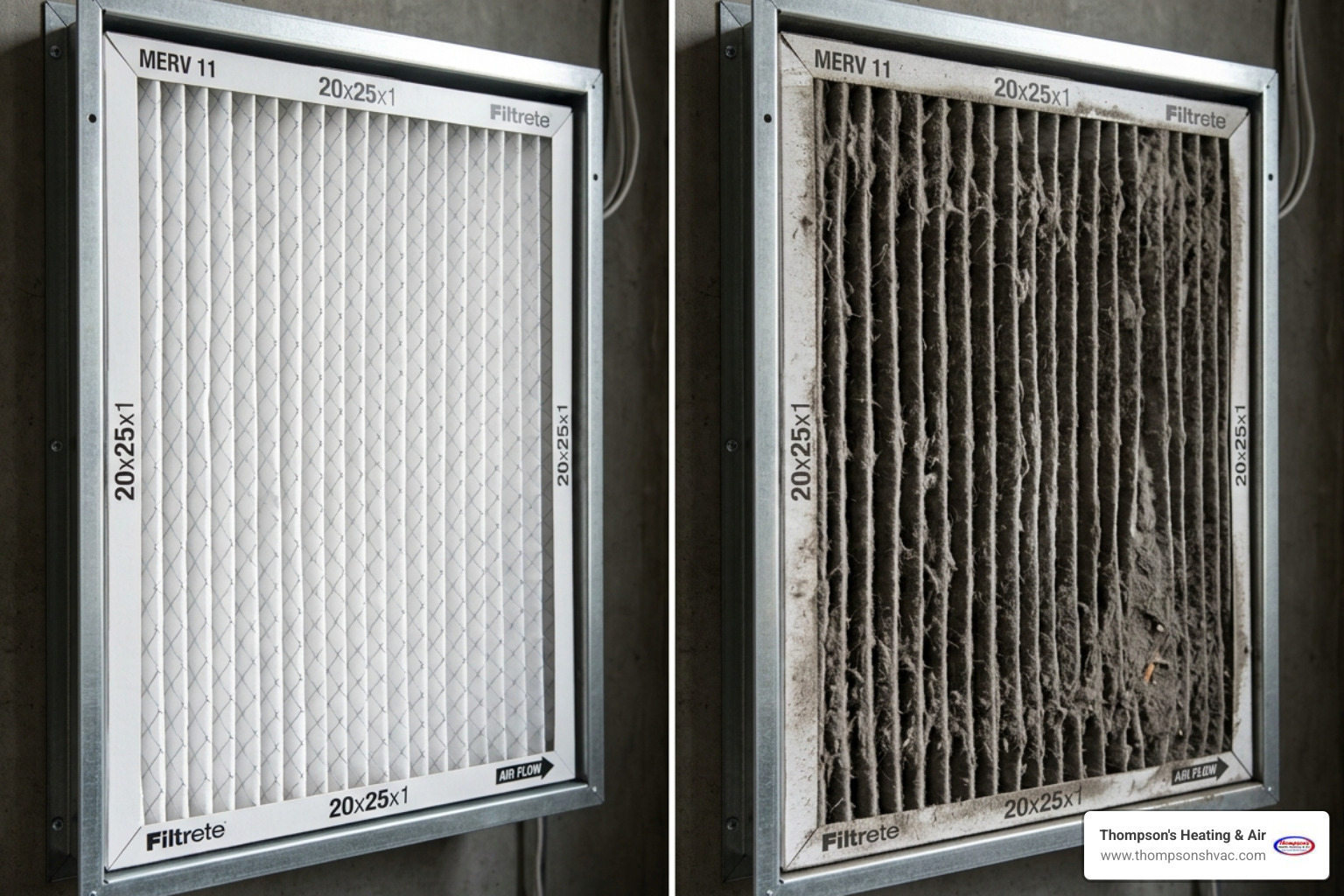
The Visual Inspection: The "Light Test"
The easiest way to check your filter is the light test. Take the filter out and hold it up to a bright light or the sun. If you can't see light passing through the material, it is too clogged with dust to allow proper airflow. It’s time for a new one.
Increased Dust and Odors
If you find yourself dusting your coffee table in Davis every two days, or if you notice a "musty" smell when the AC kicks on, your filter is likely full. Once a filter reaches its capacity, it can no longer "grab" new dust, leaving it to circulate back into your living rooms and bedrooms.
The Consequences of Neglect
Ignoring that dirty filter isn't just a matter of "bad air." It can lead to serious mechanical issues that require HVAC Installation, Maintenance & Repair services:
1. Frozen Coils: Restricted airflow causes the temperature of your evaporator coil to drop. In the middle of a Woodland summer, your AC can actually turn into a block of ice, shutting down the whole system.
2. Blower Motor Failure: Your system has to work twice as hard to suck air through a dirty filter. This puts massive strain on the motor, leading to a premature (and expensive) burnout.
3. Short Cycling: If the system gets too hot because air isn't moving, safety sensors will shut it down, then restart it repeatedly. This "short cycling" hammers your energy efficiency and wears out components.
Frequently Asked Questions
Is it okay to run my HVAC without a filter for a day?We strongly recommend never running your system without a filter. Even 24 hours of operation can pull a significant amount of dust onto your damp evaporator coils. This creates a "mud" that is incredibly difficult to clean and can lead to mold growth inside your unit.
How do I find my filter size?The size is almost always printed on the side of the filter frame (e.g., 20x25x1). If you can't find it, measure the length, width, and thickness of the old filter. It's a good idea to write this size in permanent marker on the furnace cabinet so you never have to guess again.
Should I use washable filters?While they seem eco-friendly, washable filters often have lower MERV ratings. Furthermore, if you don't let them dry completely before putting them back in, you risk blowing moisture into your system, which can lead to biological growth. Most homeowners find high-quality disposable pleated filters to be more effective and convenient.
How often should you change your hvac air filter with pets?
If you have one pet, aim for every 60 days. If you have a "zoo" (multiple dogs or cats), you should be on a 30-day schedule. Pet hair is heavy and oily; it clings to filter fibers much more aggressively than standard household dust. Regular changes prevent that "wet dog" smell from being distributed through your vents.
How often should you change your hvac air filter during allergy season?
During the peak pollen months in Yolo County (typically March through May), allergy sufferers should change their filters every 30 days. Using a filter with a MERV 11 or 12 rating during this time can significantly reduce sneezing and itchy eyes by trapping the fine pollen that lower-grade filters miss.
Does filter thickness affect replacement frequency?
Absolutely. A 1-inch filter has very little "depth," so it fills up quickly. A 4-inch or 5-inch media filter has accordion-like folds that, if stretched out, would cover a much larger area. This extra surface area is why they can last up to a year. However, you cannot simply put a 5-inch filter into a 1-inch slot; your system must have a specially installed media cabinet to accommodate the thicker size.
Conclusion: Keep Your Woodland Home Comfortable
Maintaining a clean air filter is the single simplest thing you can do to protect your home’s comfort and your wallet. Whether you’re in Woodland, Winters, or West Sacramento, staying on top of this small task prevents big headaches down the road.
At Thompson's Heating & Air, we’ve been a family-owned part of this community since 1992. We know the Yolo County climate, and we know exactly what our local dust and allergens can do to an HVAC system. We’re committed to providing reliable, 5-star service to our neighbors, ensuring your home stays a sanctuary of clean, cool air.
If you’re worried about your indoor air quality or if your system isn't running as efficiently as it used to, we’re here to help. From professional maintenance to installing advanced Indoor Air Quality Products, our team is ready to ensure your "lungs of the home" are breathing easy.
Ready to breathe easier? Contact us today to schedule your seasonal maintenance or to discuss the best filtration options for your specific home!



.avif)
.avif)
.png)
