
Signs Your HVAC Needs Replacing and Not Just Another Band-Aid

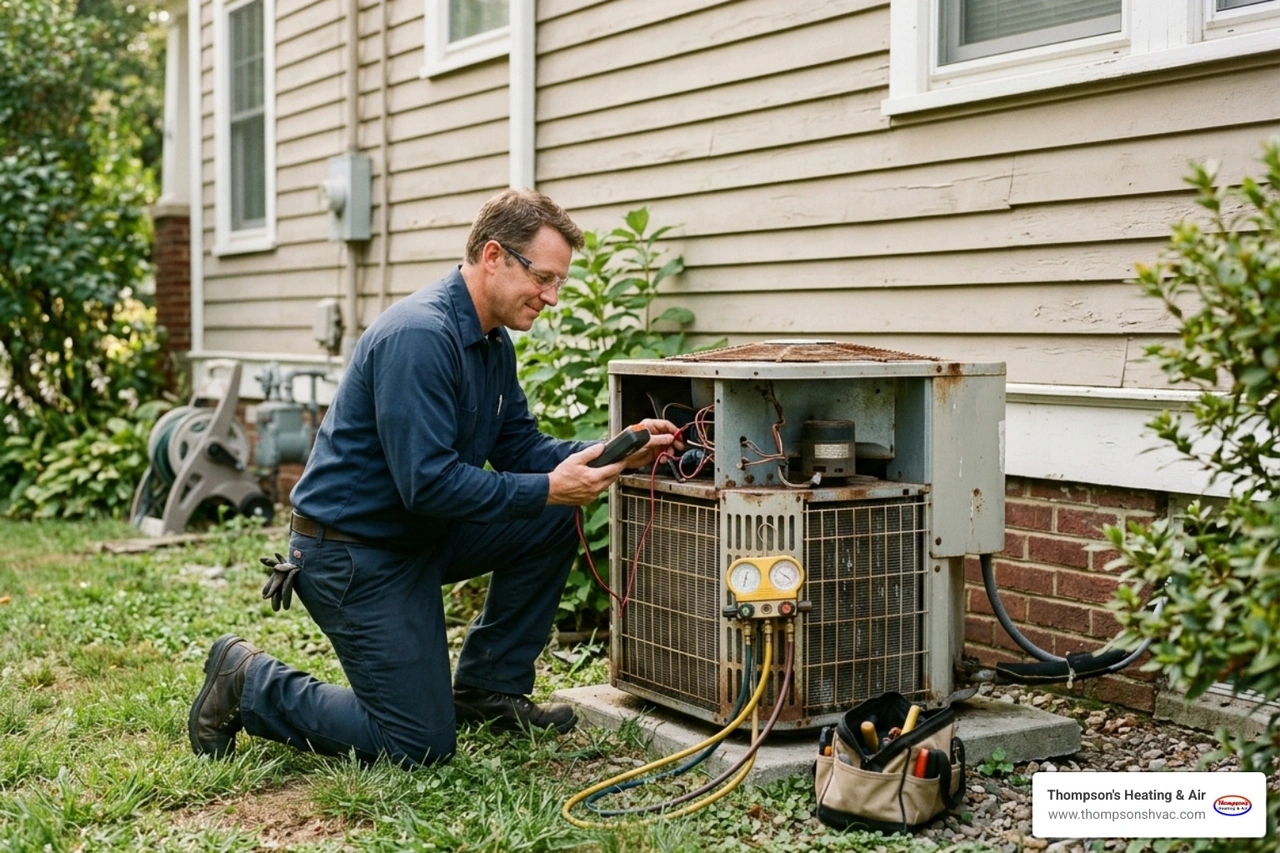
When to Repair vs Replace Your HVAC System: What Woodland Homeowners Need to Know
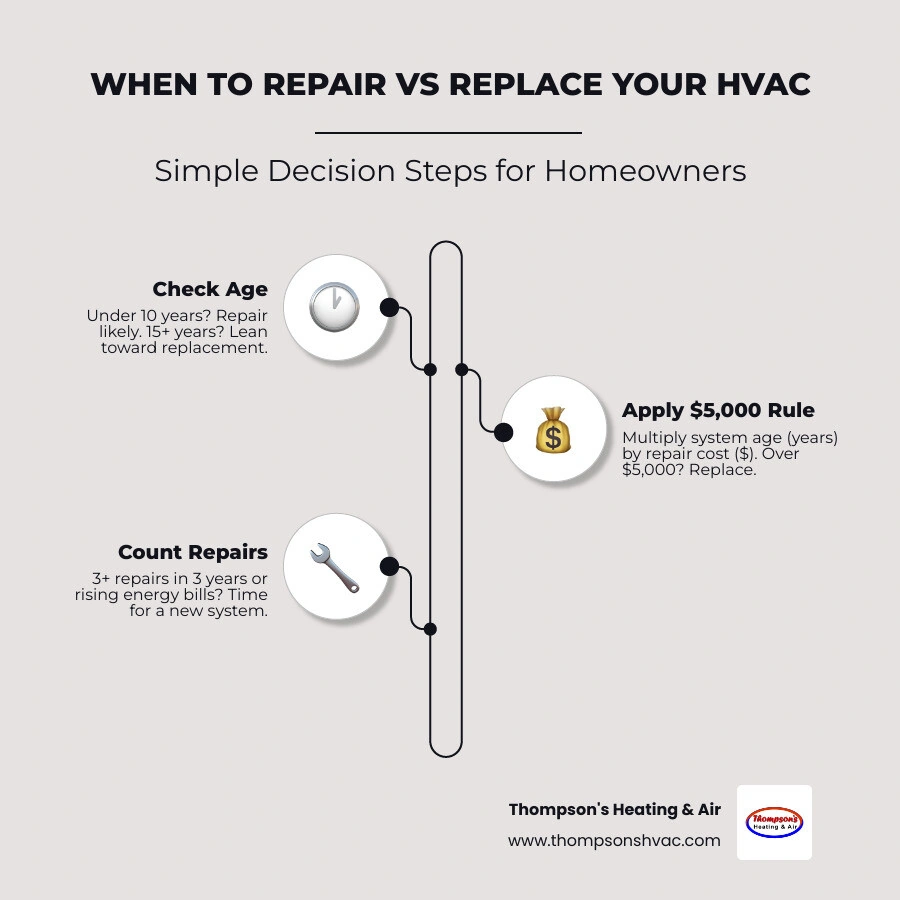
Knowing when to repair vs replace your HVAC system can save you hundreds — sometimes thousands — of dollars over time. Here is a quick breakdown to help you decide:
Repair your HVAC system if:
• The system is under 10 years old
• The repair is minor and inexpensive
• Your energy bills have stayed relatively stable
• You have had 1-2 repairs or fewer in the past 3 years
• The repair cost is less than 30-50% of a new system's cost
Replace your HVAC system if:
• The system is 15+ years old
• You apply the $5,000 Rule: system age × repair cost exceeds $5,000
• You have had 3 or more repairs in the past 3 years
• Your energy bills keep climbing with no clear cause
• The system uses R-22 refrigerant (now banned from production)
• A major component like the compressor or heat exchanger has failed
Most homeowners in Woodland, CA don't think about their HVAC system until something goes wrong — and it usually goes wrong on the hottest day in July or the coldest morning in January. That moment of panic is the worst possible time to make a major financial decision about your home comfort system.
The truth is, not every breakdown means you need a brand-new system. But not every repair is worth making either. Some repairs are simple, affordable fixes that add years to a system's life. Others are expensive band-aids on equipment that is already failing — and putting that money toward a new, efficient system would serve you far better in the long run.
Understanding the difference is what this guide is all about. Whether your system is making strange noises, struggling to cool your home during a Woodland summer, or running up your energy bill every month, the factors covered here will help you make a confident, informed decision — without the pressure of making that call in the middle of a breakdown.
Understanding the Lifespan of Your Heating and Cooling Equipment
Everything has an expiration date, and your HVAC system is no exception. While we’d all love for our air conditioners and furnaces to last forever, the reality of Northern California’s climate means these machines work incredibly hard. In areas like Davis and Dixon, where summer temperatures can regularly soar past 100 degrees, your AC is under significant stress for months at a time.
On average, a well-maintained HVAC system lasts between 15 and 20 years. However, this varies depending on the specific component:
• Air Conditioners: Typically 12 to 15 years.
• Furnaces: Usually 15 to 20 years (gas furnaces tend to outlast electric ones).
• Heat Pumps: Generally 15 to 20 years.
If your system is approaching the 15-year mark in April 2026, it was likely installed around 2011. Technology has changed drastically since then. Even if an older unit is still "working," it is likely doing so at a much lower efficiency than a modern model.
The best way to push these numbers to their upper limits is through consistent AC Maintenance and Heating Maintenance. We’ve found that half of all costly HVAC breakdowns can be avoided with preventative care. Think of it like a car; you wouldn't drive 100,000 miles without an oil change and expect the engine to stay quiet. Your HVAC system needs that same level of attention to survive the Yolo County heat.
The $5,000 Rule: When to Repair vs Replace Your HVAC System
When you're staring at a repair quote, it's easy to get tunnel vision. You see a number and think, "Well, that's cheaper than a whole new system." But is it? This is where financial heuristics come into play. In the HVAC industry, we use two primary "rules of thumb" to help homeowners decide if they're throwing good money after bad.
The first is the 50% Rule. It’s simple: if the cost of a single repair exceeds 50% of the value of the system, it’s time to replace it. Investing half the cost of a new unit into a machine that is already halfway through its lifespan rarely makes financial sense.
The second, and perhaps most famous, is the $5,000 Rule. This is a quick "gut-check" that factors in the age of your equipment to determine the true value of a repair.
Applying the $5,000 Rule to Your Decision
To use this rule, multiply the age of your system (in years) by the cost of the repair. If the result is over $5,000, you should strongly consider a replacement. If it’s under $5,000, a repair is likely the smarter move.
Let’s look at two examples:
1. The Repair Choice: You have a 6-year-old AC unit in Woodland that needs a $400 fix. (6 x 400 = 2,400). Since 2,400 is well under 5,000, this is a "safe" AC Repair.
2. The Replace Choice: You have a 12-year-old furnace that needs a $600 repair. (12 x 600 = 7,200). Because 7,200 is over the 5,000 threshold, you are better off looking into HVAC Installation Woodland CA.
This rule works because it accounts for the "risk profile" of older equipment. A 12-year-old system is much more likely to have another part fail six months after you fix the first one. By using this math, you can see if you're entering a "repair spiral."
Frequency of Breakdowns and System Reliability
Beyond the cost of a single fix, you have to look at the pattern. If you feel like you have us on speed dial, that's a red flag. A reliable system should only need professional attention during its two annual tune-ups. If you’ve had three or more repairs in the last three years, your system is signaling systemic decline.
Frequent service calls indicate that components are wearing out in a "domino effect." When one part fails, it often puts extra strain on others. Learning How to Prevent HVAC Emergencies with Maintenance can help, but once a system enters this cycle of failure, even the best maintenance can only do so much. At that point, you're not just paying for parts; you're paying for the stress of wondering if the AC will quit during the next West Sacramento heatwave.
Critical Indicators That Replacement is the Smarter Choice
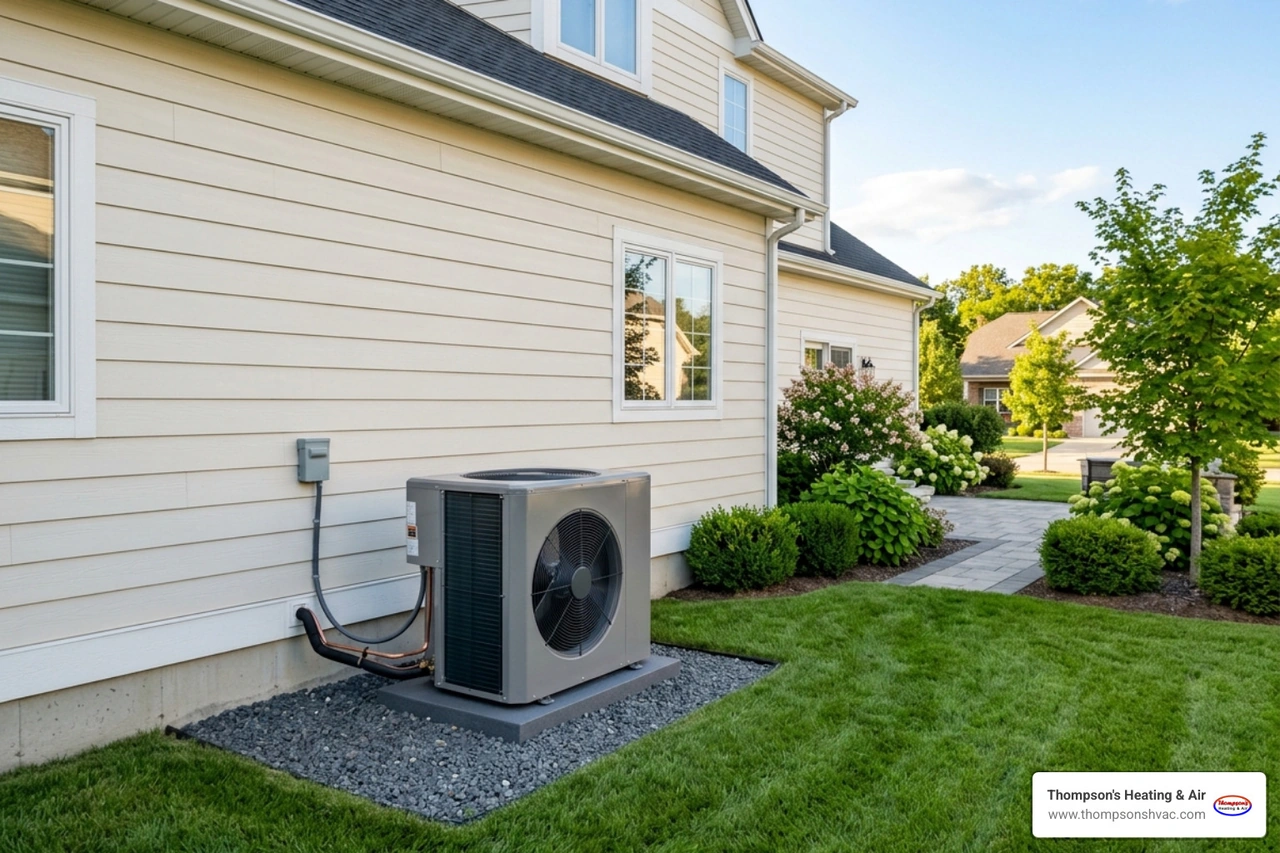
Sometimes, the decision is taken out of your hands by safety issues or federal regulations. As we move through 2026, several factors have made older units virtually impossible — or incredibly expensive — to maintain.
The R-22 Refrigerant Factor:If your air conditioner was built before 2010, it likely uses R-22 refrigerant (often called Freon). The production and import of R-22 were phased out completely because of its harmful effects on the ozone layer. Today, we can only use reclaimed or recycled R-22, which has sent the cost of this refrigerant skyrocketing. If an old R-22 system has a significant leak in the evaporator coil, the cost of the refrigerant alone can approach the cost of a down payment on a new unit. In these cases, we almost always recommend HVAC Service Woodland CA to discuss an upgrade to a modern, eco-friendly R-410A or R-454B system.
Safety Emergencies:There are certain failures where we don't even talk about repairs. A cracked heat exchanger in a gas furnace is a prime example. The heat exchanger is what separates the combustion gases (like carbon monoxide) from the air blowing into your home. If it cracks, it poses a lethal risk of carbon monoxide poisoning. Because the heat exchanger is the "heart" of the furnace and is extremely labor-intensive to replace, a crack almost always warrants a full system replacement. You can read more about When an HVAC Failure is a True Emergency to understand these high-stakes situations.
Efficiency Ratings and When to Repair vs Replace Your HVAC System
One of the most compelling reasons to replace an aging system is the "hidden cost" of keeping it. Older systems are simply less efficient. They use more gas and electricity to do the same amount of work.
When evaluating a new system, look at these ratings:
• SEER2 (Seasonal Energy Efficiency Ratio): Measures cooling efficiency. Older units might be SEER 8 or 9. Modern minimums are 14 or 15, and high-efficiency models can go over 20. Switching from SEER 9 to SEER 14 can reduce energy consumption by more than 35%.
• AFUE (Annual Fuel Utilization Efficiency): Measures furnace efficiency. An old furnace might be 80% AFUE (meaning 20% of the heat goes up the chimney). Modern ENERGY STAR models can reach 95% or higher.
• HSPF2 (Heating Seasonal Performance Factor): Measures heat pump efficiency.
If your energy bills in Winters or Esparto are significantly higher than your neighbors' with similar-sized homes, your old unit is likely the culprit. Over 10 years, the energy savings from an ENERGY STAR unit can often pay for a significant portion of the installation cost.
Comfort and Air Quality Red Flags
Does your home feel like a collection of different micro-climates? If the living room is a freezer but the upstairs bedrooms are sweltering, your HVAC system is struggling. This could be due to ductwork issues, but it often means the system is improperly sized or its blower motor is failing.
Other red flags include:
• Excess Humidity: Your AC doesn't just cool; it dehumidifies. If your home feels "clammy," the unit is failing its second job.
• Unusual Odors: "Dirty sock syndrome" or burning smells shouldn't be ignored.
• Excessive Dust: This often points to leaky ducts pulling air from attics or crawl spaces.
If you're noticing these issues, a Ductless Repair or a system-wide evaluation might be necessary to restore your home's air quality.
Maximizing Comfort and Efficiency in Yolo County
Living in Northern California means we deal with unique challenges. We have high humidity during the rainy months and bone-dry heat in the summer. A "one-size-fits-all" approach doesn't work here.
Modern HVAC technology has introduced variable-speed compressors. Unlike old systems that are either "100% ON" or "OFF," variable-speed units can run at lower speeds to maintain a perfectly consistent temperature. This uses less energy and provides much better dehumidification.
• Efficiency (SEER2) — Old HVAC (10-15+ Years): 8 - 10 — Modern High-Efficiency HVAC: 16 - 25+
• Blower Motor — Old HVAC (10-15+ Years): Single-speed (Loud, inconsistent) — Modern High-Efficiency HVAC: Variable-speed (Quiet, steady)
• Refrigerant — Old HVAC (10-15+ Years): R-22 (Phased out, expensive) — Modern High-Efficiency HVAC: R-410A / R-454B (Eco-friendly)
• Monthly Savings — Old HVAC (10-15+ Years): Standard — Modern High-Efficiency HVAC: 20% - 40% lower
• Comfort — Old HVAC (10-15+ Years): Hot/Cold spots — Modern High-Efficiency HVAC: Even temperatures
For many homes in Woodland and Davis, especially those with additions or "problem rooms," we often recommend Ductless Service. These mini-split systems allow for incredibly precise temperature control without the energy loss associated with traditional ductwork.
Long-Term Benefits of When to Repair vs Replace Your HVAC System
Your decision should also factor in how long you plan to stay in your home.
• Staying <5 Years: If you're planning to move soon, a repair is often the more attractive option to keep upfront costs low. However, be aware that a failing HVAC system can be a major hurdle during a home inspection and may lead to buyers asking for a price reduction.
• Staying 7+ Years: If this is your "forever home" or a long-term investment, replacement is almost always the better financial move. You’ll reap the benefits of lower monthly bills and the peace of mind that comes with a new manufacturer's warranty (often 5 to 10 years on parts).
Additionally, as of April 2026, there are still significant federal tax credits and local utility rebates available for installing ENERGY STAR-certified heat pumps and air conditioners. These incentives can shave thousands off the total project cost, making the "replace" decision much easier to swallow.
Frequently Asked Questions about HVAC Replacement
Making the call to replace a system is a big deal. We hear many of the same questions from our neighbors in Knights Landing and West Sacramento. Here are the answers to the most common concerns.
Is it better to replace the furnace and AC at the same time?
In most cases, yes. Your indoor and outdoor units are designed to work as a matched set. If you pair a brand-new, high-efficiency AC with a 15-year-old furnace blower, the AC won't be able to reach its rated efficiency. It's like putting a Ferrari engine in a 1990s sedan; the parts just aren't compatible. Plus, replacing both at once saves you money on labor costs, as our team only has to make one trip and perform one installation. This ensures you have a fully Heating Installation Woodland CA that is balanced and ready for years of service.
How does the R-22 refrigerant ban affect my old unit?
As mentioned earlier, R-22 is essentially obsolete. While we can still service these units, the cost of the refrigerant is so high that a simple leak repair can become a financial nightmare. If your system uses R-22 and has a leak, it is a strong signal that you should transition to a modern system. Continuing to "top off" an R-22 unit is like pouring money into a leaky bucket. A professional AC Service can confirm which refrigerant your unit uses.
Can regular maintenance delay a full system replacement?
Absolutely. The number one cause of premature HVAC failure is neglect. A simple clogged filter can cause the blower motor to overheat or the evaporator coil to freeze, leading to a catastrophic breakdown. By staying on top of your Maintenance Plan, you ensure that small issues are caught before they turn into "system-killers." Regular tune-ups can easily add 3 to 5 years to the life of a system.
Conclusion
Deciding when to repair vs replace your HVAC system doesn't have to be a guessing game. By looking at the age of your system, applying the $5,000 Rule, and considering your long-term energy savings, the right path usually becomes clear.
At Thompson's Heating & Air, we’ve been serving the Yolo County community since 1992. We know the Woodland climate, and we know that a broken AC in July is more than just an inconvenience — it's a home emergency. Our goal is never to "upsell" you on a system you don't need. Instead, we provide honest, professional diagnostics so you can make the choice that fits your budget and your family's comfort needs.
Whether you need a quick Heating Repair to get through a chilly night or are ready to explore a high-efficiency upgrade, we are here to help. We offer 24/7 technician access and a commitment to 5-star service for all our neighbors in Woodland, Davis, Dixon, and beyond.
Don't wait for the next extreme weather event to test your system. Contact us today for a comprehensive HVAC Maintenance and Repair evaluation. Let's make sure your home stays comfortable, efficient, and safe for years to come.



.avif)
.avif)
.png)
