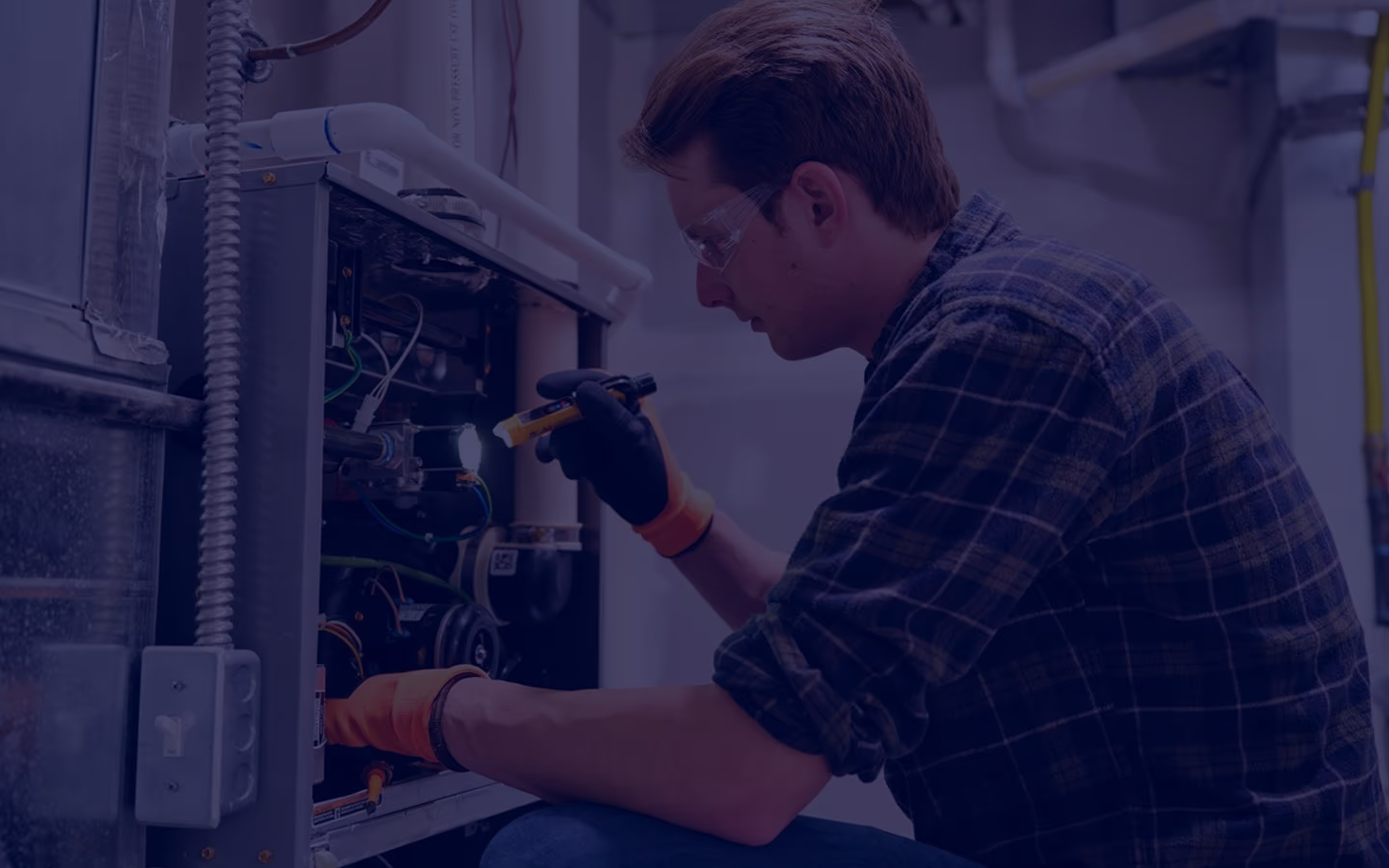
What We Find Inside Gas Furnaces Left Unchecked Before the First October Frost


The Hidden Risks of Firing Up Your Furnace on the First Freezing Night
Autumn in the Sacramento Valley brings a sudden, sharp drop in nighttime temperatures, making the process of preparing gas furnace for first freeze conditions an urgent priority for homeowners. After sitting idle for over six months, your heating system is not the same machine you shut off in the spring. During that long downtime, furnaces gather extreme layers of dust, attract dormant pests into critical exhaust flues, and develop hidden ignition issues that remain invisible from the outside.
This creates a critical decision point for your household. You can proactively schedule a professional inspection to verify the system is safe, or you can risk firing up a compromised unit when the temperatures suddenly plummet. Basic heating services and routine maintenance are not just about keeping your living room comfortable. They are primarily about household safety, fire prevention, and protecting your family from invisible hazards before the first October frost arrives.
If you need professional support, explore our heating services and schedule comprehensive heating maintenance today.
What Happens Inside Your Heating System During a Long Summer Dormancy
The extreme shift from hot, dry Woodland CA summers to sudden frosty autumns takes a massive toll on residential heating equipment. While your air conditioner works overtime, your furnace sits in a dark, quiet utility closet or garage, completely dormant. This long off-season creates the perfect environment for several hidden problems to take root.
The problem of extreme dust accumulation: Throughout the summer, airborne particulate matter settles heavily over the internal components of your furnace. Because the blower motor may still run to circulate cooled air, dust bypasses the filter and coats the sensitive flame sensor, the electronic ignition system, and the burner assembly. This acts as an insulator, preventing the system from reading temperatures correctly and often causing immediate ignition failures.
The cause of blocked exhaust flues: A dark, undisturbed metal pipe is highly attractive to local pests. Spiders frequently spin dense webs across burner orifices, while rodents and birds often build nests inside the exhaust flues. When you turn the heater on, these blockages prevent dangerous combustion gases from venting safely outside, forcing them to backdraft into your home.
The solution for thermal stress: Older metal components, particularly the heat exchanger, react poorly to sudden temperature changes after months of inactivity. When a cold, dormant metal chamber is suddenly blasted with high-heat combustion flames, the metal expands rapidly. If the metal is already fatigued, this sudden expansion can cause micro-fractures to open up. Because all of these issues are completely hidden behind the solid metal cabinet doors of your furnace, they give homeowners a false sense of security.
Why a Pre-Season Safety Check is About More Than Just Comfort
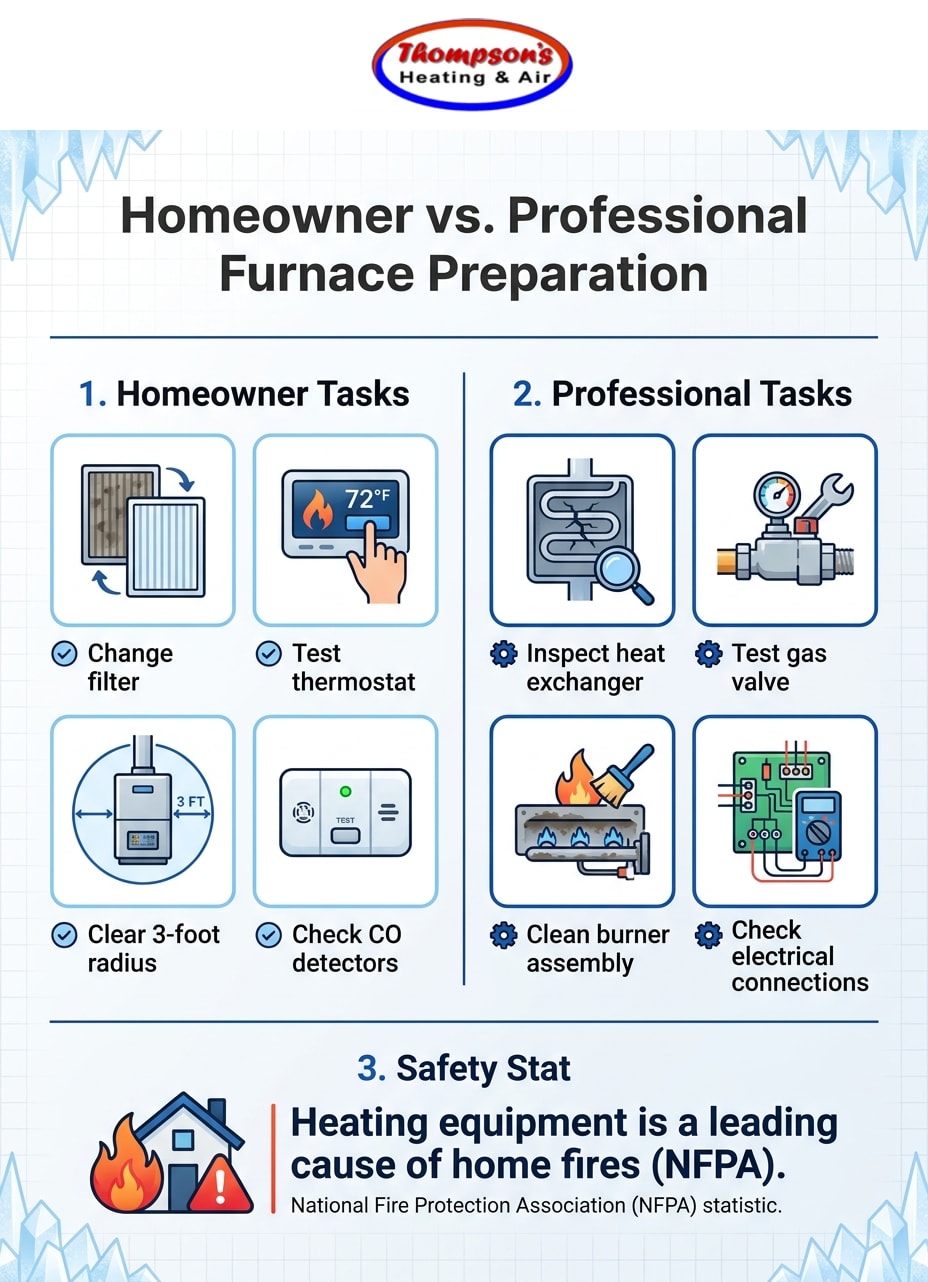
Many homeowners view a fall tune-up as an optional luxury—something to do only if the heater seems to be running poorly. However, the data tells a much more serious story. According to the National Fire Protection Association (NFPA), heating equipment is a leading cause of home fires, and a primary contributing factor is the failure to clean and maintain the equipment before the cold weather hits.
Furthermore, the Centers for Disease Control and Prevention (CDC) consistently issues warnings about carbon monoxide incidents spiking in the fall and winter. These spikes almost always correlate with the first few weeks that heating systems are turned on for the season. The danger lies in how a gas furnace separates the fire from the air you breathe.
Inside your furnace is a component called the heat exchanger. It acts as a metal wall. On one side of the wall, toxic combustion gases and flames heat the metal. On the other side, your home's breathing air blows across the hot metal, warming up before traveling through your vents. If that metal wall develops a crack due to thermal stress or rust, the two sides mix. Dangerous, odorless carbon monoxide is then pumped directly into your living spaces.
This is why preparing for the first October frost requires a shift in perspective. A pre-season check is not a simple cleaning; it is a non-negotiable safety inspection designed to catch these life-threatening defects before the thermostat ever clicks on.
Inside the Cabinet: What Local Technicians Uncover During Fall Startups
When a homeowner looks at their furnace, they see a clean metal box and a digital thermostat. When a licensed technician opens that cabinet during an emergency fall service call, they often find a completely different reality. The internal environment of an unchecked furnace can be highly volatile after a long summer.
During emergency first-frost calls, technicians routinely discover heavy soot buildup on the burners, which indicates incomplete combustion and a high risk of carbon monoxide production. We also find compromised electrical connections where summer humidity and temperature fluctuations have caused wires to loosen, leading to intermittent power losses. Ignition failures are incredibly common, usually caused by a flame sensor that has become so coated in summer dust that it cannot detect the burner flame, prompting the safety switch to shut the entire system down.
There is a critical distinction between what a homeowner can safely manage and what requires a licensed professional. You can easily change an air filter, but tasks like burner alignment, gas valve pressure testing, and heat exchanger inspections require specialized diagnostic tools. Attempting DIY repairs or deep cleaning on internal gas components is highly dangerous and strictly requires professional furnace repair in Woodland.
At Thompson's Heating & Air, we rely on firsthand, local field experience in the Sacramento Valley to provide honest advice on what actually causes fall breakdowns. We know exactly how the local climate impacts these systems, and we know that catching these specific issues early is the only proven way to prevent catastrophic, mid-winter breakdowns when you need your heat the most in Woodland CA.
Decoding Startup Odors When Preparing Your Gas Furnace
One of the most common reasons homeowners panic during the first October frost is an unexpected smell coming from their vents. When a furnace sits unused for months, it gathers dust on the heat exchanger. When the system fires up for the first time, that dust instantly incinerates. This creates a distinct "burning dust" smell that permeates the house.
This specific odor is entirely normal and should dissipate within one to two hours. You can open a few windows to help ventilate the space while the system burns off the summer accumulation. However, not all smells are harmless. Knowing the difference between burning dust and a serious mechanical failure can save your home from severe damage.
• Light, dusty burning smell — Likely Cause: Normal incineration of summer dust on the heat exchanger. — Required Action: Monitor for 1-2 hours. Open windows for ventilation.
• Sharp, electrical ozone smell — Likely Cause: Overheating blower motor or melting wire insulation. — Required Action: Shut off the system at the thermostat immediately.
• Harsh, burning plastic smell — Likely Cause: Foreign object in the vents or a failing electrical capacitor. — Required Action: Turn off power. Read more on why your heater smells like burning plastic.
• Rotten eggs or sulfur — Likely Cause: A natural gas leak near the furnace valve or supply line. — Required Action: Evacuate the home, leave doors open, and call the gas company.
If you detect any unnatural or persistent chemical odors, electrical burning smells, or the distinct scent of gas, do not wait to see if it goes away. Shut the system off immediately at the thermostat and contact a professional. Ignoring these warning signs can lead to severe electrical fires or hazardous gas accumulation.
Safe Steps to Prepare Your Gas Furnace for the First Freeze
While the internal gas and electrical components are strictly off-limits for DIY maintenance, there are several vital steps you can take to prepare your home for the cold. Taking action now ensures your system has the best chance of operating safely when the temperature drops in Woodland CA.
• Change the air filter: A clogged filter severely restricts airflow. When airflow is blocked, the heat exchanger cannot shed its heat fast enough, causing the entire system to overheat and trigger a safety shutdown. A fresh filter protects the equipment and improves indoor air quality.
• Test the thermostat early: Do not wait for a freezing night to find out your heater is broken. Switch your thermostat to "heat" mode early in the day while temperatures are still mild. Let it run for fifteen minutes to ensure the system responds and produces warm air.
• Clear the surrounding area: Over the summer, utility closets often become storage spaces. Remove all boxes, cleaning supplies, suitcases, and flammable materials so they are at least three feet away from the furnace cabinet. The system requires adequate airflow for safe combustion.
• Test your safety monitors: Carbon monoxide is invisible and odorless. Replace the batteries in all household carbon monoxide and smoke detectors, and press the test button on each unit to verify the alarms are loud and functional.
• Inspect outdoor exhaust pipes: If you have a high-efficiency furnace that vents through PVC pipes on the side of your house, walk outside and ensure no leaves, dirt, or debris are blocking the exhaust or intake pipes.
Remember, inspecting the heat exchanger, adjusting the gas valve, or cleaning the burner assembly is strictly off-limits for DIY. These tasks require a licensed professional with specialized training and combustion analysis tools.
When to Call a Professional
Even if you follow all the safe preparation steps, your system may still exhibit signs of internal distress. You should immediately call a licensed technician if the furnace fails to ignite after testing, or if you hear the system clicking repeatedly without producing a flame. Additionally, if the system short-cycles—meaning it turns on, runs for two minutes, and abruptly shuts off—this indicates a serious airflow or sensor failure. Finally, any unusual banging, scraping, or loud booming noises upon startup require immediate professional intervention to prevent permanent equipment damage.
Frequently Asked Questions About Fall Furnace Preparation
Should I test my furnace before winter?
Yes, you should test your heating system early in the fall before the first October frost arrives. Switch the thermostat to heat mode during a mild day and let it run for fifteen minutes to ensure it produces warm air. Catching a failure early prevents you from being trapped without heat during an emergency cold snap.
How do I prepare my gas furnace for winter?
Start by changing the air filter, clearing at least three feet of space around the furnace cabinet, and testing your carbon monoxide detectors. Once these basic homeowner tasks are complete, you must schedule a professional safety inspection. A licensed technician will handle the dangerous internal work, like checking the heat exchanger and cleaning the burners.
Why does my heater smell like burning when I first turn it on?
When a furnace sits dormant all summer, dust settles heavily on the heat exchanger. Turning the system on for the first time incinerates this dust, creating a temporary burning smell that should fade within a few hours. If the smell resembles burning plastic or electrical wires, shut the system off immediately and call a professional.
At what temperature should I turn on my furnace?
Most homeowners turn their heating systems on when indoor temperatures drop below 68 degrees Fahrenheit. However, it is highly recommended to perform a brief, fifteen-minute test run well before the indoor temperature reaches an uncomfortable level, ensuring the system is functional before you actually need it.
How long does a pre-season furnace safety inspection take?
A thorough, professional safety inspection typically takes between 60 and 90 minutes to complete. During this time, the technician will test the electrical components, clean the ignition assembly, inspect the heat exchanger for cracks, and verify that the system is venting combustion gases safely outside.
Secure Your Peace of Mind Before the Cold Hits
A clear understanding of the hidden risks associated with dormant heating equipment makes fall preparation an absolute necessity. Fire hazards, carbon monoxide leaks, and sudden breakdowns are real threats that develop silently over the long summer months. By acknowledging these risks, you can take control of your home's safety and ensure your system is ready for the demands of the upcoming winter.
While changing your filter and testing your detectors are great first steps, a professional safety check provides the ultimate peace of mind. A licensed technician will uncover the hidden dangers you cannot see, ensuring your equipment operates safely and efficiently. Don't wait for a sudden temperature drop in Woodland CA to find out if your heater works. Schedule your comprehensive inspection today and secure your family's comfort before the freezing weather arrives.