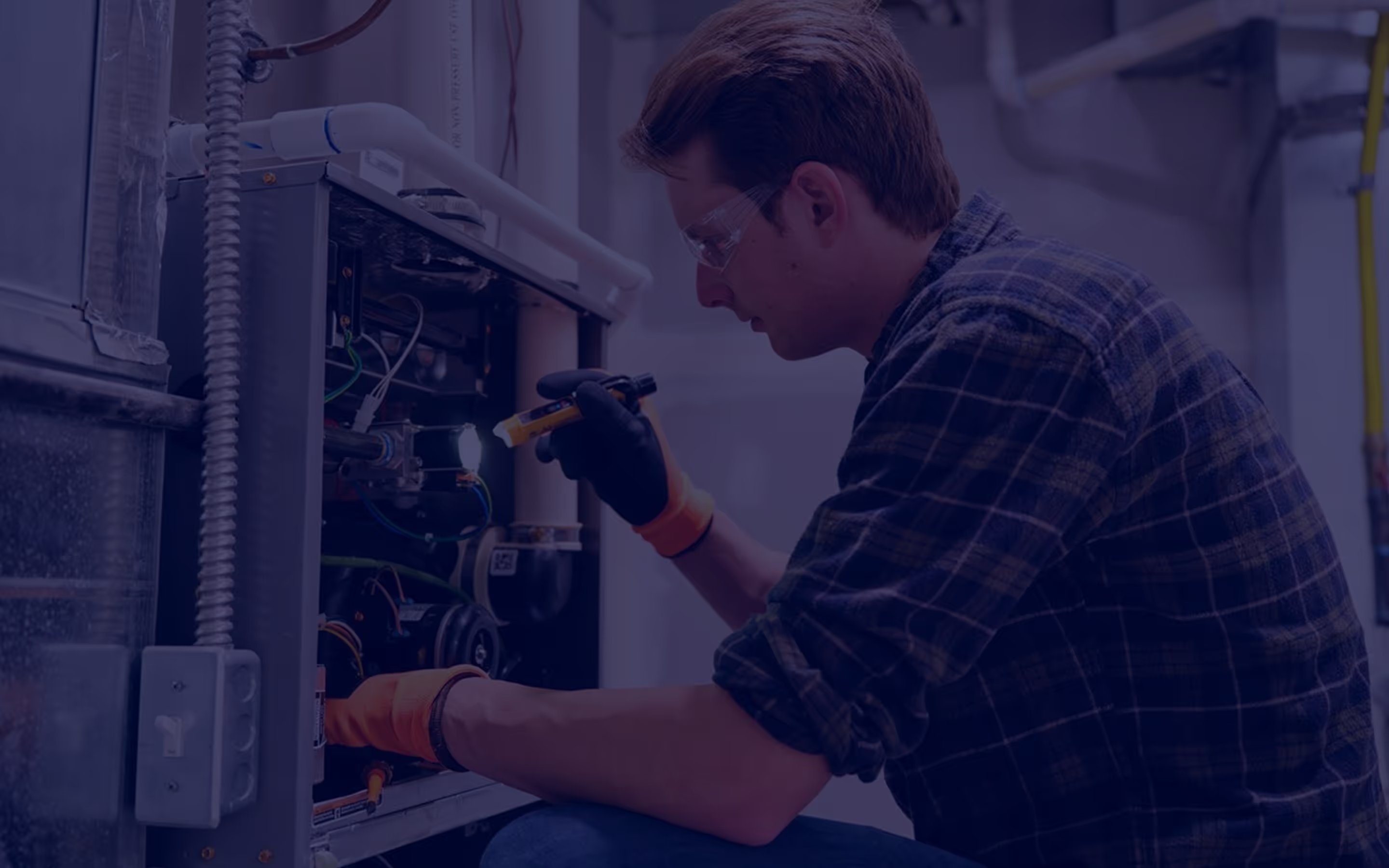
Why Professionals Prioritize Testing Furnace Gas Valve Manifold Pressure During October Startups


Preparing for the Chill: The Crucial First October Startup
As the crisp autumn air settles in and temperatures begin to drop, testing furnace gas valve manifold pressure is one of the most critical steps in preparing your home for the chilly months ahead. Every year, our team at Thompson's Heating & Air sees countless Woodland homeowners simply walk up to their thermostat during the first October heating startup, turn the dial to "heat," and assume the system is ready to go because warm air eventually comes out of the vents. However, as we often remind our customers, there is a massive difference between a furnace that merely powers on and a furnace that operates safely, reliably, and efficiently.
After sitting completely dormant all summer, your heating equipment requires more than just a quick visual glance. Dust has settled on the burners, internal components have sat unused for months, and subtle shifts in the gas valve regulator can occur over time. Understanding why a professional must verify these highly technical settings—rather than simply checking the air filter and wiping down the cabinet—is the key to protecting your equipment and your household. A thorough verification ensures that the combustion process is happening exactly as the manufacturer intended, safeguarding your home against invisible threats while maximizing energy efficiency.
If you need professional support for your system, explore our Heating Services or schedule furnace tune-ups and maintenance today.
Decoding the Metrics: What Is Manifold Pressure?
To understand why our technicians prioritize this step during a fall tune-up, we first need to define what manifold pressure actually is. In simple terms, manifold pressure is the exact force at which natural gas or propane is delivered from your furnace's internal gas valve directly to the burners inside the unit. It dictates the size, shape, and intensity of the flame that heats your home. It is important to distinguish this from inlet pressure. Inlet pressure is the raw force of the gas coming from the utility line into your house and up to the furnace. Manifold pressure, on the other hand, is the highly regulated, precise flow distributed within the furnace itself.
• Inlet Pressure — Source: Utility meter / Gas line — Function: Delivers bulk fuel to the furnace valve — Adjustment: Regulated by the utility provider
• Manifold Pressure — Source: Furnace gas valve — Function: Feeds exact fuel amounts to the burners — Adjustment: Calibrated by an HVAC professional
Understanding Inches of Water Column
When HVAC professionals talk about gas pressure in residential heating systems, we do not use standard high-pressure metrics like PSI (pounds per square inch). Instead, we measure it in inches of water column (in. w.c.). This is the standard unit of measurement for low-pressure gas systems, allowing for incredibly minute, precise readings. For example, natural gas furnaces typically require specific manufacturer readings, often around 3.2 to 3.5 in. w.c. for standard single-stage systems. Even a fraction of an inch off from the manufacturer's specification can dramatically alter how the furnace performs, which is why precision is absolutely non-negotiable.
How Technicians Measure Gas Flow
Because these measurements are so minute, they cannot be guessed, estimated, or eyeballed. Licensed professionals use specialized diagnostic tools, most notably a digital or analog manometer, to get precise readings. The manometer connects directly to specific, threaded ports on the gas valve to read the exact output while the furnace is running under a full load. Because this process involves handling live gas lines, accessing sealed combustion chambers, and manipulating internal valve regulators with specialized tools, it absolutely requires a certified professional to ensure absolute safety and accuracy. There are no safe DIY workarounds for adjusting gas pressure.
The Hidden Risks of Improper Gas Flow
In our experience servicing homes throughout Woodland, we've found that when a furnace operates with incorrect gas pressure, the result is often a cascade of hidden mechanical failures that homeowners cannot see until it is too late. The problems typically fall into two distinct categories: having too much gas (over-firing) or having too little gas (under-firing). Both scenarios compromise the structural integrity of the heating equipment and pose significant safety risks to your household.
The Dangers of Over-Firing
The Problem: When the manifold pressure is set higher than the manufacturer specifies, the furnace is over-firing.
The Cause: This excessive pressure pushes too much fuel into the burners, creating excessively large, aggressive flames. These oversized flames generate far more heat than the system was designed to safely handle, which continuously overheats the heat exchanger—the core metal component that separates the toxic combustion exhaust from the breathable air circulating in your home.
The Solution: Regular professional calibration prevents this severe metal fatigue. Over time, the intense stress of over-firing causes the heat exchanger to warp, crack, or completely fail. A cracked heat exchanger is one of the primary pathways for deadly carbon monoxide leaks, making this a severe safety hazard. If you ever notice strange odors coming from your vents, which might prompt you to wonder why your heater smells like burning plastic or exhaust, it is critical to shut the system down immediately and contact a professional.
The Consequences of Under-Firing
The Problem: On the opposite end of the spectrum, under-firing occurs when the manifold pressure is too low, meaning the burners are starved of fuel.
The Cause: While it might sound less dangerous than over-firing, insufficient pressure prevents the heat exchanger from ever reaching its designed operating temperature. When the exhaust gases do not get hot enough to properly draft and vent out of the flue, they cool down too quickly and condense inside the unit.
The Solution: Precise measurement in inches of water column (in. w.c.) ensures the flame is robust enough to vent gases properly. The condensation created by under-firing is highly acidic. Left unchecked, this acidic moisture eats away at the metal components, leading to rapid rust, widespread corrosion, and excessive sooting inside the combustion chamber, which will inevitably destroy the furnace from the inside out.

True Safety Inspections vs. Superficial Furnace Checks
Not all heating maintenance is created equal. Many homeowners mistakenly believe that changing the air filter and wiping down the exterior cabinet constitutes a complete "furnace tune-up." However, a true safety inspection dives deep into the technical operation of the unit. Highlighting thorough, professional inspections by trained technicians who go beyond basic superficial checks is vital to ensuring genuine safety and preventing unexpected mid-winter breakdowns. When you schedule professional heating service with our team, validating pressure specifications is a non-negotiable step for long-term reliability.
Why Visual Inspections Fall Short
It is a common myth that you can judge a furnace's health simply by looking at the color of the flames. While a steady blue flame is a good baseline indicator of proper combustion, our technicians know firsthand that subtle pressure irregularities can remain completely hidden to the naked eye until they cause major component failure. Modern high-efficiency furnaces are incredibly sensitive to pressure changes. A technician cannot look at a burner and accurately declare that it is running at exactly 3.5 inches of water column; they must use the proper diagnostic tools.
• Gas Flow Verification — Superficial Check: Glancing at the flame color — Professional Safety Inspection: Using a manometer to measure exact in. w.c.
• Heat Exchanger Check — Superficial Check: Looking for obvious rust on the exterior — Professional Safety Inspection: Using combustion analysis and cameras to find micro-cracks
• Safety Controls — Superficial Check: Assuming limits work because the unit turns on — Professional Safety Inspection: Physically testing high-limit switches and flame sensors
• Overall Value — Superficial Check: Provides a false sense of security — Professional Safety Inspection: Ensures safe operation and prevents mid-winter breakdowns
Adapting to the Cold: Efficiency During the Fall Transition
As Woodland transitions into chilly fall weather, your heating system needs to be able to adapt to fluctuating temperatures efficiently. We often tell our customers that optimal furnace efficiency is required to manage seasonal energy usage effectively during this shift, and precise gas pressure is at the absolute heart of that efficiency. A furnace that is fighting against improper calibration will struggle to keep your home comfortable as the outdoor temperatures drop.
When your manifold pressure is correctly calibrated by our experts during an October heating startup, the furnace can heat the home evenly, running in smooth, predictable cycles. The blower motor distributes warm air steadily, and the thermostat accurately registers the temperature change. However, incorrect settings can completely disrupt this process. One of the most common and frustrating consequences of improper gas flow that we encounter is a phenomenon known as short-cycling.
Short-cycling happens when the furnace turns on, runs for a very brief period, and then shuts off prematurely, only to turn right back on a few minutes later. This rapid on-and-off cycling puts immense strain on the blower motor, the hot surface igniter, and the gas valve itself. Furthermore, it ruins your home's energy efficiency. Just like a vehicle uses more fuel in heavy stop-and-go traffic than it does cruising on the open highway, a short-cycling furnace consumes significantly more energy to constantly restart, leading to unnecessary spikes in your utility bills right as the weather gets colder.
Recognizing the Warning Signs of Pressure Imbalances
While testing and adjusting manifold pressure strictly requires a professional equipped with a manometer, homeowners can still be proactive by observing how their system behaves on a daily basis. If your system was not properly calibrated during its initial startup or previous tune-ups, it will often display audible and visual red flags that indicate something is wrong.
Based on our field experience, here is a checklist of warning signs that indicate your system may be suffering from pressure imbalances:
• Yellow or wavering burner flames: A healthy natural gas flame should be steady and predominantly blue, perhaps with tiny yellow tips. If you look into the burner viewport and see lazy, entirely yellow, or orange flames, it is a clear sign of incomplete combustion, often tied to incorrect pressure.
• Excessive soot buildup: If you notice black soot accumulating around the furnace registers, the exhaust flue, or the front of the cabinet, the burners are likely under-firing and creating heavy, acidic condensation that is turning into soot.
• Loud booming noises on startup: A delayed ignition, often sounding like a loud "whoosh" or a small boom when the furnace kicks on, can happen when gas pressure is too high or too low, causing gas to pool in the chamber before finally igniting.
• Inconsistent heating: If some rooms are freezing while others are sweltering, or if the furnace constantly struggles to reach the temperature set on the thermostat, the unit is likely not producing the correct BTU output due to poor gas flow.
• Unexpectedly high energy bills: A sudden, sharp spike in your heating costs without a corresponding drop in outdoor temperatures usually points to a system that is burning fuel inefficiently due to calibration issues.
If you notice any of these symptoms, do not wait for the system to fail completely or for a safety hazard to develop. Reach out to our team for professional furnace repair to have the manifold pressure tested and the unit safely recalibrated by an expert.
Frequently Asked Questions About Furnace Gas Pressure
What happens if gas pressure is too high on a furnace?
If gas pressure is too high on a furnace, the unit will over-fire, creating excessively large flames that overheat the internal components. This intense heat places immense stress on the heat exchanger, which can eventually warp or crack the metal. A cracked heat exchanger is a critical safety failure that can allow carbon monoxide to leak into your home's breathable air, requiring immediate professional intervention.
Why do technicians check furnace manifold pressure?
Technicians check furnace manifold pressure to ensure the equipment is burning fuel safely, efficiently, and according to the manufacturer's exact specifications. Verifying this metric guarantees that the burners are not being starved of fuel (which causes acidic condensation) or overloaded (which causes overheating). It is a vital diagnostic step that prevents long-term mechanical degradation and protects household safety.
What should the manifold pressure be on a natural gas furnace?
For most standard single-stage natural gas furnaces, the manifold pressure should typically be set between 3.2 and 3.5 inches of water column (in. w.c.). However, this is just a general baseline. Every furnace has a specific rating plate installed by the manufacturer that dictates the exact required pressure, and a licensed technician will always calibrate the system to match that specific label.
Can incorrect gas pressure cause a carbon monoxide leak?
Yes, incorrect gas pressure is a leading underlying cause of carbon monoxide leaks over time. When a furnace is constantly over-firing due to high pressure, the resulting thermal stress cracks the heat exchanger. Because the heat exchanger is the primary barrier keeping toxic combustion exhaust separate from your indoor air, any crack provides a direct pathway for carbon monoxide to enter your living spaces.
Does a brand new furnace need its gas pressure adjusted during installation?
Yes, a brand new furnace absolutely needs its gas pressure tested and adjusted during the initial installation. Furnaces are shipped from the factory with baseline settings, but the inlet gas pressure coming from your local utility line varies from house to house. A professional installer must use a manometer to fine-tune the gas valve so it matches the specific conditions of your home.
Secure Your Home's Comfort for the Winter Ahead
As you prepare for the colder weather, remember that testing furnace gas valve manifold pressure is a critical step in verifying the safety, efficiency, and longevity of your entire HVAC system. A proper October heating startup is about much more than just getting warm air to blow through the vents; it is about ensuring your equipment operates smoothly without putting your household at risk of carbon monoxide exposure or facing astronomical heating bills. Having a clear understanding of why this technical test affects your safety and comfort empowers you to make the best decisions for your home. Don't settle for a superficial visual check when your family's winter comfort is on the line. Ensure your fall maintenance includes this vital professional check by scheduling comprehensive furnace tune-ups and maintenance with our certified experts at Thompson's Heating & Air today.