
Itemizing the Installation Costs for a 3-Ton HVAC Upgrade in Woodland

Facing a Late-Summer AC Replacement Without the Sticker Shock
Your air conditioner is running nonstop, but the house still feels warm. When you are dealing with a failing system, itemizing the installation costs for a 3-ton HVAC upgrade in Woodland is the first step toward restoring your home's comfort. Homeowners facing a failing AC often experience frustration and sticker shock when quoted for a comprehensive replacement. The initial reaction is usually surprise, primarily because it is easy to assume the quote only covers the metal boxes sitting outside and in the garage.
To learn more about your options, explore our Air Conditioning resources or schedule an AC Replacement in Woodland today.
In reality, a professional HVAC quote encompasses far more than just the physical machinery. By the time a system is suffering from late August end-of-season cooling wear, the internal components have battled extreme heat for months. When a professional evaluates your home, they are looking at the entire ecosystem required to keep you comfortable. Understanding these "invisible" components—labor, local permits, custom materials, and precision testing—is key to making a sound investment. When you break down the scope of work, you protect yourself from lowball estimates that inevitably lead to mid-project change orders and future breakdowns.
Evaluating the Core Equipment: What Goes Into the Hardware?
The most visible part of any HVAC quote is the equipment itself. When you invest in a standard 3-ton residential system, you are purchasing advanced machinery designed to move heat out of your home efficiently. However, the equipment is only a fraction of the total installation scope. Understanding what this hardware actually does helps clarify why certain systems require a larger initial investment.
The Condenser and Air Handler
A typical residential setup is a split system, meaning it has both outdoor and indoor components that must work together seamlessly.
• The outdoor condenser: This unit sits outside your home and is responsible for releasing the heat absorbed from your indoor air. It houses the compressor, which is the heart of the refrigeration cycle.
• The indoor air handler or furnace: Located in your garage, attic, or closet, this component contains the evaporator coil and the blower motor. It cools the air and circulates it through your ductwork.
A matched system ensures optimal performance and longevity. If you mix a new outdoor unit with an old indoor unit, the system will struggle to communicate, leading to reduced efficiency and premature failure.
Efficiency Ratings and Technology
Modern air conditioners are measured by their SEER2 (Seasonal Energy Efficiency Ratio 2) rating. This rating impacts your initial investment versus your long-term utility savings.
• Single-stage systems: These units run at one speed—100% capacity. They are reliable and form the baseline of a standard 3-ton residential system, but they turn on and off frequently.
• Two-stage systems: These units can run at a lower speed for mild days and a higher speed for extreme heat, providing better humidity control.
• Variable-speed technology: These advanced systems adjust their output in tiny increments, much like the gas pedal in a car. Higher SEER2 ratings require these more advanced, complex internal components.
The Value of Specialized Labor and Precision Load Calculations
The physical boxes do not install themselves. A flawless installation requires hours of highly skilled labor, and this expertise is a critical component of your investment. Removing old equipment safely, managing refrigerants according to EPA guidelines, brazing copper lines with nitrogen, and pulling a deep vacuum on the system all require specialized training.
When you review a quote for AC Installation Services, you are paying for technicians who understand the complex physics of refrigeration. Framing professional labor as an insurance policy against future breakdowns is the smartest way to view this part of the quote. A poorly installed premium system will perform worse than a perfectly installed basic system.
Why Sizing Matters: The Manual J Calculation
Guessing system size based on square footage alone is an outdated and dangerous practice. As part of our commitment to transparent pricing and proper sizing, performing a Manual J load calculation is standard practice to protect homeowners from overpaying for improperly sized systems.
The precision calculation: A Manual J calculation verifies that a standard 3-ton residential system is actually the correct size for your home's specific layout. This calculation factors in:
• Window quality and placement: South-facing windows absorb significantly more heat.
• Insulation levels: The thickness of your attic and wall insulation dictates how quickly heat enters the home.
• Home orientation and ceiling height: Vaulted ceilings increase the volume of air that needs cooling.
Improper sizing leads to disaster. An oversized unit will short-cycle, turning on and off too quickly to remove humidity, leaving your home feeling cold and clammy. An undersized unit will run constantly, driving up utility bills and wearing out prematurely.
Custom Materials, Duct Transitions, and Title 24 Compliance
Beyond the primary equipment, every installation requires hidden materials and strict adherence to energy compliance standards. These invisible elements factor heavily into the total scope of work.
Meeting California Energy Standards
California's Title 24 energy efficiency standards dictate strict protocols for HVAC changeouts. These regulations are not optional; they are legally mandated to reduce energy consumption across the state.
1. Mandatory duct testing: When installing a standard 3-ton residential system, an independent HERS (Home Energy Rating System) rater must often test your ductwork for leaks.
2. Duct sealing: If your ducts leak beyond the allowable percentage, they must be sealed. Woodland's hot Sacramento Valley summers necessitate strict duct sealing and insulation standards to prevent precious conditioned air from escaping into 120-degree attics.
3. System verification: The state requires proof that the system is moving the correct amount of air and using the right amount of fan power.
The Invisible Materials
Connecting new, highly efficient equipment to existing ductwork is rarely a simple plug-and-play operation. The quote includes custom sheet metal, plenums, and transition pieces fabricated specifically for your home. These custom transitions prevent airflow restrictions that could choke the new blower motor.
Additionally, proper insulation, new copper refrigerant line sets, safety drain pans, float switches, and electrical disconnect upgrades are vital materials. They ensure the system runs efficiently, drains condensation safely, and passes all state and local standards.
Navigating Woodland City Permits and Safety Inspections
Legitimate HVAC quotes always include the administrative time and fees associated with pulling local permits. The City of Woodland requires building permits for residential HVAC replacements, and this process protects your safety and your property value.
When an installation is complete, a final municipal inspection verifies that the electrical connections are safe, the gas lines are secure, and the structural integrity of the installation meets current building codes. If you ever sell your home, unpermitted HVAC work can hold up the sale or force you into costly retroactive inspections. A comprehensive quote covers the legwork of securing these permits, scheduling the inspections, and ensuring your standard 3-ton residential system is 100% compliant with local laws.
Weighing a Full Scope Installation Against Patchwork Repairs
When a system breaks down, you must evaluate whether investing in a full system replacement makes more sense than continuing to repair an old unit. One Woodland homeowner reached out during a summer heat wave when their AC system, installed just 6 years ago, suddenly stopped working with a record high temperature predicted. A technician was dispatched the same day and addressed the issue immediately. However, for systems older than a decade, recurring breakdowns often signal that a comprehensive replacement is the wiser path.
Older systems lose efficiency every year and struggle immensely during peak heat events. Late August end-of-season cooling wear frequently pushes aging compressors past their breaking point. While a full installation quote encompasses many components, it provides a clean slate for your home comfort.
• Reliability — Patchwork Repairs: High risk of secondary component failure during extreme heat. — Comprehensive Replacement: Peace of mind with a fully warrantied, properly installed system.
• Energy Efficiency — Patchwork Repairs: Continues to operate at degraded, older efficiency standards. — Comprehensive Replacement: Meets modern SEER2 and Title 24 standards, lowering energy use.
• Long-Term Value — Patchwork Repairs: Sinks funds into obsolete technology and R-22 refrigerant. — Comprehensive Replacement: Invests in modern technology, boosting home comfort and property value.
Comparing the long-term value of a comprehensive, permitted installation versus the recurring costs of band-aid fixes is crucial when repairing your old HVAC vs. buying a new system.
Structuring Your HVAC Investment Responsibly
Managing the components of a major home upgrade requires a clear understanding of the terms. A comprehensive quote protects homeowners from unexpected mid-project change orders. If a contractor provides a quote without itemizing the labor, materials, and permits for a standard 3-ton residential system, you are at risk of being charged extra when they "discover" that you need a new plenum or a Title 24 duct test.
Flexible payment options can make a full-scope installation highly manageable. By utilizing HVAC Financing, you can break the comprehensive scope into predictable monthly terms rather than depleting your savings. Furthermore, generic utility rebates or federal tax credits may apply to qualifying high-efficiency heat pumps and air conditioners. Always encourage your contractor to explain which generic incentive programs your new system might qualify for, and look at the total value of the installation components rather than just the bottom-line number.
Frequently Asked Questions About HVAC Installation Scopes
What components are included in a full HVAC installation quote?
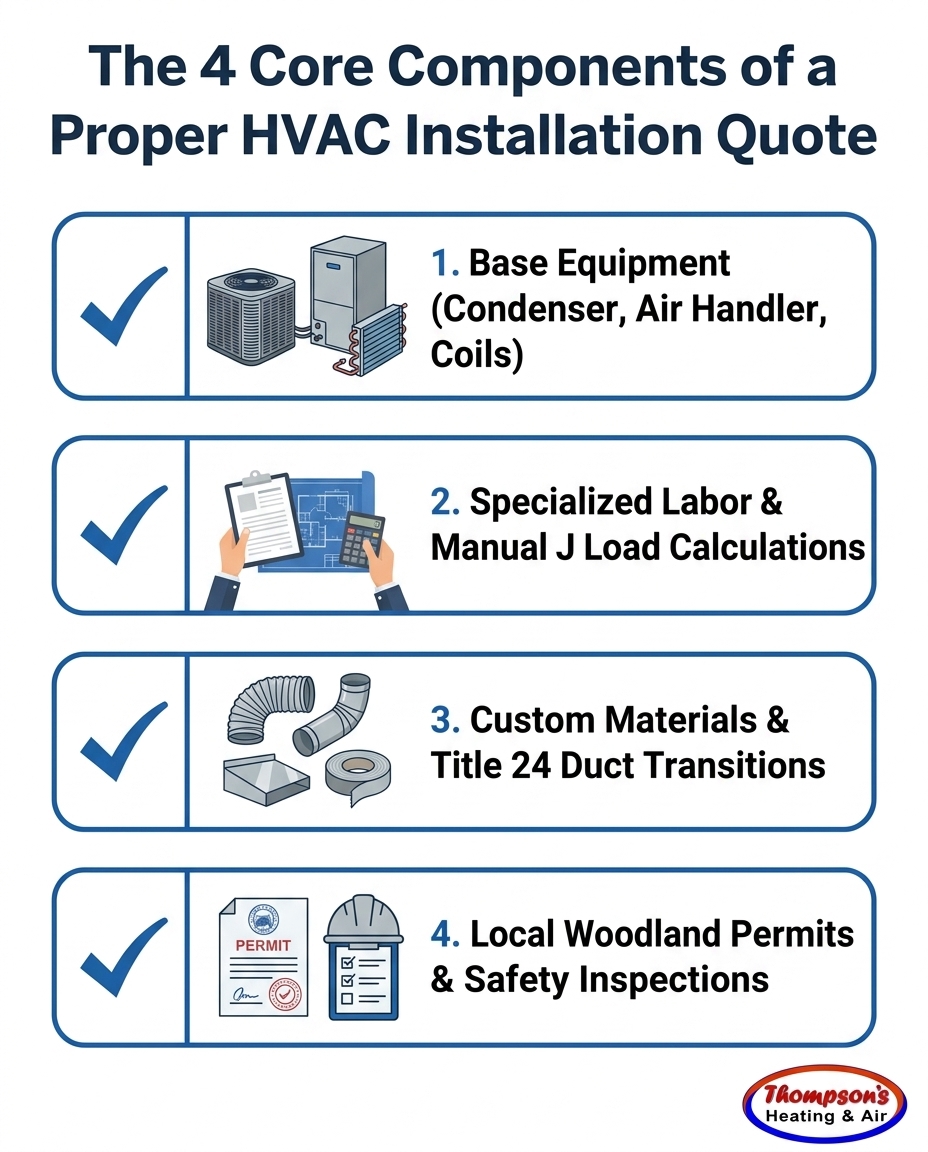
A complete quote covers four main pillars: the base equipment, specialized labor, custom materials, and local permits. When installing a standard 3-ton residential system, the quote should detail the outdoor condenser, indoor air handler, custom sheet metal transitions, new refrigerant lines, and the administrative costs of pulling city permits. Skipping any of these components usually results in a subpar installation.
Why are permits required for AC replacement in Woodland?
The City of Woodland requires building permits to ensure that all electrical, gas, and structural work meets current safety codes. Permits trigger a final municipal inspection, which acts as an independent verification that your contractor performed the work safely. Skipping permits can result in fines and complicate the future sale of your home.
Do I need a permit to replace my AC in California?
Yes, replacing an air conditioning system in California requires a permit and compliance with Title 24 energy standards. This statewide regulation mandates that your ductwork is tested for leaks and your system's airflow is verified by an independent HERS rater. These regulations are designed to lower the state's overall energy consumption.
What goes into the labor of installing a 3-ton AC?
The labor involves safely recovering old refrigerant, removing the existing units, and meticulously installing the new machinery. Technicians must braze copper lines while flowing nitrogen to prevent oxidation, pull a deep vacuum to remove moisture from the lines, and precisely calibrate the electrical components. It requires specialized training and hours of focused work.
Why is a Manual J load calculation necessary for an AC upgrade?
A Manual J calculation determines the exact heating and cooling load of your specific home, ensuring you do not buy an oversized or undersized unit. It factors in your windows, insulation, ceiling height, and home orientation. Guessing the size based on square footage leads to poor humidity control, short-cycling, and premature system failure.
Making an Informed Decision on Your Woodland HVAC Upgrade
When your system succumbs to late August end-of-season cooling wear, making a rushed decision can lead to years of discomfort. By summarizing the four main components—core equipment, specialized labor, custom materials, and local permits—you can see exactly why a proper installation requires a comprehensive scope of work. Understanding these elements justifies the investment and protects you from cut-rate installations that skip crucial safety and efficiency steps.
Itemizing the installation costs for a 3-ton HVAC upgrade in Woodland is about recognizing the value of precision engineering and dedicated craftsmanship. We encourage readers to seek out transparent, detailed quotes for their home comfort needs. If you are ready to evaluate your options with a team that prioritizes honesty and strict compliance, schedule your AC Replacement in Woodland today.



.avif)
.avif)
.png)
