
AC Repair in Woodland CA: Troubleshooting Fall HVAC Transitions and Startup Odors

Navigating the October HVAC Transition in the Sacramento Valley
As you finalize your seasonal home maintenance checklist, the shift from extreme summer heat to cool fall evenings marks a critical transition period for your home's climate control system. October in the Sacramento Valley often brings unpredictable weather, requiring homeowners to toggle between cooling during the day and heating at night. This abrupt switch places unique mechanical stress on your HVAC equipment. At Thompson's Heating & Air, our team frequently fields calls from households turning on their heating system for the first time after months of total inactivity, only to experience a highly concrete problem: a sudden burning smell or listening to the system rapidly turn on and off in short cycles.
When you encounter these symptoms during an October heating startup, you face an immediate decision point. You must determine whether the initial startup odors and mechanical noises are simply normal dust burn-off or the early warning signs of a hazardous malfunction. Addressing these symptoms early is absolutely vital for the safety, efficiency, and comfort of your household before severe winter weather sets in. Ignoring a strange odor or an erratic heating cycle can lead to complete system failure exactly when you need warmth the most.
Whether you are preparing your system for the winter ahead or still require late-season Air Conditioning Services to manage warm afternoons, securing professional AC repair in Woodland CA and comprehensive heating inspections ensures your equipment operates safely through the transition.
How Woodland's Dry Summers Impact Idle Heating Components
To understand why your furnace struggles in the fall, it helps to look closely at the environmental conditions of the preceding months. The extreme, dry, and dusty summer heat in the Sacramento Valley causes significant particulate buildup in idle heating components, exacerbating startup odors. While your air conditioner works overtime from June through September, the heating components inside your HVAC cabinet sit completely dormant.
In our experience servicing homes throughout Woodland CA, heavy summer AC usage combined with the dry, agricultural conditions common to our area leads to a continuous intake of airborne debris. Your system's blower motor constantly circulates indoor air, pulling microscopic dust, pet dander, and pollen through the return vents. While the air filter catches a large percentage of this debris, a portion inevitably bypasses the media and settles deep inside the mechanical cabinet.
The Anatomy of Summer Dust Accumulation
The resting state of furnace components: During the cooling season, your furnace's burners, heat exchanger, and ignition assemblies remain completely inactive. Because they generate no heat and experience minimal direct airflow, they become a magnet for household dust. Layer by microscopic layer, airborne debris coats these sensitive metal surfaces over a period of five to six months.
The catalyst for startup smells: This accumulated buildup is the primary catalyst for the alarming smells homeowners experience during the first fall heating cycle. When the thermostat finally calls for heat in late October, the burners ignite, and the heat exchanger rapidly reaches high temperatures. The layer of summer dust instantly incinerates. This flash-burning of organic particulate matter is exactly what creates the distinct odor that fills your living space.
The mechanical stress of the transition: Beyond just dust, transitioning a system from an idle summer status to heavy winter heating loads shocks the mechanical components. Bearings that haven't moved in months must suddenly rotate at high speeds. Gas valves that have remained shut must open precisely. This sudden demand highlights any underlying wear and tear, making the first few weeks of fall a peak time for component failures.
Normal Dust Burn-Off vs. Hazardous Malfunctions
Distinguishing between harmless startup smells and dangerous electrical or mechanical issues is a core component of heating safety. Because the symptoms can seem identical to an untrained observer, establishing clear boundaries for safe operation is essential during your October heating startup.
When to Wait It Out
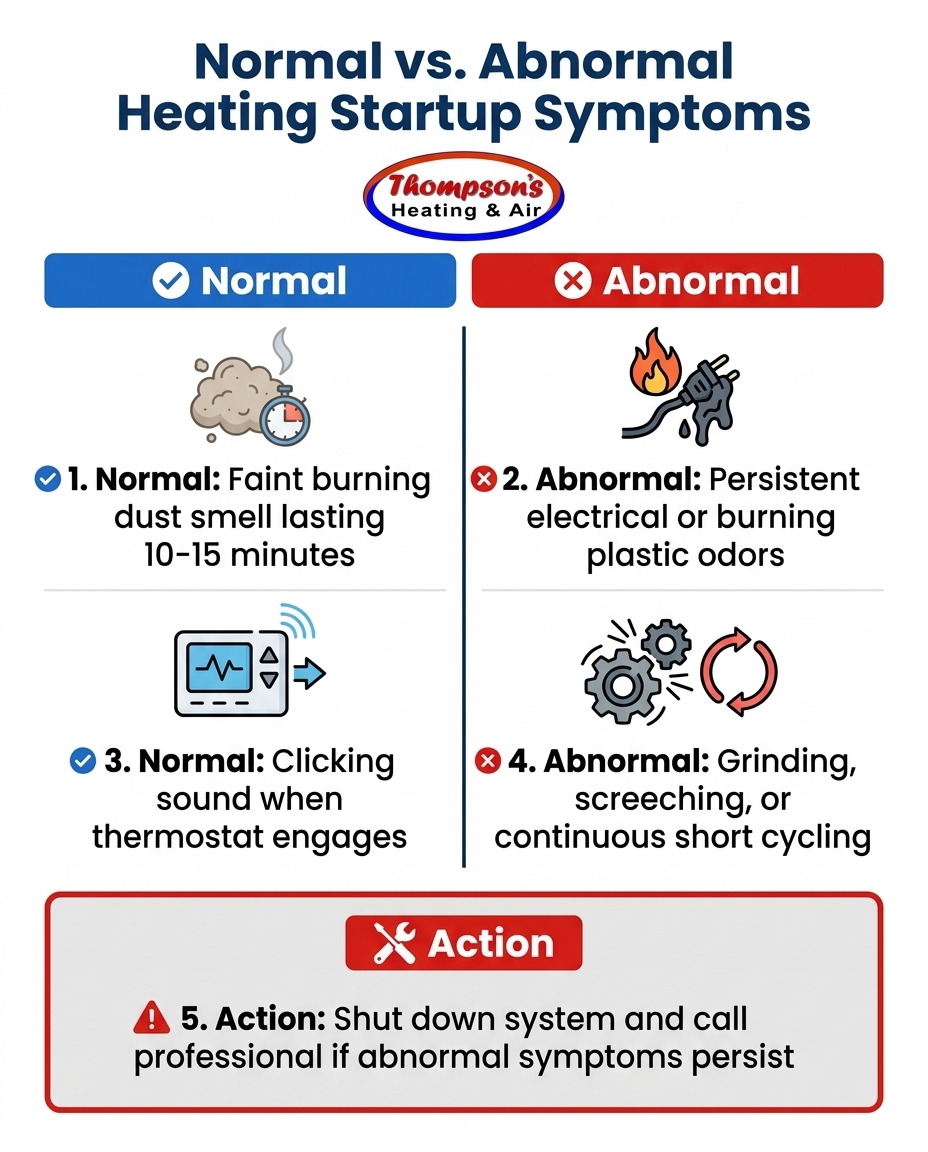
Normal dust burn-off has very specific characteristics. It typically presents as a temporary, faint burning smell—often compared to the scent of a hot hair dryer or a warm space heater. This odor should be most noticeable during the very first time the system runs and should steadily dissipate within the first few heating cycles.
Safe observation practices: When you initiate the first heating cycle of the season, remain near the thermostat and the air vents for the first 15 minutes of operation. Monitor the airflow and the scent. If the smell is faint and begins to fade after 10 to 15 minutes, our team generally advises that the system is likely just clearing the summer dust from the heat exchanger.
When to Shut Down the System
Hazardous malfunctions produce distinctly different warning signs that require immediate action. If you detect persistent smells of burning plastic, sharp electrical ozone odors, or the scent of raw gas, these are not normal dust burn-off. Furthermore, if you ever see visible smoke emerging from the vents or the HVAC cabinet, the situation is critical.
Immediate action required: If you notice any of these hazardous warning signs, establish a clear boundary: immediately shut the system down at the thermostat. Do not wait to see if the smell improves. Diagnosing persistent odors, chemical smells, or unusual mechanical grinding noises requires a licensed professional. Homeowners should never attempt unsafe DIY exploration of the electrical panel, gas valves, or heat exchanger.
Troubleshooting Short Cycling and Late-Season Airflow Issues
The fall transition in Woodland CA is notoriously unpredictable. You might need your furnace overnight, only to require cooling again by mid-afternoon. This dual-season demand makes troubleshooting particularly complex, especially when dealing with a phenomenon known as short cycling.
Short cycling occurs when your HVAC system turns on, runs for only a brief period, and then shuts down before reaching the target temperature on the thermostat. This erratic on-and-off cycling can plague both air conditioning and heating modes, drastically reducing energy efficiency and accelerating wear and tear on the blower motor and compressor.
The Role of Air Filters in System Cycling
One of the most common culprits behind short cycling during the fall is a heavily soiled air filter. This is often a direct remnant of peak summer cooling. After months of filtering out dust, pollen, and smoke, the filter media becomes severely restricted. This restriction chokes the overall system airflow.
How restricted airflow triggers safety switches: When airflow is restricted, the heat generated by the furnace cannot be pushed into the ductwork fast enough. The internal temperature of the HVAC cabinet rises rapidly. To prevent a catastrophic fire or a cracked heat exchanger, the system's high-limit safety switch automatically trips, shutting the burners down prematurely. Once the cabinet cools slightly, the system tries to start again, creating an endless loop of short cycles.
Safe homeowner checks: Before assuming the worst, there are safe, homeowner-level observation tips you can follow. First, check the status of your air filter; if it is dark, gray, or caked with dust, replace it immediately. Second, walk through your home and ensure all supply and return vents are unblocked by furniture, rugs, or drapes. If these basic airflow checks do not resolve the erratic cycling, professional intervention is necessary. Whether you need routine AC maintenance to clear out summer debris or you are researching what to check if your AC is not cooling properly during late-season heat waves, one of our licensed technicians can safely diagnose the underlying restriction.
Prioritizing Indoor Air Quality and Fire Safety Checkpoints
It is a common misconception that fall maintenance is solely about improving energy efficiency or lowering utility bills. In reality, a thorough pre-winter inspection is a critical safety and indoor air quality (IAQ) checkpoint. As the weather cools and windows are shut tight, the condition of your HVAC system directly impacts the health and safety of your living space.
According to data from the Environmental Protection Agency (EPA), indoor air pollutants can be two to five times higher than outdoor levels. This disparity becomes especially pronounced in the fall and winter when homes are sealed tightly against cooler weather. The dust, mold spores, and particulate matter resting inside an unmaintained HVAC cabinet are continuously circulated into the air your family breathes.
Mitigating Winter Fire Risks
Beyond air quality, there are severe physical safety risks tied to neglected heating equipment. Data from the National Fire Protection Association (NFPA) highlights that heating equipment is a leading cause of home fires, with incidents peaking heavily in the cooler months. Professional preventative maintenance mitigates these specific risks by thoroughly cleaning and inspecting the combustion components.
• Clearing the furnace area: A vital homeowner task is ensuring the perimeter around the indoor HVAC cabinet is entirely clear. Over the summer, it is common to store boxes, cleaning supplies, or seasonal decorations near the unit. These combustible materials must be moved at least three feet away before the October heating startup.
• Professional heat exchanger inspection: A licensed technician uses specialized tools to inspect the heat exchanger for microscopic cracks. A cracked heat exchanger can leak deadly, odorless carbon monoxide into the home's airstream.
• Wiring and electrical checks: Technicians secure loose electrical connections that may have vibrated loose during the heavy summer cooling season, preventing dangerous electrical arcing.
Alongside scheduling your professional inspection, a critical homeowner task is testing all smoke and carbon monoxide detectors in the home. Replace the batteries and verify that the alarms sound loudly, matching this essential safety check with the very first heating startup of the year.
The Value of Proactive Fall Maintenance Before Winter Hits
The transition from mild fall evenings to freezing winter nights happens quickly. Delaying necessary maintenance places extreme stress on untested HVAC systems during the very first major cold snap of the season. When temperatures plummet, furnaces that have not been professionally cleared of summer dust and mechanical wear are highly susceptible to sudden breakdowns.
The inconvenience and discomfort of a mid-winter heating failure cannot be overstated. Waking up to a freezing house on a weekend morning creates immediate safety risks, particularly for vulnerable family members or households with compromised plumbing that could freeze. Proactive fall maintenance removes this anxiety, providing the peace of mind that your system can handle heavy winter loads safely and efficiently.
Our team recently saw the reality of this stress when a local homeowner's heater went out on a cold Sunday morning. Our technicians, Kevin and an associate, were dispatched to the property, diagnosing a severe mechanical failure and restoring the unit to full operation by the very next day. This rapid response underscores the importance of having a reliable local partner. At Thompson's Heating & Air, we bring deep, first-hand familiarity with Sacramento Valley weather demands and established local expertise in preventing these sudden winter breakdowns. By thoroughly testing the ignition sequence, calibrating the thermostat, and verifying the integrity of the heat exchanger long before the freezing weather arrives, proactive care keeps the broader regional community—including the Davis CA service area—safe and comfortable.
Frequently Asked Questions About Fall HVAC Maintenance
Why does my heater smell like burning dust when I turn it on?
When your heater sits idle throughout the summer, dust and airborne particles settle on the burners and heat exchanger. When you turn the system on for the first time in the fall, these components heat up rapidly and incinerate the accumulated debris. This flash-burning creates a temporary, faint burning smell. It is a normal part of the seasonal transition and should dissipate within 10 to 15 minutes of operation.
Is a burning smell from the heater dangerous?
It depends entirely on the type of smell and how long it lasts. A faint, dusty burning smell that fades quickly is harmless normal operation. However, if the smell resembles burning plastic, sharp electrical ozone, or raw gas, it is highly dangerous. Persistent acrid odors indicate a serious mechanical or electrical malfunction, and the system should be shut down at the thermostat immediately.
How do I know if my furnace is safe to turn on for the winter?
The most reliable way to ensure your furnace is safe is to have it inspected by a licensed HVAC professional before the first cold snap. A technician will verify that the heat exchanger is free of cracks, the gas pressure is calibrated correctly, and the safety limit switches are functioning. As a homeowner, you can ensure safety by changing the air filter, clearing combustible materials away from the cabinet, and testing your carbon monoxide detectors.
What should be included in a seasonal home maintenance checklist?
A comprehensive checklist should cover both performance and safety. It must include replacing the HVAC air filter, ensuring all room vents are open and unblocked, and testing smoke and carbon monoxide alarms. Most importantly, the checklist should prioritize scheduling a professional preventative maintenance visit to clean the blower assembly, inspect the electrical connections, and verify the safe operation of the combustion cycle.
How often should my heating and AC system be serviced?
We strongly recommend that HVAC systems receive professional servicing twice a year to maintain safety and efficiency. Your air conditioning components should be inspected and cleaned in the spring before the extreme summer heat arrives. Conversely, your furnace or heating components require a dedicated inspection in the fall to prepare for heavy winter usage and mitigate fire or indoor air quality risks.
Why is my HVAC system short cycling during the fall transition?
Short cycling often occurs in the fall due to severely restricted airflow caused by a dirty air filter left over from heavy summer use. When the filter is clogged, the furnace cannot push heat into the home fast enough, causing the internal cabinet to overheat. The system's safety limit switch then trips, shutting the unit down prematurely to prevent a fire hazard, only to restart again once it cools.
Ensure Safe and Reliable Comfort for the Cooler Months With Your Seasonal Home Maintenance Checklist
Accurately distinguishing between harmless dust burn-off and serious mechanical malfunctions is the cornerstone of a safe October heating startup in Woodland CA. While a brief, dusty odor during the first heating cycle is perfectly normal, persistent electrical smells, grinding noises, or erratic short cycling are clear indicators that your system is struggling under the stress of the seasonal transition. Relying on clear, neutral guidance and securing professional inspections are the keys to a safe, comfortable winter.
If you observe any abnormal symptoms, or if your system simply hasn't been evaluated since the spring, do not wait for a complete breakdown during the first major cold snap. Add a professional inspection to the top of your seasonal home maintenance checklist today. Schedule a comprehensive evaluation with our licensed local experts at Thompson's Heating & Air to ensure your equipment is thoroughly cleaned, safely calibrated, and fully prepared to handle the winter weather ahead.



.avif)
.avif)
.png)
