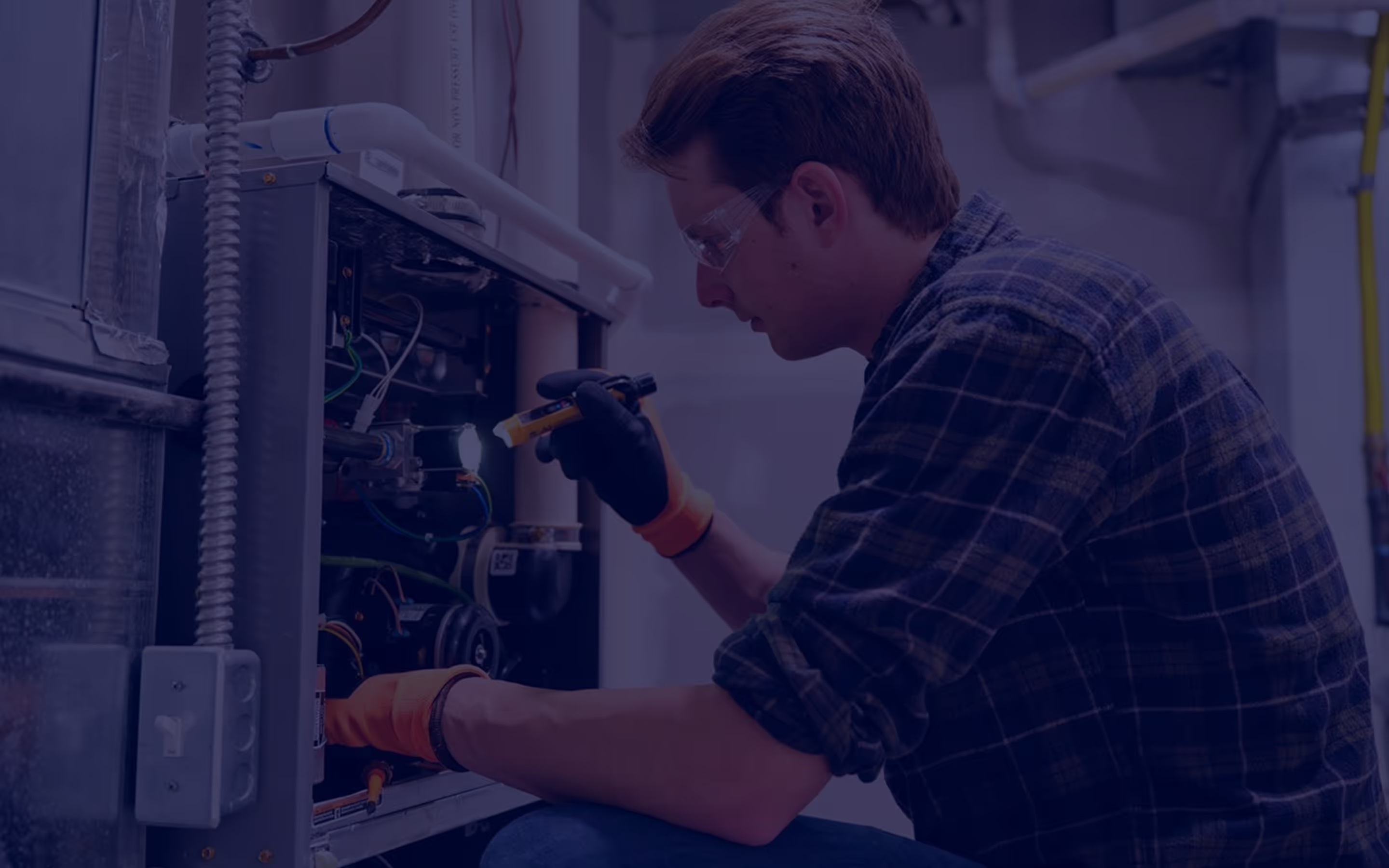
Why Is My Furnace Blowing Cold Air? 7 Causes Woodland Homeowners See Every Winter


Quick answer: A furnace usually blows cold air for one of seven reasons: the thermostat fan is set to ON instead of AUTO, the pilot or electronic ignition has failed, a clogged filter has tripped the overheat limit switch, the gas supply is interrupted, leaky ducts are dumping heat into the attic, a blocked condensate switch has shut down a high-efficiency unit, or the heat exchanger is failing with age. Check the thermostat and filter yourself; leave gas, ignition, and heat exchanger problems to a licensed technician.
By the Thompson's Heating & Air team — CA License #884512, serving Yolo County since 1992.
Every winter, usually during the first real cold snap in late November, our phones in Woodland light up with the same complaint: "the furnace is running, but the air coming out is cold." In our 30+ years serving Yolo County we see the same seven causes over and over, and about a third are things you can check yourself before you ever pick up the phone. This guide walks through all seven and draws a clear line between safe at-home checks and problems that call for our heating repair services.
Is the thermostat fan setting the problem?
Yes, more often than any mechanical failure — if your thermostat fan is set to ON instead of AUTO, the blower runs continuously and pushes unheated air between heating cycles. On AUTO, the blower only runs when the burners have actually warmed the heat exchanger, so the air at the register always feels warm. On ON, the blower keeps circulating room-temperature air through ducts that pass through a 45°F attic, and by the time that air reaches the register it genuinely feels cold. The fix costs nothing: switch the fan to AUTO and wait one full heating cycle. In our experience, roughly one in five "furnace blowing cold air" calls in Woodland ends with a thermostat set to AUTO and no repair bill at all.
Has the pilot light or electronic ignition failed?
If the blower runs but you never hear the burners fire, the ignition system is the next suspect. Furnaces older than about 15 years often use a standing pilot light that can be blown out by a draft or starved by a dirty pilot orifice. Newer furnaces use a hot-surface igniter or intermittent spark ignition, and hot-surface igniters are a known wear item — most last 3 to 7 years before cracking. You can safely look through the inspection window to see whether a pilot flame is present, and you can follow the relighting instructions printed on the furnace label exactly once. If the pilot will not stay lit, the thermocouple or flame sensor is likely failing, and that is a technician's job. A pilot that repeatedly goes out is a message, not a nuisance — something upstream is wrong.
Is a dirty filter tripping the limit switch?
A clogged filter is the most common cause of a furnace that starts warm and then goes cold mid-cycle. When the filter is packed with dust, airflow across the heat exchanger drops, the exchanger overheats, and a safety device called the high-limit switch shuts off the burners while the blower keeps running to cool things down — so you feel cold air. This matters more here than in most places: valley agricultural dust from the fields around Woodland, Esparto, and Winters loads filters noticeably faster than the "every 90 days" rule printed on the package assumes, and during wildfire smoke season filters can load in weeks. Check the filter first; it is a $15 part that mimics a $1,500 failure. If the furnace repeatedly overheats even with a clean filter, stop running it and call — repeated limit-switch trips fatigue the heat exchanger itself.
Is the furnace getting gas?
A furnace with no gas supply will click, attempt ignition, and deliver nothing but cold air. Safe things to check: confirm the gas shutoff valve on the supply line to the furnace is parallel with the pipe (open), and confirm other gas appliances in the house — the water heater or range — are working. If nothing in the house has gas, the issue is at the meter and you should contact PG&E rather than any HVAC company. Never attempt to repair a gas valve or bypass any gas control, and if you smell gas at any point, leave the house and call PG&E from outside. Gas supply problems are the firmest when-to-call boundary on this list.
Are leaky ducts stealing your heat?
Sometimes the furnace is heating perfectly and the ductwork is throwing that heat away. Most homes in Woodland, Davis, and West Sacramento run their ducts through unconditioned attics or crawl spaces, and field studies of California homes have long found typical duct systems leaking 20 to 30 percent of the air they carry. On a 40°F January morning, air that leaves the furnace at 120°F can arrive at a far register merely lukewarm. Telltale signs: rooms farthest from the furnace are coldest, the system runs long cycles, and your winter PG&E bills climb year over year even at the same thermostat setting — a real budget concern given where PG&E rates have gone. Duct sealing and testing is part of our heating repair services, and it is one of the few repairs that pays you back every month afterward.
Why would a high-efficiency furnace shut itself off? The condensate switch
Condensing (90%+ AFUE) furnaces produce water as a byproduct of extracting extra heat from exhaust gases, and that water drains through a small trap and line. If the line clogs with algae or debris, a float switch shuts the furnace down to prevent an overflow — and you get a blower moving cold air. You can safely look for standing water around the furnace base or a visibly full condensate trap, and if there is an accessible cleanout, clearing it sometimes restores heat. A condensate switch that trips more than once a season means the drain needs to be properly cleaned and re-sloped, not just poked clear.
Is the heat exchanger failing with age?
The heat exchanger is the metal barrier between the burner flames and the air you breathe, and after 15 to 20 years of heating and cooling cycles it can crack. A failing exchanger often shows up first as short cycling and lukewarm air, because modern furnaces use flame-rollout and limit sensors that shut the burners down when the exchanger misbehaves. This is the one cause on this list with a genuine safety dimension: a cracked exchanger can allow combustion gases, including carbon monoxide, into your supply air. A cracked heat exchanger is never a repair-it-later problem — the furnace should stay off until a technician evaluates it. If your furnace is in this age range, it is worth reading our guide to the average HVAC lifespan in the Sacramento Valley, and if you heat part of the house with an older wall furnace, our note on older wall heater safety covers the same era of equipment.
What can I safely check myself, and when should I call?
Do these five things yourself, in order, before calling anyone: set the thermostat fan to AUTO and the mode to HEAT with the setpoint 5°F above room temperature; replace the filter if you cannot remember the last change; confirm the furnace switch (it looks like a light switch, usually on or beside the unit) is on and the breaker has not tripped; confirm other gas appliances work; and look for water around a high-efficiency unit. Call a licensed professional for anything involving gas valves, ignition components, repeated safety lockouts, or a suspected heat exchanger crack. Under California law, furnace repair and replacement must be performed by a C-20 licensed contractor, and Yolo County requires a mechanical permit for furnace replacements — two reasons the "handyman special" often costs more in the long run. If your furnace is 10 years or older and this is not its first winter breakdown, the smarter question may not be "what is broken?" but "is this still worth fixing?" — our decision framework, Repair or replace? A decision framework for systems 10+ years old, walks through that math honestly, including when we would tell you to repair.
Frequently Asked Questions
Why does my furnace blow cold air at first, then warm up?
That is usually normal. Many furnaces have a blower delay, and the first 30 to 60 seconds of air travels through ducts that cooled down between cycles. If the air never warms up, or warms up and then goes cold mid-cycle, refer to the limit switch and filter causes above.
Can I keep running the furnace if it is blowing cold air?
If the cause is the thermostat fan setting or duct loss, yes. If the furnace is short cycling, tripping safety switches, or you suspect a heat exchanger problem, turn it off. Running a furnace through repeated safety lockouts damages components and can mask a carbon monoxide risk.
How often should I replace my filter in Yolo County?
Check monthly and expect to replace a 1-inch filter every 30 to 60 days here, faster than national guidance suggests. Valley agricultural dust and wildfire smoke season both load filters quickly, and a clogged filter is the top preventable cause of no-heat calls we see.
How much does a typical furnace repair cost?
Market ranges in the Sacramento Valley typically run from roughly $150 to $500 for common repairs like igniters, flame sensors, or condensate issues, and $500 to $1,200 for blower motors or control boards. Heat exchanger replacement often approaches the cost of a new furnace, which is why age matters in the decision.
Does a furnace tune-up actually prevent cold-air breakdowns?
Yes — most of the seven causes above are caught in an annual inspection. Cleaning the flame sensor, testing the limit switch, clearing the condensate line, and inspecting the heat exchanger address five of the seven causes before they strand you on a cold morning.
Is it worth repairing a 15-year-old furnace?
Sometimes. A single inexpensive repair on an otherwise healthy 15-year-old furnace can make sense; a major component failure usually does not. Our repair-or-replace framework compares repair cost against remaining lifespan so you are deciding with numbers, not pressure.
If your furnace is blowing cold air right now, start with the checklist above — and if the fix is beyond the safe do-it-yourself line, we are here weekdays 8:00–4:00 at (530) 661-2599. And now that you know why furnaces fail, the next smart read is Repair or replace? A decision framework for systems 10+ years old — it will tell you whether this winter's repair should be your last one.



.avif)
.avif)
.png)
