
Sacramento HVAC Lifespan: Is Your Unit Ready for Retirement?

How Long Does an HVAC System Last in the Sacramento Valley?
Understanding the average lifespan of an HVAC system in the Sacramento Valley is one of the most practical things a homeowner can do before summer arrives — or before an unexpected breakdown forces the decision. In this region, systems simply don't last as long as national averages suggest, and knowing where your unit stands can save you from a very hot, very stressful situation.
Here's a quick answer by system type:
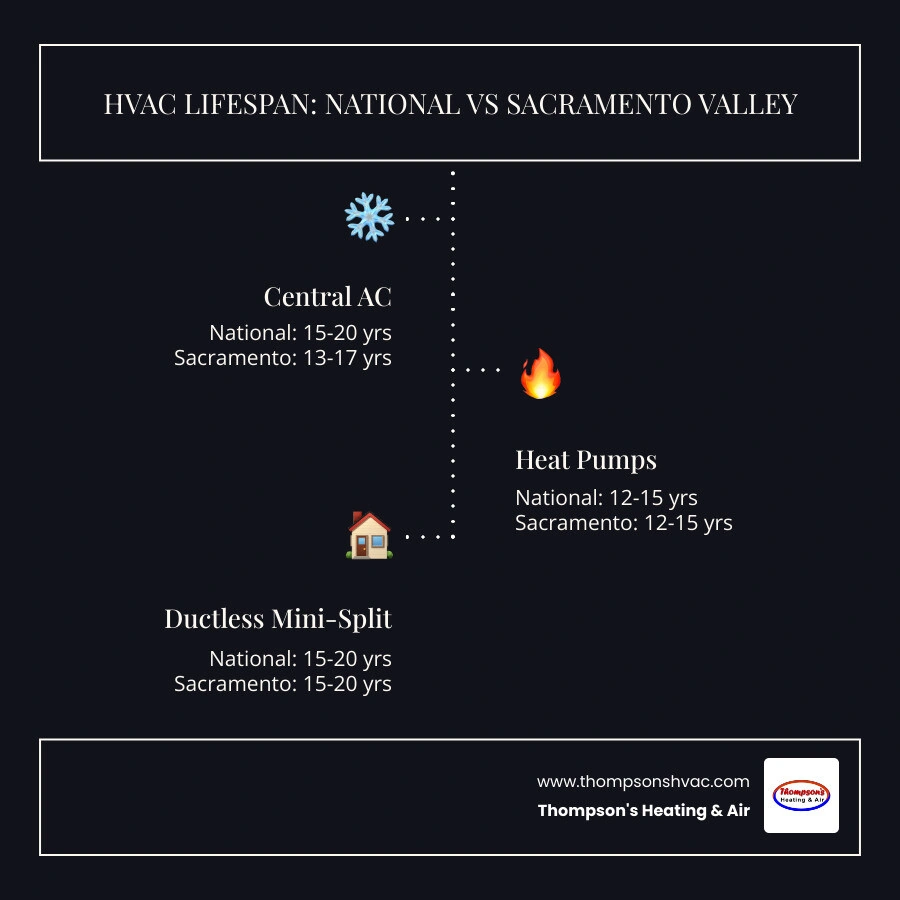
• Central Air Conditioner — National Average Lifespan: 15-20 years — Sacramento Valley Average: 13-17 years (well-maintained)
• Whole-Home AC Unit — National Average Lifespan: ~15 years — Sacramento Valley Average: 12-15 years
• Heat Pump — National Average Lifespan: 12-15 years — Sacramento Valley Average: 12-15 years
• Ductless Mini-Split — National Average Lifespan: 15-20 years — Sacramento Valley Average: 15-20 years
• Window/Portable Unit — National Average Lifespan: 5-10 years — Sacramento Valley Average: 5-8 years
Sacramento Valley's triple-digit summers, wildfire smoke, agricultural dust, Tule fog, and the shifting humidity of the Delta Breeze all work against your HVAC system in ways that homeowners in milder climates never have to think about. A system that might coast to 20 years in San Francisco or Portland may be ready for retirement at 13 in Woodland, Sacramento, or Roseville.
The good news? Maintenance, proper sizing, and smart replacement timing can make a real difference. This guide walks you through everything you need to know — from what shortens system life in this specific climate to how to tell when it's time to replace rather than repair.
What Is the Average Lifespan of an HVAC System in the Sacramento Valley?
For homeowners in Woodland, Davis, West Sacramento, Dixon, Natomas, Winters, and surrounding Yolo County communities, the short version is this: most cooling systems live a little harder here.
The local climate creates a longer cooling season, more dusty-air days, and more periods when equipment runs flat-out for hours at a time. That wear adds up.
Average lifespan of an HVAC system in the Sacramento Valley: the short answer
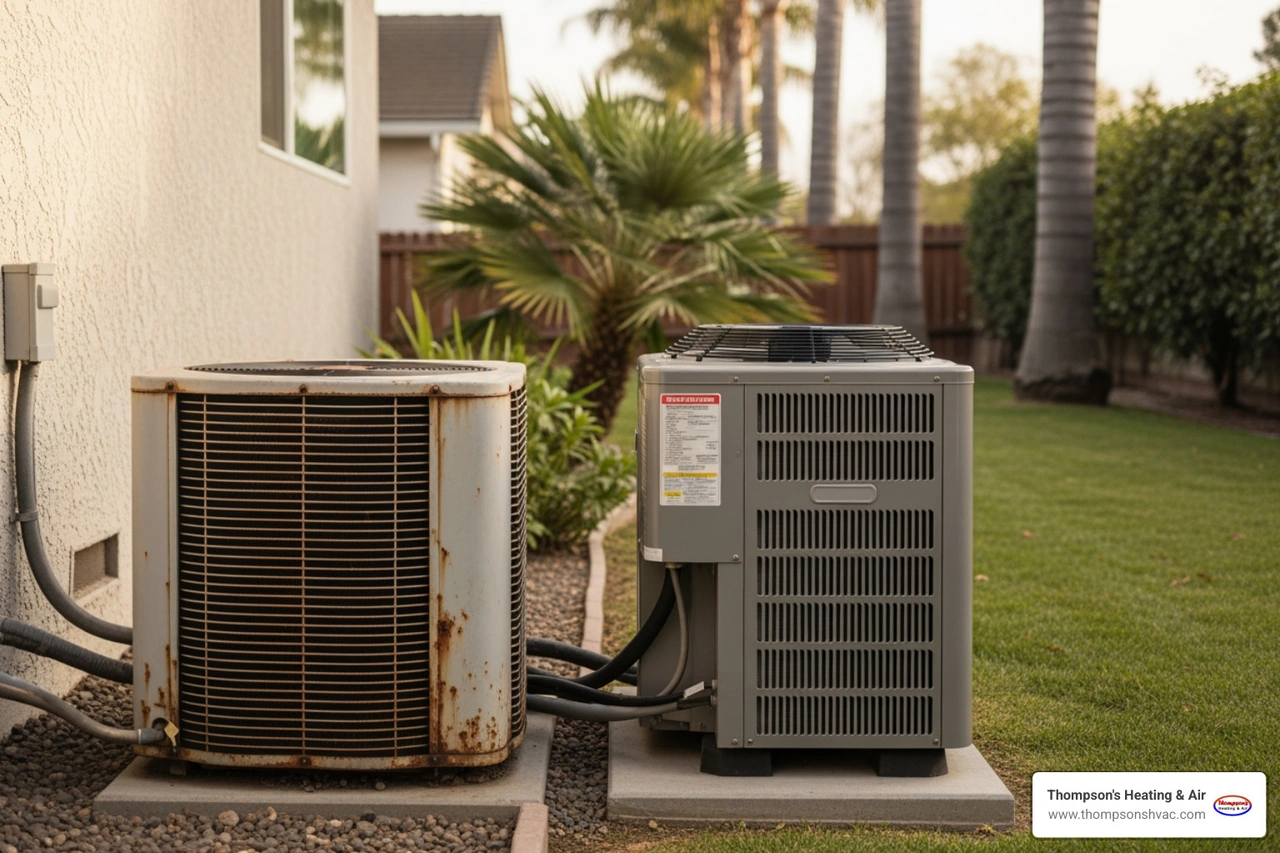
A realistic local range for many well-maintained central air systems is about 13 to 17 years. Without regular care, some units may struggle to make it past 10 to 12 years. With excellent maintenance, proper sizing, and a bit of luck, some systems can stretch toward 20 years, but that is the exception, not the plan.
By type, here is what we usually tell homeowners to expect:
• Central AC: often 10 to 15 years, with 13 to 17 possible when well maintained
• Whole-home split AC systems: around 12 to 15 years in many valley homes
• Heat pumps: usually 12 to 15 years
• Ductless mini-splits: often 15 to 20 years
• Portable or window units: usually much shorter, around 5 to 8 years locally
That means the "replacement watch" period often starts earlier than people expect. If your system is around 10 to 12 years old and has begun showing wear, it is smart to start planning rather than waiting for a July surprise.
How the average lifespan of an HVAC system in the Sacramento Valley compares by equipment type
Not all HVAC systems age the same way. Some are better matched to our climate and home layouts than others.
• Central AC split system — Typical Sacramento Valley Lifespan: 10-15 years, sometimes 13-17 with strong maintenance — What Affects Longevity Most: Summer runtime, dirty coils, duct leakage, sizing
• Heat pump — Typical Sacramento Valley Lifespan: 12-15 years — What Affects Longevity Most: Year-round use, installation quality, airflow, maintenance
• Ductless mini-split — Typical Sacramento Valley Lifespan: 15-20 years — What Affects Longevity Most: Filter care, coil cleaning, inverter operation, installation
• Dual-fuel system — Typical Sacramento Valley Lifespan: Varies by components — What Affects Longevity Most: Proper controls, sizing, duct condition
• Variable-speed/inverter system — Typical Sacramento Valley Lifespan: Often strong lifespan potential — What Affects Longevity Most: Correct setup, clean airflow, routine service
Mini-splits often hold up well because they avoid duct losses and many use inverter technology, which reduces constant hard starts. Heat pumps are also a strong fit for this region, especially because Sacramento-area weather has long shoulder seasons where efficient heat transfer works well. If you want a deeper look at that option, see Heat Pump Benefits for Sacramento Valley Homeowners.
One important note: warranty length and actual useful life are not the same thing. A system may still run after its most efficient years are behind it. In HVAC, "still running" and "still performing well" are two very different things.
Why Sacramento’s Climate Shortens HVAC Life Faster Than Many Homeowners Expect
The Sacramento Valley is rough on HVAC equipment. We are not just dealing with heat. We are dealing with a whole bundle of stressors that hit systems from different angles.
For more on this local climate impact, see How Sacramento Valley Heat Affects Your HVAC and Fireplace.
Extreme summer heat, urban heat islands, and nonstop runtime
Summer is the big one. In this region, highs regularly land in the 90s and often push into triple digits. During heat waves, systems can run for very long cycles, especially in the late afternoon and early evening.
That matters because long runtime stresses:
• Compressors
• Capacitors
• Fan motors
• Electrical connections
• Refrigerant performance
In hotter built-up areas, the urban heat island effect can make conditions even worse. Research suggests some downtown Sacramento zones may feel up to 8 degrees hotter than nearby rural areas. Even if your home is outside the city core, nearby pavement, roof color, shade loss, and lot layout can all raise the heat load on your system.
And then there is the other side of the problem: short cycling. Oversized systems cool too quickly, shut off, then restart repeatedly. That stop-and-start pattern is hard on compressors and reduces humidity control. In other words, too much AC can be just as unhealthy for the equipment as too little.
A practical operating tip: 78 degrees when home and 85 when away, combined with ceiling fans, is often the sweet spot for comfort and reduced wear.
Tule fog, Delta Breeze, and moisture-related wear
People often think HVAC wear is all about summer heat, but winter and shoulder seasons have their own tricks.
Tule fog brings long periods of dense moisture. That can affect outdoor components, increase dampness around equipment, and contribute to corrosion over time. Heat pumps may also go through defrost cycles during cool, damp conditions, which adds wear to relays, boards, and other electrical parts.
The Delta Breeze can help evening cooling, but it also brings quick changes in temperature and humidity. HVAC systems may need to shift from handling dry daytime heat to evening moisture management. Those swings can reveal weaknesses in airflow, controls, duct sealing, and insulation.
In older homes, especially those with crawlspaces or aging ducts, damp conditions can also affect ductwork and indoor comfort. If the house feels clammy, windows sweat inside, or certain rooms never seem balanced, your system may be fighting both weather and duct issues.
Wildfire smoke, agricultural dust, and dirty-coil damage
This is one of the biggest Sacramento Valley HVAC life-shorteners.
Smoke particles are fine, clingy, and persistent. Agricultural dust and general valley grime are coarser but just as troublesome. Together, they can:
• Clog filters quickly
• Restrict airflow
• Coat evaporator and condenser coils
• Strain blower motors
• Reduce heat transfer
• Increase operating temperatures
A dirty condenser coil acts like a blanket around the outdoor unit. It traps heat when the system is trying to dump heat outside. That forces the equipment to work harder and run hotter, which is bad news for longevity.
During wildfire season or especially dusty periods, homeowners should check filters every 2 to 4 weeks. If the filter looks gray, fuzzy, or packed with debris, replace it. In many homes, monthly checks are wise even in normal summer conditions.
If indoor air quality is a concern, higher-efficiency filters such as MERV 13 may help with smoke, but only if the system is designed to handle the extra resistance. Too much filter restriction can hurt airflow and strain the equipment, so compatibility matters.
What Helps an HVAC System Last Longer in the Sacramento Valley?
The good news is that local climate is not the whole story. Two systems installed in the same neighborhood can age very differently based on setup and care.
Why proper installation and sizing matter more in Sacramento than in milder climates
Installation quality is one of the most underrated parts of HVAC durability.
A system that is too large may short-cycle. A system that is too small may run endlessly and never quite catch up. Either way, parts wear faster.
That is why proper load calculations matter. We strongly recommend using Manual J-based sizing rather than guessing by square footage alone. Insulation levels, windows, shade, roof color, duct design, and even home additions all affect what the system actually needs.
Helpful reading on this topic:
• Getting the Right Size HVAC for the Sacramento Valley Homes
• How Proper HVAC Sizing Affects Comfort
• How HVAC Load Calculations Work
• How Improperly Sized Systems Shorten Equipment Life
In our area, duct losses matter too. Leaky ducts can waste 20 to 30 percent of conditioned air, especially when ducts run through hot attics or crawlspaces. That wasted air forces the system to run longer just to reach the thermostat setting.
The maintenance habits that add years to system life
If we had to pick one thing that most often separates a 10-year system from a 15-plus-year system, it would be maintenance.
Regular service helps catch:
• Dirty coils
• Weak capacitors
• Refrigerant issues
• Drain clogs
• Electrical wear
• Airflow problems
• Early motor failure
The basic idea is simple: less strain, fewer surprises, better heat transfer.
Spring service prepares the cooling side before the hottest weather hits. Fall service checks the heating side before winter dampness and fog season. That bi-annual approach makes sense for homes here because most systems do both heating and cooling work.
Learn more here:
• How to Prevent HVAC Emergencies with Maintenance
Recommended Sacramento Valley HVAC maintenance schedule
A simple local schedule looks like this:
• Every month: inspect filter condition
• Every 2 to 4 weeks during wildfire season or heavy dust: check filter more often and replace as needed
• Spring: professional cooling tune-up, coil inspection, refrigerant and electrical check
• Fall: heating inspection, safety checks, airflow review
• After major smoke or dust events: inspect filters and outdoor unit debris
• Year-round: keep 2 to 3 feet of clearance around the outdoor unit
• Every few years or when issues appear: inspect ducts for leakage, damage, or poor airflow balance
Seasonal homeowner checklist:
• Replace or clean filters on schedule
• Keep vents open and unobstructed
• Rinse away visible debris around the outdoor unit when safe to do so
• Watch for water around indoor equipment
• Pay attention to new noises, smells, or weak airflow
• Avoid cranking the thermostat extremely low during heat waves
Signs Your HVAC System Is Nearing the End of Its Life
Age alone does not retire a system, but age plus symptoms usually tells the story.
Performance signs the average lifespan of an HVAC system in the Sacramento Valley is being reached
Here are the most common signs your system is moving toward the end of its useful life:
• Hot and cold spots around the house
• Longer run times on hot days
• Weak airflow from vents
• Short cycling
• Trouble keeping indoor humidity comfortable
• Strange startup noises or buzzing
• Musty or burnt odors
• Rising energy use without a clear explanation
• More frequent summer breakdowns
You may also notice the home never quite feels comfortable even when the thermostat says it should. That mismatch is often a sign of declining capacity, airflow issues, or an aging system that has lost efficiency.
If your equipment still uses R-22 refrigerant, replacement planning becomes even more important. Older refrigerant systems are increasingly difficult to support, and a major repair on that kind of equipment is often hard to justify.
Repair vs. replace rules of thumb for Sacramento homeowners
No single rule fits every home, but a few decision tools are useful.
The $5,000 rule:
• Multiply the age of the equipment by the repair amount.
• If the result is over 5,000, replacement is often worth serious consideration.
The 50% rule:
• If a repair approaches about half the value of replacement, many homeowners choose to upgrade instead of sinking more into aging equipment.
Other replacement triggers include:
• Compressor failure outside warranty
• Repeated peak-summer breakdowns
• Major coil problems
• Obsolete refrigerant
• A system that no longer matches the home after additions or renovations
A simple example: an 8-year-old system with a modest repair often makes sense to fix. A 12-year-old unit with a major component failure, high energy use, and a history of repeat issues is usually telling you it is tired. Very tired.
Efficiency standards to consider if replacement is the smarter move
If replacement is the better path, efficiency matters.
California's minimum efficiency standard for many new systems is about 14.3 SEER2, but in hot inland climates like ours, many homeowners should consider systems in the 16 to 20+ SEER2 range depending on home design and usage goals.
Higher efficiency can mean:
• Shorter runtime for the same comfort
• Better humidity control
• Quieter operation
• Lower strain through variable-speed or inverter technology
Heat pumps are also worth a close look in our region because they perform well in Sacramento Valley conditions and can be an excellent fit for homeowners thinking about electrification and year-round efficiency. You can learn more here:
• Heat Pump Benefits for Sacramento Valley Homeowners
• PGE Rebates Guide Sacramento Valley Homeowners
Frequently Asked Questions About Sacramento HVAC Lifespan
How often should you change HVAC air filters in Sacramento during wildfire season or dusty periods?
More often than the box at the store might suggest.
In normal conditions, monthly checks are a good habit. During wildfire season, harvest dust, or other smoky periods, check every 2 to 4 weeks. Replace the filter if it looks visibly loaded or airflow seems reduced.
For more filter guidance, see How Often Should You Change Your HVAC Air Filter.
A quick note on MERV 13 filters: they can help capture finer particles, but not every system can handle that level of restriction. If you are unsure, ask before upgrading.
Do heat pumps or ductless mini-splits last longer in Sacramento Valley homes?
Usually, ductless mini-splits have the longest expected lifespan locally, often around 15 to 20 years. Heat pumps generally land around 12 to 15 years.
Mini-splits can have an edge because:
• Many use inverter-driven compressors
• They avoid duct losses
• They can modulate output instead of constantly starting and stopping
Heat pumps are still an excellent local option, especially in homes with good airflow, strong installation quality, and regular maintenance.
Can a well-maintained Sacramento HVAC system last 20 years?
Yes, but we would call that a best-case outcome, not the average expectation.
To get there, a system usually needs:
• Correct sizing from day one
• High-quality installation
• Consistent professional maintenance
• Good duct performance
• Clean airflow
• No chronic smoke, dust, or neglect issues
Even then, the bigger question is not just "Can it last 20 years?" but "Should we keep relying on it that long?" Older systems often lose efficiency well before they fully stop working.
Conclusion
If your equipment is approaching the local retirement window, now is the time to plan, not panic.
Here is a simple Sacramento Valley HVAC retirement checklist:
• Know your system's age
• Track repair frequency
• Watch for airflow and comfort changes
• Check filters more often during smoke and dust events
• Keep up with spring and fall maintenance
• Review whether your current system is properly sized for your home
• Start replacement planning before peak summer
A newer, correctly sized system can improve comfort, support better efficiency, and even strengthen resale appeal. For more on that, see How a New HVAC System Increases Home Value.
At Thompson's Heating & Air, we have served Yolo County since 1992, and we know how hard Woodland-area weather can be on home comfort systems. If you want help evaluating your unit's condition, planning maintenance, or deciding whether repair or replacement makes more sense, explore our HVAC maintenance and repair services.
When your HVAC starts acting like it wants an early retirement, we are here to help you make the next step a smart one.



.avif)
.avif)
.png)
