
Ultimate Guide to How Dry Air Affects Your Health and Home

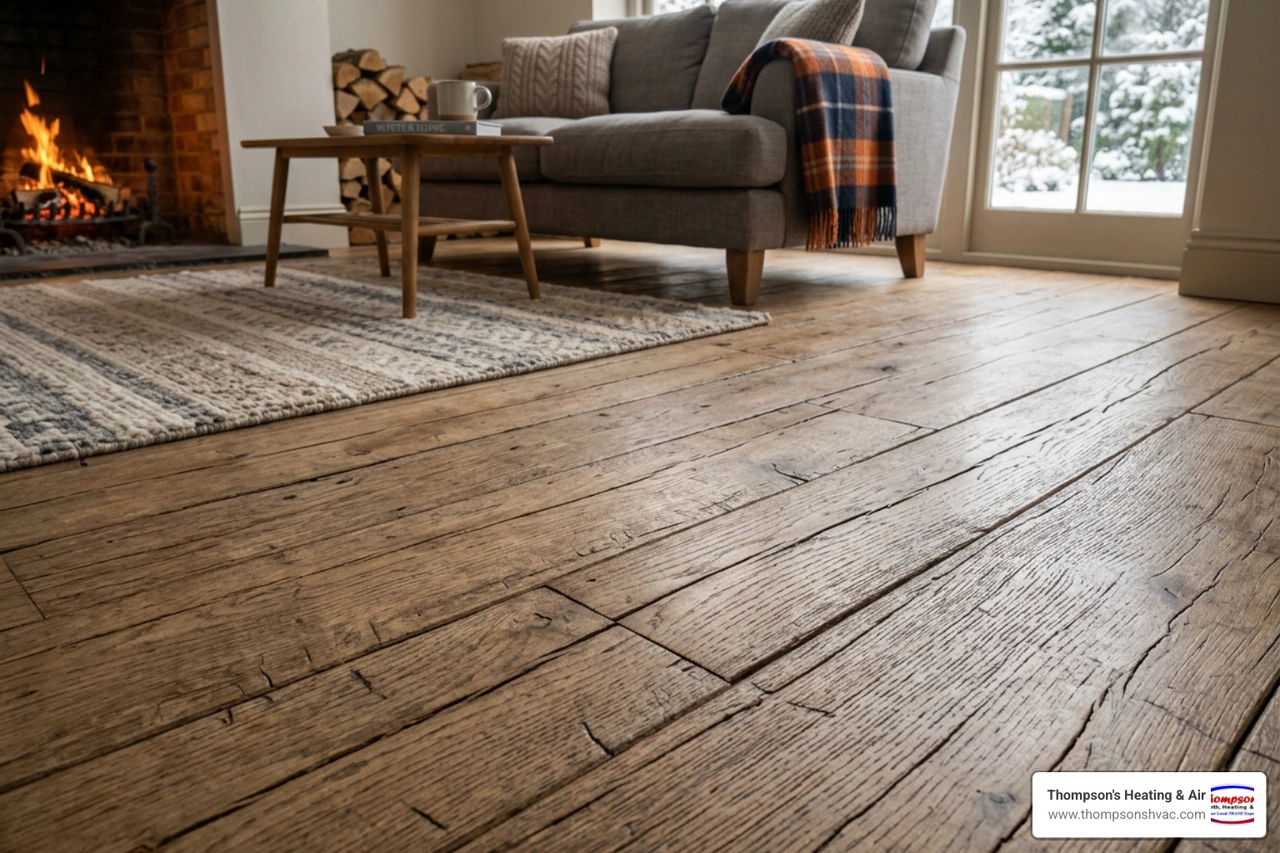
Why Dry Air Is Silently Affecting Your Health and Home Right Now
How dry air affects your health and your home is something most people in Woodland, CA don't think about until the damage is already done — scratchy throats every morning, cracked wood floors, or a cold that just won't quit.
Here's a quick overview of the main effects:
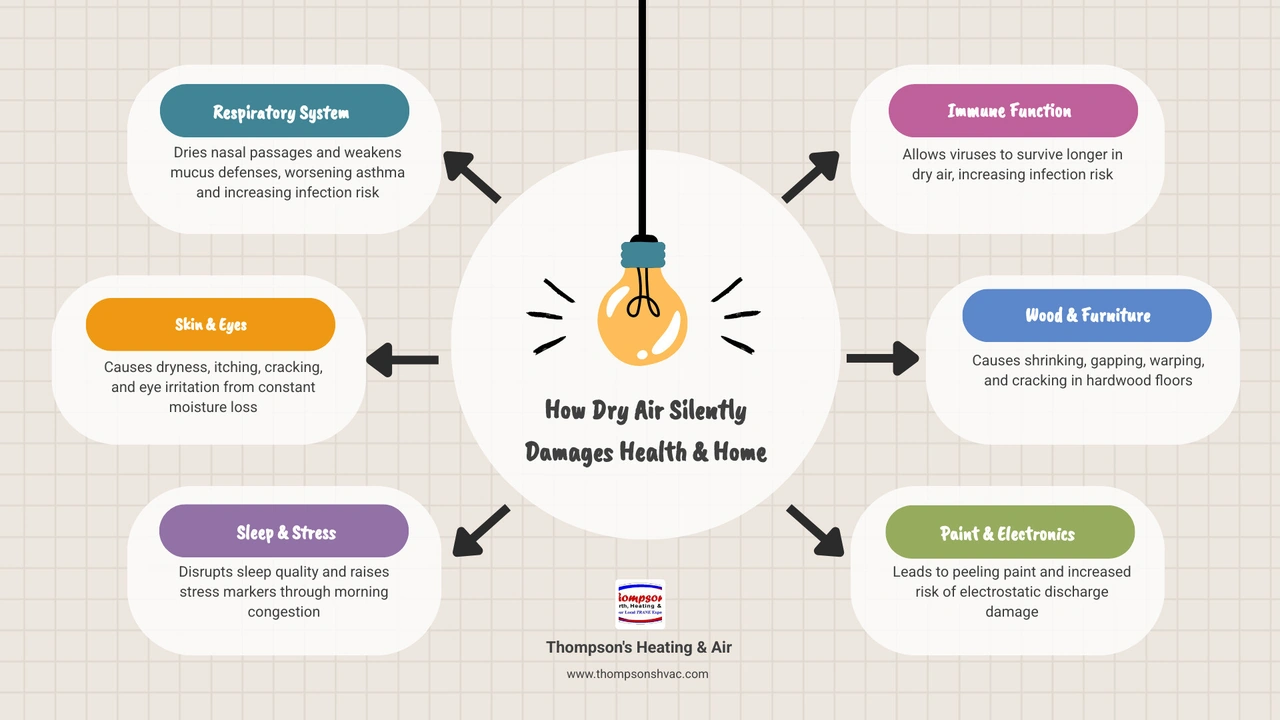
• Respiratory system — What Dry Air Does: Dries out nasal passages, weakens mucus defense, worsens asthma
• Skin and eyes — What Dry Air Does: Causes dryness, itching, cracking, and eye irritation
• Sleep and stress — What Dry Air Does: Disrupts sleep, raises stress markers, causes morning congestion
• Immune function — What Dry Air Does: Allows viruses to survive longer, increases infection risk
• Wood floors and furniture — What Dry Air Does: Causes shrinking, gapping, warping, and cracking
• Paint and wallpaper — What Dry Air Does: Leads to peeling, bubbling, and cracking
• Electronics — What Dry Air Does: Increases static electricity and risk of electrostatic damage
• Energy costs — What Dry Air Does: Dry air feels colder, pushing your thermostat higher
The EPA recommends keeping indoor humidity between 30% and 50%. Most homes in Yolo County drop well below that range during winter — and that's when problems start piling up.
Cold outdoor air naturally holds less moisture than warm air. When your furnace heats that air, it spreads warmth through your home but adds zero moisture back. The result? Dry air that quietly irritates your airways, dehydrates your skin, damages your belongings, and makes your whole home feel less comfortable.
Research backs this up. One study found that raising indoor humidity to just 43% can reduce airborne virus particles by as much as 86%. Another linked low-humidity office environments to elevated stress markers and poorer sleep quality in workers. A 2016 study connected cold, dry air conditions to spikes in influenza and pneumonia deaths.
The good news is that dry air is a fixable problem — and understanding it is the first step.
The Science of Low Humidity: Why Indoor Air Dries Out in Yolo County
To understand how dry air affects your health and your home, we first have to look at the unique climate of Yolo County. Whether you live in Woodland, Davis, Winters, or West Sacramento, you are likely familiar with our hot, dry summers and chilly, damp winters. However, even when winter brings rain outside, the indoor air in our homes often becomes incredibly dry.
This happens because of a concept known as "relative humidity." Relative humidity measures how much water vapor is currently in the air compared to the maximum amount of water vapor the air could hold at that specific temperature. Warm air is highly expansive and acts like a large sponge, capable of holding a significant amount of water vapor. Cold air, on the other hand, is dense and has a very limited moisture capacity.
When cold outdoor air seeps into your house through small gaps around windows, doors, and foundations, it brings very little moisture with it. As we heat this air to a comfortable room temperature, its capacity to hold water increases dramatically, but the actual amount of moisture remains the same. Consequently, the relative humidity inside your home plummets, turning the air into a thirsty sponge that rapidly draws moisture out of everything it touches—including your skin, your respiratory tract, and your wooden furniture.
Managing this dynamic requires a balance of fresh air and humidity control. To learn more about how fresh air moves through modern properties, check out our guide on How Fresh Air Exchange Protects Your Family.
Why Winter Weather and Heating Systems Strip Moisture
During the winter months in places like Dixon, Esparto, and Zamora, we rely heavily on our central heating systems to stay warm. However, standard forced-air furnaces contribute to a "double dryness" effect.
First, the physical process of combustion or heating elements warming the air does not add any water vapor. Second, as your furnace circulates this hot, dry air through your ductwork, it accelerates the evaporation of existing moisture from your indoor environment. Any residual moisture from daily activities like showering or boiling water is quickly swallowed up by the dry air currents.
This constant cycle of heating and drying can severely degrade your indoor air quality. If you want to explore broader strategies for keeping your indoor environment clean and balanced, read our article on How to Improve Indoor Air Quality at Home.
The Ideal Indoor Humidity Range: What Health Authorities Recommend
Health and environmental authorities, including the EPA, recommend maintaining indoor relative humidity levels between 30% and 50%. For optimal respiratory comfort and structural protection, many indoor air quality experts narrow this ideal target to 40% to 60%.
When relative humidity drops below 30%, the air becomes aggressively dry, leading to a host of physical and structural issues. Conversely, allowing humidity to rise above 50% or 60% can create an environment where mold, mildew, and dust mites thrive.
To help you monitor your home, you can use a simple, inexpensive device called a digital hygrometer. Here is a breakdown of what happens at different humidity levels:
• Below 30% (Too Dry) — Health Impacts: Sinus irritation, dry eyes, scratchy throat, nosebleeds, increased viral infection risk, dry skin flare-ups. — Home & Material Impacts: Static shocks, wood shrinkage, gaps in hardwood flooring, peeling wallpaper, cracked paint.
• 30% to 50% (Ideal Range) — Health Impacts: Optimal respiratory hydration, strong immune defense, comfortable skin, healthy sleep cycles. — Home & Material Impacts: Stable woodwork, minimal static electricity, preserved paint and finishes.
• Above 60% (Too Humid) — Health Impacts: Increased allergy flare-ups due to dust mites, potential for mold spore inhalation, respiratory heaviness. — Home & Material Impacts: Condensation on windows, musty odors, wood warping, mold growth on drywall and ceilings.
How Dry Air Affects Your Health and Your Home: The Physical Toll

When your indoor humidity drops below the recommended thresholds, your body is often the first to sound the alarm. Because humans are composed of over 60% water, dry air acts as a constant dehydrator, pulling moisture directly from your skin, eyes, and respiratory passages.
To protect your family from these daily physical stressors, it is essential to look at your home’s air as a whole. You can learn more about comprehensive solutions on our Indoor Air Quality service page.
Understanding How Dry Air Affects Your Health and Your Home Overnight
Have you ever gone to bed feeling perfectly healthy, only to wake up with a scratchy throat, a stuffy nose, or a mild headache? Many people assume they are coming down with a cold, but the actual culprit is often the dry air produced by their heating or air conditioning system overnight.
When you sleep, you breathe deeply and consistently for several hours. If the air in your bedroom is dry, it rapidly evaporates the protective layer of moisture lining your mouth, throat, and nasal passages. This leads to morning congestion, localized inflammation, and a raspy voice.
Furthermore, dry air causes your skin to lose its natural moisture barrier overnight, leaving you with tight, itchy skin and chapped lips when you wake up. Your eyes can also become red and irritated because the tear film evaporates too quickly in low-humidity environments.
This constant physical discomfort can trigger a low-grade stress response in your body. Studies monitoring office and residential environments have shown that individuals living or working in low-humidity spaces exhibit heart rate variability patterns indicative of physical stress, which directly translates to poorer sleep quality and daytime fatigue.
Specific Medical Conditions Worsened by Low Humidity
For individuals living with pre-existing health conditions in Yolo County communities like Knights Landing, Arbuckle, or Capay, dry air is more than just an inconvenience—it can be a severe health trigger.
• Asthma and Bronchitis: Cold, dry air causes the airways to contract and spasm, which can trigger sudden asthma attacks or worsen chronic bronchitis. The lack of moisture also makes it harder to clear mucus from the lungs, leading to persistent coughing fits.
• Allergic Rhinitis: Dry air allows dust, pet dander, and other allergens to remain suspended in the air longer rather than settling onto surfaces. At the same time, irritated nasal passages are far more sensitive to these airborne triggers.
• Nosebleeds (Epistaxis): The delicate blood vessels inside your nostrils require a moist environment to remain flexible. When dry air causes these membranes to crack and bleed, frequent and painful nosebleeds occur, especially in young children and older adults.
• Eczema and Dermatitis: Low humidity strips the skin of its essential lipids, causing severe flare-ups of eczema, psoriasis, and general dermatitis.
• Viral Transmission: Dry air prolongs the lifespan of airborne viruses, such as influenza. When the air is dry, infectious droplets shrink, become lighter, and remain floating in your breathing zone for hours. At the same time, your dehydrated nasal passages lose their ability to trap and filter out these pathogens, significantly increasing your risk of infection.
Long-Term Risks: How Dry Air Affects Your Health and Your Home Over Time
Chronic exposure to dry indoor air can have lasting consequences on your health. Over time, constant dehydration of your mucous membranes weakens your primary immune defenses, making you highly susceptible to recurring sinus infections, colds, and respiratory ailments.
Additionally, prolonged skin barrier damage can lead to chronic skin infections, as cracked skin allows environmental bacteria to enter the body easily. To mitigate these long-term biological risks, maintaining clean, purified, and properly humidified air is vital. Explore how advanced systems can help by reading about our Air Purification options.
The Structural Threat: How Low Humidity Damages Your Property
While dry air is busy dehydrating your body, it is also pulling moisture out of the structural elements of your home. Many building materials, particularly wood, are hygroscopic, meaning they naturally absorb and release moisture to stay in equilibrium with the surrounding air.
When your indoor air becomes excessively dry, your home itself begins to shrink, warp, and crack. To prevent these structural issues from compounding with other moisture problems, maintaining clean and balanced airflow is essential. Learn how clean ductwork plays a role in overall home moisture balance by reading How Clean Ducts Reduce Mold Risk in Your Home.
Wood, Paint, and Electronics: The Vulnerable Areas of Your House
When relative humidity drops below 30% for extended periods, several key areas of your home are put at risk:
• Hardwood Floors: As wood planks lose moisture, they shrink. This leads to unsightly gaps between your floorboards, squeaking when walked upon, and even splitting or cupping of the wood.
• Wooden Furniture and Instruments: Antique furniture, wooden doors, cabinets, and musical instruments (like pianos and acoustic guitars) can warp, loosen at the joints, or develop permanent structural cracks.
• Paint and Wallpaper: Dry air causes drywall to contract slightly, which can lead to hairline cracks in your paint. It also dries out wallpaper adhesives, causing the edges to bubble, peel, and separate from the wall.
• Static Electricity and Electronics: Moisture in the air naturally dissipates static charges. In dry air, static electricity builds up rapidly. A simple walk across the carpet can result in a painful static shock when you touch a doorknob. More importantly, these electrostatic discharges can permanently fry sensitive home electronics, such as computers, televisions, and smart home hubs.
Solutions: How to Restore Balanced Moisture to Your Living Space
If you are dealing with dry air in Woodland, Davis, or Winters, there are several highly effective ways to restore comfort and safety to your living space. To learn more about how whole-home systems can transform your indoor climate, check out our article on the Whole House Humidifier Benefits for Dry Climates.
Portable vs. Whole-Home Humidifiers
When it comes to adding moisture back into your home, you have two primary options: portable units or whole-home systems.
Portable humidifiers are great for targeted relief in a single bedroom or home office. However, they require you to manually refill their water tanks daily, and they must be cleaned thoroughly every few days to prevent mold and bacterial growth.
A whole-home humidifier, on the other hand, is installed directly into your central HVAC system. It connects to your home’s water line, automatically adding a precise amount of moisture to the air as it circulates through your ductwork. This ensures consistent, balanced humidity in every single room of your house without the hassle of manual refills.
To maximize the performance of your humidification system, pairing it with high-quality air filters is always recommended. Explore your options on our Air Filtration page.
Safe Monitoring and Avoiding the Risks of Over-Humidification
While adding moisture to dry air is essential, you must be careful not to overdo it. Allowing your indoor humidity to rise above 50% or 60% can lead to condensation on your windows, which can drip down and cause wood rot, peeling paint, and mold growth inside your walls.
To avoid these issues, always monitor your home with a digital hygrometer and keep your humidification system set to a safe, comfortable level. For local homeowners in the Sacramento Valley, managing moisture properly is a year-round task. Read our Mold Prevention Tips for the Sacramento Valley Homeowners to keep your home safe and dry in the right ways.
When to Seek Professional HVAC Help in Woodland, CA
If you are experiencing persistent dry air symptoms, noticing gaps in your hardwood floors, or dealing with constant static shocks, it is time to consult with a professional HVAC technician.
At Thompson's Heating & Air, we can perform a comprehensive indoor air quality assessment of your home. We will measure your humidity levels, inspect your ventilation systems, and help you determine whether a whole-home bypass or steam humidifier is the right solution for your specific property and heating system.
Frequently Asked Questions About Indoor Humidity
What is the quickest way to increase humidity in a single room?
The fastest way to boost moisture in a single room is to run a portable cool-mist or warm-mist humidifier. If you do not have one on hand, you can get temporary relief by placing bowls of water near heating vents to speed up evaporation, keeping your bathroom door open while taking a warm shower, or adding leafy houseplants to your space, which naturally release moisture through transpiration.
Can dry indoor air cause headaches and fatigue?
Yes. Dry air causes mild dehydration by accelerating the evaporation of moisture from your skin and respiratory tract. Dehydration is a well-known trigger for tension headaches and physical fatigue. Additionally, dry air irritates your sinuses, leading to sinus pressure and congestion that can cause dull, persistent headaches and disrupt your sleep patterns.
How do I know if my home's heating system is causing the dryness?
If you notice that your skin feels tighter, your throat is scratchier, and static electricity increases specifically when your furnace is cycling frequently during cold weather, your heating system is contributing to the dryness. Drafty windows and poor insulation compound this issue by allowing dry, cold outdoor air to continuously enter your home, which your furnace then heats up and dries out further.
Conclusion
Understanding how dry air affects your health and your home is the key to maintaining a safe, comfortable, and healthy living environment throughout the year in Yolo County. From protecting your family's respiratory health and sleep quality to preserving your hardwood floors and valuable wooden furniture, balanced indoor humidity makes a massive difference.
As a family-owned business serving Woodland, Davis, Winters, and surrounding communities since 1992, Thompson's Heating & Air is dedicated to helping you achieve perfect indoor comfort. Whether you need an indoor air quality assessment, a whole-home humidifier installation, or heating system maintenance, our team of experienced technicians is here to help.
Ready to breathe easier and protect your home from the damaging effects of dry air? Contact us today to explore our comprehensive Indoor Air Quality Products and find the perfect solution for your home.



.avif)
.avif)
.png)
