
The Ultimate Guide to How Clean Air Improves Your Health and Comfort


Why Clean Air Matters for Your Health and Comfort at Home
How clean air improves your health and comfort is something most Woodland, CA homeowners don't think about until symptoms show up — a nagging cough, restless nights, or that heavy, stuffy feeling that follows you from room to room. But the air inside your home is silently affecting your body and mind every single day.
Here is a quick look at the key ways clean indoor air supports your health and comfort:
• Better breathing - Fewer airborne irritants mean less strain on your lungs and airways
• Improved sleep - Cleaner air reduces nighttime congestion and restlessness
• Sharper focus - Reduced indoor pollutants support mental clarity and energy
• Fewer allergy and asthma flare-ups - Lower levels of dust, pollen, and pet dander ease symptoms
• Stronger immune function - Less exposure to mold, bacteria, and VOCs means your body isn't constantly fighting off environmental stressors
• Lower risk of long-term illness - Reduced exposure to pollutants like radon, fine particles, and combustion gases supports cardiovascular and respiratory health over time
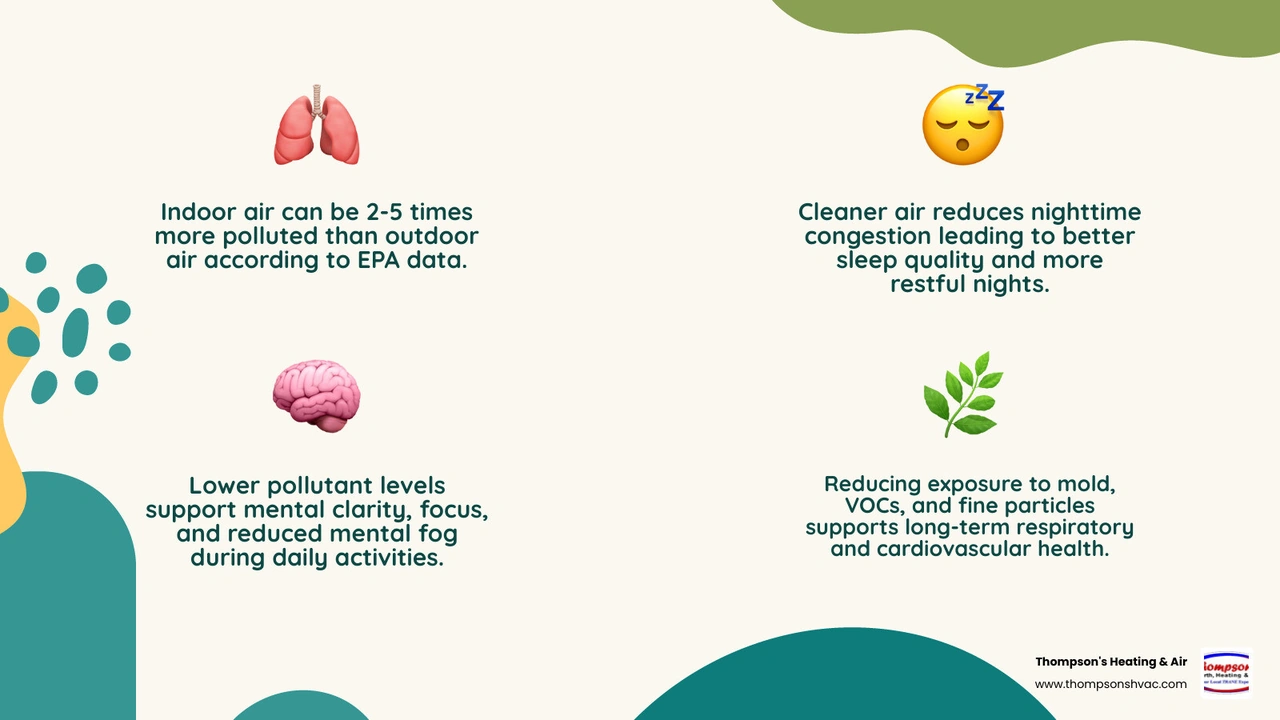
According to the EPA, indoor air can be two to five times more polluted than outdoor air — and in some cases, up to 100 times worse. That's a striking number, especially when you consider that most of us spend around 90% of our time indoors. For families in Yolo County, where hot, dry summers push everyone inside for months at a time, what's in your indoor air matters enormously.
The good news is that improving your indoor air quality is very achievable. Understanding where the problem starts is the first step.
Understanding Indoor Air Quality (IAQ) and Common Pollutants
Before we can look at the solutions, we have to understand what we are actually breathing. Indoor Air Quality (IAQ) refers to the condition of the air inside and around your home, particularly as it relates to your health, respiratory comfort, and overall well-being. When we talk about poor IAQ, we are usually talking about an accumulation of microscopic particles and gases that have nowhere to go.
Because modern homes in Northern California are built tight to maximize energy efficiency, they often act like sealed boxes. While this is great for keeping your air conditioning bills manageable during a blazing July heatwave, it means that whatever pollutants are introduced to your home stay trapped there.
Here are the primary culprits that degrade your Indoor Air Quality:
• Particulate Matter (PM): This includes fine particles like dust, pollen, soot, and smoke. The smallest of these particles (PM2.5) are particularly hazardous because they are tiny enough to bypass your body’s natural defense mechanisms, traveling deep into your lungs and even entering your bloodstream.
• Volatile Organic Compounds (VOCs): These are chemical gases emitted by everyday household items. Think of the "new car smell" or the fumes from freshly painted walls, aerosol sprays, chemical household cleaners, disinfectants, and even some scented candles.
• Mold Spores: Mold thrives in damp, dark environments. When mold spores become airborne, they can circulate through your ductwork and irritate your respiratory tract. If you suspect an issue in your heating and cooling system, keep an eye out for Signs of Mold in Your HVAC System.
• Pet Dander: If you have furry family members, they are constantly shedding microscopic flecks of skin, fur, and feathers. Pet dander is exceptionally light and can remain suspended in the air for long periods, clinging to furniture, carpets, and bedding.
• Radon: This is a naturally occurring, odorless, radioactive gas that seeps up from the soil into homes through foundation cracks. According to the American Lung Association, radon is the second leading cause of lung cancer overall, making home testing critical.
• Carbon Monoxide (CO): A colorless, odorless, and highly toxic gas produced by fuel-burning appliances like gas stoves, fireplaces, and furnaces. Proper ventilation and working CO detectors are essential safety requirements for every home.
When these pollutants build up, they create a stagnant, heavy environment that forces your body to work harder just to breathe.
How Clean Air Improves Your Health and Comfort
When you clean up your indoor air, the physical transformation is often immediate. Your body stops reacting to invisible threats, allowing your respiratory system to relax. Instead of dealing with dry throats, itchy eyes, and constant sneezing, you experience true respiratory comfort.
From a physiological perspective, clean air is a powerful health investment. When your lungs aren't constantly filtering out dust and chemical fumes, your cardiovascular system benefits as well. Fine particulate matter has been linked to increased heart rate and blood pressure because of the inflammatory response it triggers in the lungs. Clean air reduces this systemic inflammation, giving your heart and blood vessels a much-needed break.
Furthermore, your immune system is freed up. Instead of constantly fighting off airborne allergens and mold spores, your body can focus its energy on defending you against actual viruses and bacteria. To understand how we can bring more of this restorative air into our living spaces, it helps to learn How Fresh Air Exchange Protects Your Family.
How Clean Air Improves Your Health and Comfort by Enhancing Sleep and Focus
Have you ever woken up feeling completely exhausted, even though you spent a full eight hours in bed? The culprit might be the air you were breathing while asleep. During the night, carbon dioxide levels and airborne particles can build up in a closed bedroom, leading to stuffiness and fragmented sleep.
A notable two-week study found that individuals who used an air purifier in their bedrooms reported significantly better sleep quality. They experienced longer overall sleep duration and spent more actual time resting rather than tossing and turning. When your airways remain clear, you don't wake up from micro-arousals caused by minor breathing obstructions or throat irritation.
During the day, clean air acts as a natural energy booster. Stagnant air filled with VOCs and carbon dioxide is a primary cause of "mental fog," afternoon fatigue, and difficulty concentrating. By keeping the air fresh and well-circulated, you supply your brain with clean, oxygen-rich air, which sharpens focus, boosts productivity, and even helps regulate stress levels.
How Clean Air Improves Your Health and Comfort for Allergy and Asthma Sufferers
For those living with asthma or seasonal allergies, clean air isn't just about comfort — it is a daily necessity. When allergens like pollen, dust mites, and pet dander enter your home, they trigger a histamine response. Your body treats these harmless particles as dangerous invaders, leading to inflammation, swelling, runny noses, and wheezing.
During the spring and summer months in Woodland, Winters, and Davis, agricultural dust and pollen can easily make their way indoors. If your home's air filtration isn't up to the task, your living room can become an allergy hotspot.
By actively removing these triggers from your indoor environment, you reduce the frequency and severity of asthma attacks and allergy flare-ups. This provides immense physical and emotional relief, turning your home back into a safe haven where you can breathe easily and recover from the outdoor elements.
The Role of HVAC Systems, Filtration, and Purification
Your heating, ventilation, and air conditioning (HVAC) system does far more than just control the temperature. It is the heart of your home's breathing system. As air circulates through your ductwork, your HVAC system has the opportunity to filter out impurities, regulate moisture, and introduce fresh outdoor air.
To do this effectively, you need the right tools. Standard air filters are designed primarily to protect your HVAC equipment from large dust bunnies, not to clean the air for your lungs. To achieve healthier indoor air, upgrading your filtration and adding dedicated purification systems is key.
• HEPA Filters: High-Efficiency Particulate Air (HEPA) filters are the gold standard of air filtration. They are capable of capturing 99.97% of particles as small as 0.3 microns, including mold spores, bacteria, and fine dust.
• Air Purifiers: These systems can be installed directly into your central HVAC ductwork to clean the air as it moves through your home. Many utilize advanced carbon filters to absorb odors and chemical VOCs, or UV lights to neutralize biological contaminants.
• Mechanical Ventilation: Systems like Heat Recovery Ventilators (HRVs) draw fresh outdoor air inside while exhausting stale indoor air, pre-heating or pre-cooling the incoming air so you don't lose energy efficiency.
To help you understand your options, here is a quick comparison of standard filtration and purification technologies:
• Primary Target — Standard MERV 8 Filter: Large dust, lint, hair — High-Efficiency MERV 11-13 Filter: Pollen, mold spores, pet dander — True HEPA Filter: Microscopic particles, bacteria — UV Air Purifier: Viruses, mold, bacteria
• Particle Capture Rate — Standard MERV 8 Filter: Low to moderate — High-Efficiency MERV 11-13 Filter: High for larger particles — True HEPA Filter: 99.97% down to 0.3 microns — UV Air Purifier: Neutralizes biologicals
• Protects Equipment? — Standard MERV 8 Filter: Yes — High-Efficiency MERV 11-13 Filter: Yes — True HEPA Filter: Yes (requires system match) — UV Air Purifier: Focuses on air stream
• Odors & VOCs? — Standard MERV 8 Filter: No — High-Efficiency MERV 11-13 Filter: No — True HEPA Filter: No (unless carbon added) — UV Air Purifier: Yes (with photo-catalytic)
To explore the best setup for your home's specific layout, you can read more about Air Filtration and Air Purification technologies, or browse our guide on Indoor Air Quality Products.
Practical Steps to Optimize Your Home’s Air Quality
Improving your indoor air quality doesn't have to happen all at once. By taking a systematic approach, you can dramatically reduce pollutant levels and create a healthier living space.
Here are the most effective, practical steps you can take today:
1. Practice Source Control: The single most effective way to clean your air is to stop pollutants from entering in the first place. Swap out harsh chemical cleaners for natural alternatives, avoid smoking indoors, limit the use of synthetic fragrances and paraffin candles, and store paints or solvents in an outdoor shed rather than your garage or basement.
2. Increase Strategic Ventilation: When weather permits, open windows to let fresh air circulate. Always use exhaust fans in your kitchen while cooking (especially if you have a gas stove) and in your bathrooms after showering to clear out moisture and combustion gases.
3. Manage Humidity Levels: Keep your indoor relative humidity between 30% and 50%. Anything higher encourages mold growth and dust mite activity. In dry climates, a balanced approach is necessary; you can learn more about Whole House Humidifier Benefits for Dry Climates to keep your respiratory passages comfortable without over-moisturizing.
4. Keep Dust in Check: Vacuum carpets and rugs at least once a week using a vacuum equipped with a HEPA filter. Dust hard surfaces with a damp microfiber cloth to trap dust instead of kicking it back into the air. Don't forget to wash bedding weekly in hot water to eliminate dust mites.
5. Maintain Your HVAC System: Replace your air filters every 1 to 3 months, depending on your household needs (homes with pets may need more frequent changes). Additionally, keeping your ductwork clean is a vital line of defense; see How Clean Ducts Reduce Mold Risk in Your Home to understand how dust buildup in ducts can lead to biological growth.
6. Schedule Professional Checkups: Regular HVAC maintenance ensures that your system is properly circulating air and that your heating and cooling equipment isn't contributing to moisture problems. For a complete strategy, read our comprehensive guide on How to Improve Indoor Air Quality at Home and learn about Mold Prevention and Your HVAC System.
Frequently Asked Questions About Indoor Air Quality
How often should I replace my home's HVAC air filters?
For standard 1-inch pleated filters, we recommend replacing them every 30 to 90 days. If you have pets, live in a high-dust area like our rural agricultural communities in Yolo County, or suffer from severe allergies, you should check them monthly and replace them as soon as they look dirty. Thicker media filters (4 to 5 inches) can often last 6 to 12 months before needing replacement. Keeping filters clean ensures strong airflow and optimal system efficiency.
Can a whole-home air purifier completely eliminate winter allergies?
While no system can promise 100% elimination of all particles, a whole-home air purifier integrated into your central HVAC system can drastically reduce winter allergens. Because we keep windows closed during the colder months, dust mites, pet dander, and mold spores build up indoors. Continuous filtration through a high-efficiency purifier removes these particles from circulation, providing significant relief from winter allergy symptoms.
What is the ideal indoor humidity level for health and comfort?
The EPA recommends maintaining indoor relative humidity between 30% and 50%. Keeping humidity under 50% is crucial for mold prevention and controlling dust mites, which thrive in moist environments. Conversely, letting humidity drop below 30% can dry out your nasal passages, skin, and throat, making you more susceptible to respiratory infections and static electricity.
Conclusion
At Thompson's Heating & Air, we believe that true home comfort is about much more than just the temperature on your thermostat. It is about the quality of the air you and your family breathe every single day.
As a family-owned business serving Woodland, CA, and nearby Northern California communities since 1992, we have spent decades helping our neighbors achieve healthier, cleaner homes. Whether you are in Davis, Winters, Esparto, or West Sacramento, our experienced technicians are ready to help you find the perfect balance of filtration, purification, and ventilation for your unique space.
Investing in clean air is an investment in your family's long-term health, sleep quality, and daily comfort. If you are ready to take the next step and find the right solutions for your home, explore our range of Indoor Air Quality Products or reach out to us today to schedule a professional indoor air quality assessment.



.avif)
.avif)
.png)
