
Recognizing the Signs of Refrigerant Line Insulation Degradation

That Flaking Black Foam on Your AC Unit Is a Warning Sign
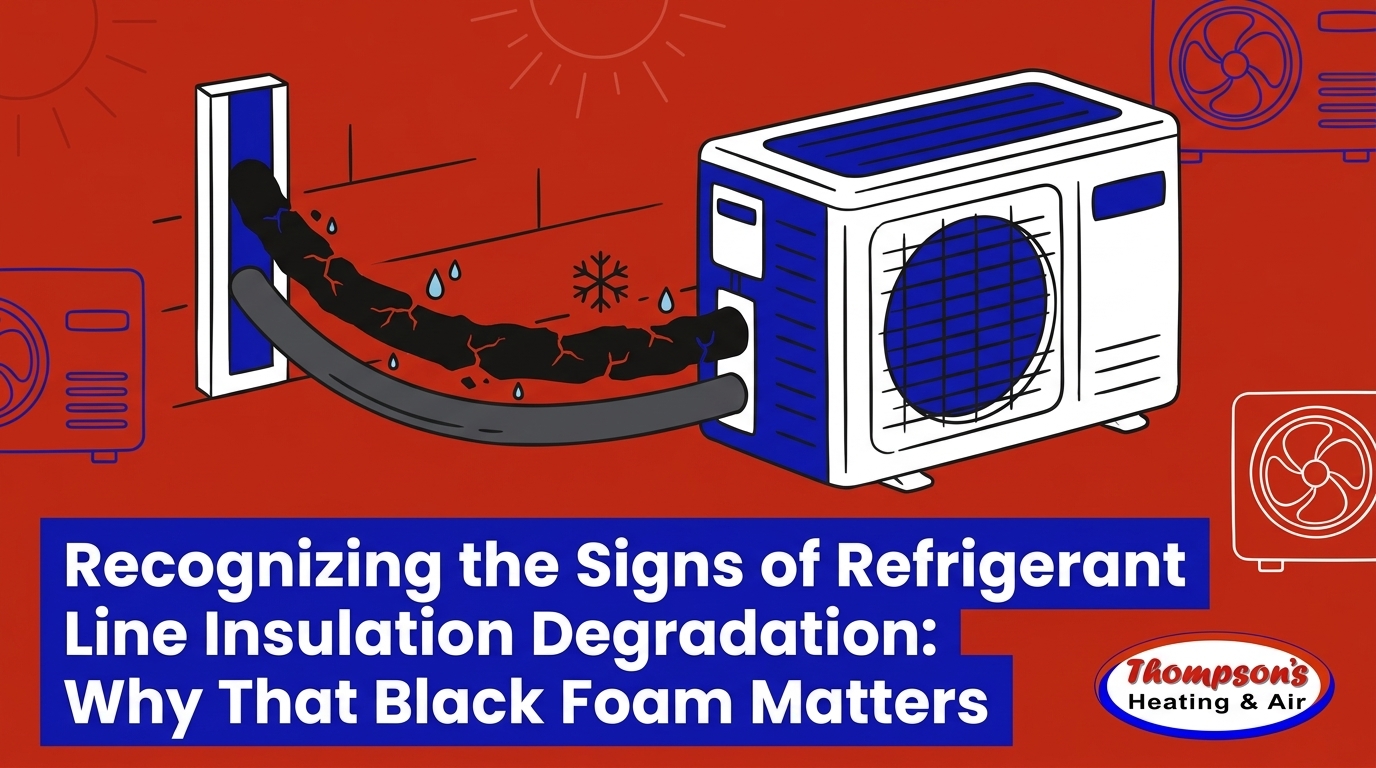
You walk outside to do some yard work, glance at your outdoor unit, and notice the black foam covering the copper pipe is crumbling into dust. Recognizing the signs of refrigerant line insulation degradation is the first crucial step toward saving your compressor from a costly, premature breakdown. Many homeowners assume this deteriorating material is just leftover shipping packaging or a cosmetic wrap that doesn't really matter. The truth is far more serious. When that foam rots away, your system is forced to work significantly harder to cool your home, putting immense strain on the equipment right when you need it most. For comprehensive air conditioning systems care, scheduling professional AC repair in Woodland can stop this minor issue from becoming a major breakdown.
The visual evidence is hard to miss: That thick, spongy tube encasing the outdoor AC condenser suction line is designed to withstand the elements, but it is not invincible. Over time, environmental exposure breaks down the chemical bonds in the foam. What starts as a minor crack soon turns into a brittle, flaking mess that leaves bare copper exposed to the ambient air. Because this degradation happens slowly over months or years, it is easy to ignore or write off as normal wear and tear.
Ignoring this degraded material forces the system into a state of continuous overexertion. The foam is not there for decoration; it is a critical thermal barrier. Without it, the delicate temperature balance required for the refrigeration cycle is thrown entirely out of sync. Addressing the issue is a remarkably simple step that prevents massive system failures during the peak cooling season. By understanding exactly what that foam does and why it fails, you can take proactive steps to protect your investment before the hottest days of the year arrive.
The Critical Role of the Outdoor AC Condenser Suction Line
To understand why the black foam is so important, you first need to understand the anatomy of your outdoor unit. If you look closely at the connections running through your exterior wall to the outdoor condenser, you will see two copper pipes. The smaller of the two is the liquid line, which is typically uninsulated and feels warm to the touch. The larger pipe is the outdoor AC condenser suction line, and its primary job is to carry cold, low-pressure refrigerant gas from the indoor evaporator coil back outside to the compressor.
This returning refrigerant must remain cold. If the refrigerant warms up too much before reaching the compressor, the entire system loses efficiency. Insulation acts as a thermal barrier, keeping the cold gas cold as it travels through hot outdoor environments. When the insulation is intact, the refrigerant completes its journey at the precise temperature required for the compressor to do its job effectively. When the insulation is missing, the system has to fight against the outside air temperature just to maintain its baseline cooling capacity.
Thermal Dynamics of Refrigerant Transfer
The science behind this process comes down to basic thermal dynamics. Ambient heat naturally seeks out cold surfaces. It is the same reason a glass of ice water sweats on a summer afternoon; the heat in the air is drawn to the cold surface of the glass, causing the moisture in the air to condense. The exact same physical process happens to your suction line.
How the barrier protects your system:
• Blocks heat absorption: The closed-cell structure of the foam prevents hot outside air from transferring its thermal energy to the cold copper pipe.
• Prevents condensation: By keeping the warm air away from the cold pipe, the insulation stops excessive sweating, which can lead to water pooling or dripping near your foundation.
• Maintains pressure balances: Temperature and pressure are directly linked in a refrigeration cycle. Keeping the temperature stable ensures the pressure remains within the manufacturer's specified operating range.
To illustrate the dramatic difference this thermal barrier makes, consider how the system operates under different conditions:
• Fully Insulated Line — Refrigerant Temperature: Remains stable and cool — Compressor Strain: Normal, within design limits — Energy Efficiency: High (optimal performance)
• Missing/Degraded Insulation — Refrigerant Temperature: Absorbs ambient heat rapidly — Compressor Strain: High (forced to run longer cycles) — Energy Efficiency: Low (wasted energy consumption)
How Intense Central Valley Sun Destroys Elastomeric Foam
Standard elastomeric foam is the industry go-to for insulating refrigerant lines because it is flexible, moisture-resistant, and highly effective at blocking heat transfer. However, it has one major weakness: it is highly susceptible to ultraviolet (UV) radiation. Without a protective UV coating or specialized jacketing, the intense sun literally bakes the material, changing its chemical structure at a molecular level.
In the Woodland CA / Central Valley climate, this degradation happens at an accelerated pace. The region experiences over 260 sunny days a year, accompanied by a consistently high UV index from spring through autumn. This relentless solar radiation strips the plasticizers out of the foam. The heat causes the foam to lose its flexibility, leading to rapid deterioration. What starts as a pliable, spongy tube quickly becomes brittle, rigid, and ineffective.
If you are dealing with an AC not cooling properly, degraded insulation is one of the first environmental factors a professional will look for. The Central Valley sun is unforgiving on exterior plastics and foams. As the material bakes, it physically shrinks, pulling away from the fittings and leaving gaps. Once the structural integrity of the foam is compromised, it can no longer trap the microscopic pockets of air that provide the actual insulating value. The material essentially becomes a dry, hollow shell that does nothing to stop the heat.
Recognizing the Signs of Refrigerant Line Insulation Degradation
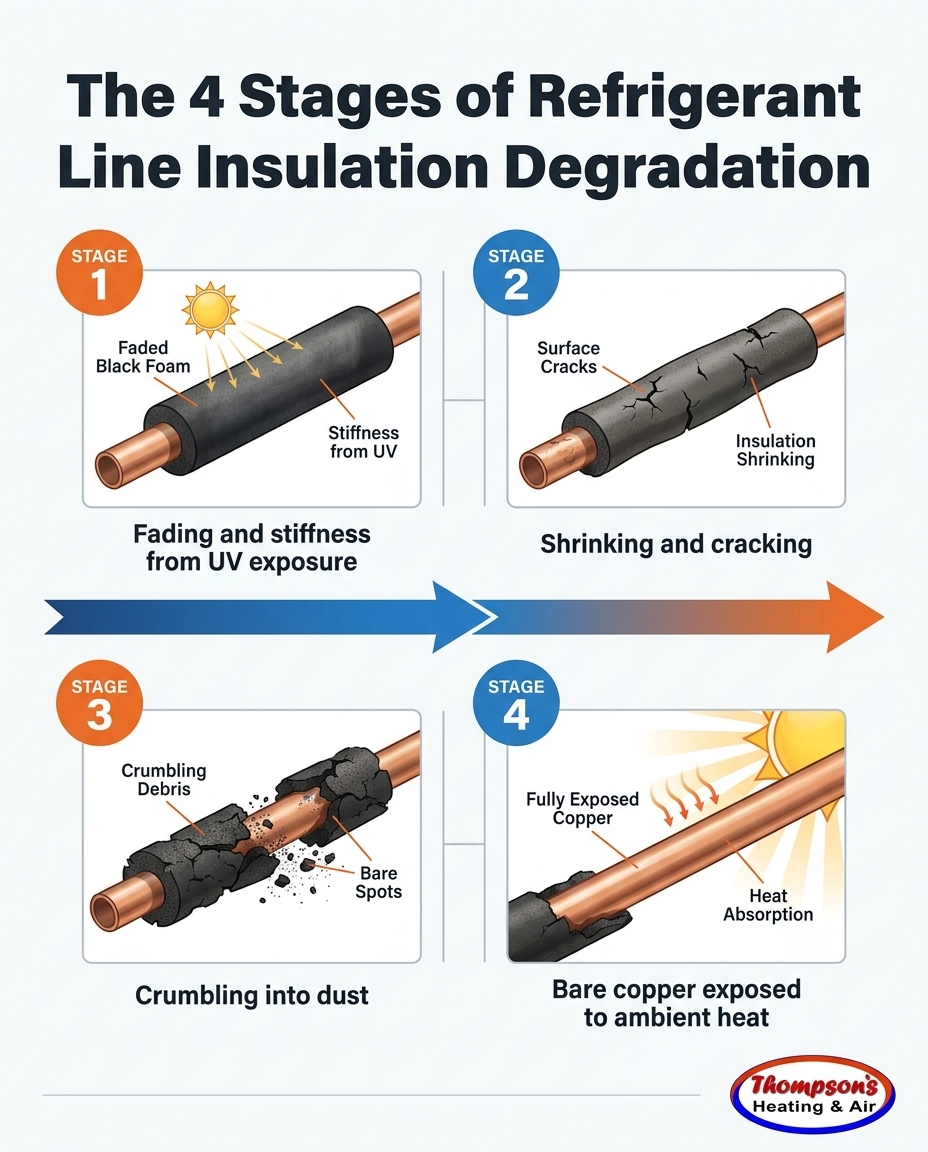
Identifying the problem early is key to preventing long-term damage to your outdoor unit. The breakdown of elastomeric foam doesn't happen overnight; it follows a predictable pattern of decay. By learning what to look for, you can catch the issue before the outdoor AC condenser suction line is completely exposed to the elements.
1. Stage 1: Fading and loss of elasticity. The very first sign of UV damage is a change in color and texture. The deep, rich black foam turns a dull, chalky gray. If you press it with your finger, it feels stiff and resistant rather than soft and spongy. At this stage, the material is still providing some thermal protection, but its chemical breakdown has officially begun.
2. Stage 2: Shrinkage and cracking. As the sun continues to bake the plasticizers out of the material, the foam physically shrinks. You will start to see gaps appear where the foam pulls apart, especially near bends or fittings. Deep, jagged cracks will form along the length of the tube, exposing small slivers of bare copper to the hot air.
3. Stage 3: Flaking and crumbling. This is the stage most homeowners finally notice. The structural integrity of the foam is completely gone. The material turns to dust when touched, and pieces of it may break off and blow around your yard during a windy day. The foam looks ragged, chewed up, and entirely ineffective.
4. Stage 4: Complete absence. In the final stage, large sections of the foam have fallen away completely, leaving the bare copper pipes exposed to the elements. You will likely notice the pipe sweating excessively, dripping water constantly, or in some cases, freezing over with a layer of frost if the airflow inside the house is also compromised.
The Chain Reaction: What Happens When Insulation Goes Missing
When the insulation is compromised, a destructive chain reaction begins within your cooling system. Bare suction lines absorb heat from the surrounding hot air, warming the refrigerant gas before it ever reaches the compressor. Because the gas is warmer than it should be, the compressor must work significantly harder and run longer to achieve the same cooling results inside the home.
This extra workload is particularly dangerous during late summer / August heat. By the time August rolls around, your system has already been running hard for months. The ambient temperatures are often at their highest, and the sun is beating down relentlessly. Adding the burden of an uninsulated suction line to an already tired system is a recipe for disaster. Excessive condensation forms on the bare pipes, which can lead to water pooling or dripping where it shouldn't, potentially causing moisture issues near your foundation or electrical components.
One local homeowner noticed their air conditioning was working poorly just as a severe heat wave was approaching. They reached out for help, and a technician came out the next day, arrived on time, and fixed the problem. Sudden performance drops during extreme weather often trace back to compound issues—like a compressor struggling to overcome the heat gain from a bare suction line. Prolonged overworking leads to a noticeable drop in cooling performance just when the home needs it most, resulting in longer run times, higher energy bills, and a home that simply won't reach the set temperature.
The Threat to the Compressor
The most severe consequence of missing insulation involves the compressor itself. The compressor is the heart of your air conditioning system, and it generates a massive amount of heat while it operates. It actually relies on the cool returning refrigerant to keep its own internal motor from overheating.
The mechanical risk:
• Loss of motor cooling: Warm returning refrigerant removes this vital cooling effect, allowing the compressor's internal temperature to spike.
• Oil breakdown: Excessive heat can cause the lubricating oil inside the compressor to break down and lose its viscosity, leading to metal-on-metal friction.
• Premature failure: Operating at high temperatures for extended periods drastically increases the risk of premature compressor failure, which is one of the most expensive repairs in the HVAC industry.
Scheduling professional AC service ensures that this chain reaction is stopped before it causes irreversible damage to the heart of your system.
Why Timely Maintenance Prevents Premature System Failure
The good news is that replacing degraded insulation is a highly effective, straightforward process for a licensed technician during a routine tune-up. While it might be tempting to view this as a minor cosmetic issue, professionals understand that restoring this thermal barrier is critical for system longevity. A technician will remove the old, crumbling foam, clean the copper line, and install fresh, high-quality elastomeric insulation.
More importantly, professionals ensure the correct wall thickness for the specific size of your suction line, and they apply UV-resistant tape or specialized protective coatings to prevent future rot. Thompson's Heating & Air technicians specifically check for sun-damaged insulation during routine inspections because they understand the aggressive nature of the Sacramento Valley sun. They know that standard foam won't survive long without proper UV shielding in this environment.
Having a technician handle the replacement also ensures the line itself hasn't suffered damage or developed microscopic refrigerant leaks from prolonged exposure or physical wear. Another customer believed their entire 28-year-old air conditioning system needed replacement because it was struggling so much during the summer heat. However, the technician performed a careful examination and determined a minor tune-up was needed, which ultimately extended the system's life by nine years. Catching these small issues—like restoring proper thermal barriers and checking system pressures—extends the lifespan of the entire system, preventing costly overhauls.
Investing in routine AC maintenance is the most reliable way to ensure that every component of your system, right down to the foam on the pipes, is ready to handle the extreme Woodland CA / Central Valley heat.
Frequently Asked Questions
Does the AC refrigerant line need to be insulated?
Yes, the larger suction line must be insulated to protect the system's efficiency. The insulation prevents the cold refrigerant gas from absorbing ambient heat before it reaches the outdoor compressor. Without it, your system has to work much harder to cool your home.
What happens if the AC suction line is not insulated?
If the suction line is left uninsulated, the refrigerant warms up too quickly from the outside air. This forces the compressor to run longer cycles, increasing energy consumption and putting severe mechanical strain on the motor. Over time, this extra workload can lead to premature system failure.
Why is the foam on my AC pipe crumbling?
The foam crumbles primarily due to prolonged exposure to ultraviolet (UV) radiation from the sun. Standard elastomeric foam loses its plasticizers when baked by intense sunlight, causing it to dry out, shrink, crack, and eventually turn to dust. Proper UV-resistant tape or coatings are required to prevent this breakdown.
Does missing AC insulation affect cooling efficiency?
Absolutely. Missing insulation allows the outside heat to warm the returning refrigerant, which directly reduces the system's ability to absorb heat from inside your home. You will likely notice your air conditioner running for longer periods while struggling to reach your desired indoor temperature.
Can I just tape over the cracked black foam on my AC unit?
Taping over heavily degraded or crumbling foam is not an effective long-term solution. Once the foam has shrunk and lost its cellular structure, it no longer provides thermal insulation, meaning the tape is just holding dead material in place. The old foam needs to be completely removed and replaced by a professional.
How often should outdoor AC pipe insulation be replaced?
The lifespan of the insulation depends heavily on your local climate and sun exposure. In areas with high UV indexes, standard unprotected foam may begin degrading in just a few years. Having it inspected annually during professional maintenance ensures it is replaced as soon as it loses its effectiveness.
Protect Your Compressor from the Summer Heat
Don't let a simple issue like rotting foam force your air conditioner into an early breakdown. By recognizing the signs of refrigerant line insulation degradation and acting quickly, you protect your compressor from unnecessary strain and ensure your home stays comfortable. Reach out today to schedule a thorough inspection and keep your system running efficiently all season long.



.avif)
.avif)
.png)
