
The Ultimate Guide to Indoor Air Quality Tips for Allergy Sufferers

Why Indoor Air Quality Tips for Allergy Sufferers Matter More Than You Think
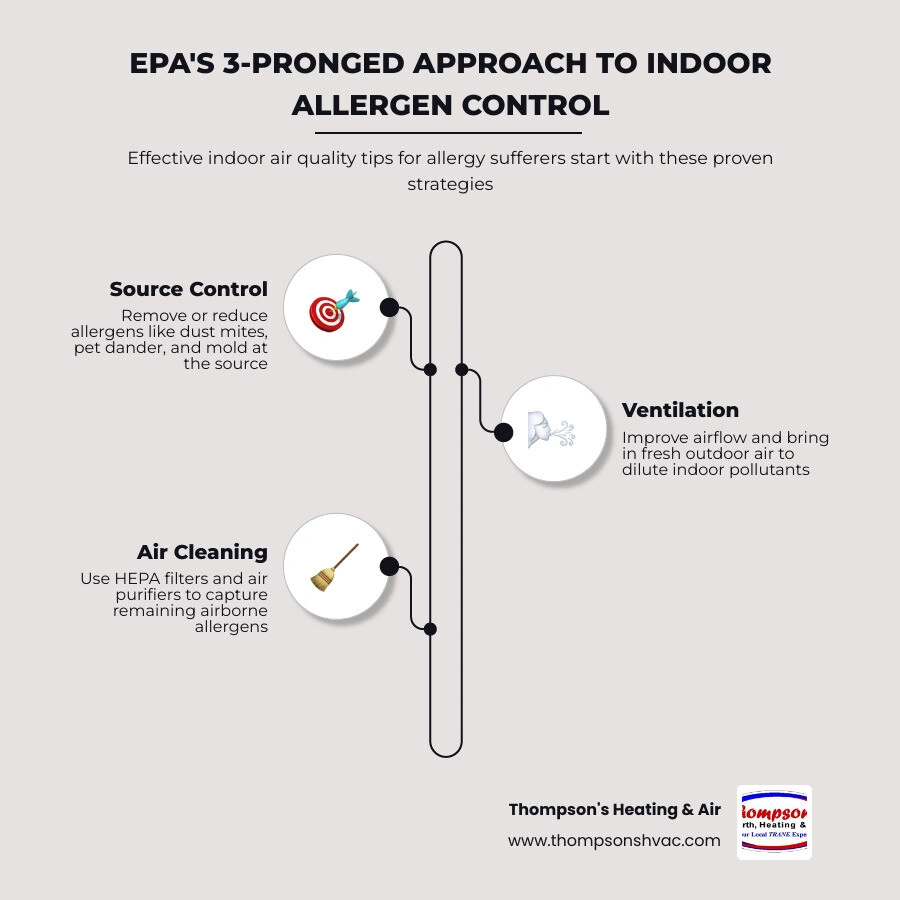
If you've been searching for indoor air quality tips for allergy sufferers, here's a quick answer before we dive deeper:
Top indoor air quality tips for allergy sufferers:
1. Encase mattresses and pillows in dust-mite-proof covers
2. Wash bedding weekly in water heated to at least 130°F
3. Keep indoor humidity between 30% and 50%
4. Vacuum twice weekly with a HEPA-filter vacuum
5. Replace HVAC filters every 30 to 60 days
6. Keep pets out of the bedroom
7. Run exhaust fans in kitchens and bathrooms to control moisture
8. Use a portable or whole-home air purifier with a true HEPA filter
9. Fix leaks promptly to prevent mold growth
10. Keep windows closed during high pollen seasons and use air conditioning instead
Most people assume the air outside is the problem. But the air inside your home can actually contain more allergens than outdoor air, especially in homes that aren't well ventilated. Dust mites, pet dander, mold spores, and even cockroach particles are all common indoor triggers — and nearly one in three adults reported suffering from pollen allergies in 2026, with eight out of ten people in the U.S. regularly exposed to dust mites.
For homeowners in Woodland, CA and the surrounding Yolo County area, the Sacramento Valley's warm, dry summers and cool, damp winters create conditions where indoor allergens can build up fast. If you're sneezing, congested, or waking up with itchy eyes year-round, your home environment is likely playing a bigger role than you realize.
The good news: most of these triggers are controllable. This guide walks you through practical, proven steps — room by room — to reduce indoor allergens and breathe easier at home.
Indoor air quality tips for allergy sufferers terms you need:
• air purification options for your hvac system
• air quality solutions for the sacramento valley homes
• how to improve indoor air quality at home
Understanding the Most Common Indoor Allergens
To effectively clear your air, we first need to know what we are fighting. Indoor allergens are microscopic, protein-based particles that float through our living spaces, easily settling onto surfaces and entering our airways. Here are the primary culprits we encounter in Yolo County homes:
• Dust Mites: These microscopic pests feed on shed human skin cells. They thrive in warm, humid environments. It is actually their waste products—not the mites themselves—that trigger intense allergic reactions and chronic sinusitis. Statistics show that 8 out of 10 people in the United States are regularly exposed to dust mites in their homes.
• Pet Dander: Consisting of tiny, lightweight flakes of skin shed by cats, dogs, and other feathered or furry pets, dander can float in the air for hours. Because of its jagged shape, it clings easily to carpets, furniture, and clothing. Roughly 6 out of 10 people are exposed to cat or dog dander daily, and science reminds us that there is truly no such thing as a 100% hypoallergenic pet.
• Mold Spores: Mold thrives in high-moisture areas like bathrooms, kitchens, and damp crawl spaces. When mold reproduces, it releases airborne spores. If inhaled, these spores trigger sneezing, nasal congestion, and severe asthma flare-ups. Mold can begin to multiply in as little as 24 hours when humidity spikes.
• Cockroach Allergens: Particularly common in urban areas, saliva, waste, and decomposing body parts of cockroaches are potent triggers. These heavy particles settle quickly onto surfaces but are easily kicked back up into the air when you sweep or walk across a room.
Understanding these microscopic troublemakers is the first step toward reclaiming your home's comfort. By addressing these specific particles, you can dramatically improve your overall Indoor Air Quality and find lasting relief. For regional solutions tailored to our local climate, check out our guide on Air Quality Solutions for the Sacramento Valley Homes.
Room-by-Room Indoor Air Quality Tips for Allergy Sufferers
Allergen control is not a one-size-fits-all weekend chore. It requires a strategic, room-by-room approach combined with consistent daily habits. By systematically minimizing the "dust reservoirs" in your home, you prevent these particles from becoming airborne.
Before we dive into specific rooms, here is a quick checklist of daily and weekly habits to establish:
• Remove shoes at the door: This simple habit prevents outdoor pollen, pesticides, and dirt from being tracked across your floors.
• Damp-dust hard surfaces: Avoid dry feather dusters, which simply launch dust back into your breathing zone. Instead, use a damp microfiber cloth to capture and remove particles.
• Wipe pet paws: Clean your pet's paws and fur with a damp cloth when they come inside to minimize tracked-in pollen.
• Vacuum with HEPA technology: Vacuum carpets and upholstered furniture at least twice weekly using a vacuum fitted with a certified HEPA filter.
To learn more about setting up these healthy routines, read our complete guide on How to Improve Indoor Air Quality at Home.
Why the Bedroom is the Most Important Target for Indoor Air Quality Tips for Allergy Sufferers
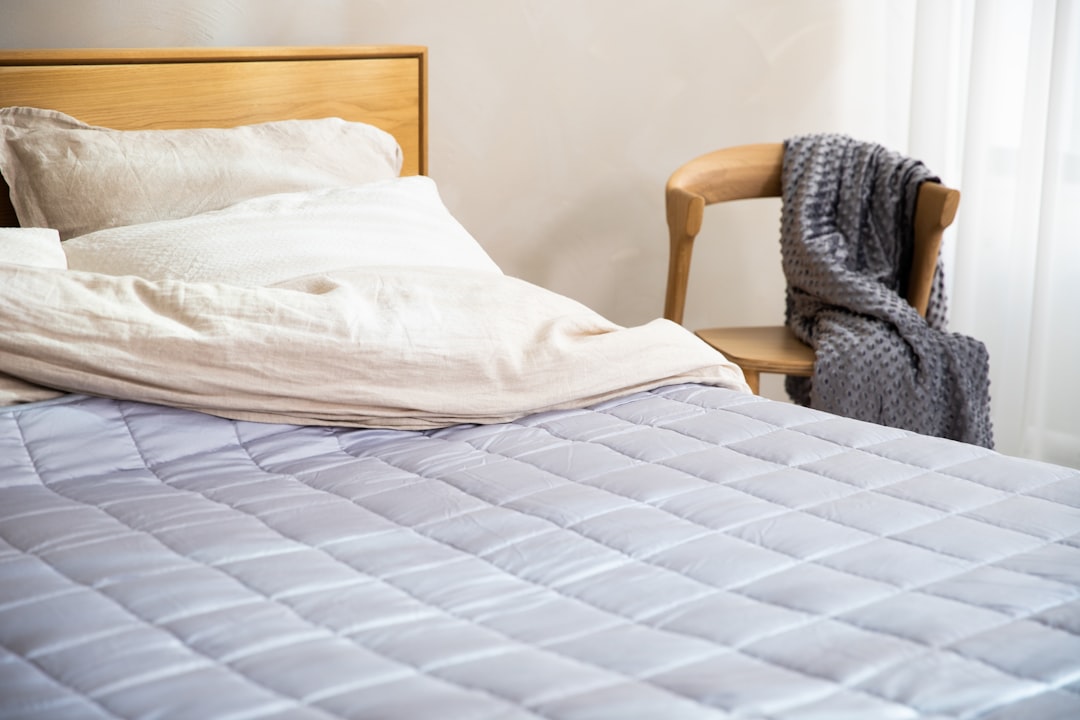
We spend roughly one-third of our lives—about 6 to 8 hours every single night—in our bedrooms. Because our faces are pressed directly against pillows and mattresses for extended periods, this room is the absolute most critical target for allergen control.
Clinical studies show that encasing mattresses and pillows works better than air cleaners alone to reduce overall allergy symptoms. Dust mites love the warm, humid environment of our beds. To stop them in their tracks, implement these steps:
• Use zippered allergen-proof covers: Encase your pillows, mattress, and box spring in zippered, dust-mite-proof covers. These tightly woven fabrics trap dust mites and their waste inside, preventing them from escaping into your breathing space.
• Wash bedding weekly in hot water: Wash all sheets, pillowcases, and blankets once a week in water heated to at least 130°F (54°C). This is the minimum temperature required to kill dust mites and eliminate their allergen proteins.
• Keep pets out of the bedroom: We love our furry family members, but the bedroom must remain a strict pet-free zone. Allowing pets on your bed introduces a massive concentration of dander and outdoor pollen right where you sleep.
• Position air purifiers strategically: If you use a portable air purifier in your bedroom, direct the clean air output toward your head while you sleep for maximum nighttime breathing protection.
Living Room and Common Area Maintenance
Living rooms are high-traffic zones filled with soft furnishings that act like giant magnets for dust, dander, and pollen. To keep these common areas allergen-free, consider these smart design and cleaning choices:
• Choose hard flooring over carpet: If possible, swap out wall-to-wall carpeting for hardwood, tile, vinyl, or linoleum. If you must keep carpets, opt for low-pile varieties and vacuum them twice weekly with a HEPA vacuum.
• Opt for easy-to-clean furniture: Choose leather, wood, metal, or plastic furniture over overstuffed fabric pieces. Leather and faux-leather can be easily wiped down, whereas fabric upholstery holds onto dander and dust for years.
• Simplify window treatments: Replace heavy, non-washable drapes and horizontal blinds (which are notorious dust collectors) with washable cotton curtains or smooth roller shades.
• Manage indoor plants wisely: Potted plants can sometimes harbor mold in their soil. To prevent this, spread a layer of aquarium gravel over the soil to contain moisture and mold spores.
Kitchen and Bathroom Moisture Management
High humidity and standing water turn kitchens and bathrooms into prime breeding grounds for mold, mildew, and cockroaches.
• Install and use exhaust fans: Always run your bathroom exhaust fan during showers and for at least 20 minutes afterward to draw out excess humidity. In the kitchen, ensure your range hood vents to the outside rather than simply recirculating air back into the room.
• Fix leaks instantly: A dripping pipe under the sink or a slow leak behind the toilet can cause mold to colonize drywall and cabinetry in less than 48 hours. Inspect these areas regularly and make repairs immediately.
• Clean mold safely: If you spot mold on hard surfaces, scrub it away immediately using a 5% chlorine bleach solution while wearing a protective mask.
• Store food in airtight containers: Keep kitchen counters clean and store all food in sealed plastic or glass containers to eliminate food sources for cockroaches and other pests.
For specialized advice on protecting your property from mold, check out our Mold Prevention Tips for the Sacramento Valley Homeowners.
Controlling Humidity and Temperature to Stop Allergen Growth
Many homeowners don't realize that temperature and relative humidity directly dictate how fast allergens multiply in their homes. Hot, humid houses are absolute paradises for dust mites and mold.
To keep these microscopic invaders from taking over, aim for these precise targets:
• Relative Humidity: Maintain your home's relative humidity between 30% and 50%. Anything above 50% allows dust mites to thrive and mold to rapidly colonize surfaces. You can easily track this with an inexpensive digital hygrometer or a smart thermostat.
• Indoor Temperature: Keep your home's temperature set between 68°F (20°C) and 72°F (22°C). This range is comfortable for humans but less hospitable to heat-loving dust mites.
During our dry Sacramento Valley summers, humidity usually isn't an issue, but winter rains can drive indoor moisture levels up. Conversely, during exceptionally dry periods, some homeowners find that a managed humidity solution is needed. If you struggle with dry, irritated nasal passages during specific seasons, exploring Whole House Humidifier Benefits for Dry Climates can help you find the perfect balance without over-humidifying your home.
Advanced HVAC and Filtration Solutions for Woodland Homes
Your central HVAC system is essentially the "lungs" of your home. If your system is dirty, neglected, or fitted with a cheap filter, it will continuously recirculate dust, pollen, and dander through every room. By upgrading your filtration and maintaining proper airflow, you can transform your HVAC system into your home's most powerful air-cleaning asset.
To understand how different filters protect your air, it helps to understand MERV (Minimum Efficiency Reporting Value) ratings. This scale ranges from 1 to 16, measuring a filter's ability to capture particles of various sizes.
• Standard Fiberglass (MERV 1–4) — Allergen Capture Efficiency: Captures <20% of large particles. Does not stop allergens. — Best Suited For: Basic system protection only; not recommended for allergy sufferers.
• Basic Pleated (MERV 5–8) — Allergen Capture Efficiency: Captures 20% to 50% of mold spores and large dust particles. — Best Suited For: Standard homes without pets or significant allergy concerns.
• Superior Pleated (MERV 11–13) — Allergen Capture Efficiency: Captures 70% to 90% of pollen, dust mites, dander, and mold. — Best Suited For: Highly recommended for allergy and asthma sufferers.
• Hospital-Grade (MERV 14–16) — Allergen Capture Efficiency: Captures >95% of fine particles, bacteria, and smoke. — Best Suited For: Medical facilities; often restricts residential HVAC airflow unless custom-fitted.
To explore how these options fit your home's specific system, take a look at our Air Quality Solutions for the Sacramento Valley Homes.
Implementing HVAC-Based Indoor Air Quality Tips for Allergy Sufferers
Upgrading your home's filtration is one of the most effective steps you can take. However, simply buying the highest MERV filter on the shelf isn't always the best move. Thicker, high-efficiency filters can restrict airflow in older HVAC systems, putting strain on your blower motor and reducing system efficiency.
Here is how to safely implement advanced filtration:
• Consult a professional first: Before upgrading to a MERV 11 or MERV 13 filter, have a professional technician verify that your system can handle the increased airflow resistance.
• Establish a strict filter replacement schedule: For allergy sufferers, we recommend changing your HVAC filter every 30 to 60 days, especially during spring and fall when outdoor pollen and mold counts spike.
• Utilize your system's fan setting: If you are doing heavy cleaning, vacuuming, or experiencing a high-allergen day, switch your thermostat's fan setting from "Auto" to "On." This keeps the system's blower running continuously, pulling air through the filter even when the heating or cooling isn't actively running.
For more details on selecting the right setup, check out our guide on the Best Air Filter for Your Home, and learn more about timing your replacements with our article on How Often Should You Change Your HVAC Air Filter.
Whole-Home Air Purification and Duct Sealing
While standard filters do an excellent job of catching larger particles, microscopic contaminants like viruses, bacteria, and ultra-fine wildfire smoke can still slip through. This is where whole-home air purifiers and advanced system upgrades come into play.
• UV Germicidal Lights: Installed directly inside your HVAC system's ductwork or near the evaporator coil, UV lights emit a safe level of ultraviolet radiation that neutralizes biological contaminants. This destroys mold spores, bacteria, and viruses before they can multiply and circulate through your home.
• Active Air Purifiers: These systems integrate directly into your central HVAC ductwork to actively sanitize the air, neutralizing odors, VOCs, and microscopic allergens throughout your entire living space.
• Duct Sealing: Over time, ductwork joints can pull apart, crack, or develop leaks. When this happens, your system pulls unconditioned, dusty, and moldy air directly from your attic or crawl space and distributes it straight into your home, completely bypassing your filter. Professionally sealing your ducts ensures that 100% of your indoor air actually passes through your filtration system.
Learn more about these powerful additions by reading about Air Purification Options for Your HVAC System, and discover the benefits of clean ductwork in How Clean Ducts Reduce Mold Risk in Your Home.
Mechanical Ventilation and Fresh Air Exchange
Modern homes are built to be incredibly airtight to save energy. While this is great for your utility bills, it has a major downside: it traps stale, pollutant-heavy air inside.
To resolve this, we utilize mechanical ventilation solutions like Energy Recovery Ventilators (ERVs). An ERV system continuously exhausts stale indoor air while pulling in fresh outdoor air.
During this process, the system pre-filters the incoming outdoor air to remove pollen and dust, while transferring heat and moisture to keep your home comfortable and energy-efficient. This allows you to enjoy the benefits of fresh air exchange without introducing outdoor allergens or wasting energy.
Read more about how these systems protect your indoor climate in our article, How Fresh Air Exchange Protects Your Family.
Frequently Asked Questions about Indoor Air Quality
How often should I replace my HVAC air filter if I have severe allergies?
If you or anyone in your household suffers from severe allergies or asthma, you should replace your HVAC filter every 30 to 60 days. In homes with multiple furry pets, or during peak pollen and wildfire seasons in Northern California, changing it every 30 days is highly recommended. Regular replacement prevents dust buildup, maintains strong airflow, and ensures your filter is always operating at peak allergen-capturing efficiency.
Can leaky ductwork make my indoor allergy symptoms worse?
Yes, absolutely. Leaky ducts are a major, often overlooked source of indoor allergy flare-ups. When your ductwork has holes or loose connections, it creates a vacuum effect. This pulls unconditioned, dusty air, insulation fibers, pest droppings, and mold spores from your attic, crawl space, or wall cavities directly into the airstream and blows them into your living spaces.
If you notice musty odors when your system turns on, or find that your home gets dusty incredibly fast, it is highly likely you have leaky ducts. Learn what to look out for in our guide on Signs of Mold in Your HVAC System.
When should I consider professional allergy testing or air quality testing?
You should consider professional help if:
1. You have implemented consistent cleaning routines and upgraded your HVAC filters, but your allergy or asthma symptoms persist.
2. You smell persistent, musty odors in your home but cannot locate the source of the mold.
3. You experience symptoms like headaches, dizziness, or chronic congestion that improve noticeably when you leave the house but return when you come home.
An allergist can perform testing to identify your exact biological triggers, while an indoor air quality professional can test your home's air to identify hidden pollutants, high VOC levels, or hidden mold reservoirs.
Conclusion
Creating an allergy-free home is all about taking a layered, systematic approach. By combining smart daily habits—like washing bedding in hot water and keeping humidity low—with advanced HVAC filtration and air purification, you can dramatically reduce the microscopic triggers that cause you discomfort. You don't have to live with constant sneezing, congestion, and itchy eyes inside your own sanctuary.
At Thompson's Heating & Air, we have spent over three decades helping families throughout Woodland, Davis, Winters, and surrounding Yolo County communities breathe easier. Our experienced, friendly team specializes in tailoring indoor air quality solutions to the unique climate of the Sacramento Valley.
Whether you need a ductwork inspection, a filtration upgrade, or a whole-home air purifier installation, we are here to help you achieve 5-star comfort and cleaner, healthier air.
Ready to take the first step toward a healthier, allergen-free home? Explore our wide range of Indoor Air Quality Products and reach out to our team today to find the perfect solution for your family!



.avif)
.avif)
.png)
