
Assessing the Impact of Agricultural Dust on Your Condenser Unit in Arbuckle

The Hidden Cost of Harvest Season on Your AC Efficiency
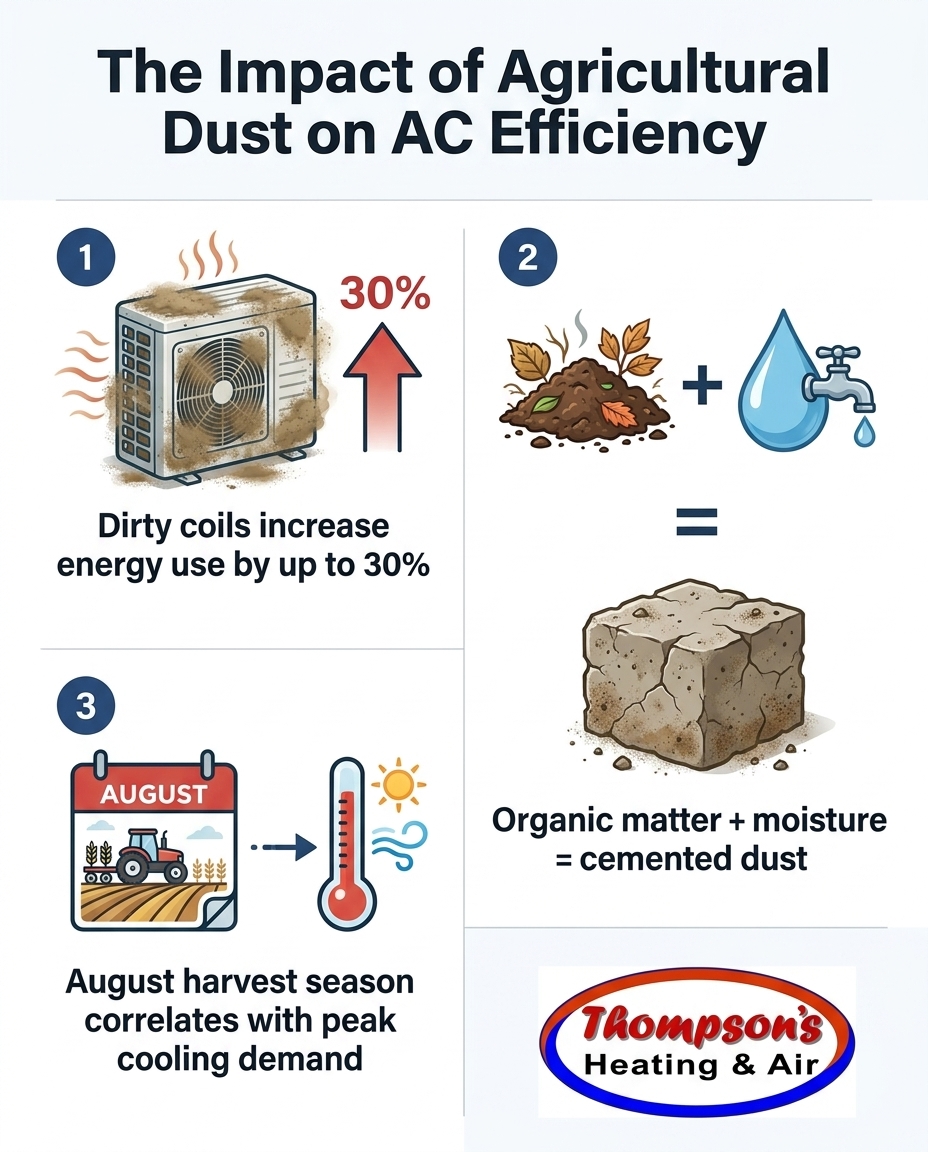
When assessing the impact of agricultural dust on your condenser unit in Arbuckle, the most shocking statistic is that a dirty coil can increase your compressor's energy consumption by up to 30%. While standard suburban homes deal with light pollen and everyday dirt, homes surrounded by active agriculture face a completely different threat. The heavy, organic particulate matter kicked up during late-summer harvesting doesn't just settle on your equipment—it actively chokes the life out of it.
Your outdoor AC unit relies on a massive volume of airflow to pull heat out of your home and release it outside. When that airflow is blocked by thick, sticky harvest debris, the entire system has to work harder, run longer, and consume significantly more electricity just to maintain the temperature on your thermostat. This is a severe issue for Arbuckle farmland properties, where the sheer volume of airborne dust can overwhelm a standard system in a matter of weeks.
Because this organic buildup is so aggressive, standard maintenance routines often fall short. Keeping your system running reliably through the late-summer heat requires specialized, professional intervention. Whether you need comprehensive Air Conditioning Services to evaluate a struggling system or proactive AC Maintenance to clear away heavy agricultural fallout, getting ahead of the harvest season is the only way to protect your equipment from premature failure.
Why Agricultural Dust is Worse Than Standard Dirt
Not all dust is created equal. The airborne particulate matter generated during crop harvesting differs fundamentally from the typical household dust or dry dirt found in a standard residential subdivision. Understanding this difference is crucial for protecting your system, just as choosing the best air filter for your home is vital for protecting your indoor air quality.
The hot, dry Sacramento Valley late-summer climate creates a perfect storm for your HVAC system. Your air conditioner is forced to run at maximum capacity to combat the intense ambient heat, drawing in massive amounts of air exactly when sticky, airborne harvest dust is at its absolute worst. This combination of high system demand and heavy environmental contamination accelerates the clogging process exponentially.
The Organic Difference
Standard suburban dirt is largely composed of dry, inorganic minerals like silica and sand. When this dry dirt blows into an AC unit, much of it simply falls to the bottom of the cabinet or blows right through the aluminum fins. Agricultural dust, however, is packed with organic matter—pulverized plant material, crop residue, hulls, and soil composites.
This organic material has a completely different physical structure. It is inherently stickier and more prone to clinging to metal surfaces. When the fan pulls this material into the unit, the organic particles wedge themselves deeply between the delicate aluminum fins of your outdoor condenser coils, creating a dense, fibrous mat that blocks airflow far more effectively than dry sand ever could.
The Cementing Effect
The real danger begins when this organic dust mixes with moisture. Even in our dry climate, outdoor condenser coils experience temperature fluctuations that can create condensation or interact with morning dew. When organic agricultural dust gets wet, a chemical and physical reaction occurs.
The organic matter absorbs the moisture, swells, and then bakes onto the hot aluminum fins as the day heats up. This continuous cycle of dampening and baking turns the fibrous dust into a hardened, cement-like crust. This crust insulates the coils, completely blocking the vital heat transfer process. Instead of releasing heat into the outside air, the heat remains trapped inside the refrigerant, forcing your compressor to run dangerously hot.
• Composition — Standard Suburban Dirt: Dry minerals, sand, silica — Agricultural Harvest Dust: Organic plant matter, soil, crop residue
• Adhesion — Standard Suburban Dirt: Low; often blows through fins — Agricultural Harvest Dust: High; fibrous and sticky
• Moisture Reaction — Standard Suburban Dirt: Turns to light mud, washes away easily — Agricultural Harvest Dust: Bakes into a hard, cement-like crust
• Impact on Airflow — Standard Suburban Dirt: Gradual restriction over years — Agricultural Harvest Dust: Rapid, severe blockage within weeks
Recognizing When Your Condenser is Choking on Dust
Because the buildup of agricultural dust happens so quickly, it is vital to recognize the symptoms of a restricted coil before the system suffers permanent damage. Your air conditioner will always give you warning signs when it is struggling to breathe.
One local homeowner experienced this firsthand when their air conditioning was working poorly just as a severe heat wave approached. They reached out, and a technician was able to come out the next day, showing up on time to identify the heavily restricted airflow and fix the problem before the system failed completely. If you notice your system exhibiting similar warning signs, prompt AC Repair is essential.
Watch for these distinct symptoms that indicate your condenser is choking on harvest dust:
• Longer cooling cycles: If your AC unit is running continuously but struggling to reach the temperature set on your thermostat, the coils are likely insulated by dust, preventing effective heat transfer.
• Noticeable energy spikes: When the compressor runs longer and works harder to push air through restricted fins, it draws significantly more electricity. Unexplained spikes in your late-summer energy bills are often the first financial sign of a clogged coil.
• Warm air from vents: If the outdoor unit cannot release heat, the indoor unit cannot absorb it. This results in lukewarm or uncomfortably warm air blowing from your indoor vents.
• Visual buildup on the unit: Walk outside and look at the metal fins on the sides of your condenser. If you see a thick, fuzzy, or hardened layer of brownish-gray material coating the fins, the unit is suffocating.
• Unusual noises: A struggling compressor often sounds louder than normal, sometimes emitting a harsh buzzing or humming sound as it fights against the high internal pressures caused by lack of airflow.
The Threat of the August Harvest Season Timeline
Contextualizing the specific timing of this threat is vital for rural homeowners. In typical suburban environments, AC maintenance is a springtime chore. However, for farming communities, the most dangerous period for an air conditioning breakdown arrives late in the summer.
The August harvest season represents a unique vulnerability for your HVAC system. During this time, massive agricultural operations kick up tons of airborne particulate matter. Nut harvesting, in particular, generates an enormous amount of organic dust that drifts across the valley and settles directly into residential HVAC equipment.
This massive influx of dust correlates perfectly with the peak of late-summer cooling demand. Just as your air conditioner is working its hardest to combat triple-digit heat, its ability to breathe is severely compromised. This creates a dangerous timeline that accelerates wear and tear on your system:
1. Initial Exposure: Harvest activities begin, filling the air with heavy organic particulates that are drawn straight into the running AC condenser.
2. Rapid Accumulation: The sticky nature of the dust, combined with morning dew, causes the material to build up on the aluminum fins much faster than normal dirt.
3. Airflow Restriction: Within a matter of weeks, the hardened crust blocks the fins, preventing the system from releasing heat outdoors.
4. System Overheating: The trapped heat causes refrigerant pressures to spike, forcing the compressor to run dangerously hot and consume excessive electricity.
5. Total Failure: Without proactive intervention, the overworked compressor overheats and fails completely, leaving the home without cooling during the hottest part of the year.
Understanding this timeline emphasizes the need for proactive intervention. Waiting until the system stops cooling entirely means the compressor has already been subjected to extreme, damaging stress.
Why Standard Hose Rinsing Fails on Farm Dust
When homeowners see a dirty outdoor unit, the natural instinct is to grab a garden hose and spray it down. While this might work for light, dry dust in a suburban neighborhood, it is entirely insufficient—and potentially harmful—for homes dealing with heavy agricultural fallout.
Standard suburban HVAC maintenance routines simply fall short for Arbuckle farmland properties exposed to harvest debris. The unique chemical and physical properties of organic dust require a completely different approach to safely and effectively clean the system.
The Limits of Garden Hoses
A simple garden hose lacks the ability to break down cemented organic matter. Because harvest dust bakes onto the coils like a crust, low-pressure water simply runs over the surface without dislodging the blockage.
Conversely, using a high-pressure nozzle or a pressure washer is incredibly dangerous. The aluminum fins on your condenser coil are paper-thin and highly fragile. High water pressure will instantly bend and flatten these fins, permanently blocking airflow and ruining the coil. Furthermore, spraying water directly into a heavily impacted coil often just pushes the organic mud deeper into the center of the unit, making the blockage even worse.
The Dangers of DIY Chemicals
Realizing that water isn't enough, some homeowners turn to store-bought, DIY coil cleaning chemicals. We strongly warn against this practice. Professional coil cleaners are highly potent chemical compounds that require precise dilution and careful application.
Applying the wrong type of chemical—such as an acidic cleaner on a coil that requires an alkaline foaming agent—can cause rapid corrosion. If these chemicals are improperly diluted or not thoroughly rinsed away within a specific timeframe, they will eat through the delicate aluminum fins and copper tubing. This causes catastrophic refrigerant leaks and completely destroys the unit. The risk of destroying a system worth thousands of dollars far outweighs the perceived savings of a DIY cleaning attempt.
Professional Coil Cleaning for Arbuckle Properties
Because agricultural dust is so stubborn, safely restoring your system requires a heavy-duty, professional-grade chemical cleaning process. This isn't a simple wipe-down; it is a methodical restoration of your condenser's ability to transfer heat.
Thompson's Heating & Air has deep local expertise in the Sacramento Valley, knowing exactly how to clean and protect systems exposed to heavy agricultural and harvest dust that generic companies might overlook. We understand the specific types of organic matter generated by local crops and utilize specialized foaming agents designed to safely dissolve this buildup without harming the underlying equipment.
The professional cleaning process involves applying a specifically calibrated, heavy-duty chemical foam that expands deep between the aluminum fins. This foam actively breaks down the cemented organic matter, lifting the dirt, debris, and agricultural oils away from the metal. Once the chemical has had the proper dwell time to dissolve the crust, technicians use specialized, low-pressure rinsing techniques to flush the debris completely out of the unit.
Another local homeowner faced a crisis when their six-year-old AC system broke down just as record high temperatures were predicted. Because of rapid response capabilities, a technician was able to come out the same day to address the broken AC, clearing the restrictions and getting the house cooling again. Relying on technicians who respond rapidly to heat-wave breakdowns is crucial when your system is suffocating.
Restoring proper airflow to your outdoor condenser coils does more than just lower your energy bills. It fundamentally protects the compressor from overheating, prevents high-pressure lockouts, and significantly extends the overall lifespan of the entire system. For comprehensive HVAC services in Arbuckle, trusting a team that understands the local agricultural environment is the best way to protect your investment.
Frequently Asked Questions About AC Condensers and Dust
How does agricultural dust specifically affect an AC condenser?
Agricultural dust contains high levels of organic plant matter and crop residue that is much stickier than standard dirt. When this dust is pulled into an AC condenser, it wedges between the aluminum fins and mixes with moisture or morning dew. This mixture bakes in the heat, forming a hard, cement-like crust that completely blocks the system's ability to release heat outdoors. As a result, the compressor overheats and the system struggles to cool your home.
Why is my AC struggling to cool my home during harvest season?
During harvest season, the massive increase in airborne dust coincides directly with the hottest temperatures of the year. Your AC is running at maximum capacity to cool your home, which means it is pulling in a huge volume of dusty air. The rapid accumulation of this thick, organic dust chokes the outdoor unit's airflow, forcing the system to run longer cooling cycles while producing less actual cooling power indoors.
Can a dirty outside AC unit cause it to stop cooling entirely?
Yes, a severely dirty outside unit will eventually cause the system to stop cooling altogether. When the condenser coils are completely blocked by dirt and dust, the trapped heat causes the internal refrigerant pressures to spike dangerously high. Modern air conditioners have safety switches that will shut the compressor down to prevent it from destroying itself, resulting in a system that blows warm air or refuses to turn on at all.
Can I clean a heavily clogged AC condenser myself with store-bought chemicals?
We strongly advise against using DIY chemical cleaners on your AC condenser. The aluminum fins on the coil are extremely delicate, and using improperly diluted or incorrect store-bought chemicals can quickly corrode and destroy the metal. Professional technicians use specialized, calibrated foaming agents and low-pressure rinsing techniques to safely dissolve organic agricultural dust without causing permanent chemical damage to the equipment.
How often should AC condenser coils be professionally cleaned in dusty farming areas?
In rural farming communities exposed to heavy agricultural dust, standard once-a-year maintenance is rarely enough. Homes located immediately adjacent to active orchards or fields often require professional coil cleaning at least twice a year—typically once in the spring before the cooling season begins, and again in the late summer to clear away the heavy accumulation from harvest activities.
Protect Your AC from the Harvest Season Strain
Living in a vibrant agricultural community comes with unique challenges for your home's mechanical systems. The heavy, sticky organic dust generated during the August harvest season is far more destructive than standard dirt, rapidly choking off your condenser's airflow and forcing your compressor to work under extreme stress. Standard hose rinsing simply cannot break down this cemented debris, and DIY chemicals risk destroying your delicate aluminum coils entirely.
Don't wait for a total system failure on the hottest day of the year. Scheduling a professional inspection and heavy-duty chemical cleaning is the only reliable way to dissolve organic buildup, restore your system's efficiency, and protect your compressor from overheating. By understanding exactly why agricultural dust chokes efficiency faster than normal dirt, and learning the specific professional cleaning methods used to safely restore your condenser, you can keep your home consistently comfortable no matter how much dust is in the air.



.avif)
.avif)
.png)
