
Stop Choking Your HVAC with the Best Air Filter for Your Home

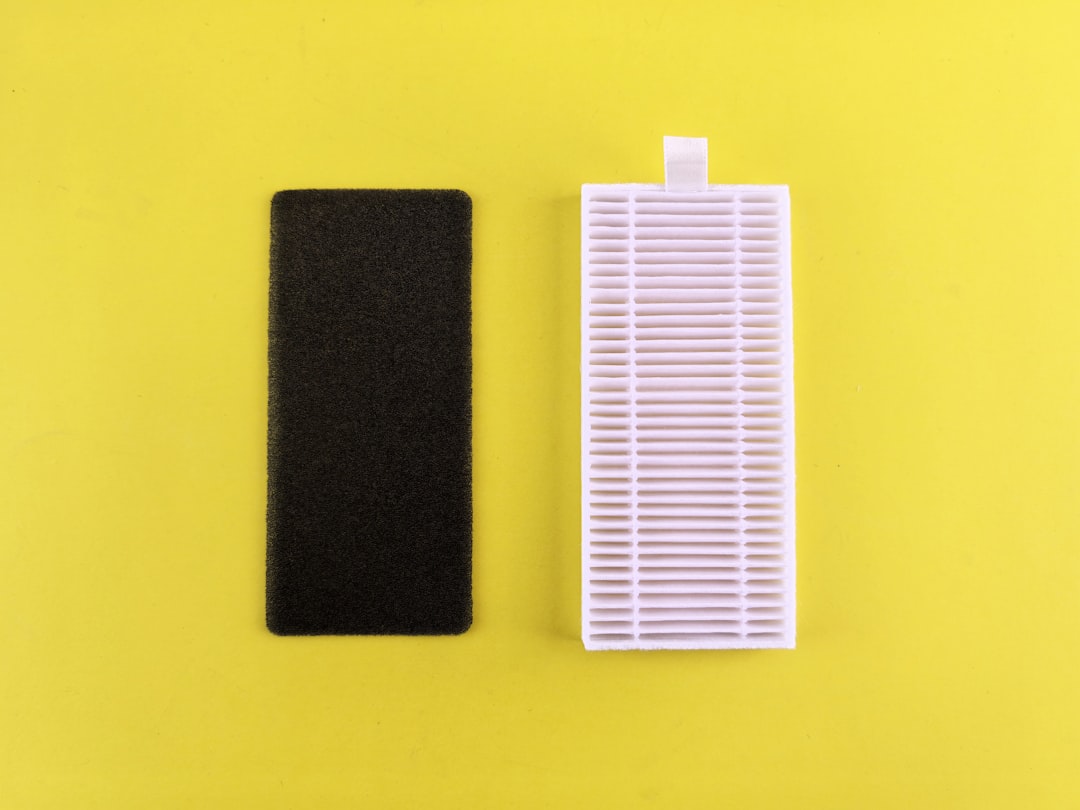
Your Home's Air Is 2–5x More Polluted Than Outside — Here's What to Do About It
Finding the best air filter for your home doesn't have to be overwhelming — but picking the wrong one can quietly damage your HVAC system or leave your family breathing air that's far dirtier than it needs to be.
According to the EPA, indoor air pollutant levels are often two to five times higher than outdoor levels. That's a startling number when you consider how much time most of us spend inside — especially during Woodland's hot summers and cold winters when windows stay shut for weeks at a time.
The right filter does two jobs at once: it protects your lungs and your HVAC equipment. Get it wrong and you're either letting contaminants through or choking your system's airflow — both costly mistakes.
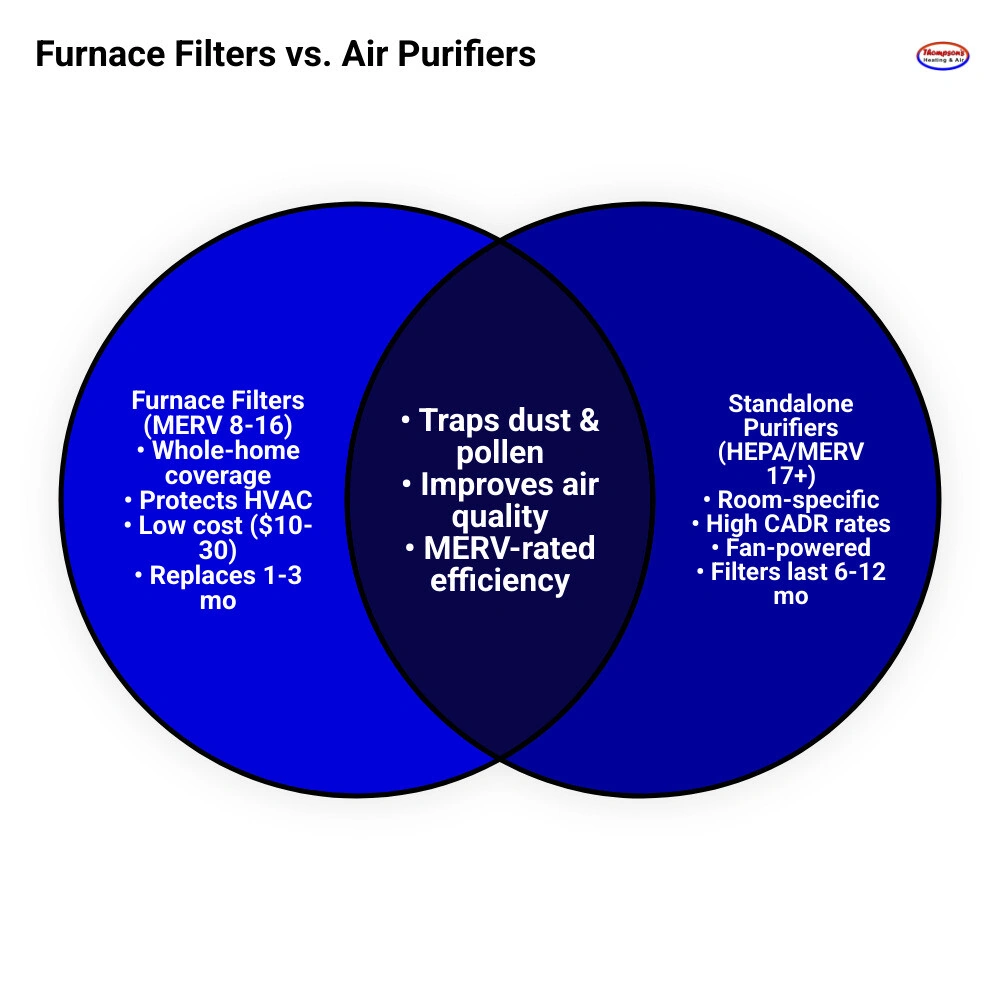
Here's a quick look at the best filter types for most homes:
• Basic pleated 1-inch — MERV Rating: MERV 8 — Best For: Standard dust and pollen control
• Mid-grade pleated 1-inch — MERV Rating: MERV 11 — Best For: Pets, mild allergies
• High-efficiency pleated 1-inch — MERV Rating: MERV 13 — Best For: Allergies, asthma, fine particles
• 4–5 inch media filter — MERV Rating: MERV 11–16 — Best For: Best overall — high filtration, low airflow restriction
• HEPA bypass system — MERV Rating: MERV 17+ — Best For: Severe health conditions (requires professional install)
Quick answer: For most Woodland homeowners, a MERV 13 pleated filter — or a 4- to 5-inch media filter rated MERV 11 to 13 — offers the best balance of clean air and HVAC protection. Replace it every 1 to 3 months, or every 6 to 12 months for thicker media filters.
Read on for a full breakdown of filter ratings, thickness options, advanced features like activated carbon, and how to avoid the most common (and expensive) mistakes homeowners make.
Understanding MERV Ratings for the Best Air Filter for Your Home
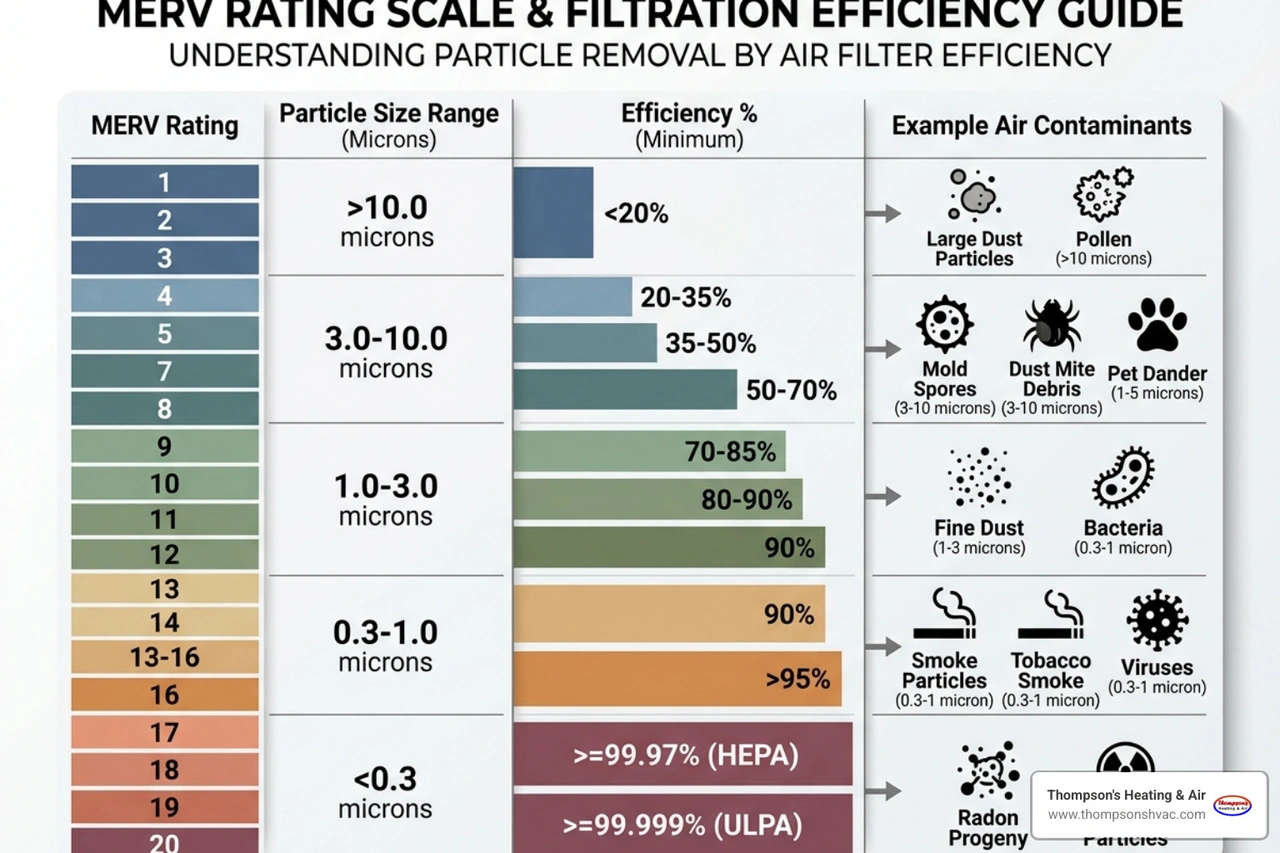
When you start shopping for the best air filter for your home, you’ll immediately run into a four-letter acronym: MERV. This stands for Minimum Efficiency Reporting Value. It’s a scale developed by ASHRAE (the American Society of Heating, Refrigerating and Air-Conditioning Engineers) to tell you exactly how effective a filter is at catching particles of different sizes.
The scale ranges from 1 to 20. A filter with a MERV 1 rating is basically just a "rock catcher"—it stops large clumps of dust from clogging your furnace but does almost nothing for your health. On the other end, MERV 20 filters are medical-grade HEPA filters used in surgery centers. For residential Air Filtration, we usually stay between MERV 8 and MERV 16.
Understanding Indoor Air Quality means looking at microns. A human hair is about 50–70 microns wide. High-quality filters can trap particles as small as 0.3 microns, including bacteria, smoke, and even some viruses.
Choosing the Right MERV Rating for Your HVAC System
It is a common myth that the highest MERV rating is always the "best." In reality, the best air filter for your home is the one that balances filtration with airflow. Think of it like breathing through a straw: a thin mesh is easy to breathe through, but a thick, dense cloth is much harder.
If you put a MERV 16 filter into a standard residential HVAC system designed for MERV 8, you create "static pressure." This forces your blower motor to work twice as hard to pull air through the dense material. Over time, this leads to system inefficiency and can eventually burn out your motor. Most modern systems in Woodland are built to handle a range of Indoor Air Quality Products between MERV 8 and 13 without significant strain.
Why MERV 13 is the Best Air Filter for Your Home and Allergies
For families in Yolo County dealing with seasonal allergies or asthma, MERV 13 is often the "sweet spot." Brands like PUREFLOW have pioneered 4-stage filtration that allows a MERV 13 rating to capture over 90% of contaminants as small as 3 microns.
This includes common irritants like:
• Pollen and mold spores
• Pet dander
• Dust mite debris
• Fine smoke particles
Independent tests from sources like Consumer Reports often highlight MERV 13 filters because they offer Air Purification capabilities that rival standalone units while still allowing your furnace to "breathe" properly.
Comparing Filter Thickness and Advanced Media Features
Size matters, but not just the height and width of the filter. The thickness—usually 1 inch, 4 inches, or 5 inches—makes a massive difference in performance.
A 4- or 5-inch media filter isn't just "bigger"; it has significantly more surface area. If you were to unfold the pleats of a 5-inch filter, it would stretch out much further than a 1-inch filter. This extra surface area allows for better filtration with less airflow resistance. It also means the filter can hold more dust before it gets clogged, extending its lifespan from 3 months to up to a year.
Proper filtration is also your first line of defense against biological growth. Learning how clean ducts reduce mold risk in your home starts with a high-quality filter that prevents organic dust from settling on your damp evaporator coils.
Activated Carbon and Antimicrobial Protection in the Best Air Filter for Your Home
Some of the best air filters for your home go beyond just catching dust. Advanced filters, such as PUREFLOW’s 4-stage models, incorporate:
1. Activated Carbon: This layer neutralizes household odors from cooking, pets, and cleaning chemicals.
2. Baking Soda: Works alongside carbon to absorb moisture and additional smells.
3. Antimicrobial Layers: This technology targets "biofouling," which is the growth of algae, mold, and fungi on the filter media itself.
If you’ve noticed signs of mold in your HVAC system, upgrading to a filter with antimicrobial properties can help prevent the filter itself from becoming a breeding ground for spores.
Maintenance and Installation Strategies for Woodland Homeowners
Even the most expensive filter is useless if installed incorrectly. We’ve seen many homeowners in Winters and Davis accidentally install their filters backward. Every filter has a small arrow on the frame indicating the direction of airflow. This arrow should always point toward the furnace or air handler, not away from it.
Knowing how often you should change your HVAC air filter is the most important part of maintenance. For standard 1-inch filters, we recommend a 1–3 month schedule. If you have pets or live in a dustier part of Yolo County, check it every 30 days.
Another pro tip: check your "actual" vs. "nominal" size. A filter labeled 20x25x1 (nominal) might actually measure 19.5x24.5x0.75 (actual). If the filter is too small, air will simply bypass the filter through the gaps, rendering the filtration useless.
Maximizing Air Quality with a Multi-Layered Approach
In Northern California, we face unique challenges like wildfire smoke and heavy agricultural pollen. Sometimes, even the best air filter for your home's HVAC system needs a little help.
We often recommend a multi-layered approach to improve indoor air quality at home:
• HVAC Filter: Your primary defense for the whole house.
• Standalone Purifiers: Great for bedrooms or offices where you spend 8+ hours a day.
• HEPA Bypass Systems: For those with severe respiratory issues, we can perform an Air Purification Installation in Woodland, CA that adds a medical-grade HEPA filter to your existing ductwork using a bypass loop.
• DIY Solutions: During wildfire events, a Corsi-Rosenthal Box (a DIY cube made of four filters and a box fan) can be a life-saver for rapid air scrubbing.
Frequently Asked Questions About Home Air Filters
Can a high-MERV filter damage my furnace or AC?
Yes, it can if your system isn't designed for it. Excessive airflow restriction can cause your blower motor to strain and overheat. In the winter, this can lead to cracks in your heat exchanger. In the summer, restricted airflow often causes the evaporator coil to freeze into a block of ice. If you want to move to a higher MERV rating, it's a good idea to have a professional perform a static pressure test first.
How do I find the correct size filter for my system?
The easiest way is to look at the filter currently in your system. The dimensions are usually printed on the side of the frame. If there isn't one, check the inside of the filter cabinet door or the user manual for your furnace. If you have a return air grille on the wall or ceiling, you’ll need to measure the internal opening of the frame.
Are smart air filters worth the investment in 2026?
Smart filters use Bluetooth sensors to track airflow and pressure drop, sending an alert to your phone when it’s time to change them. While helpful, they can be pricey. For most homeowners, a simple recurring calendar reminder on your phone works just as well. Buying your filters in bulk is usually a better way to save money than investing in "smart" sensor technology.
Conclusion
Choosing the best air filter for your home is one of the simplest things you can do to protect your family's health and your HVAC system's lifespan. Whether you’re in Woodland, Davis, or West Sacramento, the local climate and air quality factors play a huge role in which filter is right for you.
At Thompson's Heating & Air, we’ve been a family-owned staple in the community since 1992. We understand the specific needs of Yolo County homes and are dedicated to providing the 5-star service you expect. If you’re unsure about your filtration needs or want to explore advanced Indoor Air Quality in Woodland, CA, we’re here to help. Stop choking your HVAC and start breathing easier today!



.avif)
.avif)
.png)
