
Navigating the Decision Between a Patch Repair and a Full AC Replacement for Seniors

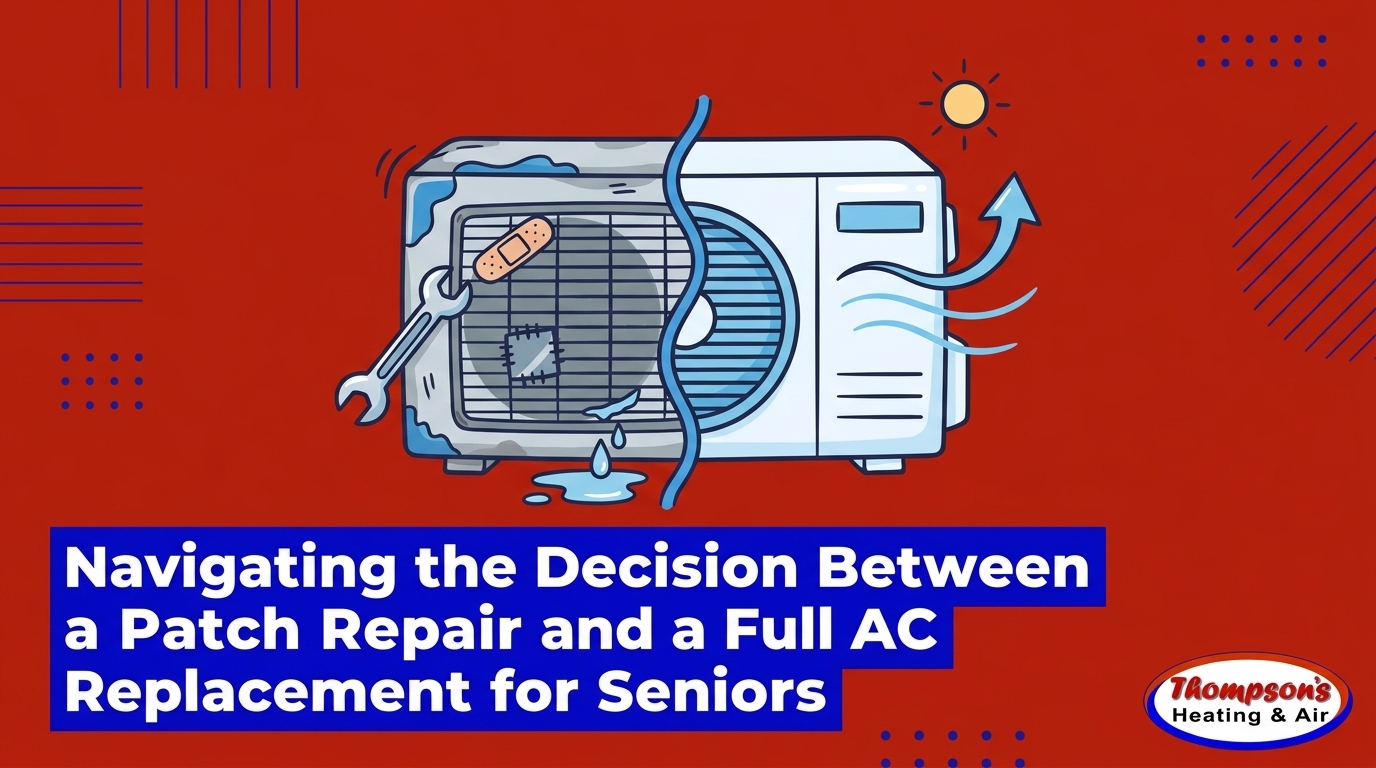
When the AC Fails During an August Heatwave: A Critical Choice
The thermostat is set to a comfortable temperature, but the indoor heat keeps climbing, and your air conditioner is making a strained humming noise that was not there yesterday. Navigating the decision between a patch repair and a full AC replacement for seniors becomes an immediate, high-stakes reality when an aging system fails during an August late-summer heatwave. For older adults, a broken air conditioner is far more than a simple inconvenience; it is a sudden disruption that impacts safety, comfort, and financial peace of mind. When the house begins to trap heat, the pressure to make a fast decision can feel overwhelming.
Many senior homeowners find themselves caught in a stressful dilemma: do you apply a quick band-aid fix to get through the rest of the summer, or do you invest in a permanent replacement? A temporary fix might seem appealing to protect a fixed budget, but it often leaves you wondering if the unit will survive the next temperature spike. On the other hand, a new system requires a larger upfront commitment but guarantees uninterrupted cooling when you need it most. When you need trustworthy AC patch repair, starting with an honest, pressure-free assessment can help you weigh these options clearly. The right choice is ultimately about ensuring safe, reliable cooling without straining your resources or your well-being.
Why Reliable Cooling is a Health Necessity, Not a Luxury
In Woodland CA, the extreme dry heat of the Sacramento Valley elevates the risk for seniors, making reliable cooling a non-negotiable safety requirement rather than a household luxury. As we age, our bodies do not adjust as quickly or efficiently to sudden temperature spikes. Medications can interfere with the body's natural ability to regulate heat, and a reduced sweat response means that older adults are significantly more susceptible to heat exhaustion and heat stroke.
When an air conditioner fails during an August heatwave, poorly insulated homes can reach dangerous indoor temperatures within a matter of hours. The stagnant, hot air becomes trapped inside, turning the living space into an unsafe environment. This reality completely reframes the repair versus replacement conversation. It is no longer just a financial calculation about equipment lifespan; it is a critical health and safety risk assessment.
Understanding the Impact of Indoor Heat:
• Indoor Temp Above 80°F — Impact on Younger Adults: Mild discomfort, easily mitigated with fans. — Impact on Senior Homeowners: Elevated heart rate, difficulty cooling down naturally.
• Sudden Temperature Spikes — Impact on Younger Adults: Body adjusts through normal perspiration. — Impact on Senior Homeowners: High risk of heat stress due to delayed physiological response.
• Prolonged Exposure (24+ hours) — Impact on Younger Adults: Fatigue and poor sleep quality. — Impact on Senior Homeowners: According to CDC guidelines, significant risk of heat-related illness requiring medical attention.
Given these risks, patching a heavily degraded system carries a hidden danger. If that patch fails a week later when temperatures peak again, the homeowner is right back in a hazardous situation. Ensuring a dependable cooling source is the most vital step in protecting older adults during the hottest months of the year.
Evaluating the Band-Aid Fix: When a Patch Makes Sense
The Problem: Your air conditioner suddenly stops blowing cold air, or the outdoor unit refuses to turn on entirely. When this happens, it is easy to assume the worst and brace for a massive home expense.
The Cause: Not every breakdown requires a massive overhaul. Often, a complete system halt is caused by a single, isolated component failure—like a blown dual run capacitor, a tripped breaker, or a malfunctioning contactor.
The Solution: In these specific scenarios, a targeted patch repair is absolutely the right choice.
We recently visited a homeowner who believed their entire air conditioning system needed replacement due to its advanced age. They were preparing for a major disruption to their savings. However, after a thorough examination, our technician determined the system only needed a minor tune-up. We performed the tune-up instead, completely avoiding an unnecessary replacement. This highlights the importance of working with an HVAC provider committed to pressure-free advising, prioritizing what the customer actually needs rather than pushing for an aggressive upsell.
A patch makes the most sense when your system is relatively young, has been well-maintained, and the breakdown is tied to a minor electrical issue rather than a catastrophic compressor failure. A well-executed minor repair can extend your system's life significantly without putting unnecessary strain on a fixed retirement income. The key is securing an honest assessment from a technician who will clearly explain the root cause of the failure. If the core components—like the compressor and the evaporator coil—are still in good health, a simple repair is often all it takes to restore safe, comfortable cooling to your home.
Recognizing When a Full System Upgrade is the Safer Bet
While a patch is great for minor issues, there comes a point where repeatedly fixing an obsolete system becomes a financial and safety liability. In our experience advising seniors, recognizing the warning signs of a failing unit is crucial for preventing a dangerous mid-summer breakdown. When the underlying machinery is simply too worn out to function reliably, a full AC replacement transitions from an option to a necessity.
Here is a step-by-step way to evaluate if your system has reached the end of its safe operational life:
1. Apply the 5,000 Rule: This is a simple metric for evaluating repair viability. Multiply the age of your equipment by the estimated repair quote. If the resulting number exceeds 5,000, investing in a new system is generally the safer, more logical bet.
2. Check Your Refrigerant Type: Older systems often rely on R-22 refrigerant (commonly known as Freon). Because this refrigerant has been phased out globally, securing it for a leak repair is incredibly difficult and prohibitively expensive. Sinking resources into an R-22 system is rarely a wise long-term investment.
3. Evaluate the Frequency of Repairs: If you have had to call a technician out more than twice in the past two years for different issues, your system is demonstrating cascading failures.
4. Assess Your Peace of Mind: Consider the psychological toll. If you find yourself constantly listening for strange noises or worrying that the system won't survive the next heatwave, that stress alone is a strong indicator that it is time for an upgrade.
The Hidden Costs of Frequent Breakdowns
It is easy to look at a single repair bill and think it is the cheaper option. However, cumulative small repair bills quickly drain fixed budgets over time. Furthermore, aging units lose their energy efficiency drastically. An old, struggling air conditioner has to run twice as long to achieve the same cooling effect, which silently drives up your monthly utility bills. A modern, high-efficiency system eliminates these hidden costs, providing guaranteed peace of mind and consistent, reliable cooling throughout the harshest August heatwaves.

Balancing Fixed Incomes with Long-Term Peace of Mind
We completely understand and validate the anxiety that comes with unexpected major home expenses, especially for those living on a fixed retirement income. When an air conditioner fails, the immediate worry is often how a massive project will impact years of careful budgeting. However, balancing your budget with your need for safety does not mean you have to settle for an unreliable, patched-together system.
First, it is important to factor in the long-term energy efficiency savings that come with modern units. Today's air conditioners are vastly more efficient than models built even ten years ago. This increased efficiency translates directly into lower monthly utility bills, which helps offset the overall impact on your living costs. Knowing the signs your HVAC needs replacing allows you to plan for these efficiency upgrades before an emergency forces your hand.
Resources for Easing the Transition:
• Generic Federal Tax Credits: Depending on the type of system you install, federal tax credits may apply to qualifying high-efficiency heat pump or AC installations. We always advise readers to consult a tax professional to see what current programs they may qualify for.
• Local Utility Incentive Programs: Many local utility companies offer generic rebates and incentives for homeowners who upgrade away from energy-hogging legacy systems to modern, eco-friendly units.
• Flexible Financing Options: Rather than draining your savings all at once, many reputable HVAC providers offer flexible financing plans. These plans allow seniors to secure reliable cooling immediately while spreading the obligation into predictable, manageable monthly amounts that fit comfortably within a fixed income.
By exploring these avenues, you can protect your hard-earned savings while ensuring your home remains a safe, comfortable sanctuary regardless of the weather outside.
Proactive Protection: The Role of Ongoing Upkeep
The absolute best way to avoid the stressful "repair or replace" dilemma mid-heatwave is through proactive, consistent care. Waiting for a system to break down before calling a technician puts you in a vulnerable position. By prioritizing ongoing upkeep, you take control of your home's comfort and significantly reduce the likelihood of facing an emergency decision when the weather is at its worst.
HVAC systems rarely fail when it is convenient. For instance, another customer experienced a complete heater failure on a Sunday morning during a winter cold snap. While our technicians were dispatched quickly and had the system repaired and operational by the next day, that 24-hour waiting period is incredibly stressful for anyone, especially older adults. Whether it is a freezing Sunday morning or a scorching August afternoon, emergency breakdowns take a toll.
Routine check-ups catch failing components—like fraying wires, weak capacitors, or low refrigerant levels—long before they cause a complete system shutdown. During a standard visit, a technician will clean the coils, test the electrical connections, and monitor the overall health of the compressor. This ongoing monitoring provides invaluable peace of mind. We highly recommend establishing a relationship with a reliable local team through a routine maintenance plan before an emergency strikes. Having a trusted technician who already knows your system's history makes all the difference when you need advice you can count on.
Frequently Asked Questions from Senior Homeowners
At what age should you replace an air conditioner?
Most central air conditioning systems last between 12 and 15 years with proper maintenance. If your unit is approaching or has exceeded this age range, it is wise to start planning for a replacement. Older units become increasingly prone to sudden failures and lose their energy efficiency, making them more expensive to operate during peak summer months.
Is it worth fixing a 15-year-old AC unit?
Generally, pouring extensive resources into a 15-year-old AC unit is not recommended. At this age, the system is likely using obsolete R-22 refrigerant and has major components that are nearing the end of their lifespan. While a minor, inexpensive patch might buy you a few weeks, a major repair is usually a poor investment compared to the reliability of a new system.
How do I know if my AC needs replacing or just repairing?
You can use the 5,000 rule as a baseline: multiply the unit's age by the repair estimate, and if it exceeds 5,000, replacement is usually better. Additionally, if your system requires frequent repairs, struggles to keep the house cool, or causes your energy bills to spike dramatically, it is likely time for a full upgrade rather than another patch.
Is it safe to leave a broken AC during a heatwave?
For senior homeowners, leaving a broken AC during a severe heatwave is absolutely not safe. Older adults are highly vulnerable to heat-related illnesses, and indoor temperatures can reach dangerous levels very quickly. It is critical to seek immediate repairs or temporary cooling solutions to protect your health and safety.
Are there tax credits or incentives for seniors replacing an AC?
Yes, there are often generic federal tax credits and local utility incentive programs designed to encourage the installation of high-efficiency cooling systems. While specific programs vary by region and year, these incentives can help offset the initial investment. We recommend consulting with a tax professional or your local utility provider to understand exactly what you qualify for.
How quickly can a failing AC be evaluated during peak summer heat?
Reputable local HVAC companies prioritize emergency calls, especially for vulnerable populations like seniors facing extreme temperatures. While peak summer heat brings high demand, established teams usually reserve capacity for urgent health-and-safety evaluations, often arriving the same day or the next morning to assess the situation.
Finding Compassionate, Pressure-Free Guidance for Your Home
Making the choice between patching an old system and investing in a new one is never easy, especially when balancing a fixed income with the critical need for safe, reliable cooling. The right choice always prioritizes your health and safety while deeply respecting your financial boundaries. In Woodland CA, you deserve honest, transparent advice without aggressive sales tactics or fear-mongering.
Our core commitment is providing trustworthy, pressure-free advising tailored to the unique needs of senior customers. We believe in giving you all the facts, explaining your options clearly, and letting you make the decision that feels right for your home. If you are worried about your system surviving the rest of the summer, reach out to us for professional air conditioning services. We are here to help you secure the peace of mind and comfort you absolutely deserve.



.avif)
.avif)
.png)
