
How a Pre-Move-In HVAC Installation Prevents Disruption for New Homebuyers

The Hidden Cost of Waiting to Upgrade Your New Home's Heating and Cooling
At Thompson's Heating & Air, we often remind clients that understanding exactly how a pre-move-in HVAC installation prevents disruption for new homebuyers is critical if you just closed on an older property with an aging climate control system. Closing on a house often means inheriting a furnace or air conditioner that is well past its prime and on the verge of total failure. While the temptation is strong to wait until the old unit finally breaks down before replacing it, delaying this inevitable project guarantees a highly disruptive, multi-day construction zone right in the middle of your newly settled living space.
To explore modernizing your home's air conditioning systems or to schedule a comprehensive HVAC installation, utilizing the brief window between closing escrow and moving your furniture in is the ultimate project management hack.
Tackling a major mechanical upgrade while the house is completely empty eliminates unnecessary stress and physically protects your belongings. Especially during the September and early fall transition, when contractor schedules fill up quickly, securing your installation date before you occupy the home ensures you are not left waiting for parts while your family shivers through the first cold snap of the year. The short period when you hold the keys but have not yet unloaded the moving truck offers a rare opportunity to execute major, messy home improvements with zero impact on your daily routine.
Why HVAC and Ductwork Retrofits Generate Massive Construction Dust
The physical reality of a full system replacement is inherently messy. Upgrading an aging climate system is rarely as simple as sliding an old box out and sliding a new one in. Full replacements often require invasive structural work, including cutting into drywall to resize return vents, modifying utility closets, and disrupting decades-old attic insulation.
Removing old, deteriorating ductwork releases years of settled airborne particulates directly into the home's environment. In our years of servicing Woodland CA older housing stock, our technicians frequently find that these existing ducts contain decades of accumulated pet dander, dust mites, fiberglass fragments, and general household debris. When our crew pulls these old materials down, a fine layer of construction dust inevitably becomes airborne.
If the home is already occupied, this microscopic dust settles into unprotected upholstery, carpets, electronics, and bedding. Cleaning up after an occupied-home installation requires extensive, repeated vacuuming and wiping down of every surface. By executing the project before your move-in date, you protect your valuable furniture and allow for a thorough, top-to-bottom deep clean of the empty rooms before you ever bring your belongings inside.
Protecting Your Indoor Environment
Dust containment is significantly easier and more effective in an empty home. Without sofas, rugs, and bookshelves in the way, technicians can lay down protective drop cloths seamlessly across bare floors. Post-installation cleanup is drastically faster because crews do not have to navigate around your fragile household goods or worry about cross-contaminating your living areas.
Key particulates disturbed during a full retrofit include:
• Drywall silica: Fine white dust generated when cutting new registers or expanding utility closets.
• Attic insulation: Loose-fill or fiberglass batts that get displaced when routing new overhead ducting.
• Legacy duct debris: Decades of trapped allergens that fall out when old flexible tubing is disconnected and removed.
• Sawdust and framing splinters: Created when reinforcing platforms for heavier, modern high-efficiency equipment.
Taking care of this dirty work while the rooms are bare is one of the most effective indoor air quality improvements you can make, ensuring you breathe clean, filtered air from the very first night you sleep in the house.
Avoiding the Driveway Clash: Movers vs. Contractors
Moving day is a chaotic, high-stress event that involves large box trucks, constant heavy foot traffic, and exterior doors being propped open for hours at a time. An HVAC installation crew requires similar logistical space. They need driveway clearance for heavy work vans, wide pathways to carry 200-pound condenser units safely, and dedicated staging areas for sheet metal, tools, and refrigerant tanks.
Trying to manage both a moving crew and a mechanical contractor on the same property simultaneously leads to frustrating scheduling conflicts and slowed progress for everyone involved. Movers cannot safely navigate a hallway if technicians are actively brazing copper pipes or pulling wire overhead. Conversely, technicians cannot maintain a safe, efficient work zone if family members and movers are constantly stepping over their tools.
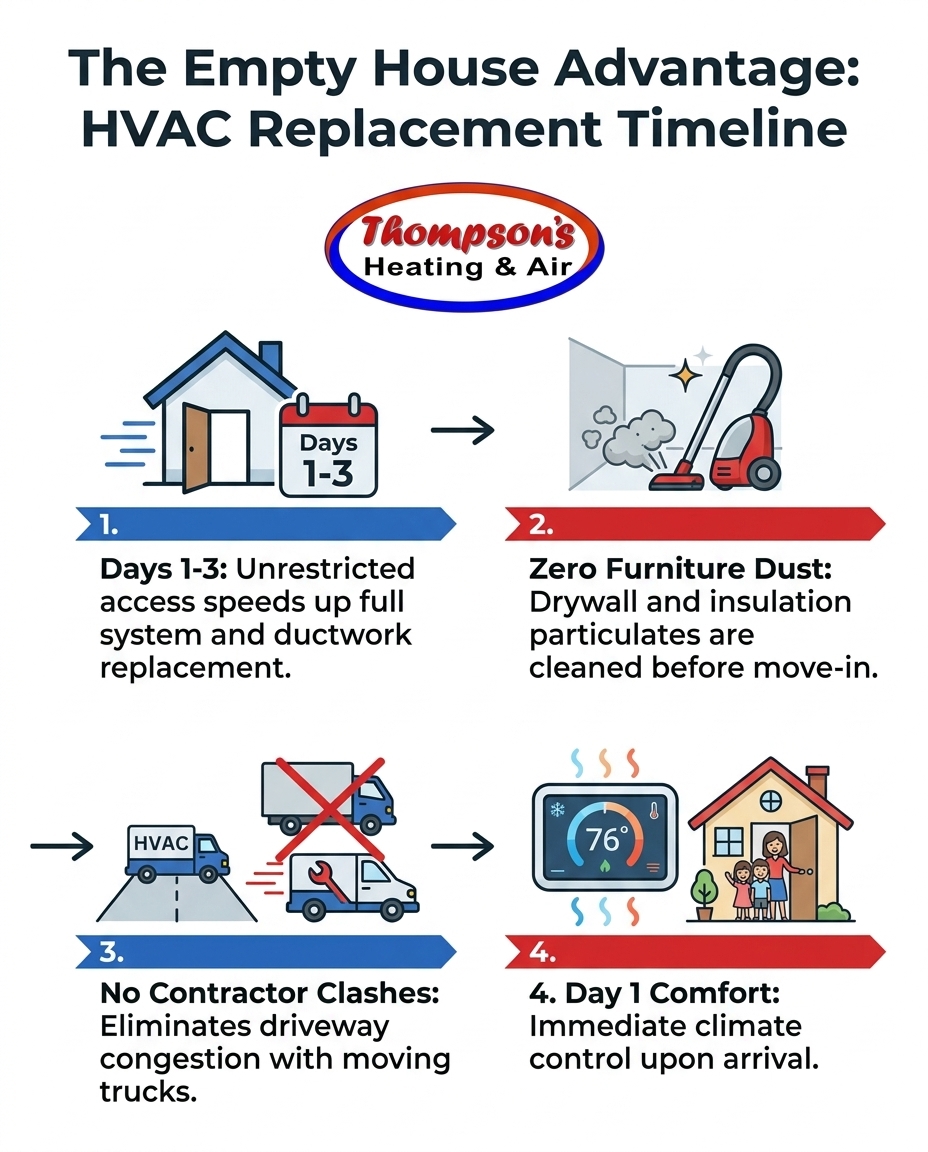
An empty-house installation gives the contractors unrestricted access to the property. This lack of interference speeds up the timeline significantly. Especially during the busy September and early fall transition, getting the contractors in and out before the moving trucks ever pull up to the curb ensures that your official move-in day is focused entirely on unpacking, rather than playing traffic cop in your own driveway.
The Unique Challenge of Upgrading Ductwork in Older Properties
Addressing the specific difficulties of retrofitting older homes reveals exactly why doing the work in an empty house is so crucial. Many older properties feature aging, inaccessible, or undersized ductwork that simply cannot support the airflow requirements of modern, high-efficiency systems.
When deciding whether to repair or replace an aging HVAC, homebuyers often realize that patching up a 30-year-old duct system is a waste of money. Retrofitting these spaces properly often requires opening up lath-and-plaster ceilings, working in tight, messy crawlspaces, or cutting new pathways through original framing. When our team tackles these upgrades in Woodland CA older housing stock, these structural realities mean the job will be loud, invasive, and dirty. Upgrading before move-in is also an ideal time to capitalize on generic energy rebates or federal tax credits that may apply to qualifying high-efficiency heat pump installations (we always advise verifying current programs with your utility provider or a tax professional).
When a home is occupied, technicians must perform a daily teardown and cleanup of their tools so the family can use the space in the evening. They have to seal off work areas, pack up ladders, and sweep up debris every single afternoon, only to set it all back up the next morning. This daily cycle extends the overall project duration by days.
• Daily Cleanup — Occupied Home Installation: Requires 1-2 hours of daily teardown to make the home livable overnight. — Empty Home Installation: Tools and staging remain in place, maximizing active working hours.
• Access — Occupied Home Installation: Technicians must carefully navigate around beds, TVs, and fragile items. — Empty Home Installation: Completely unrestricted movement throughout the property.
• Timeline — Occupied Home Installation: Often extended by 20-30% due to cautious movement and daily resets. — Empty Home Installation: Completed rapidly; crews work continuously without interruption.
• Dust Control — Occupied Home Installation: High risk of particulates settling into carpets and upholstery. — Empty Home Installation: Zero risk to belongings; easy final sweep of bare floors.
Unrestricted access in an empty house allows crews to work continuously and efficiently. They can leave their staging areas intact overnight, allowing them to pick right back up the next morning and finish the job days faster than they could in a furnished house.
Managing Your Upgrade Remotely While You Pack
One of the biggest concerns buyers have is how to oversee a major renovation when they are busy packing up their old residence. Having completed numerous empty-home installations across Woodland CA, our team at Thompson's Heating & Air assures buyers they do not need to be on-site to ensure a successful, high-quality project.
Thorough documentation and seamless communication mean you can stay at your current house focusing on your move. Professional teams utilize digital invoicing, text-message photo updates, and remote project management to keep you fully informed. We emphasize thorough documentation and remote project updates, which completely eliminates the need for the homeowner to hover on-site while the work is being done.
The remote management process typically follows these steps:
1. Initial Site Walk-Through: You meet the project manager at the empty house once to confirm equipment locations, thermostat placement, and vent modifications.
2. Digital Progress Updates: The crew sends photos of the removed equipment, the newly run ductwork, and the installed units as milestones are reached.
3. Independent Execution: Crews complete the zoning, electrical setup, and mechanical installation entirely independently.
4. Final Walk-Through and Handoff: Once testing is complete, the team provides the keys, explains the new thermostat, and hands over a perfectly conditioned home.
This hands-off approach removes a major layer of stress from the real estate transition. Our team knows how critical trust is when you aren't in the room. For example, when one recent customer experienced a sudden AC outage during extreme heat due to an unexpected scheduling and address mix-up, our owner personally drove out to fix the unit immediately to ensure the family was safe. We bring that same level of intense accountability and direct oversight to your pre-move-in project, ensuring the job is done right even when you are miles away packing boxes.
Securing Immediate Climate Comfort on Move-In Day
Moving is physically exhausting. Carrying heavy boxes, navigating stairs, and directing movers takes a toll on your body. Arriving at a house with a failing, inadequate climate system only amplifies that physical stress. You want your new home to be a sanctuary, not a sweaty, uncomfortable work zone.
During seasonal shifts, temperatures can swing wildly, making a reliable system critical for the first night in a new home. As local experts in the Sacramento Valley, we know the September transition is notoriously unpredictable. You might experience late-summer extreme heat in the afternoon, followed by surprisingly chilly fall temperatures overnight. Moving into a house with a broken air conditioner at 3:00 PM, only to realize the furnace won't ignite at 3:00 AM, guarantees immediate discomfort for your family.
A pre-move-in installation guarantees that the home is perfectly cooled or heated the moment you walk through the door. By scheduling an AC replacement before the September and early fall transition truly takes hold, you take control of your indoor environment. This proactive approach ensures that your first memories in the new house are comfortable, relaxing, and entirely free of mechanical anxiety.
Frequently Asked Questions About Pre-Move-In HVAC Upgrades
How messy is replacing an HVAC system?
Replacing an HVAC system is a highly invasive process that generates significant dust and debris. It involves cutting drywall, disturbing old attic insulation, and removing legacy ductwork that has collected particulates for decades. While technicians use drop cloths and vacuums, fine dust inevitably settles on surfaces throughout the home. Doing this work before furniture is moved in is the best way to protect your belongings.
Should I replace ductwork before moving in?
Yes, replacing your ductwork before move-in is highly recommended. Pulling old, deteriorating ducts out of ceilings and crawlspaces releases trapped allergens, fiberglass, and pet dander into the air. Tackling this messy job in an empty house prevents that dust from settling on your upholstery and allows crews to work much faster.
How long does it take to install a new HVAC system?
A full system and ductwork replacement typically takes 1 to 3 days to complete. The exact timeline depends on the complexity of the ductwork modifications, the location of the equipment, and the age of the home. When a house is completely empty, technicians can often shave a full day off the timeline because they do not have to perform daily cleanup routines to make the home livable overnight.
Can you replace ductwork after moving in?
Yes, you can replace ductwork after moving in, but it requires extensive preparation to protect your belongings. Technicians will need to carefully cover your furniture, beds, and electronics with plastic sheeting, and they will have to work cautiously around your daily routine. This restricted access usually makes the project take longer and creates a significant disruption to your household.
Does an empty house speed up the HVAC installation timeline?
Absolutely. Unrestricted access allows installation crews to work continuously without stopping for daily teardown and cleanup for the occupants. Technicians can leave their tools, ladders, and materials staged overnight, allowing them to start working immediately the next morning. This efficiency is one of the biggest advantages of scheduling the work during the escrow window.
Start Your Next Chapter in Total Comfort
Prioritizing your heating and cooling replacement before the moving trucks arrive saves you from severe home disruption, scheduling headaches, and massive amounts of construction dust. By taking advantage of the empty-house window during the September and early fall transition, you turn a potentially messy construction project into a seamless, hands-off upgrade. Enjoy the peace of mind that comes with knowing your family will step into a perfectly comfortable, clean environment on day one. Reach out to our professional team today to learn more about how to coordinate your installation perfectly during your upcoming escrow window.



.avif)
.avif)
.png)
