Why We Recommend Staggering Your Heating Startup Before Temperatures Drop

The Hidden Risk of Waiting for the First Frost
Summer in Woodland is finally winding down, and the evenings are starting to carry that familiar September chill. But while you might not be reaching for the thermostat for daily comfort just yet, there is a hidden risk in leaving your system completely untouched until the house is actually freezing. Why We Recommend Staggering Your Heating Startup Before Temperatures Drop is simple: waiting for the first frost turns a minor, easily fixable malfunction into a freezing, stressful emergency.
When you need reliable heating services or want to schedule proactive heating maintenance, testing your system early gives you the upper hand.
Most homeowners make the same understandable mistake every year. They leave their thermostat set to 'Off' or 'Cool' throughout the mild early fall weeks. Then, the first truly bitter night arrives, and they walk over to switch the heat on, expecting instant warmth. Instead, they are met with cold air blowing from the vents, strange clicking noises, or a system that refuses to turn on at all. Discovering a heating failure on the coldest night of the year leads to incredibly stressful, uncomfortable waits wrapped in blankets while trying to track down an available technician.
By introducing a proactive 'test cycle' during the September pre-heating-season, you take control of your home's comfort. Instead of crossing your fingers and hoping for the best when the weather turns harsh, you can verify your system's readiness on a mild afternoon. This simple shift in seasonal habits protects your family from unexpected breakdowns and ensures your equipment is fully prepared to handle the heavy workload of winter.
Understanding the Industry's First-Freeze Bottleneck
The Problem: To truly understand why early testing is so important, you have to look at the logistical reality of the HVAC industry during the first major cold snap. Woodland CA and surrounding Yolo County are known for deceptively mild autumns. You might enjoy comfortable 70-degree afternoons for weeks, only to have the weather suddenly shift to freezing overnight temperatures without much warning. This catches thousands of homeowners off guard simultaneously.
The Cause: When that sudden temperature drop hits, hundreds of local homeowners walk to their thermostats on the exact same evening. A significant percentage of those systems will fail to ignite due to dust buildup, worn sensors, or dormant mechanical issues from sitting unused all summer. The next morning, local HVAC companies experience a massive, predictable spike in emergency service calls. The dispatch board lights up, and what is normally a manageable schedule instantly transforms into a week-long backlog.
We see this play out every winter. For example, during one particularly cold Sunday morning, a local homeowner woke up to find their heater had completely failed overnight. It turned out their neighbor was dealing with the exact same issue at the exact same time. While our technician, Kevin, and his associate were able to come out that same day, fix the neighbor's unit, and get the first homeowner's unit scheduled to be running the next day, not everyone is that fortunate during a massive area-wide freeze. When hundreds of systems fail simultaneously across the county, a rapid response becomes a logistical impossibility for the industry at large.
The Solution: Beating this seasonal rush is the primary reason to test your system early. By running your heater during the September pre-heating-season, you completely bypass the first-freeze bottleneck. If your system needs attention, you can schedule a repair at your convenience, rather than competing with hundreds of your shivering neighbors for the next available appointment.
What It Means to Stagger Your Heating Startup
Defining the strategy of 'staggering' your startup is straightforward. It simply means running a controlled, 15-minute test cycle well before you actually need consistent heating in your home. Instead of waiting for late November or December, you pick a mild day in the September pre-heating-season to wake your system up.
This approach transitions the initial system engagement from a dreaded seasonal chore into a calm, controlled diagnostic check. You are not turning the heat on for the winter; you are simply taking the system for a quick test drive. Staggering your startup involves:
• Choosing the right day: Picking an afternoon when the weather is mild enough that you will not mind running the heater for a few minutes.
• Active observation: Listening to the system start up, paying attention to airflow, and noting any unusual behaviors.
• Controlled shutdown: Turning the system back off once you have verified it works, knowing it is ready for the real cold weather.
As a company focused on proactive customer care, we believe in giving you the insider knowledge needed to avoid emergency wait times altogether. The peace of mind gained by confirming your system's operation on your own terms is invaluable. If you find an issue during this staggered startup, you have the luxury of time. You can schedule service without paying emergency fees, without taking unexpected time off work, and without your family suffering through a freezing night.
How to Safely Run a Pre-Season Thermostat Test Cycle
Running a test cycle is highly recommended, but it must be done safely. We never advise homeowners to open up their furnace cabinets or attempt DIY repairs on complex, potentially dangerous heating equipment. Your role in the staggered startup is strictly at the thermostat and observing the vents.
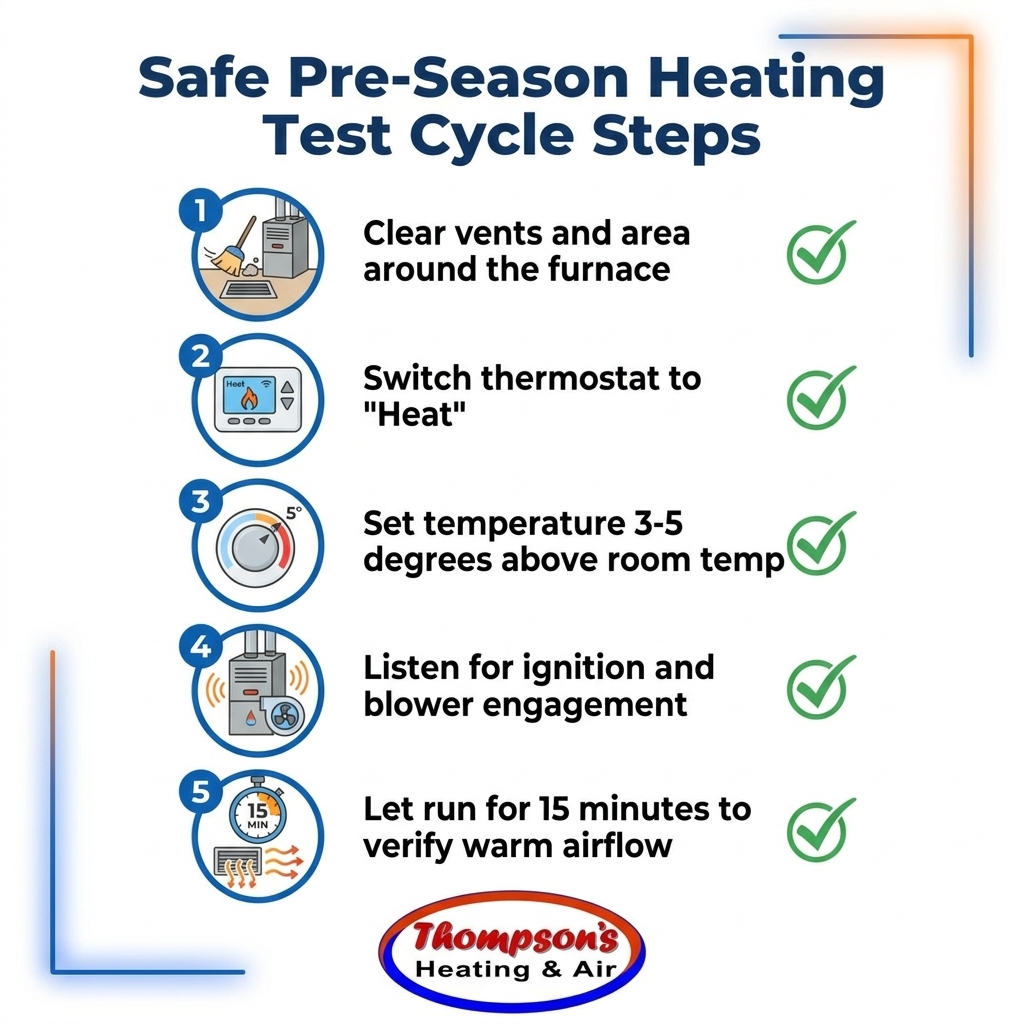
Here are the actionable, safe steps to test your system before the cold weather hits Woodland CA and surrounding Yolo County:
1. Clear the surrounding area: Before doing anything, ensure the area around your indoor furnace unit is completely clear of boxes, stored items, or flammable materials that may have accumulated over the summer. Additionally, walk through your home and ensure all indoor supply and return vents are open and unblocked by rugs or furniture.
2. Adjust the thermostat mode: Go to your thermostat and switch the system mode from 'Cool' or 'Off' to the 'Heat' setting.
3. Set the target temperature: Adjust the temperature dial or digital setting to be 3 to 5 degrees above the current room temperature. This ensures the system receives a strong, clear signal to initiate a full heating cycle rather than just briefly clicking on and off.
4. Listen for the sequence: Stand near a vent or the furnace closet and listen carefully. You should hear a click at the thermostat, followed shortly by the system igniting, and finally the blower fan engaging to push air through the ductwork.
5. Verify warm airflow: Allow the system to run uninterrupted for a full 10 to 15 minutes. Place your hand near a few different vents in the house to verify that consistent, warm air is flowing. Once you have confirmed operation, you can safely switch the thermostat back off.
Managing the Initial Burning Dust Smell
One of the most common concerns homeowners have during the very first heating cycle of the year is a distinct, sometimes alarming odor. Over the long spring and summer months, your furnace sits completely dormant. During this time, standard household dust, pet dander, and airborne particles settle directly onto the heating components, including the burners and heat exchangers.
When you finally turn the system on, those components heat up rapidly, incinerating the settled dust. This creates a brief but noticeable burning dust smell that circulates through your vents. This odor is completely normal during the first cycle of the season.
This brings up another massive advantage of the staggered startup strategy during the September pre-heating-season. If you wait until a freezing night to turn your heater on, you are trapped inside with that burning dust smell because it is far too cold outside to ventilate your home. However, if you run your test cycle on a mild 70-degree afternoon, you can safely throw open your windows and doors, allowing fresh air to clear the smell out of your house in minutes.
While a brief dust odor is normal, you should remain observant. If the smell resembles burning plastic or electrical wires, or if the standard dust smell persists for more than 30 minutes without fading, turn the system off immediately. These are signs of a deeper issue. This is also a perfect time to read up on testing furnace heat exchangers before the first frost, as professional inspections can identify invisible hazards that a simple smell test might miss.
What to Do If Your Heater Fails the Early Test
The Problem: You followed the steps, set the thermostat 5 degrees higher, and waited—but things did not go as planned. Perhaps the system never clicked on, or the blower is running but only pushing cold air. Maybe the unit turns on for two minutes and then abruptly shuts off before the house warms up.
The Cause: These are classic signs of a malfunction. Short cycling (turning on and off rapidly) often points to a dirty flame sensor or an airflow restriction. Cold air blowing usually indicates an ignition failure or a problem with the gas valve. Complete silence means the thermostat isn't communicating with the unit, or a breaker has tripped.
The Solution: First and foremost, do not panic. Failing the test cycle early in the fall is exactly why this procedure is highly recommended. You have successfully identified a problem while the weather in Woodland CA and surrounding Yolo County is still perfectly comfortable. You are not in an emergency situation.
Do not attempt to open the furnace cabinet to clean sensors or adjust valves yourself. Modern heating equipment involves high-voltage electricity and combustible gases, making DIY repairs highly dangerous. Instead, securely turn the system back to the 'Off' position at the thermostat. If the blower continues to run uncontrollably, you can switch off the dedicated furnace breaker in your electrical panel. Then, calmly reach out to schedule professional heating repair. Because you caught the issue early, you can easily secure a convenient appointment slot well before the winter rush begins.
Why a Successful Test Run Doesn't Replace Professional Maintenance
It is incredibly satisfying to run your pre-season test cycle and feel warm air pouring from the vents. However, it is vital to understand the difference between a homeowner's basic operational check and the comprehensive safety tune-up performed by a licensed technician. A successful test run simply means the unit is capable of turning on; it does not mean the system is operating safely, efficiently, or reliably.
A test cycle only verifies basic ignition and airflow. It cannot tell you if your heat exchanger has a microscopic crack that could leak carbon monoxide into your home. It cannot measure if your system is drawing too much electrical current, which leads to premature motor failure. Professionals use specialized diagnostic tools to check critical components like gas pressure, electrical connections, and exhaust venting.
Homeowner Test Cycle vs. Professional Tune-Up
To put it in perspective, think of your test cycle as checking if your car starts in the driveway, while a professional tune-up is a full mechanical inspection by a mechanic. Routine professional care extends the lifespan of the equipment, lowers your monthly energy bills, and keeps your manufacturer warranty valid.
• Primary Goal — Homeowner Test Cycle: Verifies the unit turns on and identifies obvious airflow issues. — Professional Tune-Up: Calibrates gas valves, inspects for hazards, and optimizes performance.
• Safety Checks — Homeowner Test Cycle: Clears settled dust and checks for unusual noises or smells. — Professional Tune-Up: Inspects heat exchangers for carbon monoxide risks and checks venting.
• Mechanical Care — Homeowner Test Cycle: None. Strictly observational from the thermostat. — Professional Tune-Up: Lubricates moving parts, tightens electrical connections, measures draw.
• Timing — Homeowner Test Cycle: September pre-heating-season (15 minutes). — Professional Tune-Up: Annually, ideally right after your initial test cycle.
We strongly recommend securing an HVAC maintenance plan and scheduling a formal tune-up even if your test run was flawless. Proactive maintenance is the key to a stress-free winter.
Beat the Seasonal Rush and Secure Your Comfort
Understanding Why We Recommend Staggering Your Heating Startup Before Temperatures Drop is all about taking control of your seasonal comfort. By bypassing the predictable first-freeze backlog, you protect your home from stressful emergency breakdowns and ensure your family stays warm when the weather in Woodland CA and surrounding Yolo County finally plunges.
Early action guarantees peace of mind. Don't wait for the coldest night of the year to find out if your system is ready. Run your brief test cycle today, and then schedule your professional seasonal check-up to lock in peak performance for the months ahead. Taking these simple steps now ensures a warm, comfortable, and worry-free winter season.
Frequently Asked Questions
When should I turn on my heater for the first time?
You should run a brief 15-minute test cycle during the early fall, long before you actually need the heat. Picking a mild day in September allows you to verify the system works and schedule any necessary tune-ups before the busy winter rush begins. Waiting until the first freezing night often leads to long wait times if the system fails.
What should I do before turning my heater on for the winter?
Before turning your heater on, clear the space around the indoor furnace unit of any boxes or debris. Walk through your home to ensure all supply and return vents are open and unobstructed by furniture or rugs. Finally, check that your air filter is clean, as a heavily clogged filter can cause the system to overheat and shut down during its first cycle.
Why does my heater smell the first time I turn it on?
A brief burning dust smell is completely normal during the first startup of the season. Over the summer, household dust and particles settle on the internal heating components, and this dust is safely incinerated when the system heats up. If you test your system on a mild fall day, you can easily open your windows to ventilate the home until the smell dissipates.
Is it bad to turn on the heater early in the fall?
No, it is actually highly recommended to turn the heater on early for a short test run. Running the system for 10 to 15 minutes does not harm the equipment and serves as a vital diagnostic check. It allows you to identify hidden malfunctions on your own terms, completely avoiding the emergency service backlog that happens during the first major cold snap.
How long should a pre-season heating test cycle last?
A proper pre-season test cycle should last between 10 and 15 minutes. This is enough time for the thermostat to signal the unit, the ignition sequence to complete, the blower fan to engage, and warm air to fully circulate through your ductwork. Once you confirm steady warm airflow at the vents, you can safely turn the system back off.



.avif)
.avif)
.png)
