
Keeping Cool in the Valley: Why Maintenance Matters

Why the Benefits of Regular HVAC Maintenance in Hot Dry Valley Climates Are Too Important to Ignore
The benefits of regular HVAC maintenance in a hot dry valley like California's Sacramento Valley are significant — and for Woodland, CA homeowners, skipping routine service isn't just inconvenient, it's costly.
Here's a quick look at the top benefits:
• Lower energy bills - A well-maintained system can be up to 25% more efficient than a neglected one
• Longer equipment lifespan - Maintained systems last 15-20 years; neglected ones often fail in half that time
• Fewer emergency breakdowns - Routine checks catch small problems before they become expensive failures
• Better indoor air quality - Clean filters and coils reduce dust, allergens, and valley particulates in your home
• Warranty protection - Most manufacturers require documented professional maintenance to honor parts warranties
• Consistent comfort - A properly tuned system holds steady temperatures even when outdoor temps push past 100°F
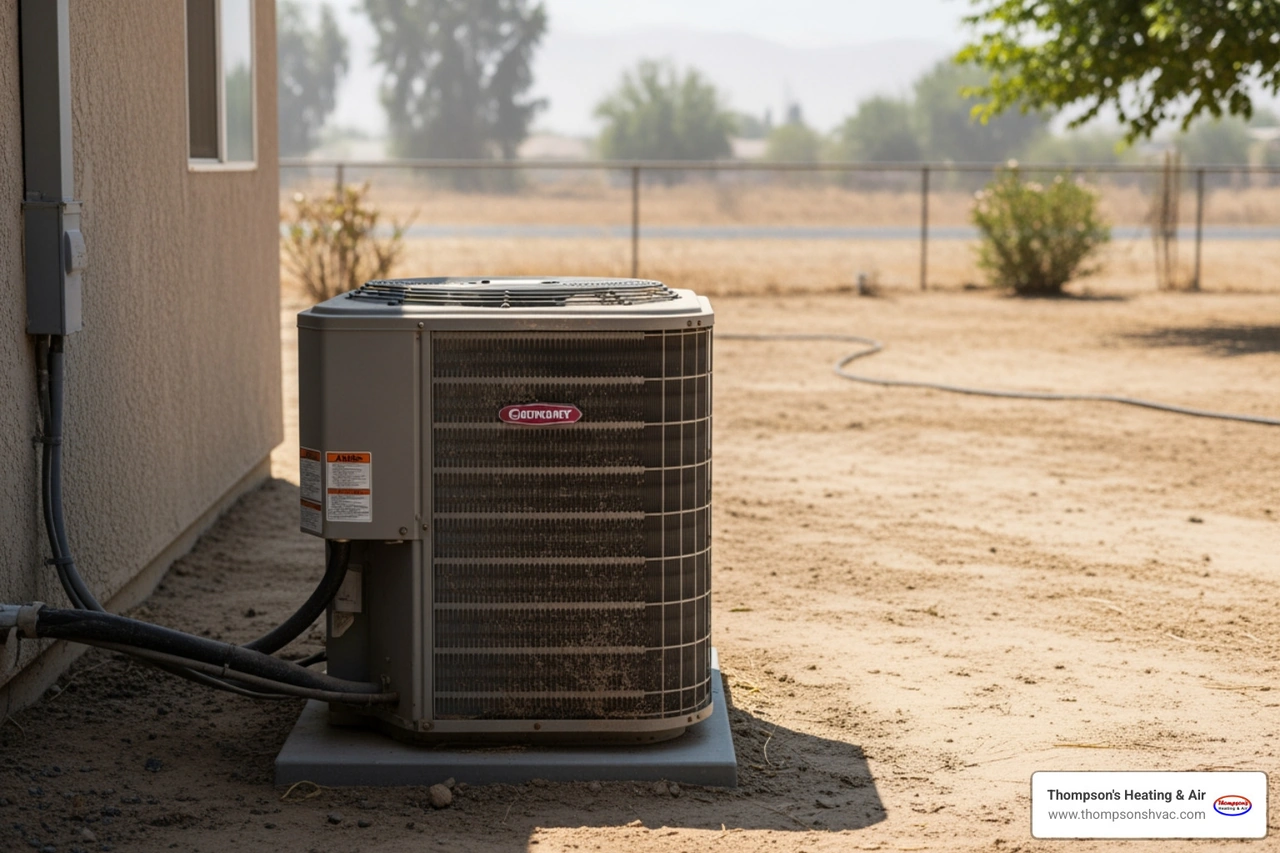
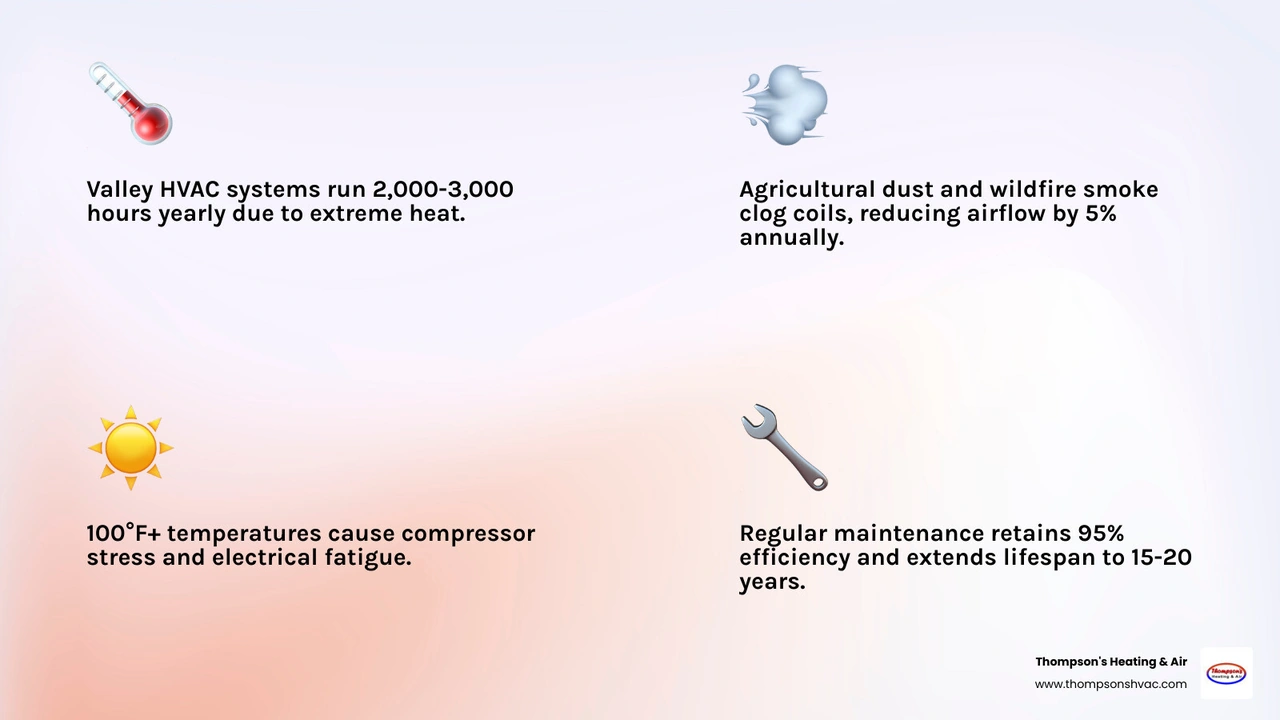
Valley summers are brutal. Temperatures in the Woodland area regularly exceed 100°F, and HVAC systems here run far longer than in most other parts of the country — often 10 to 11 months per year. That kind of extended runtime, combined with agricultural dust, wildfire smoke, and intense UV exposure, puts enormous strain on every component in your system. Without regular attention, even a quality unit will lose roughly 5% of its original efficiency every single year.
The good news? Consistent maintenance can help your system retain up to 95% of that original efficiency — keeping your home comfortable and your utility bills manageable, even during the hottest stretches of the year.
Why the benefits of regular hvac maintenance in hot dry valley are different from other climates
In Yolo County and nearby communities, HVAC maintenance is not a once-in-a-while chore. It is part of protecting one of the hardest-working systems in the home.
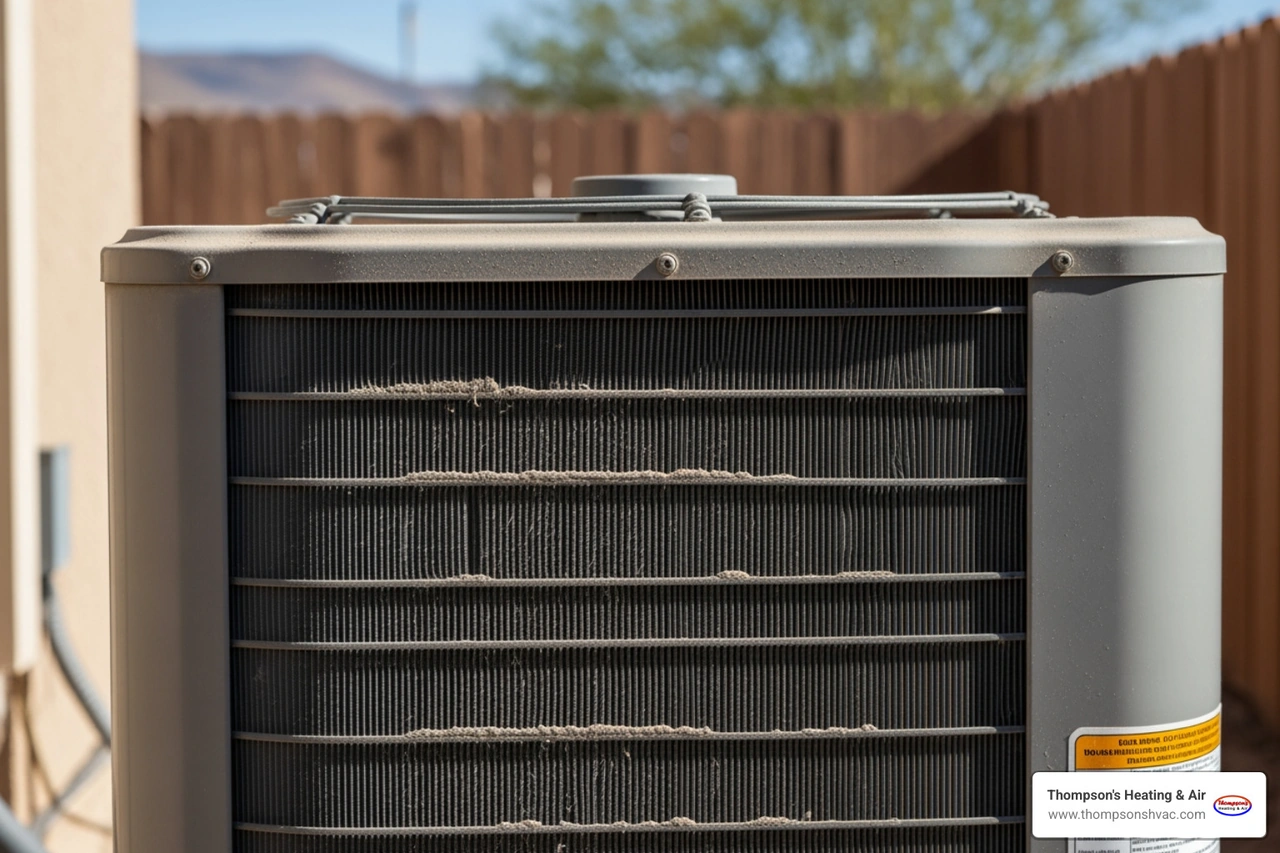
Our local climate puts equipment through a different kind of stress than mild coastal areas. We deal with long hot spells, very dry air, valley dust, smoke during wildfire season, and strong sun exposure on outdoor equipment. If you have ever seen a condenser coated with fine dust after a windy day, you have already seen why valley maintenance matters.
For more on local climate impact, see How Sacramento Valley Heat Affects Your HVAC and Fireplace.
Why hot, dry valley conditions wear HVAC systems down faster
Hot valley weather creates heavy cooling demand for months at a time. When outdoor temperatures climb above 100°F, your AC has to move heat out of your home while sitting in that same heat. That means:
• Compressors run longer and harder
• Fan motors face more wear
• Capacitors and contactors are exposed to more electrical strain
• Dust sticks to condenser coils and reduces heat transfer
• Air filters load up faster with fine particles
• UV exposure breaks down plastics, insulation, and exterior materials over time
Research on valley and desert-like climates shows these systems can operate 2,000 to 3,000 hours per year, far more than systems in milder regions. That extended runtime creates what homeowners feel as "my AC never gets a break," because honestly, it often does not.
When coils get dirty, they act like they are wearing a winter coat in July. Heat cannot leave the system efficiently, so energy use rises and parts wear out faster.
Benefits of regular hvac maintenance in hot dry valley homes during peak summer
During peak summer, regular maintenance helps your HVAC system do three things better:
1. Cool more efficiently
2. Avoid surprise breakdowns
3. Maintain steady comfort through long heat waves
That means better airflow, more accurate thermostat response, and less risk of the dreaded "why is it blowing warm air?" moment on a triple-digit afternoon.
Routine maintenance also helps preserve service records, which can matter for manufacturer warranty support. For homeowners in Woodland, Davis, West Sacramento, Winters, Dixon, and surrounding communities, that paper trail is not just paperwork. It is protection.
Top homeowner benefits of regular HVAC maintenance
The biggest advantage of maintenance is simple: your system performs closer to the way it was designed to perform.
Without service, HVAC systems can lose about 5% of their original efficiency each year. With regular tune-ups, they may retain up to 95% of that original efficiency. Well-maintained systems can also be up to 25% more efficient than neglected ones.
That leads to several practical benefits for homeowners:
• Lower energy use
• More reliable cooling and heating
• Fewer repair surprises
• Longer equipment life
• Cleaner indoor air
• Better day-to-day comfort
You can learn more in our articles on HVAC maintenance and repair and how to prevent HVAC emergencies with maintenance.
How maintenance lowers energy use and helps utility bills in extreme heat
A tune-up improves efficiency by correcting the small problems that quietly waste energy.
Common examples include:
• Dirty condenser or evaporator coils
• Low or incorrect refrigerant charge
• Clogged filters restricting airflow
• Thermostat calibration issues
• Loose duct connections
• Blower performance problems
• Short cycling caused by component wear
When airflow is restricted, the system has to run longer to reach the same temperature. When coils are dirty, heat transfer drops. When the thermostat reads incorrectly, your system may overcool or cycle too often. None of these issues look dramatic on day one, but over a full Sacramento Valley cooling season, they add up.
In very hot weather, even small efficiency losses matter because your system may be running for hours at a time. That is why maintenance can have such a noticeable effect on utility use.
How maintenance extends equipment life and prevents emergency failures
A lot of breakdowns are not random. They start as small, fixable issues:
• A weak capacitor
• A pitted contactor
• A blower motor drawing too much power
• Fan bearings wearing down
• A loose electrical wire
• A partially clogged condensate drain
• Debris around the outdoor unit choking airflow
Catching those early can prevent a much larger failure later. A maintenance visit gives us the chance to inspect, test, clean, tighten, and verify performance before a minor problem turns into a no-cooling emergency.
This is one reason maintained systems often last 15 to 20 years, while neglected systems may fail much earlier.
What should be done twice a year in a valley HVAC tune-up
For most homes in our area, the ideal schedule is biannual service:
• Spring for cooling preparation
• Fall for heating preparation
That timing helps your equipment enter each major season ready to perform. It is especially useful in our region, where cooling season is long and dusty conditions are common.
Helpful resources:
• Heating Maintenance in Woodland CA
Spring cooling maintenance checklist for hot weather readiness
Spring is the time to prepare for the longest, hardest-working part of the year. A cooling tune-up commonly includes:
• Cleaning condenser coils
• Checking refrigerant levels and pressures
• Testing thermostat operation and calibration
• Inspecting capacitors and contactors
• Verifying compressor and fan performance
• Measuring airflow
• Inspecting and flushing the condensate drain
• Tightening electrical connections
• Looking for worn insulation or damaged wiring
• Clearing debris from the outdoor unit
This visit helps make sure your system can reject heat properly before the first big heat wave hits.
Fall heating maintenance checklist for valley homes
Even in a hot valley climate, heating maintenance still matters. Nights get cold, and heating systems should be checked before winter use. A fall visit may include:
• Furnace or heat pump inspection
• Heat exchanger check
• Ignition system testing
• Blower cleaning
• Safety control verification
• Carbon monoxide safety checks where applicable
• Venting inspection
• Thermostat testing
• Filter inspection or replacement
For homeowners with dual-purpose systems like heat pumps, this seasonal check helps ensure both comfort and safe operation.
DIY tasks homeowners can do between professional visits
There are several safe tasks homeowners can handle between tune-ups. These small habits make a real difference.
• Check your filter every month
• Replace filters as needed, especially during dusty or smoky periods
• Keep supply and return vents clean and unblocked
• Dust around indoor registers
• Maintain about 2 feet of clearance around the outdoor unit
• Remove leaves, grass, and debris from around the condenser
• Listen for unusual noises like buzzing, grinding, or squealing
• Watch for weak airflow or longer run times
• Check for water near the indoor unit
For filter guidance, visit How Often Should You Change Your HVAC Air Filter.
Safe DIY can help, but coil cleaning, refrigerant work, electrical testing, and deep performance checks should be left to professionals. HVAC maintenance should be helpful, not an accidental science experiment.
Indoor air quality, ventilation, and humidity in dry valley homes
Comfort is not just temperature. In the valley, air quality is a major part of the HVAC conversation.
Dust, pollen, field debris, and wildfire smoke particles can all affect indoor air. Because many homes stay closed up during heat waves, those contaminants can circulate for long periods if the system is not maintained properly.
Our HVAC service in Woodland, CA often includes addressing the connection between system performance and indoor air quality.
Benefits of regular hvac maintenance in hot dry valley air quality and comfort
Maintenance supports cleaner indoor air in several ways:
• Filters can capture particles more effectively when replaced on time
• Clean coils are less likely to collect grime that affects airflow
• Return airflow stays stronger, helping the system circulate and condition air properly
• Dust buildup inside key components is reduced
• Homeowners often notice less visible dust and fewer airborne irritants
In a dry valley climate, dust is relentless. It gets into outdoor coils, onto filters, and into duct systems over time. If airflow drops, comfort drops too. Rooms may feel stuffy, uneven, or harder to cool.
Regular service helps keep conditioned air moving the way it should.
Why ventilation and humidity control still matter in a dry climate
Dry climates still need balanced ventilation and humidity control. In fact, very dry indoor air can create its own comfort problems.
A healthy indoor humidity range is generally around 30% to 50%. Too little humidity can make indoor air feel harsh, contribute to dry skin and irritated sinuses, and make the home feel less comfortable even when the temperature is correct.
Ventilation matters too, especially in tightly sealed homes. Good airflow helps remove stale indoor air and dilute pollutants. Helpful strategies can include:
• Using bathroom exhaust fans
• Running kitchen exhaust when cooking
• Making sure return airflow is not blocked
• Using fresh air strategies where appropriate
• Taking advantage of cooler evening air when conditions are safe and outdoor air quality is good
The goal is balance. You want a home that is cool, clean, and comfortable, not dry enough to feel like a cracker.
Is a maintenance plan worth it in a hot valley climate?
For many homeowners, yes. In a climate where HVAC systems work hard for much of the year, a maintenance plan can simplify scheduling and help keep service consistent.
Maintenance plans usually fall into a few general categories:
• Preventative-only — What it usually includes: Seasonal inspections, cleaning, testing, and tune-ups — Best fit for: Homeowners focused on efficiency and prevention
• Labor-only — What it usually includes: Maintenance plus some service labor benefits — Best fit for: Homeowners who want added repair support
• Full-coverage — What it usually includes: Broader protection that may include labor and more extensive coverage details — Best fit for: Homeowners with older systems or those who want maximum predictability
To explore options, see our Maintenance Plan, Affordable AC Maintenance Guide Woodland CA, and Slug HVAC Service Frequency Complete Guide.
Benefits of a plan may include:
• Regular scheduling so maintenance does not get forgotten
• Better odds of catching issues early
• Documented service history
• Support for warranty requirements
• Priority attention during busy seasons
• More peace of mind during heat waves
How often should you service your HVAC in valley regions?
For homes in Woodland and surrounding Yolo County communities, we recommend:
• Professional service twice a year
• Filter inspections every month
• More frequent filter changes during dusty or smoky months
• Extra attention after major wind events or wildfire smoke periods
Spring service is best scheduled before sustained hot weather starts. Fall service should happen before colder nights and heating use begin.
If you have an older system, pets, allergy concerns, or especially dusty surroundings, your filter and inspection schedule may need to be tighter than average.
Why choosing a local provider matters for desert-like valley challenges
Local experience matters because our climate has patterns that are easy to underestimate if you do not work in them every day.
A provider familiar with Yolo County understands:
• Sacramento Valley heat waves
• Agricultural dust and debris
• Smoke season impacts on filters and airflow
• Long cooling seasons
• The best spring and fall timing for service
• The urgency of fast response when temperatures spike
At Thompson's Heating & Air, we have served local homeowners since 1992. We know that valley HVAC maintenance is not generic. It has to match the real conditions your system faces in Woodland, Davis, West Sacramento, Winters, Esparto, Williams, Dixon, and nearby communities.
Frequently Asked Questions about benefits of regular hvac maintenance in hot dry valley
How often should HVAC systems be serviced in hot valley regions?
Twice yearly is the best standard for most homes: once in spring for cooling and once in fall for heating. In between those visits, filters should be checked monthly. In dusty or smoky periods, they may need replacement more often than the typical 1 to 3 month range.
What common HVAC issues show up in hot, dry environments?
The most common problems we see in valley-style conditions include:
• Dirty outdoor condenser coils
• Clogged air filters
• Drain line blockages
• Overheated or failing capacitors
• Weak airflow
• Thermostat inaccuracies
• Electrical wear from long runtimes
• Dust buildup that reduces heat transfer
Many of these start small. That is exactly why maintenance works so well as prevention.
Is regular HVAC maintenance worth the investment for long-term savings?
Yes. The long-term return comes from several places at once:
• Lower energy use
• Fewer major repairs
• Longer equipment lifespan
• Better comfort in extreme heat
• Cleaner indoor air
• Better documentation for warranty support
When a maintained system stays efficient, avoids emergency breakdowns, and lasts closer to its full expected service life, the value adds up over the years.
Conclusion
In the Sacramento Valley, regular HVAC maintenance is not just a best practice. It is one of the smartest ways to protect comfort, efficiency, and equipment life.
The benefits of regular HVAC maintenance in hot dry valley homes are clear: better performance, fewer breakdowns, improved indoor air quality, lower energy waste, and a longer-lasting system. For homeowners in Woodland and across Yolo County, those benefits matter even more because our summers are long, dusty, and demanding.
At Thompson's Heating & Air, we have been helping local families stay comfortable since 1992. As a family-owned company, we believe preventative care is the key to dependable long-term performance.
If your system is due for seasonal service, learn more here: More info about HVAC maintenance and repair



.avif)
.avif)
.png)
