
Mini Split vs Central AC: Cost Comparison Guide

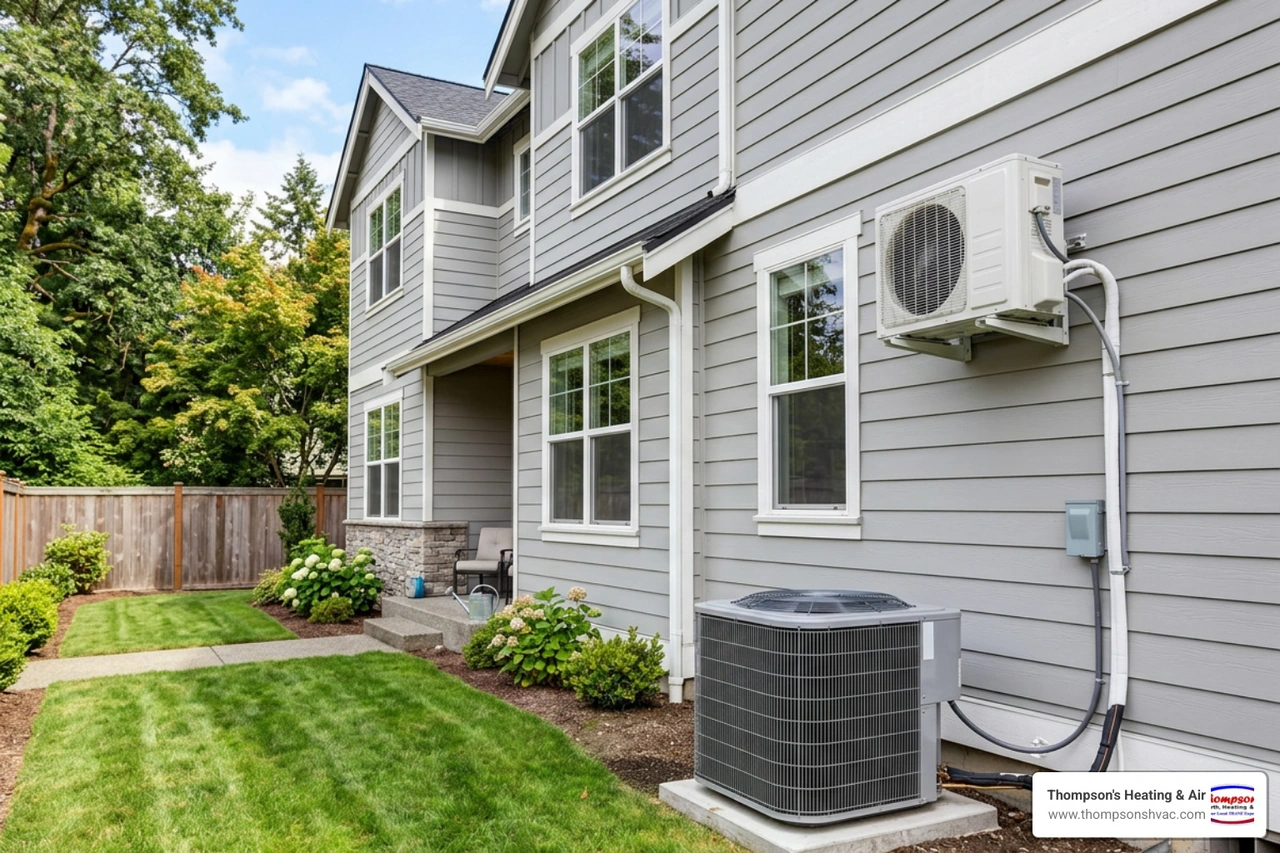
Why the Mini Split vs Central AC Cost Comparison Matters for Woodland Homeowners
The mini split vs central AC cost comparison is one of the most common questions homeowners face when upgrading or replacing their home comfort system — and for good reason. The answer isn't as simple as one system always costing less than the other. The right choice depends on your home's existing setup, how you use your space, and what you want to spend over the long haul.
Here's a quick breakdown to get you oriented:
• Best for homes without ducts — Mini Split: Yes — Central AC: No (very costly to add ducts)
• Best for homes with existing ducts — Mini Split: Possible — Central AC: Usually yes
• Energy efficiency (SEER2) — Mini Split: 18–35 SEER2 — Central AC: 14–26 SEER2
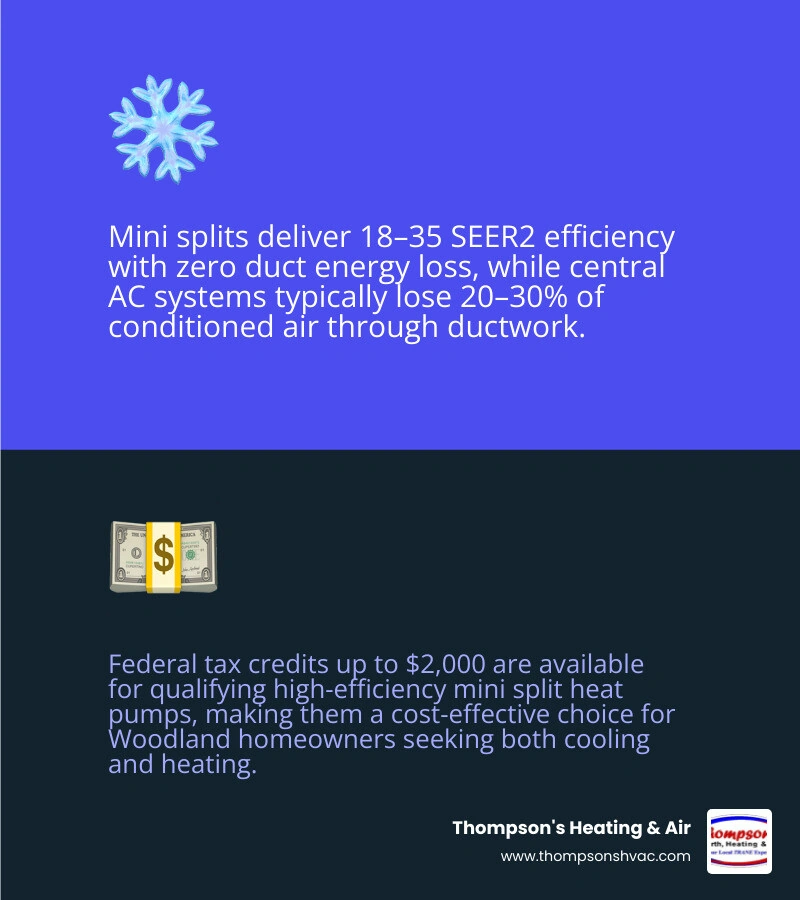
• Duct energy loss — Mini Split: None — Central AC: 20–30% typical loss
• Heating capability — Mini Split: Yes (heat pump) — Central AC: Cooling only (needs furnace)
• Zoning — Mini Split: Built-in, by room — Central AC: Requires add-ons
• Federal tax credit eligibility — Mini Split: Up to $2,000/yr (Section 25C) — Central AC: Lower credits available
• Payback period on efficiency — Mini Split: 3–5 years — Central AC: Varies
In hot Sacramento Valley summers, Woodland homeowners need a system that keeps up with the heat without sending energy bills through the roof. Whether your home has an existing duct system in good shape or no ductwork at all changes everything about which option makes financial sense — both upfront and over time.
This guide breaks down the real numbers and trade-offs so you can make a confident, informed decision.
Understanding the Core Differences Between Mini Splits and Central AC
To make sense of a mini split vs central AC cost comparison, we first have to look under the hood. While both systems are designed to keep your home comfortable, they do so in completely different ways.
A traditional central air conditioner is a ducted forced-air system. It relies on a single, large indoor unit (typically connected to a furnace in your closet, basement, or attic) and a matching outdoor compressor. The system cools the air at a central point and then uses a powerful blower fan to push that conditioned air through a hidden network of metal or flexible ducts running behind your walls and ceilings.
Because it operates from a single thermostat, central AC is designed to cool your entire home all at once. If you want to dive deeper into how these setups differ in design, you can check out our detailed guide on the Central AC vs Ductless Mini Split Comparison.
A ductless Mini Split system, on the other hand, completely eliminates the need for ductwork. Instead of one central indoor unit, a mini split uses small, individual indoor air handlers mounted directly on the walls or ceilings of specific rooms. Each of these indoor units is connected to a single outdoor compressor via a narrow conduit housing refrigerant lines, a condensate drain, and power cables.
This design gives mini splits built-in zoning capabilities. Each indoor head operates independently with its own thermostat. If you spend your evenings in the living room and your nights in the bedroom, you only have to cool those specific spaces, leaving empty guest rooms or dining areas uncooled.
This fundamental difference in how they move air is the single biggest driver of both your upfront installation investment and your monthly utility bills.
Upfront Investment: How Ductwork Impacts Your Mini Split vs Central AC Cost Comparison
When homeowners ask us which system is more budget-friendly to install, our answer always starts with a question: Does your home currently have ductwork, and what condition is it in?
If you are building a new home or looking at an AC Replacement Woodland CA, the presence or absence of ducts is the ultimate fork in the road. Let's look at how this plays out in real-world scenarios across Yolo County.
How Existing Ductwork Influences Your Mini Split vs Central AC Cost Comparison
If your home already has a well-designed network of ducts in excellent condition, upgrading to a modern, high-efficiency central air conditioner is typically the most cost-effective path upfront. The installation is straightforward because the structural infrastructure is already there. Our technicians simply swap out your old indoor coil and outdoor condenser, connect them to your existing ductwork, and you are ready to go.
However, if your home has no ductwork at all—which is common in historic homes in Woodland, older properties in Winters, or rural farmhouses in Capay—the math changes completely. Retrofitting a home for central air requires cutting into plaster walls, lowering ceilings to build soffits, and sacrificing closet space to run bulky metal ducts. This structural invasion requires a massive amount of labor, which can easily double or triple the total cost of the project.
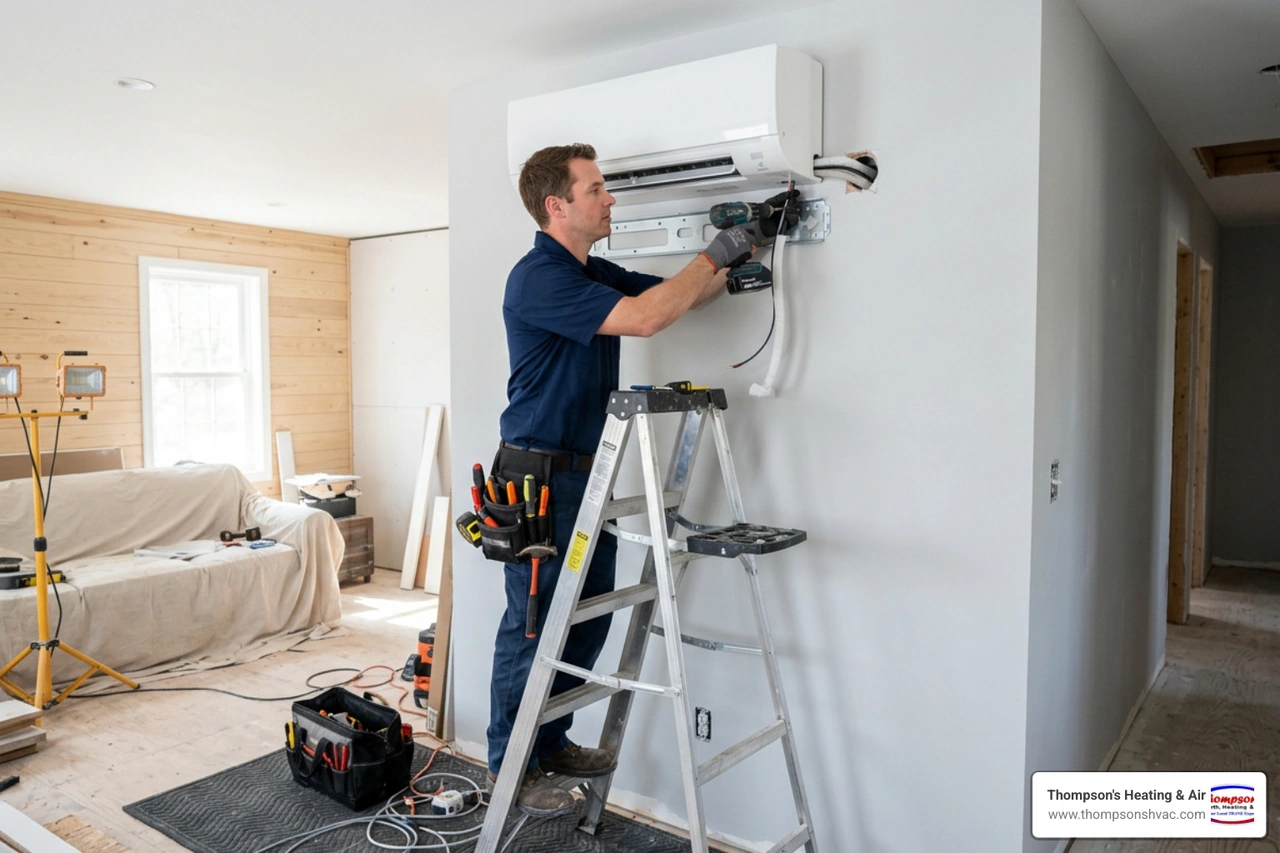
In this ductless scenario, opting for a professional Ductless Installation is almost always the more affordable and less invasive choice. Installing a mini split requires nothing more than a small, three-inch hole through an exterior wall to connect the indoor air handler to the outdoor unit. It preserves your home’s architectural integrity and avoids the heavy construction labor that ducted systems demand.
Upfront Equipment and Labor Factors in Your Mini Split vs Central AC Cost Comparison
Even if you choose ductless, the complexity of your home's layout will impact the upfront equipment and labor requirements.
• Single-Zone vs. Multi-Zone: If you only need to cool a single room addition, a finished garage, or a stubborn master bedroom that stays too hot, a single-zone mini split is highly economical and quick to install. However, if you want to cool a large, multi-story home, you will need a multi-zone setup. This means connecting four, five, or more indoor air handlers to one or two outdoor compressors, which increases equipment and labor requirements.
• Electrical Panel Capacity: Both high-efficiency central AC systems and multi-zone mini splits require dedicated electrical circuits. In older homes throughout Davis or Dixon, our team often finds that the existing electrical panel cannot handle the added load. Upgrading your electrical panel to 100 or 200 Amps is an important upfront factor to consider, regardless of which system you choose.
If you are planning a project and want to explore your options, scheduling a professional AC Installation consultation is the best way to get a clear, personalized assessment of your home's electrical and structural needs.
Long-Term Operating Costs: SEER2 Ratings and Energy Efficiency
Once your new system is installed, your focus shifts from the upfront investment to your monthly utility bills. This is where the long-term operating costs of the mini split vs central AC cost comparison truly shine.
To understand why, we have to look at how efficiency is measured. In 2023, the industry transitioned to SEER2 (Seasonal Energy Efficiency Ratio 2) standards, which use stricter testing protocols to better reflect real-world static pressure inside your home.
• Typical SEER2 Range — Standard Central AC: 14 – 16 SEER2 — High-End Central AC: 17 – 26 SEER2 — Ductless Mini Split: 18 – 35+ SEER2
• Compressor Type — Standard Central AC: Single-stage / Two-stage — High-End Central AC: Variable-speed (Inverter) — Ductless Mini Split: Variable-speed (Inverter)
• Ductwork Energy Loss — Standard Central AC: 20% – 30% loss — High-End Central AC: 20% – 30% loss — Ductless Mini Split: 0% (Ductless)
• Zoning Savings — Standard Central AC: None ( cools entire home) — High-End Central AC: Limited (requires dampers) — Ductless Mini Split: High (cools per room)
Many standard central AC units run on single-stage or two-stage compressors, which turn on at full blast, cool the house down quickly, and then shut off. This constant cycling consumes a massive amount of electricity, like stop-and-go city driving.
By contrast, almost all high-quality mini splits utilize advanced inverter technology and variable-speed compressors. Instead of cycling on and off, an inverter compressor runs continuously at a very low, whisper-quiet speed, automatically adjusting its output to maintain a perfectly steady indoor temperature. This eliminates power spikes and dramatically lowers your monthly energy usage.
To see how these efficiency tiers translate to your wallet over time, take a look at our analysis on How Much Does a High Efficiency System Save.
Duct Losses vs. Ductless Efficiency
The biggest secret behind central AC operating costs lies in your attic or crawlspace. According to the EPA and the Department of Energy, the average home loses between 20% and 30% of its conditioned air through leaks, loose connections, and poor insulation in the ductwork.
In the middle of a triple-digit July in Woodland or West Sacramento, your attic can easily reach 130 degrees. If your ducts run through that unconditioned space, the cold air inside those ducts absorbs that intense heat before it ever reaches your living room. Essentially, you are paying to air-condition your attic.
Because mini splits deliver conditioned air directly into the room without passing through ducts, they suffer zero duct losses. Every single watt of electricity you pay for is delivered directly into your living space as pure comfort.
Year-Round Performance: Heating and Cooling Value
Another major financial advantage of mini splits is that they are almost always heat pumps. This means they do double duty, providing both cooling in the summer and highly efficient heating in the winter.
Traditional central AC systems are cooling-only units that rely on a separate gas furnace or electric air handler for winter warmth. A mini split heat pump, however, can reverse its cycle to extract heat from the outdoor air and move it indoors.
Because heat pumps move heat rather than creating it through combustion, they are incredibly efficient. In our mild Northern California winters, switching to a heat pump can lead to massive savings compared to running an older gas furnace. You can learn more about these dual-season benefits in our guide on Heat Pump Advantages Over Traditional HVAC.
Maintenance, Lifespan, and Total Cost of Ownership
To calculate the true total cost of ownership over a 15-year period, we must factor in ongoing maintenance requirements and system longevity.
A central AC system generally has a lifespan of 12 to 15 years in our hot climate, while a well-maintained ductless mini split can easily last 15 to 20 years or more. However, their maintenance routines look very different:
• Central AC Maintenance: Typically requires changing a single, central air filter every one to three months. However, because it relies on ducts, you must also factor in the cost of professional duct inspections, sealing, and periodic duct cleaning every five to seven years to maintain indoor air quality and system efficiency.
• Mini Split Maintenance: Requires you to rinse the small plastic mesh filters inside each indoor head every two to four weeks. This is a simple, zero-cost DIY task, but it is absolutely critical. Because mini splits rely on high airflow through compact coils, dirty filters will quickly degrade efficiency and put strain on the compressor.
Regardless of which system you choose, scheduling an annual professional Ductless Service or central AC tune-up is essential to keep your manufacturer's warranty active and ensure your system runs at peak efficiency.
When to Repair Your Existing System vs. Upgrading
If you are currently nursing an older, struggling air conditioner through another hot summer, you might be wondering whether to keep repairing it or pull the trigger on a new installation.
If your current system is over a decade old, requires frequent service calls, or relies on the phased-out R-22 refrigerant, investing in further repairs is often throwing good money after bad. Upgrading to a modern, high-efficiency system—whether ducted or ductless—will immediately lower your energy bills and eliminate the stress of unexpected summer breakdowns.
To help you weigh your options, we have put together two helpful resources: Should I Repair or Replace My HVAC System and a breakdown of the Cost of Repairing Old HVAC vs Buying New System.
Frequently Asked Questions about Home Cooling Costs
Are mini splits cheaper to run than central air?
Yes, in the vast majority of cases, ductless mini splits are significantly cheaper to run. Because they completely eliminate duct losses (which waste 20% to 30% of energy in central systems) and utilize advanced inverter-driven variable-speed compressors, they operate with exceptional efficiency. Additionally, their built-in zoning control allows you to turn off cooling in unoccupied rooms, lowering your monthly utility bills even further.
Can a mini split replace my furnace for winter heating?
Absolutely. Most modern mini splits are high-efficiency heat pumps that provide both heating and cooling. Today's heat pump technology is fully capable of keeping your home warm and cozy during our Northern California winters, often doing so at a fraction of the operating cost of an older gas furnace or traditional electric baseboard heaters.
Are there tax credits or incentives for high-efficiency systems in 2026?
Yes! Under the federal Energy Efficient Home Improvement Credit (Section 25C), homeowners can qualify for tax credits of up to $2,000 per year for installing ENERGY STAR-certified heat pump mini splits. Traditional cooling-only central AC units may also qualify for credits, but at much lower limits. Additionally, local utility rebates throughout Yolo County can often be stacked with federal incentives to make upgrading even more affordable.
Conclusion
When it comes to the mini split vs central AC cost comparison, there is no single "correct" answer. The most affordable and efficient system is the one that aligns with your home's unique layout, your family's comfort goals, and your long-term budget.
If your home already has a duct network in great condition, upgrading to a high-efficiency central air conditioner is often the most sensible upfront path. But if you have an older home without ducts, are building an addition, or want the luxury of room-by-room temperature control, a ductless mini split heat pump is an incredibly efficient, long-lasting investment that will pay dividends on your energy bills for years to come.
As a family-owned business serving Woodland, Davis, Winters, and surrounding communities since 1992, we are here to help you navigate these choices. Contact Thompson's Heating & Air today to schedule a professional home comfort assessment, and let us help you design the perfect cooling solution for your home!



.avif)
.avif)
.png)
