
Spring Into Action with This Post-Winter HVAC Checklist

Why Knowing What to Check in a Post-Winter HVAC Inspection Could Save You This Summer
Knowing what a post winter HVAC inspection covers is the fastest way to protect your comfort and your wallet before the heat arrives. Here's a quick overview of the key areas to check:
Post-Winter HVAC Inspection Checklist at a Glance:
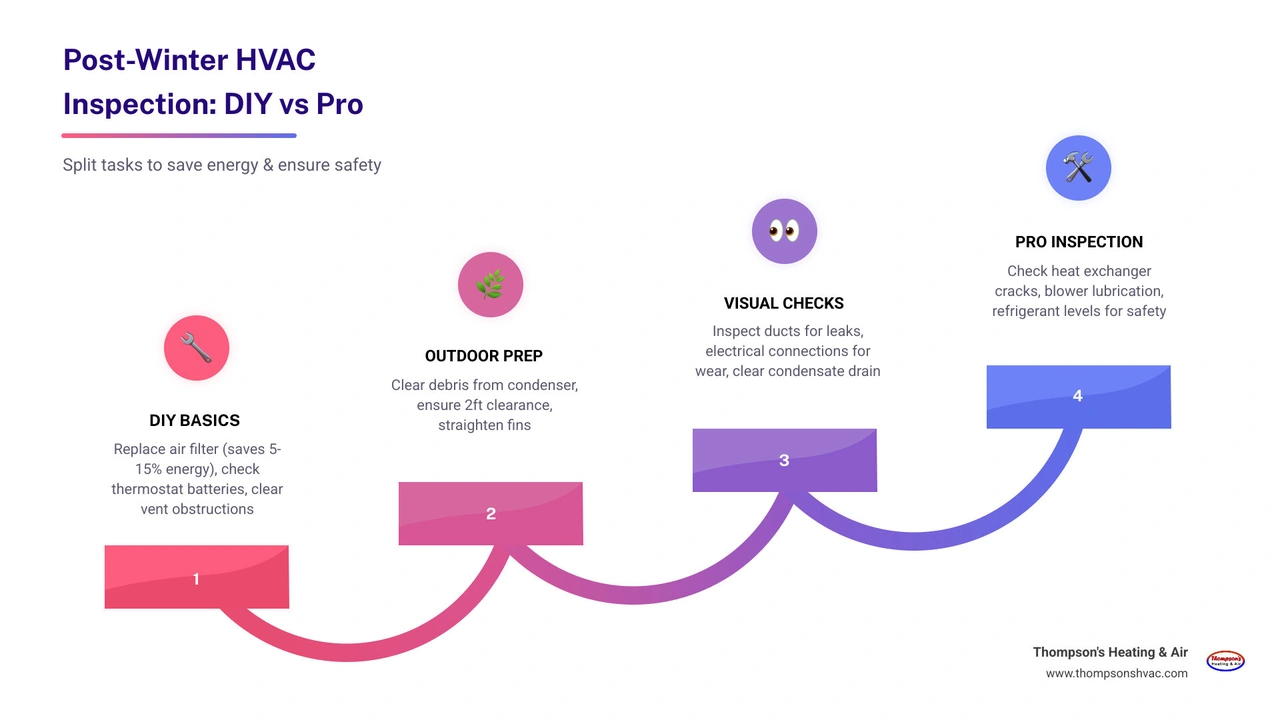
1. Air filter - Replace if dirty; a clean filter saves 5-15% on energy costs
2. Thermostat - Test, calibrate, and replace batteries if needed
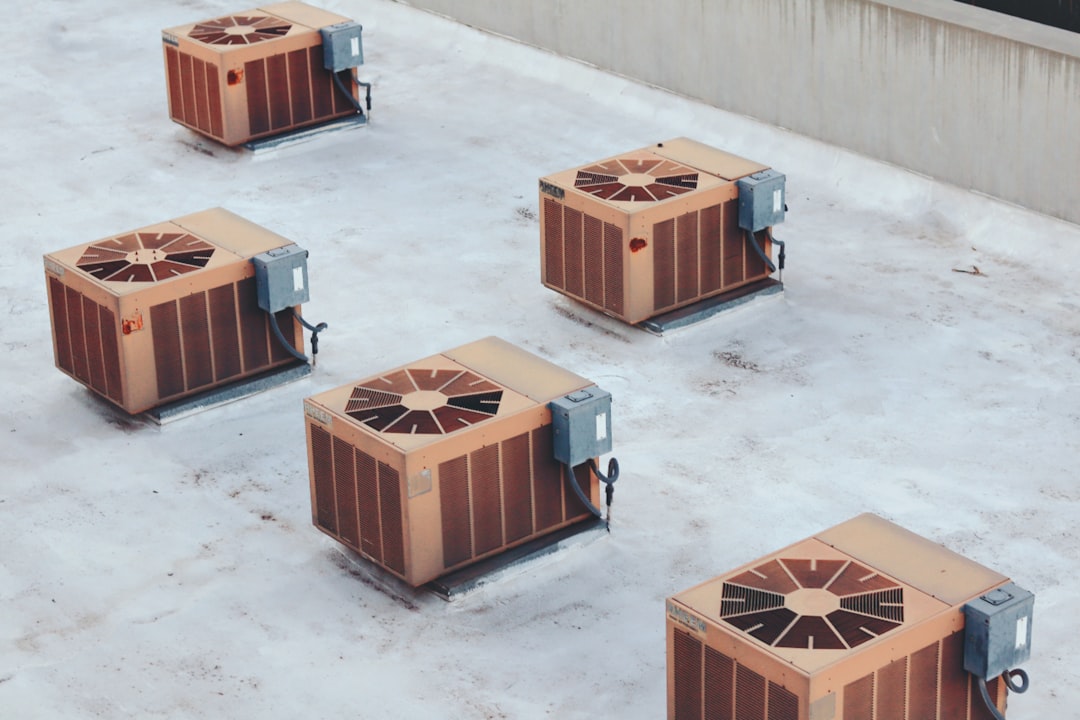
3. Outdoor condenser unit - Clear debris and maintain 2 feet of clearance
4. Ductwork - Inspect for visible leaks or disconnections
5. Electrical connections - Check for wear, looseness, or corrosion
6. Heat exchanger - Have a pro inspect for stress cracks (carbon monoxide risk)
7. Blower motor and belts - Check for wear and lubrication needs
8. Condensate drain line - Clear any clogs from winter buildup
9. Refrigerant lines - Inspect insulation and look for signs of leaks
10. Vents and registers - Confirm they are open and unobstructed
Your HVAC system worked hard all winter to keep your Woodland, CA home warm. Now that heating season is winding down, it's easy to forget about the equipment that got you through the cold months — until it fails on the first hot day in May.
Here's the reality: heating and cooling account for roughly 52% of a household's annual energy use. When a system limps into spring without a proper check, you're likely already overpaying every month without knowing it. Worse, small issues that developed during winter — a stressed heat exchanger, a partially clogged drain line, worn electrical connections — tend to stay hidden until they become expensive emergencies right when you need cool air the most.
This guide walks Woodland homeowners through exactly what to look for, what you can handle yourself, and when to call in a professional.
Why is a Post-Winter HVAC Inspection Important for My Woodland Home?
In Yolo County, we often see our heating systems cycle on and off thousands of times during a single winter. Even if our winters aren't as harsh as the East Coast, that mechanical movement creates wear and tear. A post winter hvac inspection what to check guide isn't just a suggestion; it’s a strategy for long-term savings.
Consider this: heating and cooling represent about 52% of your home's energy consumption. When your system is dirty or poorly calibrated after a long winter, it has to work significantly harder to move air. Professional maintenance can reduce your energy bills by 15% to 30% through improved efficiency. By catching small issues now, you extend the overall lifespan of your equipment, delaying the need for a full system replacement.
Furthermore, indoor air quality is a major concern. Americans spend roughly 90% of their time indoors, and indoor pollutant levels are often 2 to 5 times higher than outdoor levels. A post-winter check ensures your system isn't circulating the dust, dander, and soot that may have accumulated while your home was sealed tight against the cold. Whether you need Heating Maintenance In Woodland Ca or Heating Maintenance In Davis Ca, getting a jump on the season ensures you aren't stuck in a "no-AC" emergency when the Central Valley heat kicks in.
Essential DIY Steps for Your Seasonal Transition
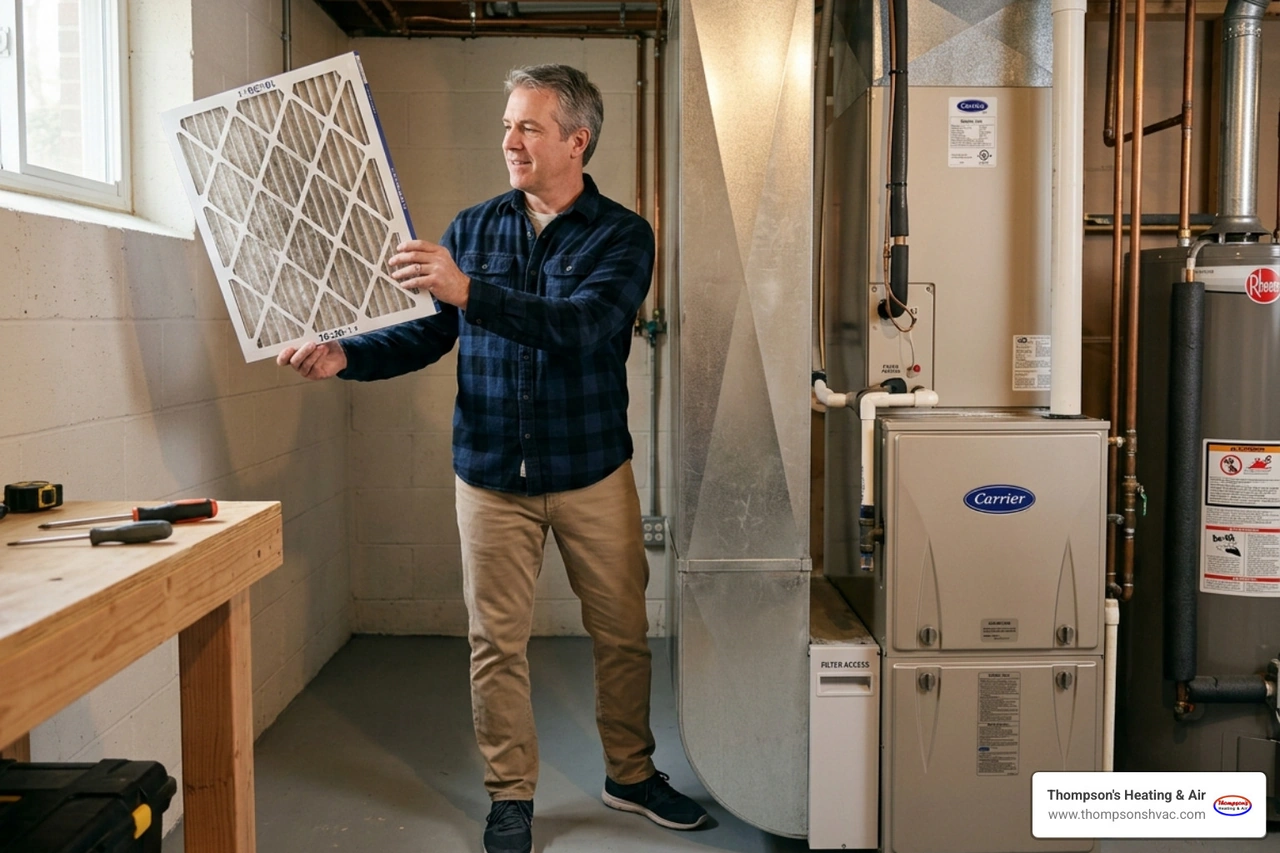
Before you call in the pros, there are several tasks you can handle to optimize your system’s performance. Taking a proactive approach to your post winter hvac inspection what to check list can immediately lower your monthly utility costs.
• Replace Air Filter — DIY or Pro?: DIY — Benefit: Saves 5-15% on energy; improves air quality
• Clear Outdoor Debris — DIY or Pro?: DIY — Benefit: Ensures proper airflow; prevents overheating
• Test Thermostat — DIY or Pro?: DIY — Benefit: Confirms cooling mode is operational
• Inspect Heat Exchanger — DIY or Pro?: Professional — Benefit: Safety check for carbon monoxide leaks
• Check Refrigerant Levels — DIY or Pro?: Professional — Benefit: Prevents compressor failure; ensures cooling
• Tighten Electrical — DIY or Pro?: Professional — Benefit: Prevents fire hazards and component damage
Essential DIY Post-Winter HVAC Inspection: What to Check First
The most impactful thing any homeowner can do is check the air filter. After a heavy heating season, your filter is likely clogged with dust and particles. How Often Should You Change Your Hvac Air Filter depends on your household—pet owners should look at a 30-day cycle, while others may go up to 90 days. Replacing a dirty filter can lower your energy consumption by 5% to 15% because it reduces the strain on your blower motor.
Next, walk through your home and check your vents and registers. It’s common for furniture, rugs, or curtains to get moved during the winter, potentially blocking airflow. Ensure all registers are open; closing vents in unused rooms actually increases energy use by creating pressure imbalances that force your system to work harder. Finally, swap the batteries in your thermostat. It’s a small step that prevents a mid-summer "unresponsive thermostat" headache.
Professional Post-Winter HVAC Inspection: What to Check for Safety
While DIY steps are great for efficiency, a professional technician focuses on safety and technical integrity. After months of heavy use, components like gas lines and electrical connections can become compromised. In places like West Sacramento, where humidity can fluctuate, electrical "embrittlement" or corrosion is a real risk.
Our technicians perform critical safety checks, including inspecting electrical wiring for signs of wear or loose terminals caused by motor vibration. We also verify that all safety controls and limit switches are functioning. This is the best way to How To Prevent Hvac Emergencies With Maintenance before they leave you stranded. If you are in the area, scheduling Heating Maintenance In West Sacramento Ca ensures your system is safe for the transition to cooling.
The Technician’s Post-Winter HVAC Inspection: What to Check Internally
The internal components of your furnace and AC share several parts, like the blower motor and ductwork. During a professional visit, we look at:
• The Heat Exchanger: We check for stress cracks or fatigue. Even a tiny crack can leak carbon monoxide into your home. This is the most critical safety step after a long winter of expansion and contraction cycles.
• Blower Motor and Belts: We inspect the motor’s voltage and current to ensure it’s within manufacturer specs. We also lubricate moving parts to reduce friction, which lowers your electricity draw.
• Refrigerant Levels: In your heat pump or AC system, we check for leaks. Low refrigerant is never "normal"—it always indicates a leak that needs a professional Ac Service to fix.
• Condensate Drain Line: We flush the drain line with a vinegar solution or specialized cleaner to prevent algae and mold from clogging the pipe, which could lead to water damage in your attic or closet.
Preparing Your Outdoor AC Unit for the 2026 Cooling Season
As we move toward May 2026, your outdoor condenser unit needs some attention. During the winter, it likely collected leaves, twigs, and maybe even some "presents" from local wildlife looking for a warm place to hide.
First, ensure you have at least a 2-foot clearance around the entire unit. Trim back any spring growth, bushes, or weeds that might restrict airflow. If the fins on the unit are bent, we use a specialized fin comb to straighten them, ensuring maximum heat transfer.
Cleaning the coils is also vital. Dirty coils hinder efficiency and force the compressor to run hotter and longer. A gentle rinse with a garden hose (with the power off!) can remove surface dust, but a professional Ac Maintenance Woodland Ca visit includes a deeper chemical cleaning of the evaporator and condenser coils. Finally, we check the suction line insulation—that foam sleeve on the copper pipe. If it's cracked or missing due to winter weather or sun exposure, your system will lose cooling capacity before the air even reaches your home.
Frequently Asked Questions About Post-Winter Maintenance
When transitioning between seasons, homeowners often have similar concerns. One of the most common issues is identifying Signs Of Mold In Your Hvac System, such as musty odors when the fan first kicks on. This usually points to moisture buildup in the ductwork or a clogged drain pan.
When is the best time to schedule a post-winter inspection?
The "sweet spot" is March or April. Scheduling during this buffer period allows you to identify issues like a seized motor or a refrigerant leak when the weather is mild. If you wait until the first 90-degree day in May, you'll be competing with every other homeowner in Yolo County for a service appointment.
How does ductwork impact my system's efficiency after winter?
Studies show that 20% to 30% of conditioned air escapes through leaky ducts. During winter, the constant expansion and contraction of metal ducts can cause seals to fail. We look for dust streaks around vent covers, which are a "smoking gun" for duct leaks. Sealing these gaps with mastic or foil tape (never standard duct tape!) is a high-return investment.
Can I perform a full post-winter inspection myself?
While you can handle filters and basic cleaning, a full inspection requires specialized tools and EPA certification. For example, handling refrigerant is a federal violation without a license, and testing for carbon monoxide or measuring motor voltage requires professional-grade equipment. It’s best to handle the DIY basics and leave the internal mechanical and safety checks to the experts.
Conclusion
Taking the time for a post winter hvac inspection what to check ensures your home remains a sanctuary of comfort as we head into the warmer months of 2026. From lowering your energy bills to protecting your family from carbon monoxide, the benefits of a seasonal tune-up far outweigh the effort.
At Thompson's Heating & Air, we’ve been a family-owned staple in Yolo County since 1992. We know the local climate and exactly what Woodland and Davis systems need to survive a Central Valley summer. Whether you need a one-time Hvac Maintenance And Repair visit or want the peace of mind that comes with our Maintenance Plan, we are here to help. With 24/7 technician access and a commitment to 5-star service, we’ll make sure your system is ready for whatever the weather brings. Contact us today to schedule your spring service!



.avif)
.avif)
.png)
