
How to Replace a Spring Air Filter the Right Way


Looking for a Spring Air Filter Replacement Guide in Woodland, CA?
A spring air filter replacement guide is exactly what Woodland homeowners need right now — when oak and grass pollen blankets Yolo County, winter dust gets stirred back into circulation, and your HVAC system kicks on for the first time in months.
Here is a quick overview of the spring air filter replacement process:
1. Turn off your HVAC system at the thermostat
2. Locate your filter (return air vent, utility closet, or air handler)
3. Check the size printed on the old filter frame
4. Note the airflow arrow direction before removing the old filter
5. Clean the housing with a damp cloth before inserting the new filter
6. Install the new filter with the airflow arrow pointing toward the furnace
7. Turn the system back on and check airflow from your vents
8. Mark your calendar to recheck the filter in 30 days
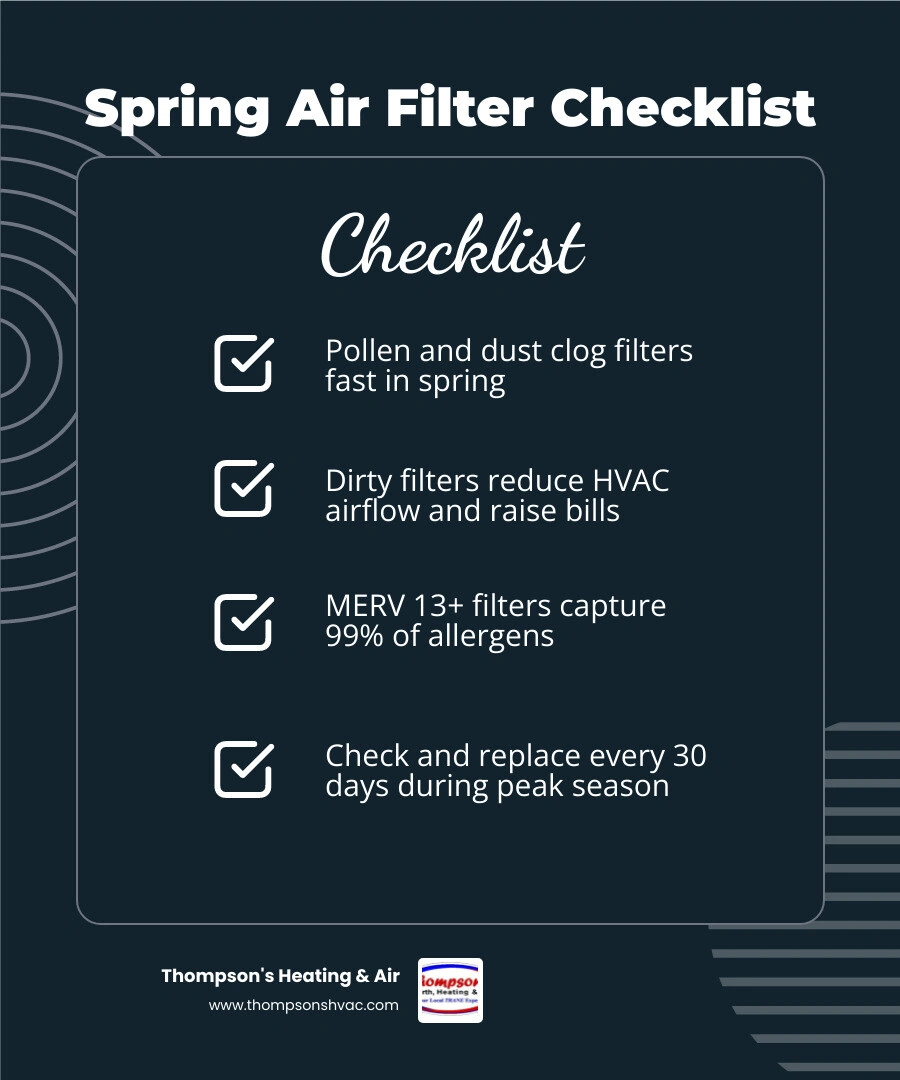
Woodland's Sacramento Valley climate makes spring a particularly tough season for indoor air quality. Pollen counts climb fast, and a filter that was fine all winter can become clogged within weeks once the season shifts. A dirty or clogged filter does not just affect your allergies — it forces your HVAC system to work harder, affects comfort, and can shorten the life of your equipment.
The good news? Replacing your air filter is one of the simplest, most impactful things you can do for your home's comfort and your family's health this season.
Terms related to spring air filter replacement guide:
• getting your cooling system ready for warm weather
• post winter hvac inspection what to check
• spring ac and hvac maintenance for the sacramento valley
Why Woodland Homeowners Need a Spring Air Filter Replacement Guide
As we move through June 2026, residents in Woodland, Davis, Dixon, and Winters are all too familiar with the signature yellow-green dust that coats cars and patios every spring. The Sacramento Valley is beautiful during the spring bloom, but it is also a hotbed for airborne irritants. When your heating and cooling system draws in air to condition it, it also sucks in these microscopic invaders.
Throughout the winter, your home's air filter quietly gathered a cocktail of seasonal dust, pet hair, and lint. Now, as the spring pollen surge hits its peak, that already-burdened filter has to contend with a massive influx of agricultural and tree allergens. If you do not perform a timely swap, your HVAC system enters its most demanding season with its "lungs" already choked.
When air cannot flow freely through a clogged filter, your system has to run longer and work harder to keep your home comfortable. This restricted airflow creates pressure imbalances that can cause ductwork leaks, noisy operation, or even cause your system to short cycle. By taking a few minutes to follow a proper seasonal routine, you protect your system from unnecessary wear and tear.
To ensure your entire system is prepared for the upcoming summer heat, we highly recommend checking out our guide on spring ac and hvac maintenance for the sacramento valley. Combining a fresh filter with a comprehensive post winter hvac inspection what to check is the best way to help your home's air stay cleaner and your HVAC system perform more reliably.
Recognizing the Signs Your Home Filter Needs a Refresh
Sometimes, we simply forget how long it has been since we last looked at our filter. Fortunately, your home and your body will give you some very clear clues when it is time for a replacement.
• A Fine Layer of Dust: If you notice a gray or yellow-green layer of dust settling on your coffee tables or countertops just hours after cleaning, your filter is likely saturated and letting bypass dust circulate.
• Reduced Airflow: Feel the air coming out of your register vents. If the breeze feels weak or struggles to reach the far corners of the room, a clogged filter is the most common culprit.
• Musty "Dirty Sock" Odors: When damp spring air mixes with the accumulated organic debris trapped in a dirty filter, it can grow mold or mildew. This results in a stale, musty smell every time your system turns on.
• Allergy Flare-Ups: If you find yourself sneezing, coughing, or dealing with dry, itchy eyes inside your home more than you do outside, your filter is no longer doing its job.
For a deeper look into how household variables like pets, children, and local agriculture affect this timeline, read our detailed article on how often should you change your hvac air filter.
Understanding MERV Ratings for Home Comfort
When you walk down the home improvement aisle or browse online, you will see filters with various ratings. The most important metric to look for is the MERV rating, which stands for Minimum Efficiency Reporting Value. This scale runs from 1 to 20 and measures how effectively a filter traps particles of different sizes.
For residential HVAC systems, choosing the right MERV rating is a balancing act. A rating that is too low will let pollen pass right through, while a rating that is too high can act like a solid wall, restricting airflow and straining your blower motor.
Here is how different filter types stack up:
• Basic Fiberglass — MERV Rating: MERV 1–4 — What It Captures: Large lint, carpet fibers, heavy dust. — Best Used For: Minimal protection; not recommended for spring allergy seasons.
• Standard Pleated — MERV Rating: MERV 8–11 — What It Captures: Pollen, dust mites, pet dander, mold spores. — Best Used For: The "sweet spot" for most Yolo County homes; excellent filtration without restricting airflow.
• High-Efficiency Pleated — MERV Rating: MERV 11–13 — What It Captures: Fine dust, pet dander, car emissions, bacteria. — Best Used For: Highly recommended for severe allergy sufferers or homes with multiple shedding pets.
• HEPA / Micro-Allergen — MERV Rating: MERV 14–16+ — What It Captures: Microscopic allergens, smoke, viruses. — Best Used For: Best for specialized hospital-grade systems; can cause severe airflow restriction in older residential units without professional modification.
A high-quality, new pleated air filter in the MERV 11 to 13 range can capture up to 99% of airborne allergens, making it an incredibly effective tool for keeping your indoor environment clean and breathable.
Step-by-Step Home HVAC Filter Replacement
Replacing your home's air filter is a quick, five-minute task that does not require any special technical skills. Follow these steps to complete the job safely and correctly:

1. Turn Off the Power
Before you touch the filter, turn your HVAC system off at the thermostat. This prevents the system from kicking on while the filter is out, which could suck loose dust, dirt, or debris directly into your blower motor and evaporator coils.
2. Locate Your Filter
Your filter is typically located in one of three places:
• Behind a return air grille on a wall or ceiling.
• Inside a slot on the side of your furnace or indoor air handler (often in a utility closet, garage, or attic).
• In a dedicated slide-out rack between the return duct and the main unit.
3. Identify the Correct Size
Pull out the old filter and look at the dimensions printed on the cardboard frame (for example, "20x20x1"). This is the nominal size. Always buy a replacement that matches these exact dimensions. If you install a filter that is even slightly too small, unfiltered air will slip around the edges—a problem known as "blow-by"—which coats your system's internal coils in grime.
4. Note the Airflow Direction
Look closely at the edge of the old filter before you discard it. You will see an arrow printed on the frame indicating the direction of the airflow. This arrow should always point toward the furnace or air handler unit (away from the return duct). Take a quick picture with your phone if you are worried about forgetting which way it points!
5. Clean the Housing
Before sliding the new filter in, use a damp microfiber cloth or a vacuum attachment to clean any dust, pet hair, or loose debris from the inside of the filter slot or grilles. This prevents loose dirt from immediately clogging your brand-new filter.
6. Insert the New Filter and Secure
Slide the new filter into place, ensuring the airflow arrow is pointing in the correct direction. Secure the cover or close the grille latches, then turn your thermostat back on.
To keep your system running beautifully year-round, check out our guide on how to maintain your heating and cooling system and read through our comprehensive annual hvac maintenance complete guide.
Common Mistakes to Avoid During Your Spring Air Filter Replacement Guide Routine
Even though changing a filter is simple, it is easy to make minor mistakes that can lead to system issues:
• Installing the Filter Backward: Air filters are designed with a graduated density, meaning they trap larger particles on the outer side and smaller ones deeper in the pleats. Installing it backward reverses this design, causing the filter to clog much faster and potentially buckle or collapse under air pressure.
• Forcing the Wrong Size: If a filter does not slide in smoothly, do not force it. Bending or crushing a filter creates gaps that allow unfiltered air to bypass the media entirely, rendering the filter useless.
• Reinstalling Reusable Filters While Wet: If your system uses a washable electrostatic filter, it must be 100% dry before you put it back. Reinstalling a damp filter introduces moisture into your dark ductwork, creating the perfect breeding ground for mold and mildew.
• Using a Trash Bag-Free Removal Method: To avoid spreading a cloud of gray dust and pollen through your hallway when removing the old filter, slide it directly into a trash bag as you pull it out of the slot.
Don't Forget the Rest of Your Home's Indoor Air Quality System
While a fresh filter is an important first step, it is only one part of your home's overall indoor air quality. In Woodland and nearby Yolo County communities, spring pollen, agricultural dust, pet dander, and fine particles can settle throughout ductwork, vents, return grilles, and HVAC components.
If you replace your filter and still notice dusty surfaces, weak airflow, stale odors, or allergy symptoms indoors, your HVAC system may need a more complete indoor air quality check. A professional inspection can help identify whether your home would benefit from ductwork service, improved filtration, thermostat adjustments, or other HVAC maintenance.
A clean filter supports better airflow, but your ducts and equipment also need to move conditioned air efficiently. Leaky, dirty, or poorly sealed ductwork can allow dust and unconditioned air to enter the system, making it harder to keep your home comfortable during warm spring and summer weather.
For homeowners in Woodland, Davis, Dixon, Winters, and nearby Northern California communities, spring is a practical time to schedule HVAC maintenance before the heaviest cooling demand arrives. Thompson's Heating & Air can help with air conditioning maintenance, ductwork services, indoor air quality solutions, thermostat installation, and heating and cooling system care designed for Woodland's climate.
When a Filter Change May Not Be Enough
A new filter can make a noticeable difference, but call for professional HVAC help if you notice any of the following:
1. Persistent Dust After Cleaning: If dust returns quickly even with a new filter, your return air pathways or ductwork may need attention.
2. Weak Airflow From Multiple Vents: A clogged filter is common, but airflow problems can also involve duct restrictions, blower issues, or equipment concerns.
3. Unusual Odors When the System Starts: Musty or stale smells may point to moisture, debris, or buildup inside the HVAC system.
4. Hot and Cold Spots: Uneven comfort can be related to airflow balance, duct layout, thermostat location, or system performance.
5. Frequent Cycling: If your system turns on and off rapidly after a filter replacement, it is time for a professional diagnosis.
6. Ongoing Allergy Symptoms Indoors: Better filtration, indoor air quality products, or ductwork improvements may help reduce airborne irritants in your home.
Frequently Asked Questions About Spring Air Filters
How often should I replace my filters during peak pollen season?
During the height of spring, we recommend checking your home's air filter every 30 days. While high-quality pleated filters can last up to 90 days under ideal winter conditions, the heavy pollen load of spring will clog them much faster.
If you have shedding pets, live near active agricultural fields, or have family members who suffer from severe seasonal allergies, you should swap the filter every 30 days during April, May, and June. Keeping a fresh filter in place is one of the easiest ways to enjoy the benefits of regular hvac maintenance in hot dry valley climates.
Can a dirty home air filter affect HVAC airflow and comfort?
Yes. When your home air filter is clogged, your HVAC system has to work harder to move air through the filter media. This can reduce airflow from your vents, make rooms feel less comfortable, and place extra strain on your heating and cooling equipment.
Replacing a dirty filter helps restore proper airflow and supports more consistent comfort throughout your home. If airflow still feels weak after a filter change, a professional HVAC inspection can help identify ductwork, blower, thermostat, or system performance issues.
When should I seek professional help instead of doing it myself?
While sliding a new filter into a standard slot is a great DIY task, there are times when it is best to call in the professionals. You should seek expert help if:
• Your filter slot is located in a hard-to-reach crawlspace or high attic that requires climbing tall ladders.
• You notice ice forming on your indoor evaporator coils or copper refrigerant lines (this is a sign of a severe airflow restriction or a refrigerant leak, which requires professional diagnostic tools).
• Your system is short cycling (turning on and off rapidly) even after you have installed a brand-new filter.
• You hear strange rattling, squealing, or grinding noises coming from your blower motor.
If you want to keep your home's heating and cooling system in peak condition without any of the hassle, find out is an hvac maintenance plan worth it for your household.
Conclusion
Taking a few minutes to complete a spring air filter replacement guide routine is one of the simplest ways to protect your health and keep your home comfortable. Whether you are swapping out the filter in your hallway return vent or checking the filter at your indoor air handler, these simple steps make a world of difference during the dusty Sacramento Valley spring.
If you want to ensure your air conditioner is fully prepared to handle the intense summer heatwaves heading our way, we are here to help. From professional seasonal tune-ups to complete indoor air quality solutions, our family-owned team has been keeping Yolo County comfortable since 1992.
Breathe easier and protect your home's comfort system today. Schedule professional HVAC maintenance and repair with Thompson's Heating & Air, and let us help you get your home ready for a cool, clean, and worry-free summer!



.avif)
.avif)
.png)
