How Does a Heat Pump Work: 101

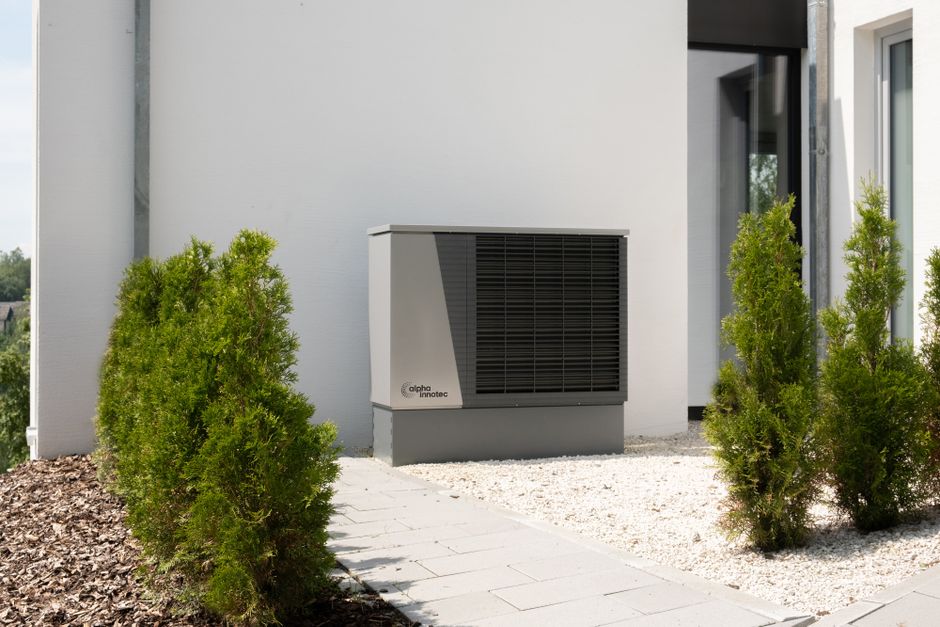
What Is a Heat Pump and How Does It Work? A Quick Answer for Woodland Homeowners
Understanding how does a heat pump work is simpler than most people expect — and it starts with one key idea: a heat pump moves heat rather than creates it.
Here's the short answer:
1. A refrigerant circulates through the system, absorbing and releasing heat as it changes pressure and phase.
2. In summer, the system pulls heat from inside your home and releases it outdoors — just like a standard air conditioner.
3. In winter, it runs the process in reverse, extracting heat energy from the outside air and moving it indoors to warm your home.
4. The result is a single system that handles both heating and cooling, using far less energy than generating heat from scratch.
That's the core of it. A heat pump is essentially a two-way refrigerator for your home — and it's one of the most energy-efficient comfort systems available today.
If you've been hearing more about heat pumps lately, there's good reason. Heating buildings accounts for roughly 10% of global emissions, and heat pumps are widely seen as one of the most practical solutions. A typical household heat pump delivers around four units of heat energy for every one unit of electricity it consumes — making it 3 to 5 times more efficient than a conventional gas boiler or electric resistance heater.
For homeowners in Woodland, CA and the broader Sacramento Valley, where summers run hot and winters stay mild by national standards, heat pumps are an especially strong fit. The technology has also advanced significantly — modern cold-climate models now operate efficiently down to -22°F, expanding their usefulness well beyond just moderate climates.
In this guide, Thompson's Heating & Air breaks down exactly how this technology works, what types are available, and what to consider if you're thinking about making the switch.
The Science Behind the System: How Does a Heat Pump Work?
To understand how does a heat pump work, we have to look at the physics of heat. Heat energy is present in all matter, even in air that feels cold to us. In fact, usable heat energy exists in the air until you reach absolute zero (-459°F). A heat pump’s job is to capture that energy and move it from one place to another.
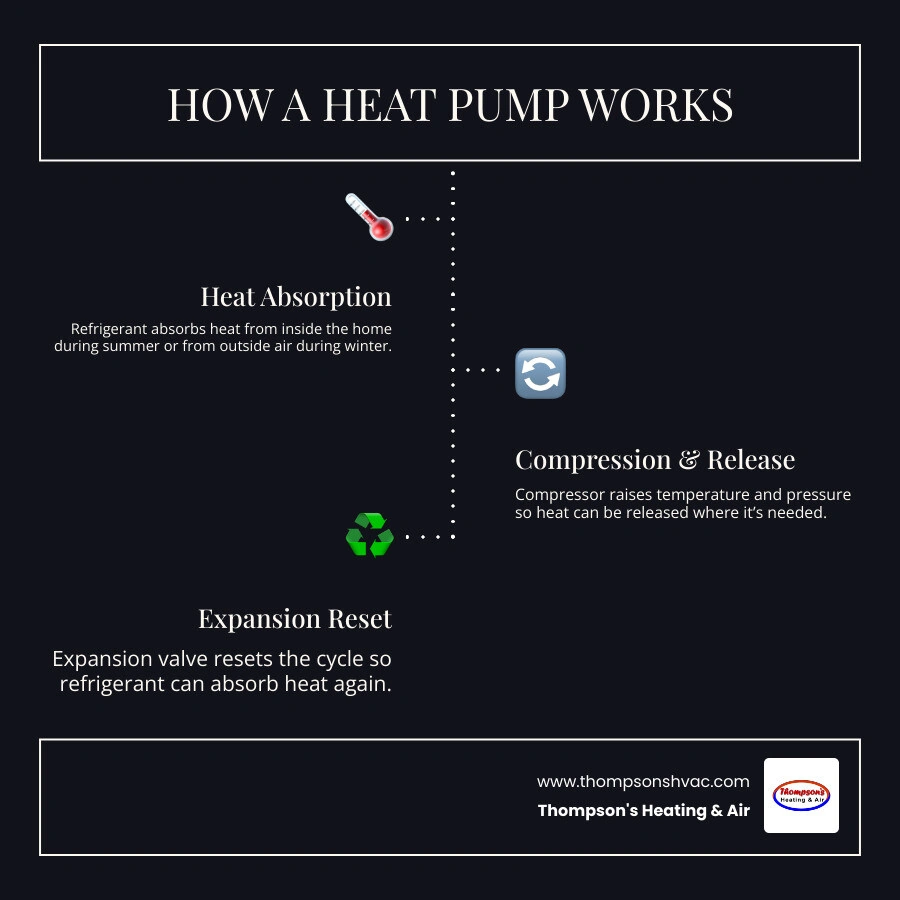
The heart of this process is the vapor-compression cycle. This cycle relies on a special fluid called refrigerant, which has an incredibly low boiling point. By manipulating the pressure of this refrigerant, we can force it to absorb or release heat at specific times. Here is the step-by-step breakdown of the cycle:
1. Evaporation: The cold, liquid refrigerant passes through an outdoor coil. Even on a chilly day in Davis or Winters, the outdoor air is warmer than the refrigerant. The refrigerant absorbs this heat and evaporates into a low-pressure gas.
2. Compression: This gas travels to the compressor. By squeezing the gas tightly, the compressor spikes its temperature and pressure. Think of how a bike pump gets warm when you use it—that’s the same principle of physics in action.
3. Condensation: The hot, high-pressure gas moves to the indoor coil. As air from your home blows across this coil, it "steals" the heat from the refrigerant. This warms your house, and the refrigerant cools down and turns back into a liquid.
4. Expansion: Finally, the liquid refrigerant passes through an expansion valve, which drops its pressure instantly. This makes the refrigerant very cold again, resetting it so it can head back outside to start the process over.
Because this system relies on the movement of existing heat rather than burning fuel, it is incredibly efficient. However, because these systems are complex mechanical devices, regular Heat Pump Service is essential to keep the refrigerant levels precise and the coils clean.
How does a heat pump work in cooling mode?
In the middle of a triple-digit July afternoon in the Sacramento Valley, a heat pump acts exactly like a high-end air conditioner. The system uses a reversing valve to flip the direction of the refrigerant flow.
In cooling mode, the indoor coil becomes the "evaporator." It absorbs the unwanted heat from inside your home. As the air passes over the cold coils, moisture also condenses on them, providing essential dehumidification that makes your home feel much cooler than the thermometer suggests. That absorbed heat is then pumped outside and "dumped" into the outdoor air. If your system is struggling to keep up with the Woodland heat, you may need a Heat Pump Repair in Woodland CA to check for airflow blockages or electrical issues.
How does a heat pump work in heating mode?
When the sun sets and the temperature drops, the heat pump switches roles. The reversing valve changes the refrigerant's path so that the outdoor coil becomes the evaporator and the indoor coil becomes the condenser.
The system extracts low-temperature energy from the outdoor air—even when it's 35°F outside—and "pumps" it up to a higher temperature to release indoors. This creates a much more even, gentle heat compared to the "blast" of a gas furnace. There are many Heat Pump Benefits for Sacramento Valley Homeowners, including the fact that you don't have to worry about carbon monoxide or gas leaks.
Comparing Heat Pump Types for Northern California
Not every home in Yolo County is built the same, which is why there are several different types of heat pump configurations.
• Air-Source — Best For: Most residential homes — Key Advantage: Easy to install; uses existing ductwork
• Ground-Source — Best For: Large lots/New construction — Key Advantage: Highest efficiency; uses stable earth temps
• Ductless Mini-Split — Best For: Additions or older homes — Key Advantage: No ductwork needed; room-by-room control
• Dual-Fuel/Hybrid — Best For: High-performance needs — Key Advantage: Combines heat pump with a gas furnace backup
For many of our neighbors, a Heat Pump Installation in Woodland CA involves an air-source system. These are the most common because they are cost-effective and versatile. However, geothermal (ground-source) systems are the "gold standard" for efficiency. They use pipes buried underground to tap into the constant 55-60°F temperature of the earth, meaning they don't have to work as hard during extreme weather.
Advanced components and features
By May 2026, technology has made heat pumps quieter and more capable than ever. Modern systems often feature:
• Variable-speed compressors: Unlike older "on/off" systems, these can run at 20% or 50% capacity, matching your home's needs exactly and saving a massive amount of energy.
• Scroll compressors: These have fewer moving parts than traditional piston compressors, making them quieter and longer-lasting.
• Desuperheaters: Some high-end models can use waste heat from the cooling cycle to provide "free" hot water for your home.
• Staged motors: These reduce drafts by starting the fan slowly and increasing speed only as needed.
To keep these high-tech parts in peak condition, we recommend annual Heat Pump Maintenance to prevent wear and tear on the sensitive electronics and valves.
Efficiency Ratings and Environmental Benefits
When you look at a heat pump, you’ll likely see an ENERGY STAR certified label. This isn't just for show—it indicates the system meets strict efficiency guidelines.
Efficiency is measured in a few ways:
• COP (Coefficient of Performance): This is the ratio of heat out to energy in. If a system has a COP of 4.0, it produces 4kW of heat for every 1kW of electricity used.
• SEER2: This measures cooling efficiency over a typical summer season.
• HSPF2: This measures heating efficiency over a typical winter.
The environmental impact is significant. Heat pumps can reduce electricity use for heating by up to 75% compared to electric baseboard heaters. Because they run on electricity, they can be powered by renewable energy like solar panels. If you are looking to lower your home's carbon footprint, a professional Heat Pump Service in Woodland CA can help you calibrate your system for maximum seasonal efficiency.
Frequently Asked Questions about Heat Pumps
As local experts, we hear several common questions from homeowners in Woodland, Davis, and West Sacramento.
Do heat pumps work in freezing temperatures?
Yes! This is the most common myth we encounter. While older models struggled when the mercury dropped, modern cold-climate heat pumps are rated to work at 100% capacity down to 5°F and can continue operating down to -22°F.
In our Sacramento Valley climate, we rarely see those extremes. However, if it does get exceptionally cold, the system may use a backup heating source (like electric heat strips or a gas furnace in a hybrid setup). While efficiency drops slightly as it gets colder, the heat pump is still often more efficient than traditional heaters. If your system seems to be blowing cold air during a frost, it might be stuck in "defrost mode," or it may require a Heat Pump Repair.
Can a heat pump replace both my furnace and AC?
Absolutely. A heat pump is an all-in-one system. By replacing two separate units (a furnace and an AC) with one heat pump, you save space in your utility closet or attic. It provides year-round comfort with a single thermostat. For those who want the ultimate peace of mind, dual-fuel options allow you to keep a gas furnace as a backup for the few truly freezing nights we get each year.
How long do heat pump systems typically last?
A well-maintained heat pump has a lifespan of 15 to 25 years. Because the system runs year-round (unlike a furnace that sits idle all summer), maintenance is the single biggest factor in how long it lasts. Ground-source systems can last even longer, with the underground loops often rated for 50+ years. Regular cleaning of coils and changing of filters ensures the compressor doesn't have to overwork, which preserves the life of the most expensive components.
Conclusion
At Thompson's Heating & Air, we’ve seen how heat pump technology has revolutionized home comfort in Northern California. As a family-owned business serving Woodland since 1992, we understand the specific challenges of our local climate—from the dry heat of the valley to the chilly winter nights.
Whether you are looking for a brand-new Heat Pump Installation or just need your current system tuned up for the season, our team is here to help. We pride ourselves on reliable service and 24/7 access to technicians because we know that HVAC issues don't always happen during business hours.
Ready to make your home more efficient? Learn more about tax credits and rebates available for heat pump upgrades and see how much you could save on your next project. Give us a call today to experience the 5-star service your neighbors in Yolo County have trusted for over three decades.



.avif)
.avif)
.png)
