
Beating the Heat and Cold with Local Climate Experts

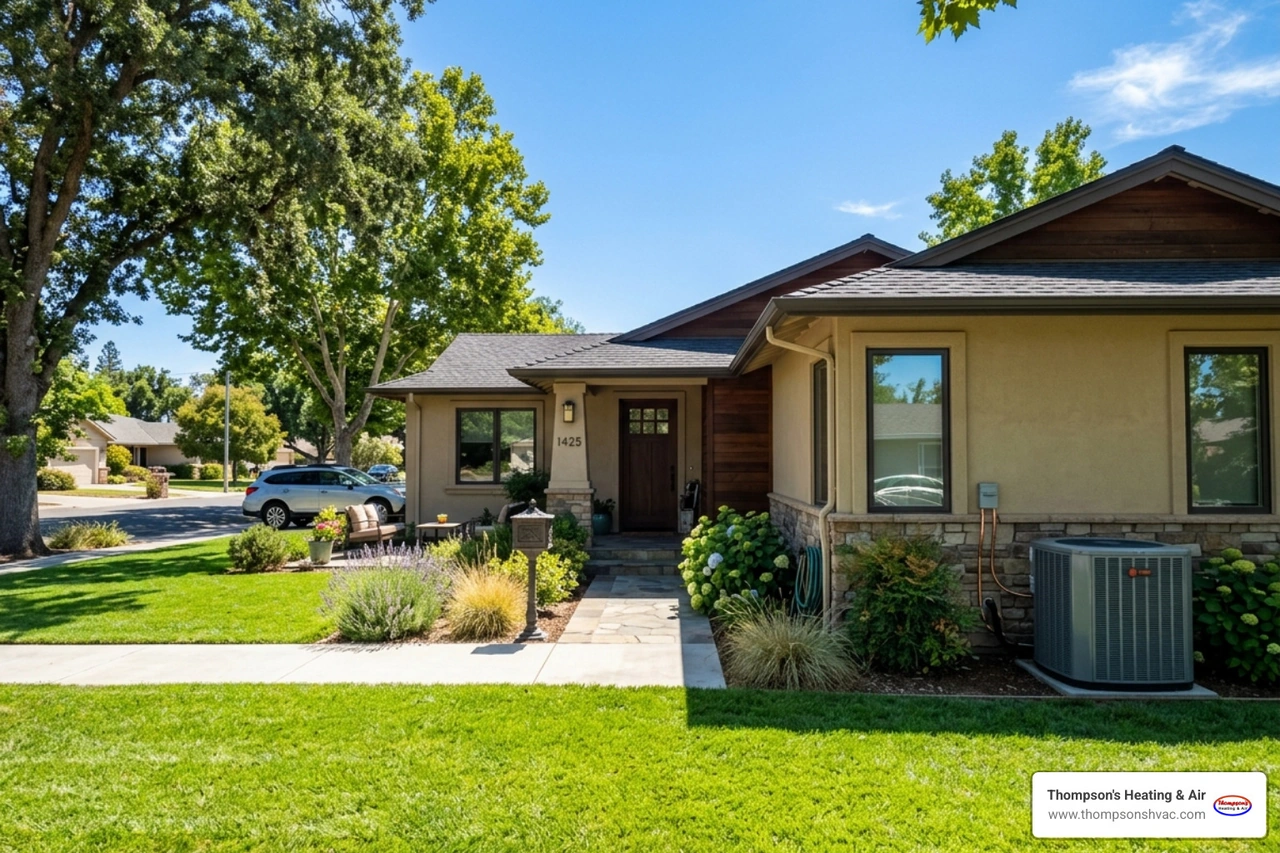
Why How Local Companies Understand Valley Weather Needs Makes All the Difference in Woodland, CA
How local companies understand valley weather needs comes down to one simple truth: they live and work in the same environment you do. In Woodland, CA, that means triple-digit summer heat, sudden cold snaps, Delta Breezes that shift conditions block by block, and harvest-season dust that clogs HVAC filters faster than any national forecast model can predict. Generic weather data from regional sources simply averages out the terrain — and in Yolo County, that average can be dangerously wrong.
Here is a quick look at how local companies apply Valley-specific knowledge to serve homeowners better:
• Hyperlocal monitoring - Local providers track micro-climates that national models miss entirely, including temperature inversions and fog patterns unique to the Sacramento Valley floor
• Seasonal pattern recognition - Local experts know when Delta Breezes shift, when Tule fog season begins, and how early spring warmth in 2026 is creating new irrigation and comfort challenges
• Agricultural dust awareness - Valley harvest cycles create airborne particulates that accelerate HVAC filter blockages — a root cause national companies routinely overlook
• Real-time data for real decisions - On-site weather intelligence helps local HVAC companies time maintenance, manage inventory, and respond before heat waves or cold snaps hit
• Community accountability - A local company's reputation depends on neighbors, not call center scripts, creating a higher standard of accurate, responsive service
For Woodland homeowners and business owners, the gap between a regional weather forecast and what is actually happening outside your front door is not a minor inconvenience — it is the difference between a system that keeps up and one that breaks down at the worst possible moment.
How local companies understand valley weather needs through hyperlocal data
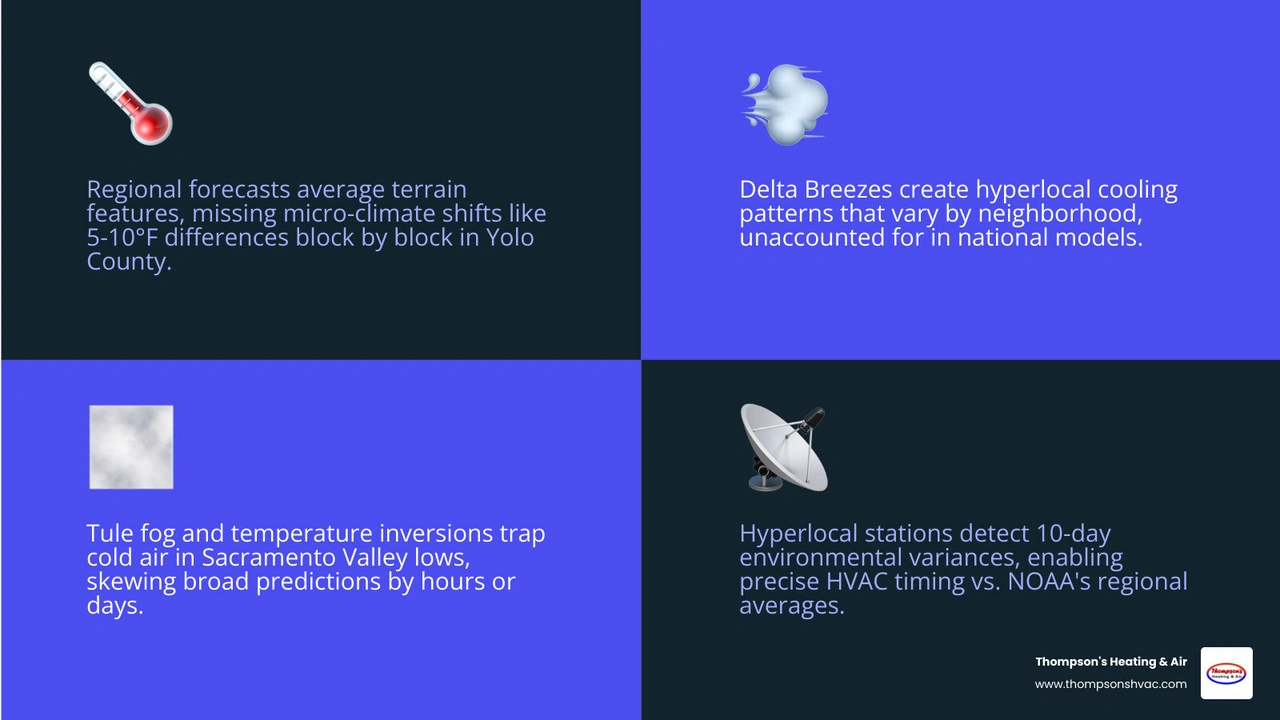
When you look at a weather app, you are often seeing data processed by a supercomputer in a different state, solving a complex math problem based on broad regional averages. While agencies like NOAA do incredible work with satellites and weather balloons, their models often "average out" the very terrain features that define our daily lives in Yolo County.
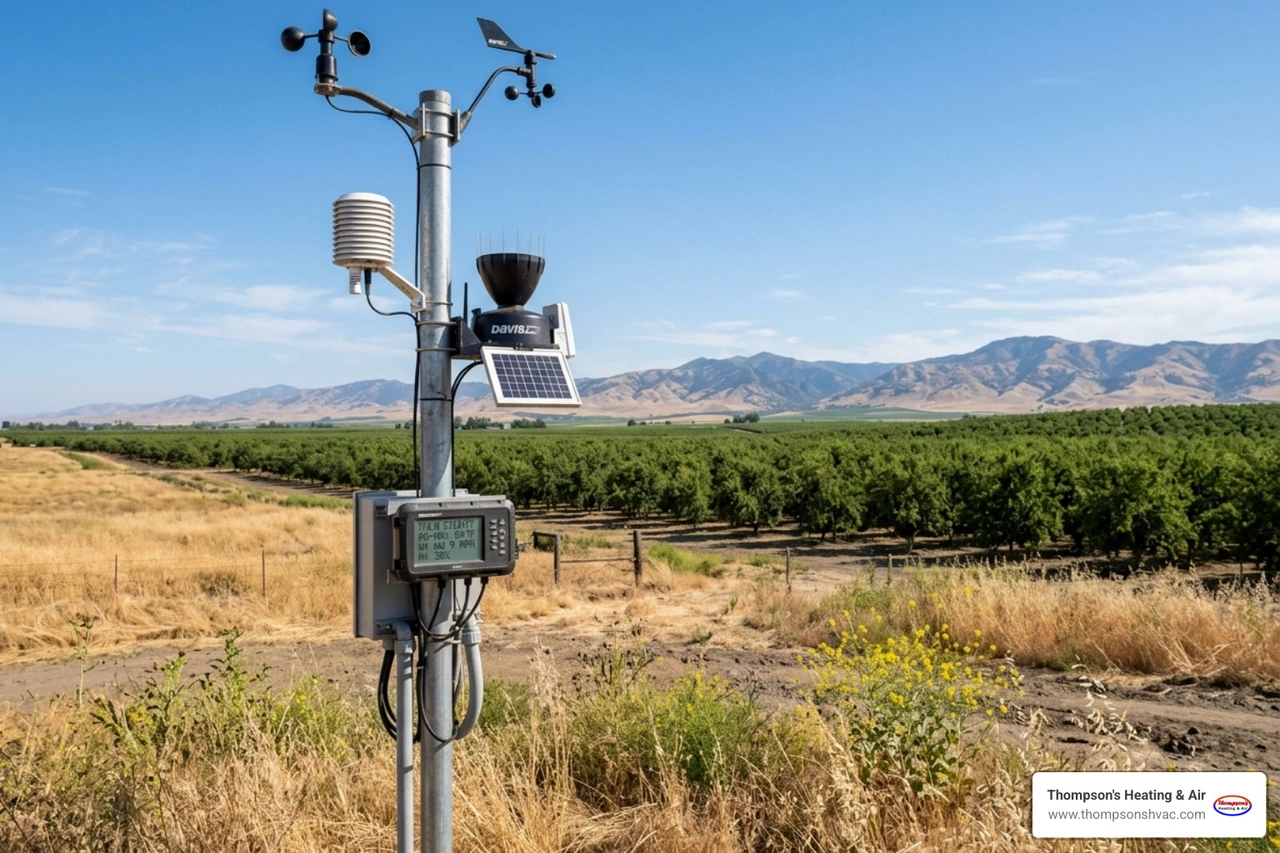
How local companies understand valley weather needs is by moving away from the "shotgun" approach of regional forecasting and toward a "sniper rifle" level of precision. By utilizing in-field weather stations and hyperlocal monitoring networks, we can see the 10-day variance in environmental shifts that a national model might miss. For example, a station in a Davis orchard might record significantly different humidity levels than one in downtown Woodland, even though they are only a few miles apart.
This precision is vital for Getting the Right Size HVAC for the Sacramento Valley Homes. If we relied on generic California averages, we might install a system that is either too small to handle a 110-degree Woodland afternoon or too large, leading to inefficient short-cycling.
Why generic forecasts fail and how local companies understand valley weather needs
Generic forecasts often fail because the atmosphere does not happen in isolation. In our region, the "Delta Breeze" is a perfect example. A national forecast might call for a high of 100 degrees, but it cannot always predict the exact hour the cool marine air will push through the Carquinez Strait and provide relief to Dixon and Davis.
Local experts understand these terrain-driven variabilities. We know that Tule fog can trap cold air on the valley floor while the foothills stay warm—a phenomenon called a temperature inversion. These inversions change how your heating system works and how moisture builds up in your home. Understanding these nuances is why How Proper HVAC Sizing Affects Comfort is so critical; your system needs to be calibrated for the actual peaks and valleys of our local climate, not a theoretical average.
• Data Source — National Weather Models: Satellite & Regional Balloons — Hyperlocal Station Accuracy: On-site Ground Sensors
• Terrain Focus — National Weather Models: Averaged Elevations — Hyperlocal Station Accuracy: Field-Specific Topography
• Update Frequency — National Weather Models: Every 1-6 Hours — Hyperlocal Station Accuracy: Real-time (Every 2-5 Mins)
• Micro-climate Detection — National Weather Models: Low (Misses fog/wind pockets) — Hyperlocal Station Accuracy: High (Captures block-by-block shifts)
• HVAC Application — National Weather Models: General Scheduling — Hyperlocal Station Accuracy: Precise Load Calculation
The impact of 2026 climate shifts on Woodland residents
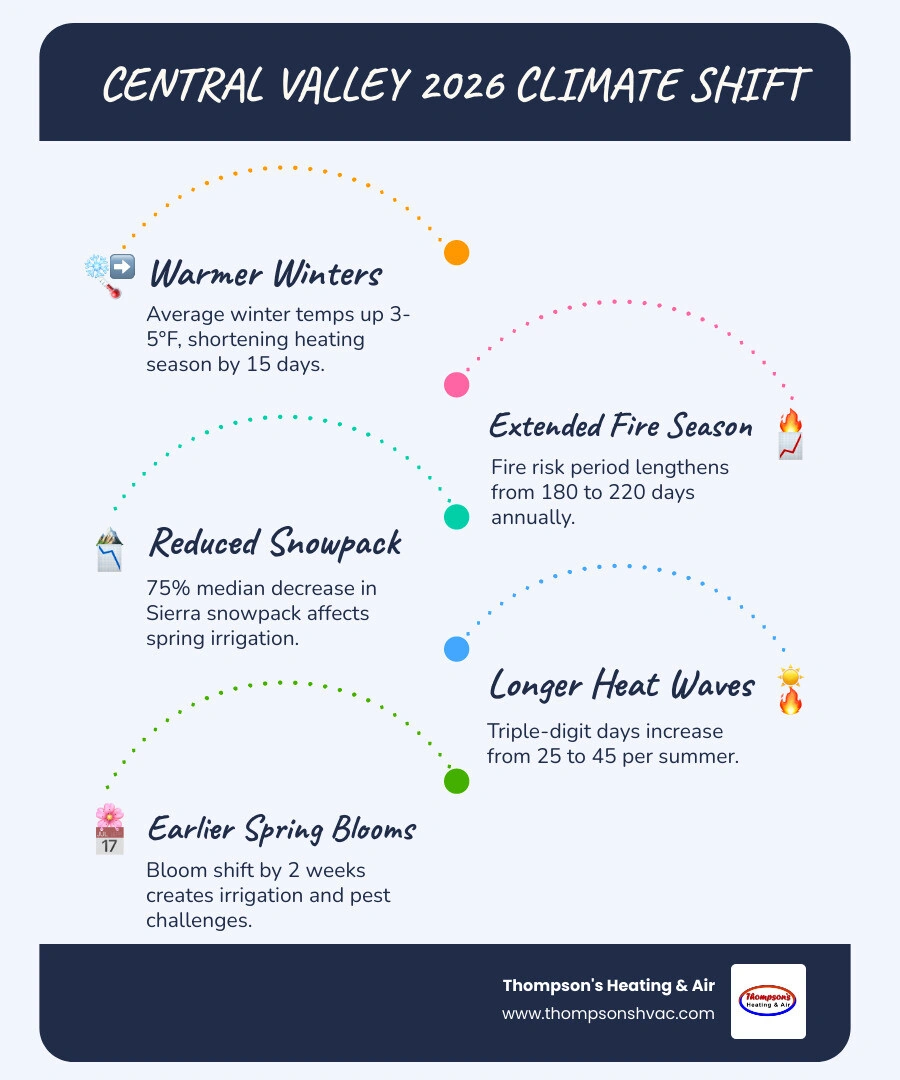
As we move through May 2026, we are seeing how changing climate patterns require local expertise. This year, the snowpack in the mountains that feed our valley is down to just 75% of the median. This lack of "frozen storage" means our spring and summer are starting earlier and feeling drier.
We have seen daffodil buds and almond blossoms emerge weeks ahead of schedule. While an "early spring" sounds lovely, it creates an "irrigation gap" and a "comfort gap." When the valley warms up before the traditional "cooling season" begins, your home's HVAC system is suddenly under pressure while the air is still filled with spring allergens and agricultural dust. Local companies are accountable to the community to recognize these shifts and ensure that our maintenance schedules reflect the reality of 2026, not the patterns of 1996.
Adapting to Central Valley extremes: Heat waves and agricultural dust
In Yolo County, "summer" is a bit of an understatement. We deal with "Central Valley Summer," where triple-digit temperatures are the norm rather than the exception. But the heat isn't the only challenge; we are an agricultural powerhouse, and that comes with a unique environmental byproduct: dust.
During harvest season, the air is thick with particulates. National HVAC brands might recommend changing your filter every three months, but how local companies understand valley weather needs involves knowing that during a Woodland harvest, a filter can be completely blocked in just thirty days.
When a system fails, we don't just look at the broken part; we perform a "Root Cause Analysis." We ask the "Five Whys."
1. Why is the AC not cooling? (The coil is frozen).
2. Why is the coil frozen? (Airflow is restricted).
3. Why is airflow restricted? (The filter is blocked).
4. Why is the filter blocked so quickly? (It’s harvest season).
5. Why did the homeowner not know? (They were following a generic national maintenance schedule).
This is a prime example of How Improperly Sized Systems Shorten Equipment Life. A system struggling against Valley dust and extreme heat will burn out years earlier than one maintained with local conditions in mind.
Managing indoor air quality during harvest season
Indoor air quality (IAQ) is a major concern for residents in areas like Arbuckle, Williams, and Zamora. We’ve seen research showing a 10-day variance in pest treatment timing between local stations and public ones. When farmers are out protecting their crops, those airborne particulates and chemicals can find their way into your home if your ventilation isn't up to par.
Modern homes are built to be airtight for energy efficiency, but this can trap pollutants inside. We focus on balanced ventilation that brings in fresh air while filtering out the agricultural dust and allergens. For more on keeping your home healthy, check out our Mold Prevention Tips for the Sacramento Valley Homeowners.
Maximizing efficiency: How local companies understand valley weather needs for maintenance
Timing is everything. National chains might push for tune-ups year-round, but we know that spring is the "low demand" window that allows for the most thorough service. By scheduling a spring tune-up, you ensure your system is ready for the first 100-degree day in June.
Furthermore, local companies manage their inventory based on what actually breaks in the Valley. We know which parts fail under the stress of a Delta Breeze humidity shift or a 110-degree heatwave. This prevents the 35% failure rate often seen in small businesses that mismanage inventory. We also help you navigate local incentives, such as the PGE Rebates Guide Sacramento Valley Homeowners, ensuring you get the best ROI on your equipment.
Protecting your home during unpredictable cold snaps and moisture shifts
While we are famous for our heat, Northern California cold snaps can be surprisingly brutal because they are often unexpected. In places like Winters and Esparto, a sudden drop in temperature can strain a system that hasn't been winterized.
Heat pumps are becoming the "unsung heroes" of the Valley. They provide incredibly efficient cooling in the summer and reliable heat in the winter. However, they require local knowledge to operate at peak efficiency during a "Tule fog" event, where high humidity and low temperatures can cause ice buildup on the outdoor unit. Understanding Heat Pump Benefits for Sacramento Valley Homeowners helps you choose a system that can handle these moisture shifts without breaking a sweat.
Preventing system strain during winter humidity
Winter in the Valley isn't just cold; it's damp. That humidity can lead to restricted airflow and strain on your evaporator coils. We recommend a few simple "how-to" steps for winter moisture control:
• Recalibrate your thermostat to ensure it’s reading the actual temperature, not the "stuffy" air trapped in a hallway.
• Maintain your water heater by flushing sediment annually. In the winter, your water heater works significantly harder to warm up the cold water coming from the ground.
• Set your water heater to 120 degrees to balance safety, comfort, and energy conservation.
The role of historical data in long-term home comfort
How local companies understand valley weather needs isn't just about looking at today's radar; it's about looking at thirty years of history. We use historical data from local stations to track the "2026 shift"—the trend toward warmer winters and longer, more intense fire seasons.
This data allows us to recommend equipment that isn't just good for today, but will remain efficient for the next 15 to 20 years. For high-stakes operations like local utilities or agricultural hubs, this "auditable data" is the gold standard for safety and ROI. For you, the homeowner, it means your HVAC system is a "defensible" investment—one backed by regional expertise and a deep understanding of where our climate is headed.
Frequently Asked Questions about Valley Weather Needs
Why is my AC struggling even when the Delta Breeze is blowing?
The Delta Breeze is a blessing, but it also brings a shift in humidity. If your AC system isn't properly sized or if your ducts have leaks (common in older Woodland housing tracts), the system may struggle to remove the added moisture from the air, making your home feel "stuffy" even if the temperature outside has dropped.
How does agricultural dust in Yolo County affect my HVAC filters?
Agricultural dust is heavier and more frequent than standard household dust. It can coat your filter and the sensitive internal components of your AC, like the evaporator coil. This forces the motor to work harder, leading to higher energy bills and a shorter equipment lifespan. During harvest, we recommend checking your filters every month.
What is the benefit of a hyperlocal weather station for my home comfort?
A hyperlocal station provides data for your specific GPS coordinates. This allows us to see if your neighborhood is a "heat pocket" or if you are more susceptible to wind-driven dust. We use this data to calibrate your thermostat and suggest filtration systems that actually match your real-world environment.
Conclusion
At Thompson's Heating & Air, we don't just see a thermostat setting; we see the Tule fog rolling in over the fields and the Delta Breeze cooling down a Woodland evening. As a family-owned business serving Yolo County since 1992, we've built our reputation on the fact that we live in the same heat and cold that you do.
Whether you are in Davis, Dixon, or the heart of Woodland, you deserve climate solutions that are as local as the crops in our fields. From 24/7 technician access to precision maintenance plans, we are here to ensure your home remains a sanctuary, no matter what the 2026 weather patterns throw our way.
Ready to experience the difference that local expertise makes? Visit us at www.thompsonshvac.com to schedule your seasonal check-up or explore our high-efficiency cooling and heating options. Let's keep your home comfortable, together.



.avif)
.avif)
.png)
