
Comparing Variable-Speed Furnaces to Single-Stage Models for Woodland Homes

Are You Tired of Loud Start-Ups and Chilly Mornings?
Are you frequently woken up by the loud, sudden "whoosh" of your heating system kicking into high gear? If you are tired of noisy start-ups and uneven temperatures, comparing variable-speed furnaces to single-stage models for Woodland homes is an essential first step toward better comfort. As the crisp air returns, our technicians at Thompson's Heating & Air often hear the same complaint: aging furnaces struggle to keep every room evenly warm. You might find yourself shivering in the hallway while the living room feels stiflingly hot. These daily frustrations often force a critical decision: should you stick with legacy technology, or is it time to upgrade to a system designed for seamless comfort?
To explore comprehensive solutions for your home, learn more about our heating services.
The Hidden Discomfort of Aging Heating Systems
For many Woodland CA homes, the transition into cooler weather reveals the glaring flaws of older heating equipment. You set the thermostat to a comfortable 70 degrees, but the actual experience in your home feels wildly inconsistent. In our experience, this is not just a minor inconvenience; it is a fundamental limitation of outdated furnace technology. When your system was installed decades ago, the primary goal was simply to generate heat, with very little emphasis on how that heat was distributed or how loud the process was.
Today, home comfort is defined by consistency. A true comfort upgrade goes far beyond simply swapping out a broken metal box in your garage or attic. It involves evaluating how air moves through your living spaces. If you are currently relying on an older system, you are likely experiencing the harsh reality of an "all-on or all-off" heating cycle. Recognizing these symptoms early—especially during our September early fall prep visits—gives you the opportunity to make a deliberate, informed choice about your home's long-term comfort rather than rushing into an emergency replacement in the dead of winter.
The 'All-On or All-Off' Problem of Single-Stage Furnaces
To understand why your current home heating feels so uneven, you have to look at the blower motor inside your furnace. Traditional systems utilize a single-stage blower motor, often referred to in the industry as a PSC (Permanent Split Capacitor) motor. The defining characteristic of a single-stage system is that it only has one operational speed: 100% maximum capacity. It cannot adjust, it cannot slow down, and it cannot provide a gentle breeze. It operates entirely on an "all-on or all-off" basis.
The Temperature Rollercoaster Effect
When your thermostat detects that the house has dropped below your set temperature, it sends a signal to the single-stage furnace. The system immediately fires up at full blast. You hear the loud mechanical engagement, followed by a heavy rush of air pushing through your vents. The furnace will continue to blast this maximum level of hot air until the thermostat is satisfied, at which point the system shuts down completely.
The predictable drawbacks of this cycle include:
• Noticeable temperature swings: Your home quickly goes from feeling slightly too cold to slightly too warm, creating a continuous rollercoaster of temperature fluctuations.
• Persistent cold spots: Because the fan shuts off entirely between heating cycles, the air in your home stops moving. Rooms furthest from the furnace quickly lose their heat and become chilly.
• Disruptive noise levels: The abrupt start-up sequence is jarring, often loud enough to interrupt conversations, distract you from the television, or wake light sleepers during the night.
• Increased wear and tear: Constantly turning a heavy mechanical motor on and off at full speed places immense strain on the system's components over time.
Before you invest heavily in another major heating repair for an aging single-stage unit, our team always recommends understanding these inherent limitations. You might fix the broken part, but you will still be left with the same loud, uneven heating experience that single-stage technology inherently provides.
How Variable-Speed Technology Changes the Game
If single-stage technology is a light switch that only flips on or off, variable-speed technology is a precise dimmer switch. Modern high-efficiency furnaces utilize an ECM (Electronically Commutated Motor) as their blower. Instead of being restricted to one speed, these advanced motors can operate at a wide range of capacities, adjusting their output in tiny increments to perfectly match the real-time heating demands of your home.
The Mechanics of Continuous Circulation
The most transformative aspect of a variable-speed furnace is its ability to run continuously at a very low, ultra-quiet speed. By keeping the air moving constantly, the system fundamentally changes how your home feels. Here is how this technology elevates your daily comfort:
1. Eliminating Stubborn Cold Spots: Because the variable-speed fan rarely shuts off entirely, air never stagnates. The continuous, gentle circulation constantly mixes the air in your home, pushing warm air into those hard-to-reach back bedrooms and pulling cold air back to the furnace to be heated. This results in an incredibly even temperature from wall to wall.
2. Whisper-Quiet Operation: Variable-speed motors are designed to ramp up gradually. When the thermostat calls for heat, the motor slowly increases its speed rather than violently kicking on. This eliminates the loud, jarring "whoosh" at the start of a cycle. Most of the time, the system operates so quietly that you will not even realize it is running.
3. Enhanced Indoor Air Quality: Your HVAC filter can only capture dust, pollen, and pet dander when air is actively moving through it. A single-stage system only filters the air during an active heating cycle. A variable-speed system, running continuously on a low fan setting, is constantly pulling air through your filtration system, dramatically improving the air quality you breathe every day.
4. Precise Humidity Control: During the winter, heating systems can dry out the air in your home. The harsh, high-heat blasts of a single-stage furnace exacerbate this dry air spike. The gentle, sustained heating of a variable-speed system helps maintain a more comfortable, natural indoor environment without stripping away all the ambient moisture.
Head-to-Head: Single-Stage vs. Variable-Speed Performance
When weighing your options for a home upgrade, seeing the differences laid out side-by-side can clarify exactly what you are paying for. While single-stage systems have a lower initial equipment cost, we consistently see them fall short in almost every category related to daily comfort and long-term efficiency. Variable-speed systems represent an investment in a superior living environment.
Here is how the two technologies compare across the most important performance metrics:
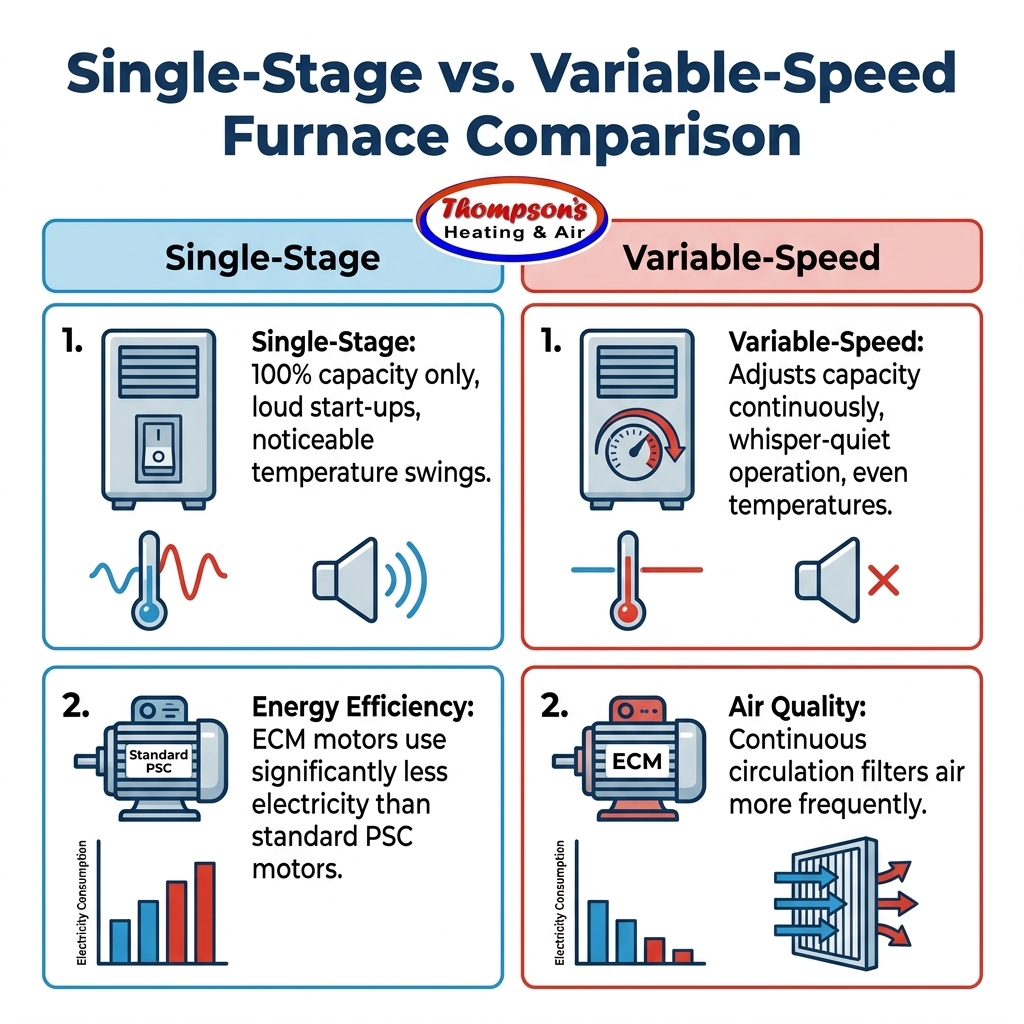
• Airflow Operation — Single-Stage Furnace (PSC Motor): All-on (100% capacity) or all-off. No middle ground. — Variable-Speed Furnace (ECM Motor): Adjusts continuously; can run at low speeds for constant circulation.
• Temperature Consistency — Single-Stage Furnace (PSC Motor): Noticeable swings; creates a "rollercoaster" effect of hot and cold. — Variable-Speed Furnace (ECM Motor): Precise consistency; maintains temperature within a fraction of a degree.
• Noise Levels — Single-Stage Furnace (PSC Motor): Loud, abrupt start-ups; high-velocity air noise during the cycle. — Variable-Speed Furnace (ECM Motor): Whisper-quiet; ramps up gradually without sudden mechanical clunks.
• Energy Efficiency — Single-Stage Furnace (PSC Motor): Standard electrical consumption; motor draws high amps on every start. — Variable-Speed Furnace (ECM Motor): High efficiency; ECM motors use significantly less electricity overall.
• Air Filtration & IAQ — Single-Stage Furnace (PSC Motor): Only filters air when actively heating the home. — Variable-Speed Furnace (ECM Motor): Filters air continuously, capturing far more dust and allergens.
• Winter Dry Air Spikes — Single-Stage Furnace (PSC Motor): Harsh heat blasts contribute to severe dry air in the home. — Variable-Speed Furnace (ECM Motor): Gentle heating mitigates the worst of winter dry air symptoms.
Why the Sacramento Valley Climate Demands Better Circulation
Understanding the technology is only half the battle; applying it to your local environment is what truly maximizes your comfort. Having served Woodland and the surrounding areas for years, our technicians know the Sacramento Valley is famous for its distinct weather patterns, particularly the significant diurnal temperature swings we experience during the fall and winter months. It is not uncommon to have a beautifully mild, sunny afternoon followed by a sharp drop into chilly winter nights.
Managing Daily Temperature Shifts
These severe daily shifts present a unique challenge for home heating systems. When the sun goes down and the chill sets in, an older single-stage furnace reacts aggressively. Because it can only output 100% capacity, it often overshoots the desired temperature during these mild transition months. It blasts intense heat to combat the evening chill, making the house uncomfortably warm, only to shut off and let the house get cold again.
A variable-speed system perfectly manages these Sacramento Valley shifts. Instead of overreacting to a slight drop in temperature, the variable-speed motor simply ramps up slightly, providing a gentle wave of warm air just sufficient to maintain your comfort. It prevents the cold swings and dry air spikes common in Woodland CA homes during the winter.
Because these temperature swings begin in the early autumn, September is the ideal transition period to evaluate your heating needs. Preparing your home now ensures you are not caught off guard by the first major cold snap. If you are considering a furnace installation in Woodland, our installers strongly recommend choosing a system that adapts to our unique regional climate for the best long-term results.
The Crucial Role of Ductwork in Your Upgrade Decision
One of the biggest misconceptions we encounter in the HVAC industry is that upgrading your furnace is just a simple "box swap." Many homeowners believe that if they buy the most advanced variable-speed furnace on the market, perfect comfort is guaranteed. Unfortunately, the reality is much more complex. A variable-speed furnace relies entirely on the condition and sizing of your home's ductwork to deliver its promised benefits.
The Hidden Danger of Undersized Ducts
Variable-speed ECM motors are incredibly smart. They are programmed to adjust their output to maintain a specific volume of airflow, automatically compensating for static pressure (the resistance the air faces as it moves through the ducts). If your existing ductwork is undersized, crushed, or poorly designed, the variable-speed motor will sense that resistance. In response, it will ramp up its speed, working harder and harder to push the air through the restrictive ducts.
When this happens, the whisper-quiet operation you paid for disappears. The motor becomes loud, the rushing air sounds like a jet engine, and the system's energy efficiency plummets because it is constantly straining against the high static pressure. This is why airflow matters for your HVAC ductwork. As we often tell our customers, putting a high-tech motor on a low-tech, restrictive duct system is a recipe for frustration.
The Importance of Custom Assessment
This is where professional expertise makes all the difference. At Thompson's Heating & Air, we focus on custom HVAC solutions, ensuring that variable-speed technology is properly matched to your existing ductwork rather than just pushing standard equipment out the door. We provide clear, honest answers about your home's airflow capabilities without unnecessary upselling.
This commitment to careful assessment plays out in real life. Just recently, our team worked with a local Woodland homeowner who reached out over the summer when they needed a new HVAC system installation. Instead of a high-pressure sales pitch, our technicians provided a thorough consultation where all their questions about equipment compatibility were answered. Because the system was properly matched to the home's specifications, the new installation is working beautifully, and the customer felt completely comfortable with the process from start to finish. Proper airflow matching is the secret to unlocking the true comfort potential of any new furnace.
Efficiency, Savings, and Long-Term Value
While the immediate comfort benefits of continuous circulation and quiet operation are usually what drive a homeowner to upgrade, the financial advantages of variable-speed technology are equally compelling. Upgrading your furnace is a significant investment, but we find that modern systems are designed to pay dividends over their lifespan through reduced energy consumption.
Breaking Down the Financial Benefits
Here is how a variable-speed upgrade provides long-term value for your household:
1. Drastically Reduced Electrical Consumption: While the furnace burns gas to create heat, it uses electricity to run the blower motor. ECM variable-speed motors use a mere fraction of the electricity compared to standard PSC motors. Because they spend most of their time running at very low speeds, the electrical savings over a typical winter season can be substantial.
2. Incentives and Rebates: Because variable-speed systems are highly efficient, upgrading to this technology often qualifies homeowners for generally applicable federal tax credits or local utility rebates. While specific programs and amounts vary, taking advantage of these incentives can help offset the initial investment of a high-efficiency installation. Always verify current programs with your utility provider or a tax professional.
3. Less Mechanical Wear and Tear: The gradual ramp-up of a variable-speed motor places significantly less stress on the furnace's internal components compared to the violent start-and-stop operation of a single-stage unit. This smoother operation often translates to fewer unexpected breakdowns and a longer overall lifespan for the equipment.
4. Preserving Efficiency Over Time: To ensure your new variable-speed system continues to deliver peak efficiency and maximum savings year after year, it requires proper upkeep. Scheduling routine furnace maintenance keeps the blower motor clean, ensures the sensors are calibrating airflow correctly, and protects your long-term investment.
Frequently Asked Questions About Furnace Upgrades
Does a variable speed furnace run all the time?
Yes, the fan often runs continuously at a very low, energy-efficient speed to keep air circulating and temperatures even. This continuous operation is completely normal and is exactly what the system is designed to do. Because the motor is highly efficient, running it constantly uses very little electricity while providing massive improvements in indoor air quality and temperature consistency.
Why is my single-stage furnace so loud?
Single-stage furnaces operate at 100% capacity immediately upon starting, causing a loud rush of air and mechanical noise. When the thermostat calls for heat, the heavy motor kicks on instantly, creating a jarring "whoosh" sound. Additionally, because the fan is pushing the maximum volume of air through your ducts all at once, the velocity of the air itself creates significant noise at the vents.
What is the difference between single stage and variable speed furnace?
Single-stage has one speed (high), while variable-speed can adjust its output precisely to match the heating needs of the home. A single-stage furnace is either entirely on or entirely off, which often leads to temperature swings. A variable-speed furnace acts more like a dimmer switch, ramping up and down gently to provide exactly the right amount of continuous heat, resulting in a much more comfortable environment.
Are variable speed furnaces quieter?
Significantly quieter, as they gradually ramp up to speed rather than turning on abruptly. Because they spend the vast majority of their time operating at lower, continuous speeds, the volume of air moving through your ducts is reduced, eliminating the loud rushing sounds. In many cases, homeowners have to walk right up to a vent just to tell if a variable-speed system is currently running.
Can I install a variable-speed furnace with my existing ductwork?
It depends on the size and condition of your ducts; our team always requires a professional assessment to ensure the motor won't overwork itself. Variable-speed motors automatically adjust to overcome resistance in the ductwork. If your ducts are too small or heavily restricted, the motor will ramp up to a high, noisy speed to force the air through, which defeats the purpose of the upgrade and wastes energy.
Is early fall a good time to upgrade my furnace in Woodland?
Yes, September is the ideal transition period to replace an aging system before the busy winter heating season begins. By scheduling your assessment and installation during the early fall prep window, you avoid the rush of emergency breakdowns that occur when the first freeze hits. It ensures your home is fully equipped with quiet, even heating long before the chilly Sacramento Valley nights arrive.
Ready to Eliminate Cold Spots in Your Home?
Upgrading to a variable-speed furnace fundamentally transforms your home comfort by providing continuous, whisper-quiet operation and eliminating the frustrating temperature swings of older technology. As you tackle your September early fall prep, you don't have to navigate this technical decision alone. The experts at Thompson's Heating & Air will perform a custom assessment of your home and ductwork to ensure you get the exact right technology to perfectly manage our regional climate. Schedule a consultation with our team today to prepare your home for the upcoming heating season, and experience the peace of mind that comes with a truly comfortable, evenly heated living space.



.avif)
.avif)
.png)
